
“Reversible Rusting” Battery Manufacturer Gets Production-Boosting Funding
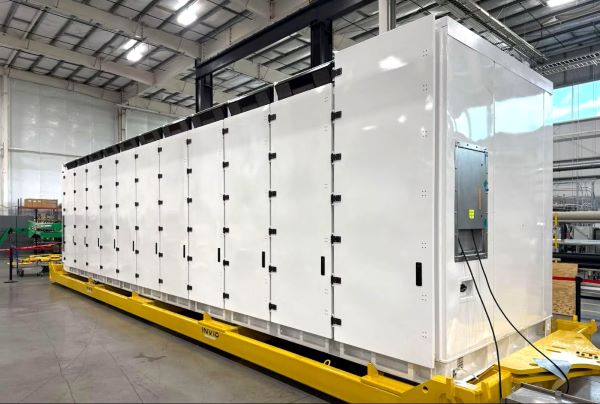
Form Energy, the maker of huge iron-air batteries that can store enough power to last several days, has raised another $750 million in funding, it announced this week (The Wall Street Journal, subscription).
What’s going on: With this latest funding boost, the Massachusetts-based manufacturing startup has now raised over $2 billion, and “plans to use the money to boost manufacturing at its Weirton, W.Va., plant and for its first wave of commercial projects.”
- Demand for Form Energy’s batteries has surged alongside the growing number of electrification and energy-intensive artificial intelligence projects, including data centers.
Why it’s important: Designed to last 100 hours per charge, Form’s batteries can “help utilities power through dayslong grid emergencies, such as a winter storm.”
- The batteries will be able to store and deliver 30 gigawatt-hours of energy, enough to power 3,000 average-sized American homes for a year (Sherwood).
“Reversible rusting”: The batteries take in oxygen, convert iron to rust and then reverse the process.
- This “reversible rusting” turns the rust back into iron and breathes out oxygen to charge and discharge the batteries.
- The batteries would function like peaker units, natural-gas-fired power plants that tend to operate during the hottest or coldest hours of the year, when the power grid is under stress, Form Energy Co-founder and CEO Mateo Jaramillo told the Journal.
The nuclear angle: “Form’s batteries could also soak up electricity from various plants, including nuclear facilities, which operate continuously even if they lose money during periods when wholesale power prices plummet.”
