
NAM: New EO on Vaccines Is Contrary to Science, Public Health
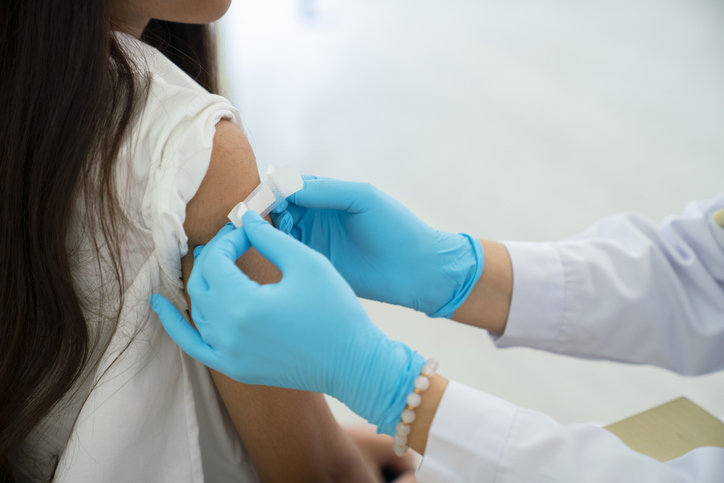
The Trump administration unveiled an executive order on Monday that calls for a reduced vaccine schedule for kids, while citing an unsupported link between vaccines and autism (CNBC).
The background: Recent actions and statements from the Department of Health and Human Services have raised concerns among public health stakeholders about the potential weakening of long-standing health protections and the communication of scientific and public health information.
The economic stakes: The NAM’s report, Industrial Immunity: Inoculating the Manufacturing Economy, released earlier this year and covered exclusively by POLITICO (subscription), found that vaccine-preventable illnesses cost the U.S. economy at least $12.5 billion annually, while illness-related absenteeism costs manufacturers roughly $30 billion.
- “With 95% of manufacturing workers eligible for health benefits through their employers and 70% of manufacturers reporting rising health-care costs as a top business challenge, our industry has a direct stake in policies that keep workers healthy and health care affordable. Strong, stable and consistent vaccine policies are common sense—keeping workers on the job, factories running and America’s economy humming,” said NAM President and CEO Jay Timmons when the report was released.
What it does: The EO calls for reducing the childhood vaccine schedule to 11 shots and splitting up the measles, mumps and rubella vaccine into three separate shots. This change would necessitate many more doctors’ visits for parents and children and likely reduce vaccine uptake.
What happens next: Though the EO calls for policy changes, the states have authority over vaccine requirements.
- However, the EO also “instructs the attorney general to ‘further meritorious legal actions’ challenging state laws that conflict with obligations on parental authority, religious freedom, disability accommodations and equal protection, and directs the Departments of Justice, Education and Health to ensure their contractors and grantees, including states and localities, comply” (Jurist).
- Meanwhile, HHS’s attempt to change the childhood vaccine schedule back in December is currently held up in court.
No link between vaccines and autism: Vaccines do not cause autism. The claim traces back to a small 1998 study that was later retracted over falsified information, while subsequent research—including a study of more than 95,000 children—found no increased autism risk from the MMR vaccine, even among children already at higher risk because they had a sibling with autism. The British researcher who falsified the study later had his medical license revoked (Mayo Clinic).
Congressional pushback: Sen. Bill Cassidy (R-LA), a physician and chairman of the Senate Health, Education, Labor and Pensions Committee, sharply criticized the order shortly after it was signed.
- “I’m a doctor. This executive order is wrong. The President does not have the expertise to make these changes. Vaccines are overwhelmingly safe. Vaccines are effective. Vaccines DO NOT cause autism,” Cassidy wrote on X.
The NAM says: “We agree with President Trump when he said that vaccines work and not taking them can endanger others. They are made by the men and women of America’s manufacturing workforce, who dedicate themselves to science and safety every day. Proven science must lead the way on public health, and vaccines are backed by decades of reputable data confirming their safety,” said Timmons in response to the EO.
- “But the shifting policy approach at the CDC and its vaccine advisory committee (ACIP) is creating a climate of uncertainty. This undermines not only public trust but also threatens access to and coverage of vaccines—putting at risk the health of manufacturing workers and their families. At the end of the day, vaccines are about keeping Americans healthy, safe and strong—and that’s what we all want.”
