Port of Long Beach, DOT Sign First-of-Its-Kind SMR Agreement
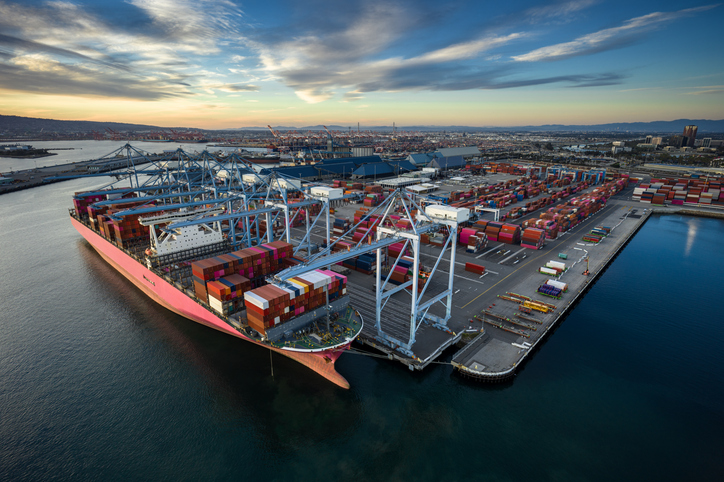
The Port of Long Beach in California has become the first port in the U.S. to sign an agreement with federal regulators to explore the possibility of powering maritime operations with small nuclear reactor technology (gCaptain).
What’s going on: “The nonbinding Memorandum of Cooperation, signed Wednesday [July 22], establishes a framework for the Port and [the U.S. Department of Transportation’s Maritime Administration] to work together on the development of nuclear technology for commercial vessels, port operations and other maritime assets.”
- The development, one of the latest in the administration’s campaign to kickstart nuclear-powered shipping, follows MARAD’s May request for industry guidance on designing a commercially viable small modular reactor for American ocean transport.
Private-sector involvement: The port—home to two MARAD Ready Reserve Force ships and one of 18 seaports tasked by the federal government with military logistics support during national emergencies—recently signed a lease deal with nuclear technology company Bluecore Energy Inc. to build, test and store maritime power modules.
What’s in it: “Under the agreement, the Port and MARAD will coordinate with the U.S. Coast Guard, Department of Energy and Nuclear Regulatory Commission to develop operational protocols, safety standards, inspection procedures and other best practices needed to support future SMR-powered vessels calling at U.S. ports.”
- The agreement aligns with the port’s long-term plans, including the goal of doubling annual container volume (to 20 million TEUs) by 2050.
What’s not in it: The agreement does not authorize the building of nuclear-powered ships, nor does it commit either the administration or the port to funding or the use of any specific technology.
Why it’s important: “Recent industry studies have concluded that advanced small modular reactors could eliminate carbon emissions from oceangoing vessels while allowing ships to operate for decades without refueling.”