SCOTUS Hears Arguments in Climate Case
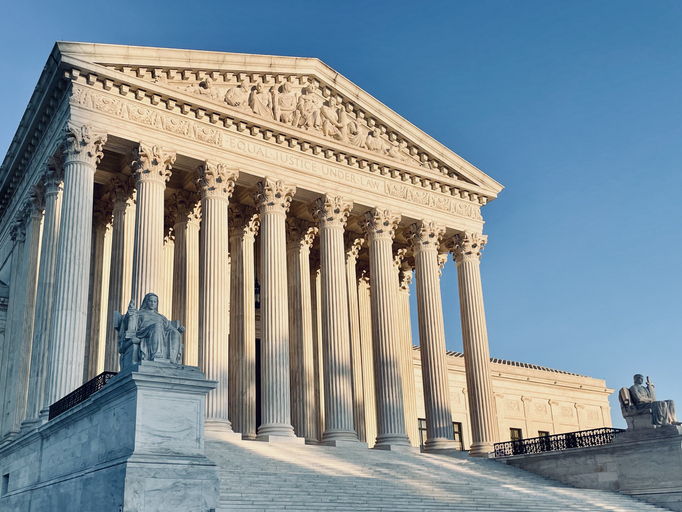
The Supreme Court heard oral arguments this week on a consequential case for manufacturers, Suncor Energy U.S.A., et al. v. County Commissioners of Boulder County, et al, in which Court will consider the merits of state and local lawsuits targeting energy manufacturers for the effects of global greenhouse gas emissions.
- This is the first time the Court has taken up the question, after dozens such cases have been brought at the state and local level—with the NAM pushing back against these overreaching suits.
The analysis: The justices posed difficult questions for all three advocates—Kannon Shanmugam for the petitioner energy manufacturers, Deputy Solicitor General Sarah Harris for the Department of Justice and Kevin Russell for Boulder—making a firm prediction of the outcome nearly impossible, NAM Vice President and Deputy General Counsel Erica Klenicki said.
- “Our best guess is that the Court is likely to find at least some of Boulder’s claims preempted, but on narrower grounds than those advanced by the petitioners,” she added.
- Justice Alito recused himself before oral arguments, which means the Court could find itself in a 4-4 deadlock. In that event, the Colorado Supreme Court’s ruling, which allowed Boulder’s claims to move forward, would remain in place.
The divide: Justic Kavanaugh repeatedly cast doubt on Boulder’s claims, saying “[Supreme Court precedent] make crystal-clear that interstate air and water pollution are matters for federal law unless Congress specifically preserves state law.”
- Meanwhile, Justices Sotomayor and Jackson seemed skeptical that the case needed Supreme Court attention, with Justice Jackson saying “Isn’t it a matter of fact, though, whether or not there are direct, traceable, and particularized effects within the state?”
- The other five justices were “difficult to read,” said Klenicki, but they didn’t seem willing to back the constitutional arguments of the energy manufacturers.
NAM at work: The NAM submitted amicus briefs to the Court—both in support of the energy manufacturers’ petition for review and, later, on the merits—arguing that the subject matter and remedies sought through this litigation are inherently national, as well as legislative and regulatory in nature, and that such complex policy matters should not be driven by individual state judges in individual state courtrooms applying various state liability laws.
- The NAM has led industry opposition to the climate litigation campaign through the Manufacturers’ Accountability Project, using the courts and the media to push back on efforts to transform social, political and environmental public policy matters into state court tort lawsuits targeting manufacturers.
What’s next: The court is expected to make a decision in late winter or spring.