Manufacturers: BUILD America 250 Act a Down Payment on Nation’s Future Growth
Washington, D.C. – Following the successful vote in the House Transportation and Infrastructure Committee to advance the bipartisan BUILD America 250 Act, National Association of Manufacturers Executive Vice President Erin Streeter released the following statement:
“Chairman Graves, Ranking Member Larsen and the full T&I Committee have offered a down payment on America’s future growth with a thoughtful bill that recognizes the urgent infrastructure and permitting challenges facing manufacturers and the broader economy.
“Manufacturers depend on reliable roads, bridges, ports and rail infrastructure to move goods efficiently, strengthen supply chains and drive economic growth. When America’s infrastructure moves, America’s economy moves with it.
“Today, highway congestion and bottlenecked ports cost manufacturers nearly $40 billion annually, while freight delays drain 65 million hours of efficiency each year—driving up costs, slowing shipments and weakening competitiveness. And that’s before accounting for America’s broken permitting system, which costs manufacturers nearly $8 billion annually.
“Manufacturers asked Congress to begin the work toward developing long-term solutions for Highway Trust Fund solvency; invest in our mass transit, rail, aviation, maritime and water infrastructure; and pass comprehensive permitting reform—all with an eye toward keeping workers and the traveling public safe. The BUILD America Act answers that call and advances meaningful progress on these priorities. We commend the members of the committee for their work on this bill and urge Speaker Johnson to bring it to the floor so manufacturers can realize the benefits of this legislation through growth and innovation that will support our nation’s broader economic prosperity. Because when manufacturing wins, America wins.”
Background
As Politico first reported in April, the NAM called on Congress to make the next surface transportation reauthorization a robust $600 billion investment.
In February, the NAM launched “Building to Win,” a national campaign urging Congress to pass robust infrastructure investments and reauthorize critical federal highway programs. As part of the campaign’s launch earlier this year, the NAM released a roadmap outlining four pillars for a robust surface transportation reauthorization:
- Continuing robust investment levels for federal infrastructure, including by developing long-term solutions for Highway Trust Fund solvency
- Strengthening supply chains across transportation modes
- Investing in water infrastructure that will support manufacturing growth and public health
- Reforming burdensome permitting laws and regulations to ensure federal infrastructure investments are made efficiently and responsibly
The NAM’s policy roadmap also features original analysis:
- The NAM’s analysis shows that highway congestion costs manufacturers more than $25 billion annually and results in over 65 million hours of delays in freight carrying finished goods and critical inputs each year.
- The analysis also visualizes, through a new map, key logistics nodes intersecting with the nation’s 25 worst freight bottlenecks, revealing more than 2 million hours of annual delays incurred and faced by manufacturers.
- In addition, the NAM estimates that congestion at container and bulk ports cost manufacturers more than $13 billion annually in carrying costs and demurrage charges.
In March, the NAM and the Foundation for American Innovation released a report showing America’s broken permitting system costs manufacturers in America at least $7.9 billion each year.
-NAM-
The National Association of Manufacturers is the largest manufacturing association in the United States, representing small and large manufacturers in every industrial sector and in all 50 states. Manufacturing employs nearly 13 million men and women, contributes $2.96 trillion to the U.S. economy annually and accounts for nearly 52% of private-sector research and development. The NAM is the powerful voice of the manufacturing community and the leading advocate for a policy agenda that helps manufacturers compete in the global economy and create jobs across the United States. For more information about the NAM or to follow us on Twitter and Facebook, please visit www.nam.org.
Manufacturers Welcome Release of Robust, Bipartisan Infrastructure Funding Bill
Washington, D.C. – Following the release of surface transportation reauthorization bill text by House Transportation and Infrastructure Committee Chairman Sam Graves and Ranking Member Rick Larsen, NAM Executive Vice President Erin Streeter released the following statement:
“Chairman Graves and Ranking Member Larsen understand the importance of modern, reliable infrastructure to strengthening manufacturing in the United States, creating more jobs and keeping our country globally competitive. The highway bill released today reflects the needs of America’s manufacturers, including tremendous progress toward comprehensive permitting reform, and our industry looks forward to working with the committee to quickly advance this vital legislation.
“Highway congestion and port delays alone are costing manufacturers nearly $40 billion annually and freight delays account for 65 million hours of lost efficiency each year. By passing a robust surface transportation reauthorization bill and bipartisan, comprehensive permitting reform this year, Congress can take a major step forward to reduce congestion, improve reliability, and empower manufacturers to make and move products that reach millions worldwide—supporting communities here at home.”
Background
As Politico first reported in April, the NAM called on Congress to make the next surface transportation reauthorization a robust $600 billion investment.
In February, the NAM launched “Building to Win,” a national campaign urging Congress to pass robust infrastructure investments and reauthorize critical federal highway programs. As part of the campaign’s launch earlier this year, the NAM released a roadmap outlining four pillars for a robust surface transportation reauthorization:
- Continuing robust investment levels for federal infrastructure, including by developing long-term solutions for Highway Trust Fund solvency
- Strengthening supply chains across transportation modes
- Investing in water infrastructure that will support manufacturing growth and public health
- Reforming burdensome permitting laws and regulations to ensure federal infrastructure investments are made efficiently and responsibly
The NAM’s policy roadmap also features original analysis:
- The NAM’s analysis shows that highway congestion costs manufacturers more than $25 billion annually and results in over 65 million hours of delays in freight carrying finished goods and critical inputs each year.
- The analysis also visualizes, through a new map, key logistics nodes intersecting with the nation’s 25 worst freight bottlenecks, revealing more than 2 million hours of annual delays incurred and faced by manufacturers.
- In addition, the NAM estimates that congestion at container and bulk ports cost manufacturers more than $13 billion annually in carrying costs and demurrage charges.
In March, the NAM and the Foundation for American Innovation released a report showing America’s broken permitting system costs manufacturers in America at least $7.9 billion each year.
-NAM-
The National Association of Manufacturers is the largest manufacturing association in the United States, representing small and large manufacturers in every industrial sector and in all 50 states. Manufacturing employs nearly 13 million men and women, contributes $2.96 trillion to the U.S. economy annually and accounts for nearly 52% of private-sector research and development. The NAM is the powerful voice of the manufacturing community and the leading advocate for a policy agenda that helps manufacturers compete in the global economy and create jobs across the United States. For more information about the NAM or to follow us on Twitter and Facebook, please visit www.nam.org.
Q&A with Sen. Daines on the Pass-Through Deduction
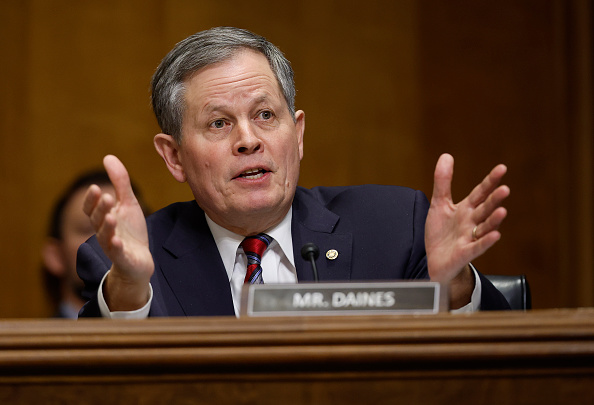
NAM: Sen. Daines, H.R. 1 permanently extended the Section 199A pass-through deduction, preventing the substantial tax increase that would have hit small manufacturers at the start of 2026. You have been among the Senate’s most persistent champions of pass-through businesses since the Tax Cuts and Jobs Act was enacted. What does achieving permanency mean for small manufacturers in Montana and across the country?
Sen. Daines: Our small businesses and manufacturers are the backbone of our country’s economy, driving growth and investment across states like Montana. Since I entered Congress, I prioritized the need to protect this industry and warned of what a less competitive America looks like.
I championed the small business deduction in 2017, and last year, I led the charge on making sure this and other pro-growth provisions became permanent. Clarity and certainty are two of the most important things these job creators need to be as successful as possible, and making 199A permanent delivered both.
NAM: You introduced the Main Street Tax Certainty Act specifically to make the 199A deduction permanent. H.R. 1 accomplished that goal. How did your legislation and sustained advocacy help build the political and policy case for permanency in the reconciliation package, and were there particular provisions in the final bill—beyond the basic permanency—that reflect your priorities for pass-through manufacturers?
Sen. Daines: As important as it was to make sure this provision was included in 2017, it was imperative we avoided the steep tax increase small businesses and manufacturers faced if we let this expire. Since the day the TCJA was signed into law, we pushed to make this provision permanent. Businesses from every state came in and helped us tell the story of what this means for them. When the time came to draft the Working Families Tax Cuts, the Main Street Tax Certainty Act was one of the most co-sponsored bills in the Senate. We had nearly all Republican senators on that bill advocating for its inclusion in final passage, and we achieved exactly that.
NAM: The Senate Finance Committee conducted detailed working group discussions ahead of H.R. 1. What arguments proved most decisive in the Senate debate over 199A permanency, and are there remaining gaps or unresolved issues in the tax treatment of pass-through manufacturers that you believe should be addressed in future legislation?
Sen. Daines: Good policies are easy to defend, and the economic data behind 199A spoke for itself. Pass-through businesses employ more than half of private–sector workers, [and] more than 96% of businesses in our country are organized as pass-throughs. The deduction itself is directly responsible for 2.6 million jobs and $325 billion of the United States’ GDP. Many of these businesses are manufacturers who are the backbone of our competitiveness. A successful manufacturing industry supports the American economy and helps protect us against foreign adversaries.
NAM: Manufacturers appreciate your passion and persistence in securing the 199A deduction for the long term. What can our members do to help ensure the benefits of this provision reach every small manufacturer across the country?
Sen. Daines: We can see economic data and how policies will broadly operate, but hearing firsthand from businesses [that] have utilized those policies to reinvest and grow makes all the difference. We wouldn’t have been able to get nearly our entire conference onto the Main Street Tax Certainty Act if we didn’t have stories from each state to point to.
Manufacturers: USMCA Supports Millions of American Jobs
Manufacturers’ Stories Highlight Advantages of Landmark Trade Agreement, Illustrate the Need for Improvements Ahead of North American Manufacturing Conference
Washington, D.C. – As manufacturers, policymakers, congressional leaders and business leaders across North America convene in Washington, D.C., for the North American Manufacturing Conference today, a new report released by the National Association of Manufacturers underscores the United States–Mexico–Canada Agreement as a foundation for manufacturing dominance in the U.S.—the most pro-U.S. manufacturing trade agreement in history, with exports to Mexico and Canada already supporting 2 million American jobs. With targeted improvements to this agreement, the USMCA can deliver even more jobs, growth and innovation across the sector.
The report, “Built to Spec: USMCA Supports Millions of American Jobs and Drives U.S. Manufacturing Dominance,” illustrates manufacturers’ stories on how much the USMCA has benefited manufacturing in the U.S. The report combines these stories with data on the depth of North American manufacturing integration. The U.S., Mexico and Canada account for 30% of global GDP.
Since the USMCA was ratified, 15 out of 18 manufacturing sectors have increased exports to Canada and Mexico. Companies across the manufacturing sector have boosted investment and expanded hiring. Rheem Manufacturing said capital investments nearly quadrupled to $100 million following negotiation of the agreement, while Thermo Fisher Scientific recently announced a $2 billion U.S. investment that includes $1.5 billion to expand U.S. manufacturing operations. Manufacturers are also creating jobs and growing their workforce, with Amphenol Corporation noting it has “more jobs across our factories in the U.S. today than we had five years ago,” and Humtown adding “machines and personnel” to support increased exports to Canada and Mexico.
The landmark agreement also strengthened customs procedures, harmonized regulations, increased protections for intellectual property rights and delivered other pro-manufacturing improvements—making North America the most attractive region to manufacture and driving real gains for America’s manufacturers.
“The USMCA is a proven engine for America’s manufacturing strength, ensuring that more products bear the imprint ‘Made in America,’” said NAM President and CEO Jay Timmons. “Under President Trump’s signature trade agreement, manufacturers have moved production and investments away from Asia to the United States and the rest of the North American market. This report shows that the USMCA has been an anchor for manufacturing investment and expansion in the U.S.—supporting job creation and export growth to the region.
“In his first term, President Trump asked manufacturers to support the USMCA, and we have been proud to do so every step of the way. We partnered with the president and Congress to drive the USMCA into law and supported the negotiations to deliver a winning deal for the American people. We kept our promises to use the USMCA’s provisions to fortify the American supply chain, power more American jobs and drive more American growth. Now is our chance to double down on behalf of the American people. Let’s preserve the USMCA, strengthen it and lead with it—creating more jobs and expanding production for the United States.”
The report features testimonials from manufacturing companies across different manufacturing sectors, including CNH, Unicorr, Advanced Superabrasives Inc., Brunswick Corporation, Dragonfly Energy, American Textile Company, Amphenol Corporation, Hydro, Thermo Fisher Scientific, Dauch Corporation and more. Regardless of type or size, these companies cited clear examples of the USMCA’s advantages to manufacturers:
- Flexibility and speed through proximity
- Access to critical manufacturing inputs
- A unique co-production model that leverages regional assets
- Access to greater sales across North America and the world
- A larger talent pool to address workforce shortfalls in the U.S.
- Resiliency against global tensions
“The results are clear: the USMCA strengthens U.S. manufacturing in the face of threats from fierce global competitors. We can maximize these advantages—putting America’s manufacturers first—by preserving the USMCA while implementing impactful reforms. Because a stronger USMCA means a stronger America.”
Read the full report here.
Read the one-pager here.
-NAM-
The National Association of Manufacturers is the largest manufacturing association in the United States, representing small and large manufacturers in every industrial sector and in all 50 states. Manufacturing employs nearly 13 million men and women, contributes $2.96 trillion to the U.S. economy annually and accounts for nearly 52% of private-sector research and development. The NAM is the powerful voice of the manufacturing community and the leading advocate for a policy agenda that helps manufacturers compete in the global economy and create jobs across the United States. For more information about the NAM or to follow us on Twitter and Facebook, please visit www.nam.org.
733 10th St. NW, Suite 700 • Washington, DC 20001 • (202) 637-3000
Q&A with Rep. Carol Miller on Tax Certainty

NAM: Rep. Miller, H.R. 1 has been signed into law, preserving the 21% corporate tax rate established by the 2017 Tax Cuts and Jobs Act. As the leader of the House Ways and Means Supply Chain Tax Team leading up to the bill’s passage, what does preserving this rate on a permanent basis mean for manufacturers’ ability to invest in American supply chains and compete globally?
Rep. Miller: Tax certainty is essential to maintaining the United States’ position as a global leader in manufacturing. The Working Families Tax Cuts will deliver meaningful relief to American manufacturers, driving the development of new facilities, the creation of jobs and increased investment across the country. The Ways and Means Supply Chain Tax Team focused on advancing pro-growth policies to fuel long-term economic prosperity. Key provisions in the legislation—including permanent research and development expensing, full immediate expensing, a strengthened interest deduction and a 100% factory construction deduction—provide businesses with the certainty and incentives needed to plan, invest and compete globally.
NAM: With the 21% corporate rate now secured through H.R. 1, U.S. manufacturers have a more competitive tax foundation than they did even a year ago. But the global tax landscape continues to shift, with major trading partners and competitors making their own adjustments to attract investment and manufacturing activity. From your vantage point leading the Supply Chain Tax Team, how has that preservation of the 21% corporate rate bolstered the United States’ position in promoting and attracting investment?
Rep. Miller: The preservation of the 21% corporate rate is critical in promoting American manufacturing because companies can invest in expanding infrastructure, purchase new equipment and increase workforce without tax liability uncertainty. The Working Families Tax Cuts compounded with bonus depreciation and immediate research expensing have proved to be effective for the industry, and we will continue to advocate for pro-growth policy, which leads to new markets and more opportunities.
NAM: Your Supply Chain Tax Team has traveled the country meeting with manufacturers since the TCJA was enacted. Now that H.R. 1 is law, what are businesses in your district or on your tax team’s radar telling you about specific investments or hiring decisions they are making or accelerating because the 21% corporate rate is no longer at risk?
Rep. Miller: The real-world impact of the Working Families Tax Cuts has been clear and meaningful, reinforcing the need for stable, pro-growth tax policy to help American manufacturers succeed. In my home district, we’ve seen these policies translate into new factories, new jobs and expanded opportunities. Companies like Conn-Weld Industries and Ferroglobe have used this tax relief to invest in their operations, grow their businesses and strengthen the local economy.
NAM: Thank you for your leadership in protecting manufacturers through H.R. 1. What should NAM members be doing now to help communicate the benefits of the 21% corporate rate and to support continued pro-manufacturing tax policy?
Rep. Miller: NAM members should share their stories and voice their support for the Working Families Tax Cuts and communicate the real-world impact this legislation has on the country, their business and the employees and their families who benefit. Manufacturers are at the core of our economy and need a predictable and pro-growth tax code.
Q&A with Sen. Young on R&D Expensing

NAM: Sen. Young, H.R. 1 restored immediate domestic R&D expensing, ending the amortization requirement that had been in effect since 2022. You have been one of the Senate’s most dedicated champions of R&D competitiveness through the American Innovation and Jobs Act. How did your years of sustained advocacy help deliver this outcome in the final reconciliation package?
Sen. Young: The American Innovation and Jobs Act laid the foundation for a multiyear, bipartisan effort to restore full and immediate expensing. From the outset, our goal was to make clear that strong R&D incentives are essential to maintaining America’s competitive edge. With the support of my Senate Finance Committee colleagues and active industry partners like the NAM, we built a broad coalition that understood the real-world consequences of the amortization treatment. This sustained advocacy was critical to ensuring this policy was included in the final version of the One Big Beautiful Bill Act.
NAM: The amortization requirement that was in effect from 2022 to 2024 was particularly damaging for manufacturers, who conduct 52% of private-sector research. Now that immediate expensing is restored and prior-year costs can be accelerated, what are Indiana manufacturers or other stakeholders telling you about how this relief changes their investment and hiring plans?
Sen. Young: During the three-year span when businesses had to amortize, I heard from countless Hoosier employers, including many in the manufacturing and life sciences industries, about how the R&D tax treatment was forcing incredibly difficult decisions. These included delaying R&D projects, scaling back hiring for key personnel like engineers and scientists and, in some cases, even considering shifting research activity overseas. That kind of uncertainty is especially challenging for industries that rely on long-term investment cycles.
Now that immediate expensing has been restored, and restored on a permanent basis, there is a renewed sense of confidence. Businesses back home have shared with me that they are moving forward with previously delayed investments, expanding their research operations and accelerating plans to grow their workforce. Those are the types of business decisions we should be encouraging in our tax code.
NAM: Restoring R&D expensing is a major step, but the United States still trails competitors like China in the overall generosity of R&D incentives. What is your honest assessment of where America now stands in the global innovation competition, and what further actions—whether through additional tax policy, increased federal R&D investment or streamlined regulatory pathways—should Congress prioritize to ensure the U.S. remains the world’s leading destination for manufacturing innovation?
Sen. Young: As our global competitors, like China, are expanding their R&D incentives, we simply cannot allow our nation and our economy to fall behind. To remain the world’s leading destination for innovation and advanced manufacturing, we need a more comprehensive approach. That includes increasing federal investment in critical research areas, ensuring our regulatory environment supports the commercialization of new technologies and strengthening workforce development and apprenticeship streams so that we can better connect students and workers to high-demand careers in manufacturing and innovation.
My focus going forward is on advancing policies that not only restore our competitiveness but position the United States to lead in rapidly growing industries like advanced manufacturing, artificial intelligence, quantum and biotechnology.
NAM: Thank you, Sen. Young. What can NAM members do to help manufacturers take advantage of the restored R&D deduction and to support continued investment in American manufacturing innovation?
Sen. Young: I would encourage NAM members to continue engaging with policymakers and sharing examples of how R&D incentives are driving investment, hiring and innovation in their communities. Those real-world stories about the advancements companies are making are incredibly important as we consider future policy decisions.
I’d also urge manufacturers to fully utilize the restored deduction and continue investing in their workforce and research capabilities. By doing so, and by staying engaged in the policymaking process, you can help ensure we build on this progress and continue strengthening America’s leadership in manufacturing.
Sen. Young on Championing Immediate R&D Expensing Provision for Manufacturers

Marking the approach of H.R. 1’s first anniversary this July, the NAM is highlighting the law’s pro-manufacturing tax wins. This week, we spoke to Sen. Todd Young (R-IN), a leading proponent of immediate R&D expensing, which the law successfully restored.
How they did it: When asked about his efforts to get this key provision reinstated, Sen. Young said, “From the outset, our goal was to make clear that strong R&D incentives are essential to maintaining America’s competitive edge.”
- “With the support of my Senate Finance Committee colleagues and active industry partners like the NAM, we built a broad coalition that understood the real-world consequences of the amortization treatment.”
Making a difference: “During the three-year span when businesses had to amortize, I heard from countless Hoosier employers, including many in the manufacturing and life sciences industries, about how the R&D tax treatment was forcing incredibly difficult decisions,” said Sen. Young. “These included delaying R&D projects, scaling back hiring for key personnel like engineers and scientists and, in some cases, even considering shifting research activity overseas.”
- “Now that immediate expensing has been restored, and restored on a permanent basis, there is a renewed sense of confidence,” he continued. “Businesses back home have shared with me that they are moving forward with previously delayed investments, expanding their research operations and accelerating plans to grow their workforce.”
Why it matters: “As our global competitors, like China, are expanding their R&D incentives, we simply cannot allow our nation and our economy to fall behind,” said Sen. Young.
- “My focus going forward is on advancing policies that not only restore our competitiveness but position the United States to lead in rapidly growing industries like advanced manufacturing, artificial intelligence, quantum and biotechnology.”
Advice for manufacturers: When asked what manufacturers should do now that immediate R&D expensing has been made permanent, Sen. Young said, “I would encourage NAM members to continue engaging with policymakers and sharing examples of how R&D incentives are driving investment, hiring and innovation in their communities. Those real-world stories about the advancements companies are making are incredibly important as we consider future policy decisions.”
- “I’d also urge manufacturers to fully utilize the restored deduction and continue investing in their workforce and research capabilities. By doing so, and by staying engaged in the policymaking process, you can help ensure we build on this progress and continue strengthening America’s leadership in manufacturing.”
Read the whole thing: You can read the whole Q&A here.
Manufacturers Back Long-Awaited Federal Action on Data Privacy
House Energy and Commerce Bill Would Protect Consumers and Clarify Rules so Manufacturers Can Continue to Innovate, Compete
Washington, D.C. – Manufacturers today welcomed the introduction of the SECURE Data Act by House Energy and Commerce Committee Chairman Brett Guthrie (R-KY) and Vice Chair John Joyce (R-PA).
National Association of Manufacturers Executive Vice President Erin Streeter issued the following statement endorsing the SECURE Data Act:
“Processing personal data has become integral to modern manufacturing operations and modern manufactured products. Manufacturers are encouraged that this first-of-its-kind federal law would establish a uniform national framework that is both forward-looking and adaptable to new technology, while avoiding the regulatory morass of a 50-state patchwork. Manufacturers believe granting consumers much-needed privacy protections and creating clear guidelines will keep the industry innovating and competing in the age of AI. We thank Chairman Guthrie and Vice Chair Joyce for championing this legislation.”
-NAM-
The National Association of Manufacturers is the largest manufacturing association in the United States, representing small and large manufacturers in every industrial sector and in all 50 states. Manufacturing employs nearly 13 million men and women, contributes $2.95 trillion to the U.S. economy annually and accounts for nearly 52% of private-sector research and development. The NAM is the powerful voice of the manufacturing community and the leading advocate for a policy agenda that helps manufacturers compete in the global economy and create jobs across the United States. For more information about the NAM or to follow us on Twitter and Facebook, please visit www.nam.org.
733 10th St. NW, Suite 700 • Washington, DC 20001 • (202) 637-3000
Q&A with Sen. Lankford on Tax Policy
NAM: Sen. Lankford, H.R. 1 permanently restored 100% bonus depreciation for qualifying property acquired after Jan. 19, 2025, reversing a phasedown that had reduced the deduction to 40% in 2025 and would have eliminated it by 2027. As a member of the Senate Finance Committee, what does permanent full expensing mean for manufacturers making long-lived capital investment decisions, and how does permanency change their planning horizon relative to a temporary extension?
Sen. Lankford: Permanency is the difference between short-term tax relief and long-term economic certainty. Manufacturers are not making one-year decisions. They are making 10-, 20-, even 30-year capital allocation decisions on facilities, heavy equipment and production lines. When full expensing is temporary or phasing down, it distorts those decisions and often forces companies to either accelerate investments inefficiently or delay them altogether.
By making 100% expensing permanent, we are giving manufacturers confidence that the tax treatment will be consistent across the full lifecycle of an investment. That stability lowers the cost of capital, improves after-tax returns and allows companies to plan rationally instead of reacting to arbitrary deadlines.
That is why I have pushed for permanency through efforts like the ALIGN Act, which was included in the Working Families Tax Cuts Act, because pro-growth policy only works if businesses can rely on it over the long term.
NAM: During the phasedown years, when bonus depreciation fell from 100% to 80% to 60% to 40%, manufacturers reported delaying or canceling major capital purchases because the economics no longer worked as favorably. Now that 100% expensing is restored permanently, what evidence are you seeing—in Oklahoma or nationally—that manufacturers are moving forward on investments that were on hold?
Sen. Lankford: What we are hearing, both in Oklahoma and across the country, is that the return to full expensing is beginning to unlock projects that were sitting on the sidelines. During the phasedown, when expensing dropped from 100% to 40%, many of those investments simply didn’t pencil out.
That lines up with what we know about Oklahoma’s economy. The state is heavily concentrated in capital-intensive sectors like oil and gas, manufacturing and aerospace. Oil and gas alone accounts for a significant share of state GDP, and when you include the broader supply chain, it touches more than a quarter of the economy. These are exactly the types of industries where cost recovery drives investment decisions.
In practical terms, that showed up in delayed energy projects, deferred equipment purchases and slower expansion of processing and manufacturing facilities. In manufacturing and aerospace, companies stretched the life of existing equipment and postponed automation upgrades.
Now, with full expensing permanently restored, those same businesses are revisiting projects. That includes moving forward on pipeline investments, placing new equipment orders and advancing plant and infrastructure upgrades. The key shift is that companies are no longer trying to time the tax code. They are making decisions based on operational need and long-term growth.
NAM: H.R. 1 also raised the Section 179 expensing cap from $1 million to $2.5 million, providing a complementary benefit particularly for smaller manufacturers. The legislation also expanded bonus depreciation to manufacturing facilities. How do bonus depreciation, the enhanced Section 179 and the new deduction for factories work together to drive capital investment across manufacturers of all sizes, and what are you hearing from businesses about how these provisions are impacting them?
Sen. Lankford: For smaller and mid-sized manufacturers, Section 179 is often the tool they use the most. These are businesses that are upgrading equipment, adding a new machine or expanding part of their shop floor. They are not doing massive projects all at once. They need something simple, predictable and easy to use. Increasing the cap means more of those everyday investments can be written off immediately, which helps with cash flow and makes it easier to keep reinvesting.
For larger manufacturers, the scale is different. They are looking at bigger equipment purchases, full production lines and major upgrades across facilities. Bonus depreciation matters here because it allows them to expense those larger investments upfront. When you are talking about large equipment investments, that timing difference can influence whether a project moves forward now or gets pushed out.
The addition of expensing for manufacturing facilities is a big step forward. For a lot of companies, the building is one of the most expensive parts of the project, not just the equipment inside it. Whether it is a new plant or expanding an existing one, being able to expense both the facility and the equipment reflects the full cost of what it takes to grow.
When you put all of that together, it creates a system that works for manufacturers at different sizes and at different stages. It supports the smaller, steady investments and the larger, long-term projects. It does not solve every challenge, but it removes a major barrier and lets companies make decisions based on what they actually need to grow.
NAM: Thank you, senator. What can NAM members do to help manufacturers understand and act on the restored bonus depreciation and enhanced Section 179 provisions?
Sen. Lankford: The most important thing NAM members can do is make sure permanent expensing actually reaches the shop floor. A lot of small manufacturers may not have heard about what changed, and even if they have, they may not immediately connect a tax provision to a real equipment decision. It’s a simple but important message: if you’ve been holding off on a new piece of equipment, talk to your accountant now, because you may be able to write off the full cost this year. Pro-growth policy only delivers if manufacturers know about it and use it, and that’s where NAM can make a real difference. That’s what will drive long-term investment, create jobs and grow local economies.
On Tax Day, the Receipts Are Filled with Manufacturing Wins
Washington, D.C. – On the first Tax Day since passage of H.R. 1, National Association of Manufacturers President and CEO Jay Timmons released the following statement:
“This Tax Day, manufacturers now have a permanent, pro-growth tax code that allows our industry to compete and win. Thanks to President Trump, leaders in his Cabinet and in Congress, the 2017 provisions of the Tax Cuts and Jobs Act were not just made permanent—they were made even stronger, which saved 6 million jobs. The tax and investment incentives in H.R. 1 amount to the most significant economic transformation in the history of our industry, serving as rocket fuel for manufacturers.
“Manufacturers’ optimism is on the rise, and they are ready to keep building, investing and leading—but that requires certainty across the board to take full advantage of H.R. 1’s transformative provisions. President Trump and Congress went above and beyond to deliver tax certainty for manufacturers, and we look forward to continuing to work with them to build on this progress—ensuring certainty and lowering the cost of doing business—so that manufacturers can deliver the greatest manufacturing era in American history.
“This Tax Day, the message is clear: when Washington gets the tax code right, manufacturers deliver.”
This week, Timmons published a joint op-ed in the Washington Examiner with House Majority Whip Tom Emmer (R-MN) on the pro-growth tax reforms of H.R. 1. Read it here.
Manufacturing Wins
Learn more about how tax reform is bolstering manufacturing in America:
- Ketchie CEO Credits Trump’s “Beautiful Bill” with Helping Her Machine Shop Prosper
- Brunswick Revs the Engine on Innovation and U.S. Investment
- Tax Reform Delivers “Biggest Investment in Company History” for Marlin Steel
- J&J Makes Major Investment in North Carolina Thanks to Tax Reform
- Sylvamo to Congress: Tax Reform Made Manufacturing Success Possible
Background
Prior to final passage of H.R. 1 in 2025, the NAM activated manufacturers in America—engaging shop floor workers, plant managers, executives and state and local partners nationwide—as part of the “Manufacturing Wins” campaign. With a coordinated public advocacy campaign, which included outreach to congressional offices both in district and in Washington, targeted social media drives, video testimonials and local media op-eds, the NAM made the case for this bill directly to members of Congress and the American people. These collective voices underscored how preserving and expanding key tax provisions translates into growing businesses, creating jobs and powering stronger communities.
In January 2025, the NAM released a landmark EY study on the economic consequences of failing to renew the pro-manufacturing provisions of the Tax Cuts and Jobs Act. The NAM was joined by Senate Finance Committee Chairman Mike Crapo (R-ID), House Ways and Means Committee Chairman Jason Smith (R-MO) and House Majority Leader Steve Scalise (R-LA) for a Capitol Hill press conference highlighting the study.
KEY FACTS: If Congress had failed to preserve tax reform in 2025, the U.S. would have risked:
- 5.9 million lost jobs;
- A $540 billion reduction in employee compensation; and
- A $1.1 trillion shortfall in U.S. GDP.
-NAM-
The National Association of Manufacturers is the largest manufacturing association in the United States, representing small and large manufacturers in every industrial sector and in all 50 states. Manufacturing employs nearly 13 million men and women, contributes $2.95 trillion to the U.S. economy annually and accounts for 53% of private-sector research and development. The NAM is the powerful voice of the manufacturing community and the leading advocate for a policy agenda that helps manufacturers compete in the global economy and create jobs across the United States. For more information about the NAM or to follow us on Twitter and Facebook, please visit www.nam.org.