Policy and Legal

Press Releases

Manufacturers: White House Framework Sets Trajectory for American AI Dominance

Washington, D.C. – Manufacturers today welcomed President Trump’s national AI legislative framework for its practical, pro-growth policy recommendations to advance U.S. leadership in artificial intelligence.

National Association of Manufacturers Executive Vice President Erin Streeter issued the following statement urging Congress to take up policies to advance AI innovation:

“Manufacturers support a consistent federal framework that emphasizes innovation and avoids a cumbersome 50-state patchwork, and President Trump’s announcement today reflects this approach. The president’s commonsense AI framework will remove barriers to innovation and growth, which is critical for success. But we also need comprehensive permitting reform to go hand in hand to achieve the energy dominance needed to set manufacturers on a trajectory to win the global race for AI.

“We look forward to working with Congress to get this done.”

Background

Manufacturers have been at the forefront of developing and implementing cutting-edge AI systems that are transforming shop floors and revolutionizing operations.

Last December, the NAM supported President Trump’s AI Executive Order on state AI regulations and endorsed several bills to streamline permitting.

In July 2025, the Manufacturing Institute, the nonprofit workforce development and education affiliate of the NAM, unveiled a set of policy priorities responding to a White House Executive Order on workforce modernization.

In May 2025, the Manufacturing Leadership Council, the digital transformation division of the NAM, released a groundbreaking report, “Shaping the AI-Powered Factory of the Future,” revealing that 51% of manufacturers already deploy AI in their operations, and 80% say AI will be essential to growing or maintaining their business by 2030. This is not just about efficiency—it’s about competitiveness, innovation and the future of American industry.

In May 2024, the NAM published “Working Smarter: How Manufacturers Are Using Artificial Intelligence”—a report that explains the ways in which manufacturers are using AI already, making the technology integral to modern manufacturing with manufacturers at the forefront of developing and implementing AI systems.

-NAM-

The National Association of Manufacturers is the largest manufacturing association in the United States, representing small and large manufacturers in every industrial sector and in all 50 states. Manufacturing employs nearly 13 million men and women, contributes $2.95 trillion to the U.S. economy annually and accounts for 53% of private-sector research and development. The NAM is the powerful voice of the manufacturing community and the leading advocate for a policy agenda that helps manufacturers compete in the global economy and create jobs across the United States. For more information about the NAM or to follow us on Twitter and Facebook, please visit www.nam.org. 

733 10th St. NW, Suite 700 • Washington, DC 20001 • (202) 637-3000

Press Releases

Breakthrough on Resolution Copper: Court Clears the Path for Historic Land Exchange

Washington, D.C. – National Association of Manufacturers President and CEO Jay Timmons issued the following statement in response to the U.S. Court of Appeals for the Ninth District decision enabling Resolution Copper’s congressionally mandated land exchange to move forward—an outcome the NAM helped drive through years of sustained advocacy and strategic legal action, including an amicus brief filed with the court.

“The completion of Resolution Copper’s land exchange is a monumental milestone for our nation and the manufacturing industry’s efforts to ensure U.S. supply chains have reliable access to the raw materials that power our economy. We appreciate the leadership of the Trump administration, the Department of the Interior, the Department of Agriculture, the Bureau of Land Management and Congress for getting this extremely important land exchange across the finish line.

“The significance of this moment cannot be overstated. The U.S. imports about 35% of its copper. At full capacity, Resolution Copper—the third-largest known copper deposit in the world—could supply a quarter of all U.S. copper demand and as much as 40 billion pounds of copper over 40 years, securing access to critical minerals that are essential to our nation’s economic strength and national security. This would also reduce our reliance on adversarial nations for minerals and boost energy and critical national defense systems. The land exchange proves what is possible when policy, process and partnership align. It’s the kind of outcome manufacturers need to see more often: one that protects key landscapes, unlocks critical resources and advances America’s economic and national security.”

Background:

Copper is a critical material for manufacturing—serving as a core input in industrial production and machinery, as well as energy infrastructure that powers factories, data centers and advanced technologies. As manufacturers work to outcompete China and achieve American energy dominance, securing reliable, domestic sources of critical minerals like copper has become increasingly urgent. The NAM’s recent policy framework underscores this need, calling for a comprehensive critical minerals strategy.

At the same time, projects like Resolution Copper illustrate the challenges posed by the current permitting landscape. For more than a decade, the project has faced complex and uncertain federal review processes—reflecting broader systemic issues. According to recent NAM analysis, America’s broken permitting system costs manufacturers at least $7.9 billion each year, highlighting the need for bipartisan, comprehensive permitting reform to strengthen America’s economic and national security.

-NAM- 

The National Association of Manufacturers is the largest manufacturing association in the United States, representing small and large manufacturers in every industrial sector and in all 50 states. Manufacturing employs nearly 13 million men and women, contributes $2.90 trillion to the U.S. economy annually and accounts for 53% of private-sector research and development. The NAM is the powerful voice of the manufacturing community and the leading advocate for a policy agenda that helps manufacturers compete in the global economy and create jobs across the United States. For more information about the NAM or to follow us on Twitter and Facebook, please visit www.nam.org. 

733 10th St. NW, Suite 700 • Washington, DC 20001 • (202) 637-3000 

Press Releases

Manufacturers Chart the Path for a Comprehensive Critical Minerals Strategy

Washington, D.C. – Manufacturers today are urging policymakers to enact a modern, comprehensive policy agenda to secure access to critical minerals for both the industry and the nation—one that generates new pipelines for critical mineral projects at home while securing diversified access to vital manufacturing inputs sourced globally. To advance this agenda, the National Association of Manufacturers shared with the United States Trade Representative a framework to rebalance global supply chains with plurilateral partners.  

“The stakes are clear: manufacturers depend on secure, reliable and sustainable supply chains to make things in America,” said NAM President and CEO Jay Timmons. “Critical minerals and rare earth elements are essential for automotive parts and vehicles, electrical grid components, robotics and industrial automation, defense technology, electronics and more. With China dominating global supply chains, manufacturers can no longer risk these vulnerabilities.  

“Manufacturers support the administration and Congress’ efforts to rebalance global supply chains through comprehensive actions domestically and with international partners. The comprehensive approach the NAM is releasing today will enhance critical minerals capacity at home, leverage resources abroad and safeguard access to a diverse range of critical minerals necessary for U.S. economic strength and national security.”  

The NAM’s two-pronged policy framework offers specific, complementary domestic and international policy recommendations to the Trump Administration and Congress. On the domestic front, it calls for enacting comprehensive permitting reform and making strategic energy incentives permanent. Internationally, the NAM urges the administration to negotiate a plurilateral agreement that positions U.S. investors for success and leverages the collective advantages of international partners and allies across every stage of the critical minerals life cycle—effectively rebalancing the global market for critical minerals.  

Read the NAM’s full policy agenda here. 

-NAM- 

 The National Association of Manufacturers is the largest manufacturing association in the United States, representing small and large manufacturers in every industrial sector and in all 50 states. Manufacturing employs nearly 13 million men and women, contributes $2.95 trillion to the U.S. economy annually and accounts for 53% of private-sector research and development. The NAM is the powerful voice of the manufacturing community and the leading advocate for a policy agenda that helps manufacturers compete in the global economy and create jobs across the United States. For more information about the NAM or to follow us on Twitter and Facebook, please visit www.nam.org.  

733 10th St. NW, Suite 700 • Washington, DC 20001 • (202) 637-3000 

Press Releases

$8 Billion a Year: The Cost of America’s Broken Permitting System to Manufacturers

Analysis by the NAM and Foundation for American Innovation Documents the Real Economic Costs of Permitting Burdens on Manufacturers in America

Washington, D.C. – America’s broken permitting system is costing manufacturers in America $7.9 billion each year, according to a new report released today by the National Association of Manufacturers and the Foundation for American Innovation—underscoring the urgent need for bipartisan, comprehensive permitting reform to strengthen America’s economic and national security. The findings highlight how widespread and complex federal permitting requirements have become, with manufacturers most commonly citing Clean Water Act permits (required for 82.1% of projects) and Clean Air Act permits (required for 72.6% of projects)—the latter noted as the most burdensome approval process.

The new report, “America on Hold: How Permitting Delays Stall Manufacturing Progress,” draws from a recent joint survey of manufacturers conducted between Dec. 9, 2025, and Jan. 15, 2026, examining the types of projects companies are pursuing, the permits they most frequently require, where uncertainty and regulatory complexity create challenges and which reforms would have the greatest impact. The findings reveal a permitting system that hits manufacturers hardest where they operate most often: routine upgrades, expansions and ongoing operations.

“Manufacturers are investing across America, but permitting roadblocks are holding projects back,” said NAM President and CEO Jay Timmons. “It takes the U.S. up to 80% longer than our peer nations to move projects forward. Manufacturers want ribbon cuttings, not red tape—that means modernizing our laws to streamline regulations and eliminate duplicative reviews and a regulatory regime to support timely permitting and give manufacturers the certainty to invest, build and create jobs.”

From the NAM’s survey to manufacturers:

  • 50.8% say permitting concerns discourage investment in new or expanded capacity.
  • 65.6% would increase U.S. investment if permitting timelines were shorter and more predictable.
  • The most common permitted activities are facility expansions and equipment upgrades, not megaprojects.

Until now, consolidated research demonstrating the full economic impact of the federal permitting system on manufacturing investment has been limited—largely due to the sheer number of laws and regulations governing permits, as well as the absence of a centralized federal repository of permitting data. The NAM–FAI report addresses that gap by combining publicly available permitting data with original industry survey results to provide one of the most comprehensive views to date on the cost of permitting for manufacturers.

The full report can be read here.

Methodology:

Using external and survey data, the NAM–FAI findings estimate that over the past 10 years, the U.S. manufacturing sector has incurred an average annual permitting burden of $7.9 billion+. To calculate, unit costs are derived by multiplying the 10-year federal permit counts with the total out-of-pocket and indirect costs of the permitting process, as detailed in the bullets below.

  • The federal count of applications and final permits obtained by manufacturers over the past 10 years, categorized by permit type (i.e., NEPA, Clean Water Act, Clean Air Act, etc.)
  • Out-of-pocket costs that include application fees, consultants, legal expenses and more from project delays
  • Delays created by indirect costs, such as carrying costs, lost revenue from pushing back project initiation, inventory and contract impacts

-NAM- 

The National Association of Manufacturers is the largest manufacturing association in the United States, representing small and large manufacturers in every industrial sector and in all 50 states. Manufacturing employs nearly 13 million men and women, contributes $2.95 trillion to the U.S. economy annually and accounts for 53% of private-sector research and development. The NAM is the powerful voice of the manufacturing community and the leading advocate for a policy agenda that helps manufacturers compete in the global economy and create jobs across the United States. For more information about the NAM or to follow us on Twitter and Facebook, please visit www.nam.org.

Featured Quotes from Chairman Bruce Westerman and Manufacturing Leaders

“The federal permitting process is broken, and this report confirms what we already know: clarity and certainty must return to the process to jumpstart projects, end duplicative reviews, reform judicial review processes and boost project investments in the United States. My bipartisan SPEED Act will tackle these issues to let America build again, so we can remain a global leader across all industries, including manufacturing.” – House Committee on Natural Resources Chairman Bruce Westerman (R-Ark.)

“Regulatory uncertainty is one of the most significant hurdles our customers face as they consider placing new equipment orders with Husco. Permitting delays and denials can derail projects that enhance our economy and provide family-sustaining jobs for workers. A comprehensive effort to streamline the permitting process would represent a significant step forward. Common-sense reforms to the National Environmental Policy Act are just one example of many that would help expedite new investment. We fully support NAM’s ongoing and important efforts in this area.” – Austin Ramirez, President and CEO of Husco and NAM Small and Medium Manufacturers Group Vice Chair

“Projects that strengthen our energy system can face years of unnecessary delays under the current NEPA framework. Uncertain timelines, duplicative reviews, overly expansive analyses, and lengthy litigation can stall or even cancel critical infrastructure. Modernizing NEPA is a critical step toward providing greater certainty for developers and communities so we can deliver the energy needed to support American jobs, strengthen supply chains, and keep energy affordable for families and businesses.” – Toby Z Rice, President and CEO, EQT

“As the U.S. works to strengthen energy security and expand domestic manufacturing, the ability to build power generation, transmission and grid infrastructure on predictable timelines has become increasingly important. In our work across the energy sector, we see how lengthy and duplicative permitting processes can add years of uncertainty to projects needed to support reliability, electrification and new human critical infrastructure investments. Nearly as critical, it can also delay hiring and investment in the skilled workforce required to build and operate this critical infrastructure. While the National Environmental Policy Act plays an important role in protecting communities and the environment, modernizing permitting by improving coordination, setting clearer timelines and ensuring reviews are applied in an energy‑source‑neutral way would help advance critical infrastructure without lowering standards. Properly resourcing permitting agencies — and the judiciary to resolve challenges efficiently — would further improve predictability. A more efficient, transparent permitting framework is essential to delivering the power systems required to meet growing demand and keep U.S. industry competitive.” – Todd Edsall, President, Power Providers, Black & Veatch

We were the first mining project covered under the federal government’s FAST-41 permitting program in 2024. From start to finish the process will take just over two years. We have seen the benefits that streamlining and coordinating federal efforts under NEPA provides to projects like Hermosa. When there is a collective will to support a project needed for national security, the resources are put in place to ensure the defined timeline milestones are met with the same, if not more, amount of rigor and efficiency. By responsibly modernizing NEPA in a bipartisan manner, more critical projects can move forward to support communities, provide jobs, and deliver for America” – Pat Risner, President, Hermosa Project, South32

“The recent NEPA reforms are solid first step towards modernizing the permitting process. However, there is much more we can do to remove the bureaucracy that is not providing value. We don’t have time to waste if our energy infrastructure is going to keep pace with the AI boom. If we can create more predictability in permitting, the results will include more stability, greater speed, and lower costs.” – Ryan Lindsey, Executive Vice President of Government Relations, CRH Americas

“At Nucor, permitting delays are not abstract—they directly affect our ability to invest, build, and create good paying manufacturing jobs in America. We have experienced firsthand how reviews under NEPA and related permitting requirements can add months to project timelines and significantly increase costs, even for projects with strong environmental performance and local support. Modernizing NEPA to provide clearer timelines, better interagency coordination, and a more predictable review process, including a greater role for states with appropriate federal oversight, would strengthen American manufacturing while maintaining robust environmental protections.”  – Ben Pickett, Executive Vice President of Business Services, Nucor Corporation

“Rising energy demand in the U.S. from AI, manufacturing, and industrial operations is ushering in a full-scale expansion of our energy backbone. Given our role as an Energy Technology Partner to the U.S., Schneider Electric is uniquely positioned to help electrify, automate, and digitalize the infrastructure needed to meet the moment. By adopting favorable policies like permitting reform and advancing innovative energy tech, we can help usher in a new era of energy intelligence and accelerate our time to power.” — Jeannie Salo, Chief Public Policy Officer, North America, Schneider Electric


Press Releases

Manufacturers’ Q1 Survey: Trade Business Challenges Persist, but Optimism Up

Washington, D.C. As the review of the United States–Mexico–Canada Agreement gets underway, a majority of manufacturers report they utilize either Canada or Mexico for critical parts of their supply chains—at a time when trade uncertainty remains manufacturers’ top business concern, according to the National Association of Manufacturers Q1 2026 Manufacturers’ Outlook Survey. The survey also shows manufacturers’ optimism is rising, with 75.3% reporting a positive outlook for their company, up 5.4 percentage points from the previous quarter.

Among the manufacturers that utilize Canada or Mexico for critical parts of their supply chain, exactly half rely on both countries, according to the latest findings. The majority of U.S. imports from Mexico and Canada are industrial inputs such as machinery, equipment and raw materials while Canada and Mexico also purchase one-third of manufactured good exports—more than the next nine U.S. trading partners combined.

“Manufacturers are ready for liftoff, but the skies need to clear,” said NAM President and CEO Jay Timmons. “This quarter shows a mixed bag of results with real momentum from tax reform, regulatory rebalancing and energy policy. At the same time, the results underscore how essential durable supply chains are to manufacturing success—and how critical Canada and Mexico are to that system, which is why we need to preserve and strengthen the USMCA.”

“For the first time since 2023, manufacturers’ outlook topped the historical average of 74.3%, and manufacturers expect most indices to improve meaningfully over the next 12 months. Sales and production are projected to rise 3.8% and 3.5%, respectively, up from the previous quarter’s forecast of 2.8% and 2.4% growth,” said NAM Chief Economist Victoria Bloom. “However, challenges persist. For example, raw material and other input costs are not anticipated to slow, rising at the same pace as projected in Q4 (4.1%) and ranking as the third-highest business concern at 57.5%.”

Key findings:

  • 70.6% of manufacturers cited trade uncertainties as a top business challenge for the fifth consecutive quarter.
  • 54.6% secure critical inputs from either Canada or Mexico—82.2% of those manufacturers say they source raw materials or other inputs from either country.
  • Of those that utilize Canada or Mexico, 62.7% benefit from a strong customer base across the border.
  • For the second consecutive quarter, rising health care/insurance costs (69.8%) remained the second most-cited business challenge for manufacturers.

The NAM releases these results to the public each quarter. Further information on the survey is available here.

-NAM-

The National Association of Manufacturers is the largest manufacturing association in the United States, representing small and large manufacturers in every industrial sector and in all 50 states. Manufacturing employs nearly 13 million men and women, contributes $2.95 trillion to the U.S. economy annually and accounts for 53% of private-sector research and development. The NAM is the powerful voice of the manufacturing community and the leading advocate for a policy agenda that helps manufacturers compete in the global economy and create jobs across the United States. For more information about the NAM or to follow us on Twitter and Facebook, please visit www.nam.org.

Press Releases

ICYMI: Iowa Manufacturer Expands, Credits Pro-Growth Tax Law

Vermeer Corporation Announces Plan to Build New Facility, Create 300+ Jobs

Washington, D.C. – Vermeer Corporation, an industrial and agricultural equipment producer based in Pella, Iowa, is crediting the pro-growth tax provisions of H.R. 1 with supporting the company’s plan to build an all-new 300,000-square-foot facility in the Des Moines metro that will create more than 300 jobs.

Vermeer said in a company statement, “We’re grateful for the state of Iowa, the pro-business environment, the skilled workforce here and economic policies, like Working Families Tax Cuts, that have helped support Vermeer’s long-term growth.”

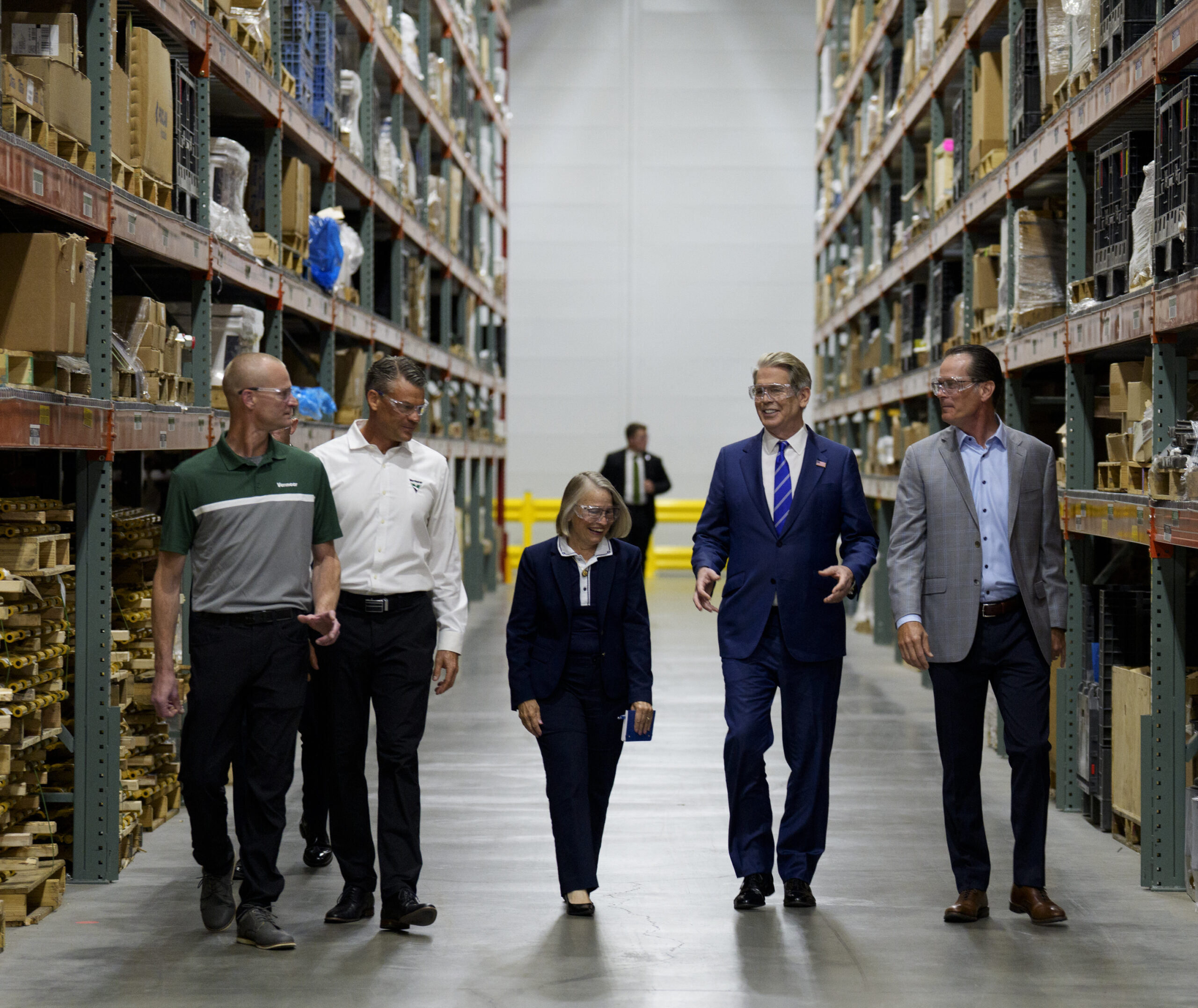
Last August, National Association of Manufacturers Executive Vice President Erin Streeter joined Rep. Mariannette Miller-Meeks (R-IA) for a Made in America Manufacturing Tour across Iowa’s 1st District, where they visited Vermeer’s facility in Pella. During the tour, Vermeer President and CEO and NAM Executive Committee member Jason Andringa said H.R. 1 “sets up manufacturers for a generation of continued growth and advancement.”

Streeter praised Rep. Miller-Meeks’ leadership during the tour.

“H.R.1 is a landmark win for manufacturing—delivering pro-growth policies that will strengthen our industry for years to come. Without bold leadership from lawmakers like Rep. Miller-Meeks, manufacturers could have been crippled by the largest tax hike in history—jeopardizing the progress we made after the 2017 Tax Cuts and Jobs Act. Iowa’s 1st Congressional District is the first in the state for manufacturing. We want to thank her for protecting 13,000 jobs and $1.2 billion in wages at more than 800 manufacturing companies in her district alone.”

Background

KEY FACTS: If Congress had failed to preserve tax reform in 2025, the U.S. would have risked:

  • 5.9 million lost jobs;
  • A $540 billion reduction in employee compensation; and
  • A $1.1 trillion shortfall in U.S. GDP.

-NAM-

The National Association of Manufacturers is the largest manufacturing association in the United States, representing small and large manufacturers in every industrial sector and in all 50 states. Manufacturing employs nearly 13 million men and women, contributes $2.95 trillion to the U.S. economy annually and accounts for 53% of private-sector research and development. The NAM is the powerful voice of the manufacturing community and the leading advocate for a policy agenda that helps manufacturers compete in the global economy and create jobs across the United States. For more information about the NAM or to follow us on Twitter and Facebook, please visit www.nam.org.

Policy and Legal

Q&A: Rep. Graves on Infrastructure and Transportation

The NAM recently interviewed Rep. Sam Graves (R-MO), chairman of the Transportation and Infrastructure Committee, about the surface transportation reauthorization bill and the importance of infrastructure to manufacturers nationwide. Here is the full text.

What are your priorities in the upcoming infrastructure bill to help drive manufacturing growth in the United States?

“Manufacturing, like every other aspect of our economy, depends on a strong transportation system and infrastructure. President Trump has prioritized bringing manufacturing back to the United States, and he’s already seen significant success. As chairman of the Transportation and Infrastructure Committee, I’m working to make sure we have an efficient, safe and reliable infrastructure that supports and facilitates the growth of manufacturing in the United States. The best way to do that is by passing a bill that focuses on building the infrastructure needed to move goods and people safely and efficiently. The next surface transportation reauthorization bill will focus on hard infrastructure, such as roads and bridges.

“Another main priority of mine is fixing the Highway Trust Fund, which serves as the main funding source at the federal level for road and bridge projects. We must address the solvency challenges facing the Highway Trust Fund and preserve our user-pays system. Right now, that system is broken, and it has been for some time. The best way to provide long-term certainty is to finally begin shoring up the Highway Trust Fund and ensuring that all users are paying into the system.

“Additionally, this bill is about looking forward and building an infrastructure for the future. Anticipating the transportation and infrastructure needs of the next 20 years is the best way to support economic growth and help our manufacturers as their industry continues to evolve.”

Why is it important that Congress pass a surface transportation reauthorization bill this year?

“The surface transportation reauthorization bill impacts all Americans—we all use or rely on roads, bridges and rails. Traditionally, this legislation provides tens of billions of dollars in annual funding to improve American highways, bridges, transit and other surface transportation infrastructure. It also provides funding for rail, trucking safety and other transportation programs.

“Surface transportation bills typically expire after five years. That multiyear time frame gives states the long-term funding certainty they need to plan and carry out many of their most critical projects. The current highway bill, which was part of the Infrastructure Investment and Jobs Act, expires on Sept. 30, 2026. Unless Congress acts before then, federal programs will be impacted, including that long-term certainty. This is unacceptable, and I’m committed to getting the next surface bill done on time and preventing potential project delays and uncertainty that can result from a lapse in long-term funding.”

How does investing in infrastructure benefit the people and manufacturers in your state/district?

“I represent all of North Missouri. Investing in our roads has never been more important for the future of our communities, large and small. For manufacturers to succeed, as well as to attract new companies, we’ve got to have good infrastructure. It’s critical for shipping Missouri-made products across the country, for receiving inputs and for farmers getting goods to market. As we work to bring manufacturing back to the United States, my district and many others see an opportunity to grow their local economy. To make that happen, we have to maintain and improve our infrastructure across the country.”

Why is the NAM’s leadership on this issue so critical to getting an infrastructure bill done this year?

“The NAM has over 14,000 members from every sector of manufacturing. The United States depends on a strong manufacturing industry, and the NAM provides a voice for our manufacturers, large and small. They are truly at the center of manufacturing in this country. So, when it comes to getting an infrastructure bill of this size done, we need to hear from all industries, especially our manufacturers. Whether it’s in the early stages of crafting the bill when we’re looking for feedback on existing policy and asking for priorities from the manufacturing industry—and we appreciate the NAM’s efforts in that process—or after the bill has been introduced and is working its way through the legislative process, organizations like the NAM have an important role in getting information out there about what the bill does and how it will benefit the country.”

Press Releases

ICYMI: “Ketchie CEO Credits Trump’s ‘Beautiful Bill’ with Helping Her Machine Shop Prosper”

Ketchie President and Owner Courtney Silver

Washington, D.C. – As part of the 2026 National Association of Manufacturers State of Manufacturing Tour, Ketchie President and Owner Courtney Silver hosted the NAM for a discussion on how tax certainty due to the NAM-backed H.R. 1 has empowered manufacturers like her to reinvest in their workforce and facilities.

The tour stop was covered by Business North Carolina. Excerpts of the report can be found below. Bolding has been added.

—-

Ketchie CEO credits Trump’s ‘beautiful bill’ with helping her machine shop prosper
Business North Carolina
Kevin Ellis
Feb. 23, 2026
https://businessnc.com/ketchie-ceo-credits-trumps-beautiful-bill-with-helping-her-machine-shop-prosper/

Miguel Carrillo describes himself as a “machine nerd,” and he had an engaged audience on Monday watching him operate a $700,000 device brought in last year to Concord-based Ketchie, the machine shop where he works.

Ketchie may only have 20 employees, but it was a stop on the State of Manufacturing Tour that National Association of Manufacturers President Jay Timmons began last week in Cleveland and will continue across the country after visiting three Charlotte-area sites on Monday. Tagging along with Timmons at Ketchie was Acting Deputy Secretary of the U.S. Treasury Derek Theurer, U.S. Rep. Tim Moore of Cleveland County and NC Chamber President Gary Salamido.

Ketchie CEO Courtney Silver was a supporter of the “One Big Beautiful Bill,” the legislation signed into law last year by President Donald Trump. She testified at congressional hearings before its passage about how it would help small businesses. Timmons said he had heard so much about Ketchie’s new machines, he wanted to see them in action.

The tax bill that eliminates income tax on overtime and tips for some workers also allows businesses to reduce their tax bills on investments immediately, rather than spreading the reduction out over several years, says Silver.

“When you can expense an investment in the year it was purchased, it provides cash flow to companies and continues to allow them to make new investments,” says Silver.

Ketchie purchased three machines last year that combined cost more than $1.1 million, plus made about $400,000 in other investments, including AI software that has cut some hour-long processes down to five minutes.

“I would have never made those investments without immediate expensing,” Silver says. She says she’s also looking to add five workers to her shop.

“This is a perfect example of what you can do to help build America and American manufacturing with the right policies in place,” says Timmons.

Theurer said it was nice to see advanced manufacturing take place in a North Carolina factory rather than spending his day on policy in the nation’s capital.

“This type of investment is what we intended to see when we made our big tax policy and worked for smarter regulation,” said Theurer.

Ketchie supplies metal parts to railroad, aerospace and heavy industry manufacturers, such as Charlotte steelmaker Nucor, Davidson-based HVAC company Trane and Norfolk Southern. The company was started in 1947 by Edgar Ketchie, the grandfather of Silver’s late husband.

On Monday, Carrillo was machining a steel part needed by an industrial recycling company. The Dual Spindle 5-Axis Machining Center that Ketchie bought last year doesn’t require Carrillo to reset the machine for the other side of the metal part, which is about half the size of a deck of cards, but grooved. It means quicker production and fewer human errors, he says.

“It allows me to step out and allows the machine to do the heavy lifting,” says Carillo. The advanced manufacturing aspect attracted the 2024 graduate of A.L. Brown High School to work at Ketchie after starting in a job shadowing program while a high school junior. “It’s nice when a machine can do one thing, but it’s really nice when a machine can do a lot of things.”

—-

Background

Learn more about Silver’s testimony before Congress in 2025 on the importance of preserving the pro-manufacturing policies of the Tax Cuts and Jobs Act here.

KEY FACTS: If Congress had failed to preserve tax reform in 2025, the U.S. would have risked:

  • 5.9 million lost jobs;
  • A $540 billion reduction in employee compensation; and
  • A $1.1 trillion shortfall in U.S. GDP.

-NAM-

The National Association of Manufacturers is the largest manufacturing association in the United States, representing small and large manufacturers in every industrial sector and in all 50 states. Manufacturing employs nearly 13 million men and women, contributes $2.95 trillion to the U.S. economy annually and accounts for 53% of private-sector research and development. The NAM is the powerful voice of the manufacturing community and the leading advocate for a policy agenda that helps manufacturers compete in the global economy and create jobs across the United States. For more information about the NAM or to follow us on Twitter and Facebook, please visit www.nam.org.

Press Releases

Manufacturers on U.S. Military Operations in Iran

PHOENIX – Following the announcement of the United States military operations in Iran, National Association of Manufacturers President and CEO Jay Timmons released the following statement:

“Manufacturers in the United States have always stood ready when our nation calls. From serving as the Arsenal of Democracy to equipping those who defend freedom today, our industry has the capacity to support U.S. objectives across multiple theaters and sustained operations. Today, manufacturers honor the courage and commitment of the men and women in uniform who stand watch and carry out this mission.

“Since November 4, 1979, the United States has endured hostility and terrorism from a rogue government in Tehran. Time and again, the Iranian regime has sponsored international terrorism, destabilized its region, violated the rights of its own people and disrupted legitimate commerce and maritime security.

“Through Operation Epic Fury, President Trump has initiated major combat operations with these stated objectives:

  • Eliminating imminent threats posed by the regime,
  • Preventing Iran from developing nuclear weapons,
  • Neutralizing military infrastructure that threatens regional and global security,
  • Countering destabilizing regional aggression, and
  • Supporting the Iranian people’s right to determine their own future.

“At moments of consequence, national unity matters. Congress should fully engage to ensure clarity of mission, alignment of authority and the sustained support of the American people.

“We also call upon allied governments and partner business associations around the globe to stand together to protect regional stability, safeguard global commerce and reinforce the collective resolve that keeps peace through credible strength.

“When security, commerce and liberty are threatened, the United States must lead with strength, resolve and the support of its people.”

-NAM- 

The National Association of Manufacturers is the largest manufacturing association in the United States, representing small and large manufacturers in every industrial sector and in all 50 states. Manufacturing employs nearly 13 million men and women, contributes $2.95 trillion to the U.S. economy annually and accounts for 53% of private-sector research and development. The NAM is the powerful voice of the manufacturing community and the leading advocate for a policy agenda that helps manufacturers compete in the global economy and create jobs across the United States. For more information about the NAM or to follow us on Twitter and Facebook, please visit www.nam.org. 

Press Releases

NAM Wraps National Tour in Phoenix Urging Action on Infrastructure and Permitting Reform

2026 NAM State of Manufacturing Tour Makes Final Stop in Phoenix, Arizona 

PHOENIX – The National Association of Manufacturers, official partner of America250, concluded its 2026 NAM State of Manufacturing Tour in Phoenix under the theme “Building for the Future.”  

After 10 days on a cross-country tour, manufacturing leaders delivered a final, urgent message: the time is now for Congress to pass robust infrastructure investments and commonsense, comprehensive permitting reform. 

“Arizona shows what happens when competitiveness leads,” said NAM President and CEO Jay Timmons. “It didn’t happen by chance—it happened because this state has chosen to lead on taxes, workforce and a business climate. But even here, federal permitting delays threaten progress. If we’re serious about semiconductors, critical minerals and energy infrastructure, it’s time to build the next generation of robust infrastructure we need, and 2026 must be the year of permitting reform.” 

In Phoenix, the NAM partnered with the Arizona Chamber of Commerce & Industry for a full day of events highlighting the state’s leadership in industrial growth. The visit began with a roundtable discussion on permitting reform with business and community leaders, followed by tours of EMD Electronics—a trusted partner to the semiconductor industry—and Four Peaks Brewery, the largest and oldest craft brewery in Arizona. Together, the stops showcased the diverse reach of manufacturing in the state from critical minerals and semiconductors to food and beverage production.  

“Arizona has proven that smart policy and regulatory clarity drive investment and growth. But at the federal level, permitting delays are slowing projects that matter to our economy and national security,” said Arizona Chamber of Commerce & Industry President and CEO Danny Seiden. “If America wants to lead in advanced manufacturing, we need a system that is predictable, efficient, and built for today’s demands. We’re proud to partner with the NAM to advance practical reforms that strengthen U.S. competitiveness.” 

 “Arizona has become a premier destination for semiconductor manufacturing, and we’re proud to be part of that dynamic and growing ecosystem,” said Katherine Dei Cas, Executive Vice President, EMD Electronics, the Electronics business of Merck KGaA, Darmstadt, Germany. “We continue to invest in our capabilities and our people while ensuring continued proximity to customers to enable the operational excellence required in advanced manufacturing. Strong collaboration among industry, community, and government partners is essential to sustaining this momentum and ensuring semiconductor innovation.” 

Spanning seven states—New York, Ohio, Pennsylvania, North Carolina, Wisconsin, Texas and Arizonathe tour brought together manufacturing leaders, workers, educators, students and elected officials to highlight the policies and conditions needed for the United States to compete and win in a global economyfocusing on innovation, tax policy, permitting reform, energy dominance, workforce and trade policy.  

-NAM- 

The National Association of Manufacturers is the largest manufacturing association in the United States, representing small and large manufacturers in every industrial sector and in all 50 states. Manufacturing employs nearly 13 million men and women, contributes $2.953 trillion to the U.S. economy annually and accounts for 53% of private-sector research and development. The NAM is the powerful voice of the manufacturing community and the leading advocate for a policy agenda that helps manufacturers compete in the global economy and create jobs across the United States. For more information about the NAM or to follow us on Twitter and Facebook, please visit www.nam.org. 

View More