NAM’s Streeter Makes Case for Permitting Reform at The Hill Forum
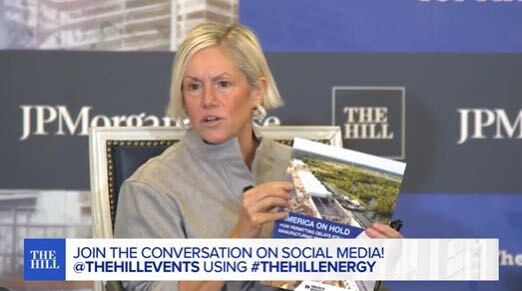
NAM Executive Vice President Erin Streeter underscored the urgent need for bipartisan permitting reform this week in front of media, lawmakers and industry leaders at The Bipartisan Blueprint: Reimagining Permitting Reform, an event hosted by The Hill and JPMorganChase.
- Speaking on a panel titled “Economic Impact: Will Fast-Tracked Permits Unlock Prosperity,” Streeter highlighted the billions of dollars manufacturers lose annually to permitting delays and the opportunity to unlock investment, strengthen infrastructure and boost American competitiveness.
The costs: Streeter held up the NAM’s “America on Hold” report to illustrate the economic stakes.
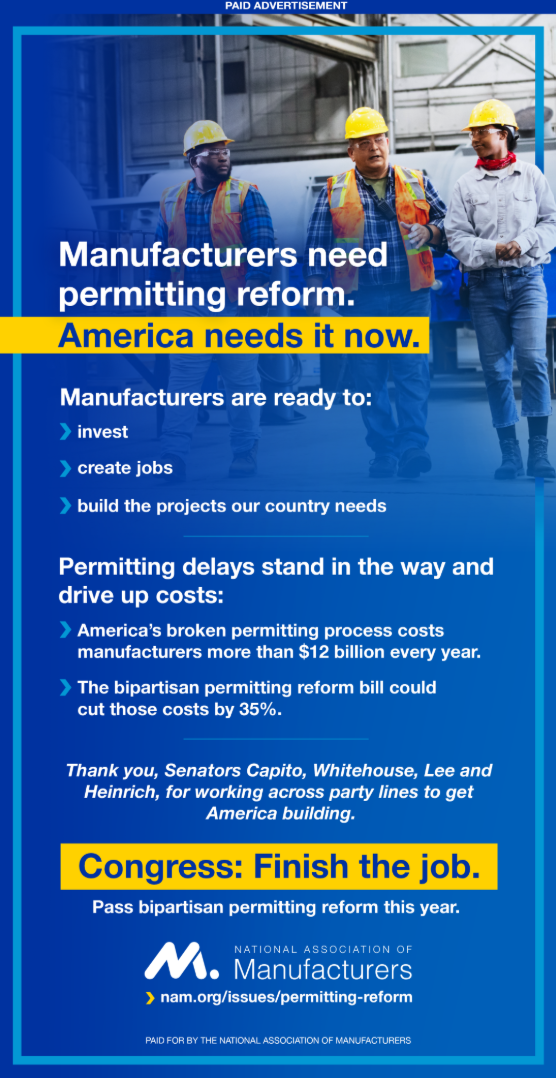
- “We did our own analysis of how our members are dealing with permitting reform delays and compliances. The cost to them annually is $12 billion,” she said, citing compliance expenses, rising energy costs and uncertainty.
- “That’s a pretty big price tag when you look at costs that could be put toward something else.”
Bipartisan momentum: Streeter also highlighted the bipartisan Senate negotiators for keeping permitting reform moving forward despite a changing political landscape.
- “What is really truly amazing and energizing is this is bipartisan. I think the negotiators deserve a lot of credit because they’ve been able to keep this together since September and they have worked very, very hard to bring it to this point,” she said.
- “We still have to get it across the finish line, but I think it is really, really encouraging that we are seeing bipartisanship.”
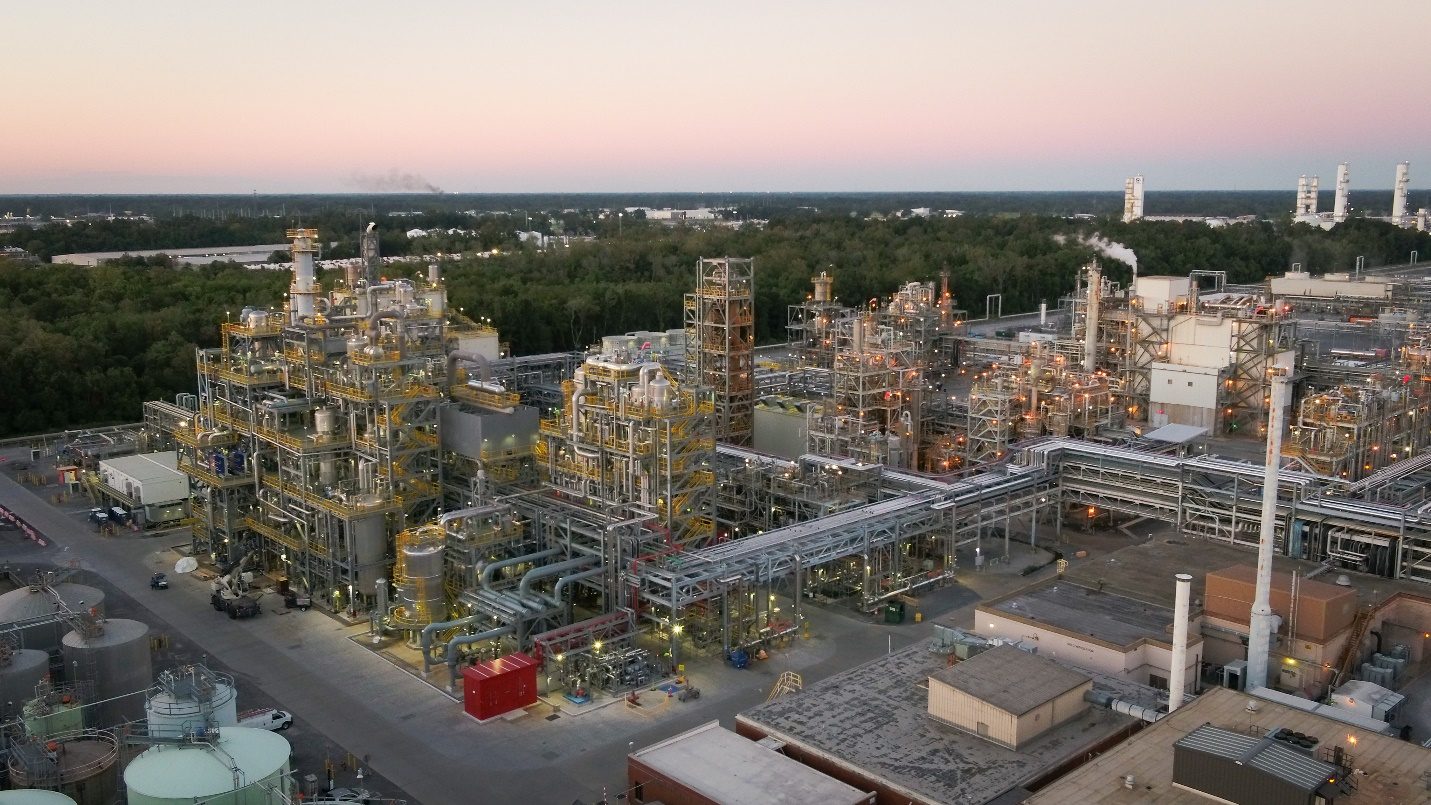
Modernization needed: Streeter explained how outdated federal permitting laws and unpredictable timelines make it harder for manufacturers to expand facilities, build new ones and attract investment.
- “From the federal permitting standpoint, a lot of these laws were put into place in the late ’60s and ’70s, and so they’re outdated. And whether it’s NEPA, whether it’s the Endangered Species Act, whether it’s the Clean Water Act, these laws need to be modernized.”
- “That has an impact for a manufacturer who is seeking to get these permits. … Our analysis shows that manufacturers estimate it takes about four years across the board to get a permit. [That] is really unpredictable for their costs [and for] attracting capital investment.”
Every manufacturer benefits: Streeter emphasized that permitting reform extends far beyond energy producers, with implications for manufacturers of every size and sector.
- “Manufacturers use a third of all energy that is produced. We also sit at the tip of the spear because we’re the innovators and producers of that energy as well,” she said.
- “Every manufacturer in this country will benefit from this bill 100%. You want to expand a facility, you want to create a new facility, you want to invest, you have to have a permit in order to do that.”
The big picture: Streeter connected permitting reform to the nation’s broader infrastructure needs, including grid reliability, transmission development and the ability to move major projects forward.
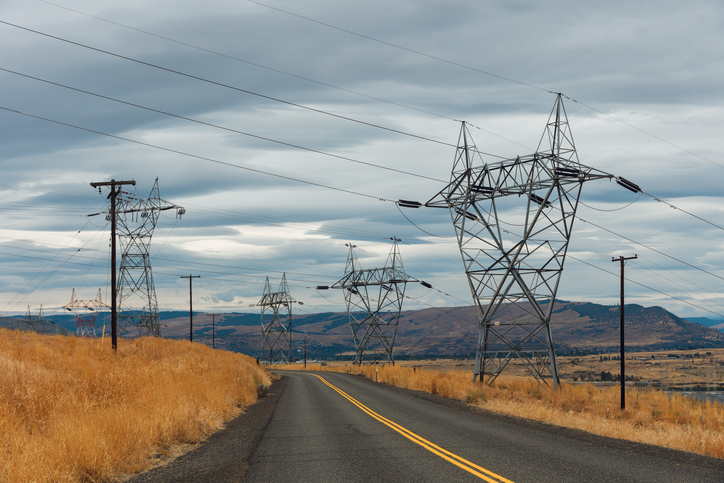
- The proposed legislation “moderniz[es] a federal permitting process that is desperately needed at a time when we need to address our nation’s infrastructure,” she said, citing the issue of grid reliability and the need for more transmission lines. Permitting is necessary for moving big infrastructure projects forward, she underlined.
Global competition: “Our global competitiveness also depends on this,” Streeter said. “We need to be able to compete, to move product and goods and services across this country faster and more efficiently,” in order to compete globally, she said, pointing out that other countries are far faster and more efficient at building new infrastructure than the United States.
The last word: Asked what meaningful permitting reform could deliver for Americans in the years ahead, Streeter offered a straightforward answer: “More manufacturing in the United States. Absolutely.”
- And on the prospects for passage this year, she remained confident. “I’m very optimistic. … The fact that we are seeing a bipartisan effort on something so important and that they have been able to lead this through, I’m very optimistic and I think we’ll get it done by the end of the year.”
Learn more: To learn more about the NAM’s full-scale push for permitting reform and vocal support for the Bipartisan American Affordability and Jobs Act, check out its ads, coalition letters, original economic research and much more.