NAM-Supported PACK Act Advances in House
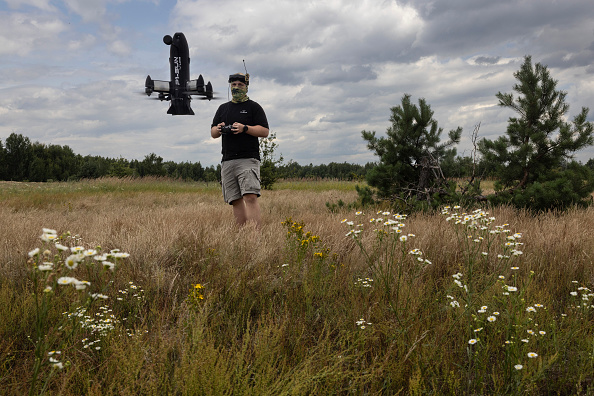
There’s a new source of critical mineral demand: drone warfare (Mining.com).
What’s going on: “About 15 million drones are expected to be deployed in the Russia–Ukraine war this year, while governments and military alliances have pledged about $150 billion to develop drone and counter-drone capabilities over the past two years,” according to a recent report from BMO Capital Markets.
- Among the minerals critical to producing military drones: gallium, germanium and magnetic rare earths.
Ramping up drone use: Ukraine intends to manufacture over 7 million drones in 2026, up from 4 million last year.
- In July, NATO pledged to spend more than $40 billion over five years in counter-drone training and capabilities, and it intends to increase by fivefold the number of drone operators it trains.
Why it’s a problem: The added demand for already difficult-to-obtain commodities creates a “vulnerability [that] is particularly acute because markets for gallium, germanium and heavy rare earths are small and their processing is concentrated in China.”
- In recent years, Beijing has tightened already stringent export controls, severely disrupting supply chains.
- Another wrench in the mix: heavy rare earths, which “are used in high-performance permanent magnets, particularly where magnets must retain their properties at elevated temperatures.”
High demand: Small electric drone motors can each require from 5 to 15 grams of neodymium-iron-boron magnets, per a study by the Center for Strategic & International Studies.
- Counter-drone systems require germanium, gallium and heavy rare earths “to detect, track and defeat drones.”
Canada plays a role: With its rich deposits of critical minerals, Canada is emerging as an alternative to China.
- Through its Canada Growth Fund, the Canadian government could invest as much as CA$400 billion in a British Columbia germanium, gallium and antimony smelting and refining complex.
- Mining company Rio Tinto “plans to start a gallium pilot plant next year at its Complexe Jonquière in Saguenay, Quebec, using material already present in the bauxite processed by its Vaudreuil alumina refinery.”
Our view: “Securing alternative critical mineral sources and strengthening and expanding America’s critical minerals industry are both crucial to creating secure supply chains for the defense capabilities needed by the U.S. and our allies,” said NAM Director of International Policy Rachel Minogue.