How Johnson Controls Helps Data Centers Reuse Energy
Johnson Controls has launched a blueprint to help data center operators solve a significant problem—their significant expenditure on power for cooling—building on its data center cooling solutions that already consume zero water and cut electricity needs nearly in half (Facilities Dive).
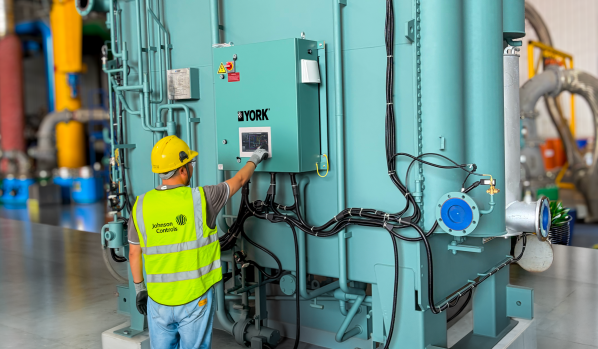
What’s going on: Late last month, the thermal management, mission-critical building systems, energy-efficiency and decarbonization company released its Absorption Chiller Reference Design Guide, a model “for how a large-scale absorption chiller [which turns waste heat into new energy] would add enough on-site power to hyperscale-sized data centers to reduce cooling electrical demand by 44%.”
- That’s enough to unlock 97 additional megawatts of computing capacity in a 1 gigawatt-scale AI facility, Johnson Controls said.
- This blueprint expands on an earlier series of reference designs for gigawatt-scale AI factories.
Why it’s important: “One of the biggest untapped opportunities in data centers is the heat they generate,” said Johnson Controls Global Data Center Solutions President Austin Domenici in a press release.
- The company “helps transform recovered heat into useful work through combined heat and power and absorption cooling solutions, enabling AI factories to scale more efficiently while reducing strain on the grid and delivering value to local communities.”
- Converting the 57% of energy lost as waste heat from on-site power generation also then enables up to $18 billion in additional revenue potential over the life of a facility, according to the company, since the recovered energy can drive additional compute.
A thriving business: Data center construction now moves at a scale and speed the world has never seen, with capital investment projected to reach $7 trillion by 2030, according to McKinsey.
- At gigawatt scale, even modest improvements in cooling efficiency can translate into tens of megawatts of additional computing capacity and billions in additional revenue.
- Johnson Controls has become a key partner to hyperscale and colocation operators, helping them address some of the industry’s most pressing challenges around power, cooling and capacity, the company said.
The last word: “As rack densities increase, new chips are launched and put into use, the amount of heat generated in data centers [will] increase,” Johnson Controls CEO Joakim Weidemanis said in a recent earnings call. “And so … thermal management becomes even more critical.”