FERC Looks to Broaden Blanket Certificate Program for Gas Projects

What’s going on: In a unanimous vote last Thursday, FERC commissioners “introduced a notice of proposed rulemaking for the [blanket certificate] program that would roughly double its cost caps for types of blanket certificate projects.”
- The program, introduced in 1982, offers “an administratively efficient means to enable a company to construct, modify, acquire, operate and abandon a limited set of natural gas facilities,” according to the FERC website.
- The program’s last substantive changes were made in 2006.
What it means: The cap raising will align limits with “long-standing expectations for the scale of projects that are appropriate for the blanket program” and “further streamline our permitting processes and speed up construction that Americans depend upon for affordable and reliable energy,” FERC Chair Laura Swett said.
- The changes “would also expand the categories of projects eligible for streamlined authorization and extend the blanket certificate framework toward LNG facilities for the first time” (National Law Review).
Deadline extension: Also last week, FERC extended by a year the deadline for projects using temporary regulatory waivers on cost limits, pushing it back to May 2028.
Follow up: This month’s revisions introduction comes less than a year after FERC issued a notice seeking public comment on whether it should permanently change the cost thresholds for projects authorized under the blanket certificate program.
Rep. Moran on the Importance of Overtime Tax Deduction
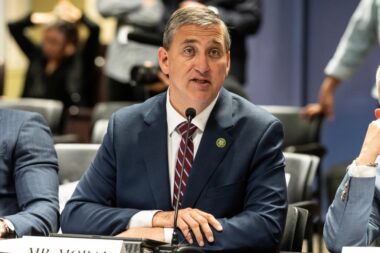
As the NAM marks nearly one year since manufacturers secured a major tax victory in Congress, we continue to spotlight the lawmakers who championed this landmark legislation and provisions that are already making a difference.
Why it matters: “Manufacturing workers are some of the hardest-working people in this country, and they’ve long understood that overtime isn’t a bonus—it’s how they keep the line running, meet a contract deadline or respond to a surge in demand,” said Rep. Moran.
- Under the Working Families Tax Cuts, “manufacturing workers can now deduct the premium portion of their overtime pay—the ‘half’ in time-and-a-half—from their federal taxable income,” he explained. “So, if a worker earns $24 an hour and works 10 hours of overtime a week, that’s $12 per hour in deductible premium.”
- “Over 50 weeks, that’s $6,000 removed from their taxable income. For a worker in the 22% bracket, that translates to roughly $1,300 in federal tax savings for the year—more than $100 extra in their pocket every single month.”
The workforce angle: Rep. Moran also emphasized the importance of this deduction for recruiting and retaining manufacturing employees—and by extension filling the persistent talent gap in the sector.
- Thanks to this provision, “a manufacturer doesn’t have to raise the hourly overtime rate to make overtime more attractive—Congress has effectively increased the after-tax value of every overtime hour already being paid,” he said. “For a plant manager trying to fill a second shift or retain a skilled operator who’s being recruited by a competitor, that’s a meaningful talking point.”
- “In East Texas, I’ve heard from manufacturers who are already incorporating this into their recruiting conversations,” he added. “Employers are seeing a renewed interest in overtime-heavy roles that used to be harder to fill.”
What manufacturers should do: When asked what companies should do to benefit from the overtime deduction, Rep. Moran said, “Most importantly, tell your workers. … Put it on the bulletin board, mention it at the shift meeting, work it into your onboarding conversations.”
- “A lot of workers won’t learn about this deduction until they sit down to file their taxes—and by then, they’ve already missed months of planning around it,” he continued.
- “And make sure to document the impact,” he added. “When the time comes to debate whether to extend this provision beyond 2028, the strongest argument Congress can make is a real one. If your employees are benefiting, capture that story. Share it with your association, share it with your team, share it with my office. That kind of evidence is what moves legislation.”
Dive deeper: Check out the full Q&A here.
FAME Adds Six New Chapters, Bolsters AI Skills Development
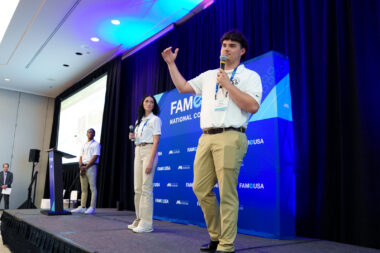
The Manufacturing Institute’s Federation for Advanced Manufacturing Education (FAME) program—the global-best workforce development program—announced the addition of six new chapters, funded by its inaugural FAME Catalyst Grants. The new chapters will be part of the MI’s new AI Skills Initiative.
The background: Founded by Toyota and led by the MI (the NAM’s workforce development and education affiliate) since 2019, FAME offers earn-and-learn apprenticeship programs that train the next generation of manufacturing talent.
- New FAME chapters are founded when local manufacturers partner with industry or economic development organizations and community colleges or technical schools.
The grants: The MI Catalyst Grants offer $50,000 in early-stage support to the sponsoring economic development organizations to fund staff time and travel involved in starting a FAME chapter.
- In total, the first grants amount to $300,000 in funding that will not only help manufacturers develop the skilled talent they need but also help students start lifelong careers in manufacturing.
- Google.org provided funding for the MI’s AI Skills Initiative, recently announcing $10 million in funding for the MI to support AI skills development in the manufacturing workforce.
The new chapters: The six inaugural recipients are:
- East County Economic Development Council in El Cajon, California;
- Carroll Tomorrow in Carrollton, Georgia;
- One Acadiana in Lafayette, Louisiana;
- Hinds County Economic Development Authority in Jackson, Mississippi;
- Greater St. Cloud in St. Cloud, Minnesota; and
- Big Country Manufacturing Alliance in Abilene, Texas.
Next steps: After building a coalition of local manufacturers along with a community college partner to support FAME chapter development, the recipients will enter the FAME Academy by October 2026 to learn how to manage the FAME Advanced Maintenance Technician program to deliver global-best results.
- Their first cohorts of students will be selected for employment at their selected company in spring 2027 and begin training and classes in fall 2027.
The big expansion: Thanks to the addition of these six new chapters, FAME’s total reach will expand to 52 chapters in 19 states. The Minnesota and Georgia chapters will be the first in their respective states.
The MI says: “With six new chapters getting off the ground—and more to follow—FAME is spanning the skills gap and providing manufacturers a workforce solution that meets the needs of today and tomorrow,” said MI President Carolyn Lee.
- “The interest we’ve seen from manufacturers and economic development organizations across the country demonstrates the success of the model. This is just the beginning,” added FAME National Director Tony Davis.
Biogen’s Nicole Murphy Aims to Elevate the Manufacturing Workforce

Biogen Executive Vice President and Head of Pharmaceutical Operations and Technology Nicole Murphy has spent more than three decades building a career defined by service. As chair of the Manufacturing Institute’s 2026 STEP Ahead Awards, she brought that same philosophy to one of manufacturing’s biggest celebrations of leadership.
A high-impact role: Murphy started her career as an engineer on the shop floor of a chemical plant. She was quickly drawn to the complexity of process and product development, a passion that led her to biotechnology and, ultimately, to a career focused on improving lives.
- At Biogen, Murphy leads a team responsible for developing, making and delivering medicines at the highest level of quality that support the company’s portfolio in neurology, immunology and rare disease. Her team’s work spans from early preclinical development to clinical and commercial stages, helping ensure promising science reaches patients safely and reliably.
- “I tell people often that I have the best job in the world—and I truly believe it,” said Murphy.
A defining moment: For Murphy, the work is deeply personal. During a factory tour early in her career, she met a family whose 6-year-old daughter relied on the medicine produced by the facility. The girl’s older brother quietly told her, “Thank you for getting my sister out of her wheelchair and letting her play with me again.”
- “That day reinvigorated a sense of purpose that has stayed with me, day in and day out,” said Murphy. “It has pushed me to continue to ‘raise the bar’ because the hard work we do is nothing compared to what our patients persevere through.”
Mentorship is key: Murphy attributes her success to the many role models who have supported her career, including mentors and peers. They challenged her to leave her comfort zone by taking on new responsibilities, roles and projects—and helped her grow as a leader.
- She has since paid that forward. At Biogen, Murphy started a Reverse Mentorship program that flips the traditional mentor/mentee relationship, empowering employees at all levels to mentor senior leaders.
- “The intent is to strengthen working relationships, improve our understanding of employee experience—particularly through a lens of inclusion—and help leaders gain new perspectives,” said Murphy. The result is more effective leadership, stronger teams and a thriving culture, she says.
Her leadership philosophy: Murphy believes the strongest leaders listen first, take responsibility for setbacks and make sure their teams receive the credit for success.
- “Trust, purpose and community are absolutely foundational in building the best teams,” said Murphy.
The last word: “Manufacturing succeeds when we develop and elevate diverse talent, and STEP Ahead shines a light on leaders who are shaping the future of the industry,” said Murphy.
- “It is our workforce that will create the great next invention, ensure products and services reach the people who need them and inspire the generations to come.”
Amazon Launches New Supply Chain Business
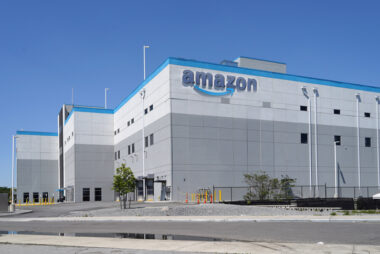
Amazon has launched a new global business based on the internal logistics network it’s spent two decades building (The Wall Street Journal, subscription).
What’s going on: The company “is trying to do for logistics what its Amazon Web Services unit did for cloud computing with a new business called Amazon Supply Chain Services.”
- The new service, announced on Monday, is “a centralized place for companies from consumer-goods manufacturers to apparel retailers to hire Amazon for services such as fulfillment, ocean and air shipping, and truck transportation.”
Why it’s important: The move makes Amazon a third-party logistics provider and “positions [it] to take a bigger bite out of a global market for third-party logistics services that is estimated at more than $1.3 trillion.”
- In 2025, Amazon became the world’s largest 3PL firm based on gross logistics revenue.
What’s different about it: While Amazon businesses thus far “have largely been offered piecemeal,” the new offering will aim to fulfill customers’ “full supply chain needs.”
A marketplace opening: The new business comes at the right time for many companies, which have increasingly been outsourcing their logistics services in recent years as a way to save money and better manage disruptions.
What to Expect: Trump–Xi Meeting
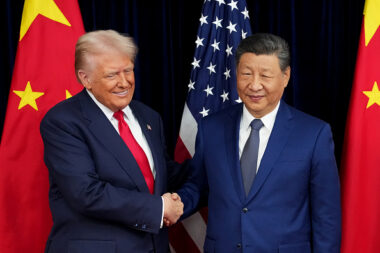
Presidents Trump and Xi will cover a wide array of topics at their meeting in China this week: Iran, Taiwan, nuclear weapons, artificial intelligence and rare earths, according to U.S. officials (Reuters, subscription).
What’s going on: Against the backdrop of a possible extension of a U.S.–China critical minerals deal, on Thursday and Friday “[t]he leaders of the world’s two largest economies will hold their first face-to-face talks in more than six months as they try to stabilize ties strained by trade, the U.S. and Israeli war with Iran and other areas of disagreement.”
- In what will be President Trump’s first China trip since 2017, the two nations “are expected to agree to forums to facilitate mutual trade and investment, while China is expected to announce purchases related to Boeing airplanes, American agriculture and energy.”
There’s more: Also potentially on the docket for the two-day meeting is a formal announcement of a Board of Trade and a Board of Investment.
- The former, a concept that came out of March U.S.–China talks, is a framework to expand trade and economic cooperation between the countries, while the latter is said to be for the management of investment disputes (The Wire China).
- However, the boards “may need subsequent work before they can be implemented, one of the officials said,” according to Reuters.
Rare earths: At the meeting, Presidents Trump and Xi could lengthen a trade-standoff truce that allows some rare earth minerals to be exported from China into the U.S.
- After imposing export controls on several rare earth elements in 2025, China suspended the restrictions for some rare earths but left others in effect.
“Thornier issues”: The presidents are also set to discuss Iran, Taiwan, AI and nuclear arms.
- China maintains ties with Iran, and President Trump has reportedly been urging China to press the regime in Tehran to accept a U.S. peace deal.
- “Xi, meanwhile, is frustrated with Washington over Taiwan. The U.S. remains the most important international backer and arms supplier for the democratically governed island, which Beijing claims as its own Chinese territory.”
- In addition, the Trump White House has “expressed increasing concern about advanced artificial intelligence models being developed in China.”
- Last, President Trump has long wanted to discuss nuclear weapons with President Xi, but Beijing “remains reluctant to discuss its arsenal.”
Rep. Miller Talks Tax Certainty with the NAM

As part of the NAM’s campaign to highlight the sweeping benefits of the 2025 tax law, which made permanent many crucial pro-manufacturing provisions, the NAM spoke to Rep. Carol Miller (R-WV) about her work in achieving tax certainty for manufacturers and all Americans.
Why it matters: “The Working Families Tax Cuts will deliver meaningful relief to American manufacturers, driving the development of new facilities, the creation of jobs and increased investment across the country,” said Rep. Miller.
- “The Ways and Means Supply Chain Tax Team focused on advancing pro-growth policies to fuel long-term economic prosperity,” she continued, discussing the legislative process that secured this victory for manufacturers.
- “Key provisions in the legislation—including permanent research and development expensing, full immediate expensing, a strengthened interest deduction and a 100% factory construction deduction—provide businesses with the certainty and incentives needed to plan, invest and compete globally,” she said.
The corporate rate: Rep. Miller singled out the lower corporate rate as essential to manufacturing competitiveness in the U.S., saying, “The preservation of the 21% corporate rate is critical in promoting American manufacturing because companies can invest in expanding infrastructure, purchase new equipment and increase workforce without tax liability uncertainty.”
- In addition, “The Working Families Tax Cuts compounded with bonus depreciation and immediate research expensing have proved to be effective for the industry, and we will continue to advocate for pro-growth policy that leads to new markets and more opportunities.”
Seeing the benefits: When asked about the impact of the Working Families Tax Cuts on her constituents, Rep. Miller said, “In my home district, we’ve seen these policies translate into new factories, new jobs and expanded opportunities.”
- “Companies like Conn-Weld Industries and Ferroglobe have used this tax relief to invest in their operations, grow their businesses and strengthen the local economy.”
What manufacturers should do: “NAM members should share their stories and voice their support for the Working Families Tax Cuts and communicate the real-world impact this legislation has on the country, their business and the employees and their families who benefit,” Rep. Miller urged.
- “Manufacturers are at the core of our economy and need a predictable and pro-growth tax code.”
Read the whole thing: You can find the full Q&A here.
Court Rules Against Section 122 Tariffs, Order Halted
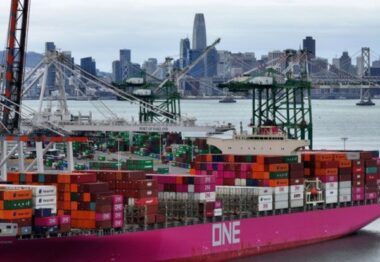
A majority of the U.S. Court of International Trade ruled against President Trump’s 10% tariffs imposed under Section 122 of the Trade Act of 1974.
What happened: Two judges found in favor of the plaintiffs, focusing on what the 1974 Congress understood “balance-of-payments deficits” to mean.
- The plaintiffs argued the administration improperly focused on the nation’s “current account” to target trade deficits while ignoring other factors in the overall balance of payments, such as financial investment inflows.
- Because it ruled the administration’s analysis did not comport with this definition, it did not address other elements of the case, including whether the exemptions for USMCA-qualifying goods were lawful.
The relief: The court majority issued a permanent injunction, providing tariff relief for the state of Washington and the two private plaintiffs that are importers of record, and dismissing the claims of the remaining 23 U.S. states, who had not acted as importers and therefore lacked standing.
- Given the narrow scope of relief, other importers would need to file suits based on the same claims to seek an injunction.
Order halted: The Department of Justice filed a notice of appeal on May 8, asking the U.S. Court of Appeals for the Federal Circuit to overrule the CIT decision.
- In response, the Court of Appeals issued an administrative stay, and “set a schedule for both sides to file briefs on the longer-term delay issue in the coming two weeks” (Bloomberg Government).
- During those two weeks, the importers to whom the CIT ruling applies will continue to pay tariffs under Section 122.
Looking ahead: Section 122 tariffs are set to expire on July 24 unless extended by Congress.
Rep. Rouzer Talks Infrastructure with the NAM
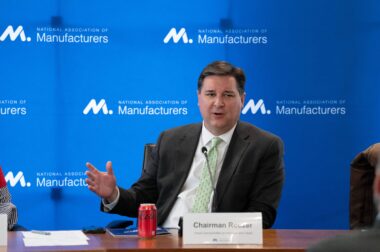
As part of the NAM’s national campaign to secure essential infrastructure legislation, we have been speaking with members of Congress about their legislative priorities. This week, we spoke with Rep. David Rouzer (R-NC) about his work promoting surface transportation reauthorization and its importance for his district.
The near term: Rep. Rouzer emphasized the importance of the upcoming surface transportation reauthorization bill, which will “achieve more timely project delivery, improved roadway safety and the strengthening of formula funding. …”
- “In my home state of North Carolina, and across the country, bottlenecks result in delay and additional costs for families, businesses and workers alike,” he continued. “That’s why I’m focused on commonsense permitting reform, better project delivery and giving states the funding certainty and flexibility they need to address their most pressing infrastructure challenges.”
The urgency: Rep. Rouzer noted that the current surface transportation law expires on Sept. 30. Passing it on time will provide “funding certainty” to states as they plan infrastructure projects, he said.
- In addition, “Congress has the responsibility to pass a strong, multiyear reauthorization bill to keep projects moving, ensure the sound stewardship of taxpayer dollars and strengthen the reliability of America’s transportation system.”
In North Carolina: When asked about the benefits of the bill for his constituents, Rep. Rouzer said that “Southeastern North Carolina depends on safe, efficient transportation to support its ports, coastal economy and the daily movement of people and goods to and from manufacturing hubs across the region…”
- “Good infrastructure also improves quality of life. Whether one is commuting to work, traveling between counties, getting supplies to a job site or evacuating during a hurricane, dependable roads and bridges matter,” he added.
Why the NAM matters: Rep. Rouzer concluded by emphasizing the importance of the NAM’s advocacy, in response to a question about the association’s role in helping get this bill passed. “The National Association of Manufacturers plays an important role by helping connect infrastructure policy to real-world needs of the economy,” he said.
- “I appreciate the NAM’s engagement to ensure all members of Congress understand the importance of a good and timely surface reauthorization bill that benefits their districts and the country as a whole. I look forward to our continued work together to achieve this.”
Sen. McCormick Introduces NAM-Backed Permitting Reform Legislation
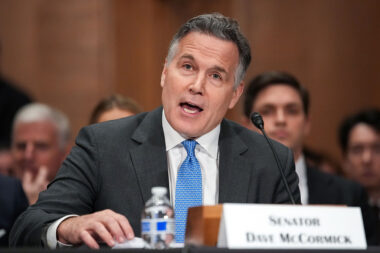
What’s going on: Sen. Dave McCormick (R-PA) last week unveiled the Unlock American Energy and Jobs Act, legislation that seeks to speed up the federal permitting process.
- “Today, more than 650 projects are currently listed on the federal Permitting Dashboard,” according to a news release from Sen. McCormick’s office. “Construction costs run 24–30% higher when projects are held up.”
- Permitting reform is a longtime NAM advocacy issue, and manufacturers have worked hand in hand with Congress to advance measures that will make building critical infrastructure in the U.S. easier, faster and less costly.
Why it’s important: The senator’s office cited a joint NAM–Foundation for American Innovation report that found “nearly 51% of manufacturers say permitting uncertainty discourages them from investing in new or expanded U.S. capacity, while nearly 66% say they would invest more if the process were faster and more predictable.”
What’s in it: The Unlock American Energy and Jobs Act aims to address four “chokepoints”:
- Clean Water Act reform
- Liquefied natural gas export deregulation
- Nuclear licensing modernization
- National Environmental Policy Act litigation reform
Our view: “Permitting reform is essential to America’s manufacturing competitiveness—and today’s broken system is costing manufacturers more than $8 billion each year,” said NAM President and CEO Jay Timmons.
- “We are grateful for Sen. McCormick’s leadership in introducing the Unlock American Energy and Jobs Act. Modernizing the Clean Water Act, reforming judicial review under NEPA for all projects, ensuring durable support for U.S. LNG exports and bringing new nuclear power online are all critical steps toward a policy framework that will drive investment, power growth and keep manufacturing strong in America for decades to come.”