News & Insights

Policy and Legal

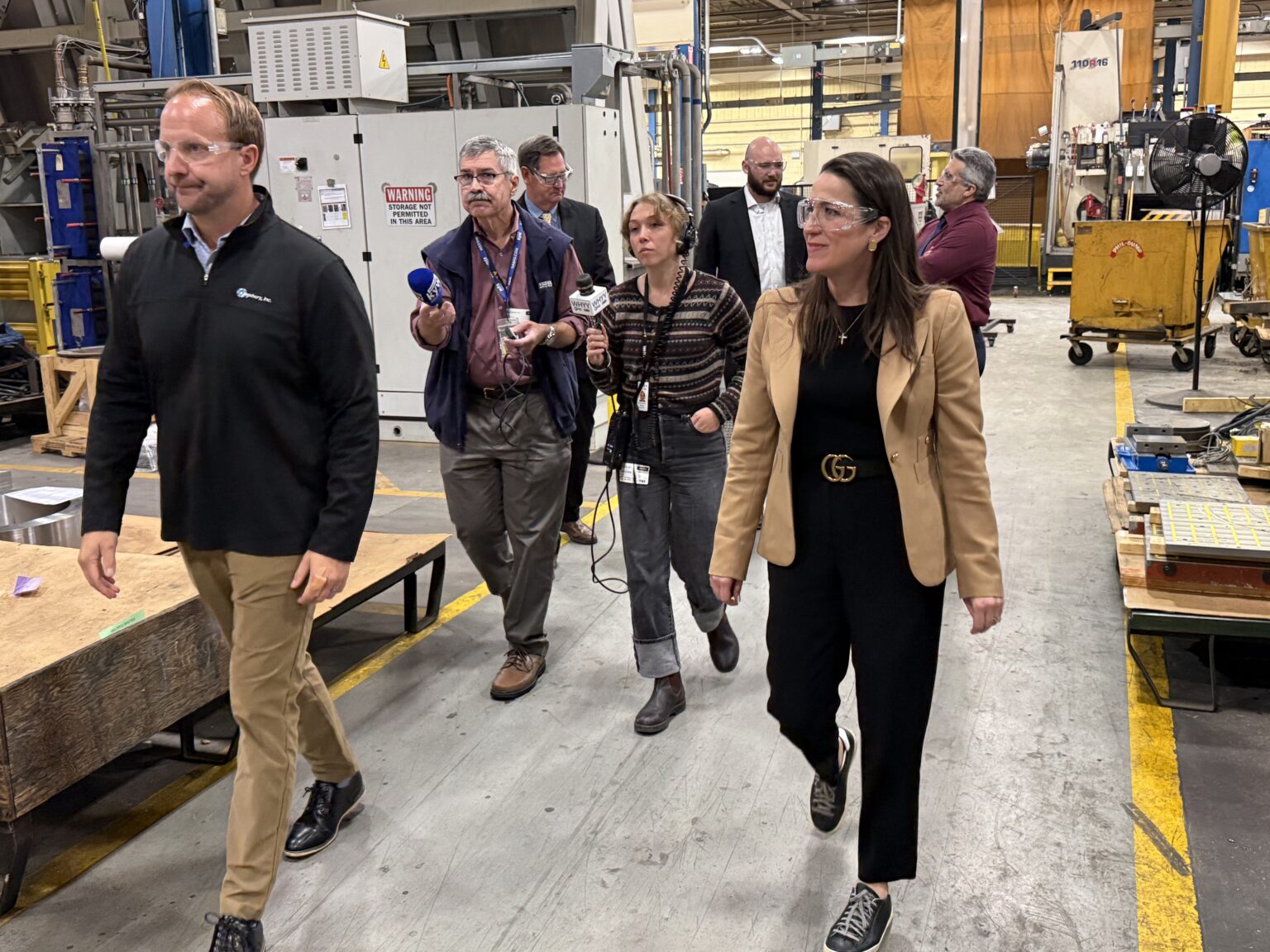
Q&A with Rep. Carol Miller on Tax Certainty

NAM: Rep. Miller, H.R. 1 has been signed into law, preserving the 21% corporate tax rate established by the 2017 Tax Cuts and Jobs Act. As the leader of the House Ways and Means Supply Chain Tax Team leading up to the bill’s passage, what does preserving this rate on a permanent basis mean for manufacturers’ ability to invest in American supply chains and compete globally?

Rep. Miller: Tax certainty is essential to maintaining the United States’ position as a global leader in manufacturing. The Working Families Tax Cuts will deliver meaningful relief to American manufacturers, driving the development of new facilities, the creation of jobs and increased investment across the country. The Ways and Means Supply Chain Tax Team focused on advancing pro-growth policies to fuel long-term economic prosperity. Key provisions in the legislation—including permanent research and development expensing, full immediate expensing, a strengthened interest deduction and a 100% factory construction deduction—provide businesses with the certainty and incentives needed to plan, invest and compete globally.

NAM: With the 21% corporate rate now secured through H.R. 1, U.S. manufacturers have a more competitive tax foundation than they did even a year ago. But the global tax landscape continues to shift, with major trading partners and competitors making their own adjustments to attract investment and manufacturing activity. From your vantage point leading the Supply Chain Tax Team, how has that preservation of the 21% corporate rate bolstered the United States’ position in promoting and attracting investment?

Rep. Miller: The preservation of the 21% corporate rate is critical in promoting American manufacturing because companies can invest in expanding infrastructure, purchase new equipment and increase workforce without tax liability uncertainty. The Working Families Tax Cuts compounded with bonus depreciation and immediate research expensing have proved to be effective for the industry, and we will continue to advocate for pro-growth policy, which leads to new markets and more opportunities.

NAM: Your Supply Chain Tax Team has traveled the country meeting with manufacturers since the TCJA was enacted. Now that H.R. 1 is law, what are businesses in your district or on your tax team’s radar telling you about specific investments or hiring decisions they are making or accelerating because the 21% corporate rate is no longer at risk?

Rep. Miller: The real-world impact of the Working Families Tax Cuts has been clear and meaningful, reinforcing the need for stable, pro-growth tax policy to help American manufacturers succeed. In my home district, we’ve seen these policies translate into new factories, new jobs and expanded opportunities. Companies like Conn-Weld Industries and Ferroglobe have used this tax relief to invest in their operations, grow their businesses and strengthen the local economy.

NAM: Thank you for your leadership in protecting manufacturers through H.R. 1. What should NAM members be doing now to help communicate the benefits of the 21% corporate rate and to support continued pro-manufacturing tax policy?

Rep. Miller: NAM members should share their stories and voice their support for the Working Families Tax Cuts and communicate the real-world impact this legislation has on the country, their business and the employees and their families who benefit. Manufacturers are at the core of our economy and need a predictable and pro-growth tax code.

Economic Data and Growth

Global Factory Activity Advances as Output Growth Quickens

In April, growth in global manufacturing activity strengthened from March, increasing from 51.3 to 52.6. Output and new orders both grew as the rate of manufacturing production growth hit a nearly five-year high. Meanwhile, lead times continued to slow, lengthening to the greatest extent since August 2022. Employment declined slightly for the second consecutive month, and inventory levels rose as firms prepared for anticipated supply chain disruptions and further cost increases.

Taiwan, Japan, Ireland and India had the highest PMI readings in April. On the other hand, Mexico, Russia and Turkey were some of the larger nations to register declines in activity. The accelerating growth in manufacturing production occurred across consumer, intermediate and investment goods.

Meanwhile, input and output price pressures continued to surge as output prices rose at the sharpest rate since June 2022. At the same time, business optimism remained depressed amid rising cost pressures and supply chain disruptions. Geopolitical uncertainty continued to weigh on sentiment as input costs rose at one of the fastest rates in the 28-year survey history.

Economic Data and Growth

Manufacturing Job Openings and Hiring Pick Up Steam

Job openings for manufacturing rose by 19,000 to 462,000 in March. At the same time, the February job openings level of 443,000 was revised upward from 439,000 in the previous report. Nondurable goods job openings in March increased 10,000 to 162,000, while durable goods job openings moved up 9,000 to 300,000. The manufacturing job openings rate inched up to 3.5% from 3.4% in February and 3.0% the previous year. The rate for nondurable goods manufacturing ticked up 0.2 percentage points to 3.3% and 0.1 percentage point to 3.7% for durable goods manufacturing.

In the larger economy, the number of job openings stayed relatively stable at 6.9 million, a decline of just 56,000 from February and 86,000 from the previous year. The job openings rate edged down to 4.1% from 4.2% in both February and March 2025. This data reflects an overall labor market that has eased back to pre-pandemic levels, but remains relatively tight from a historical perspective.

The number of hires in the overall economy jumped 655,000 to 5.6 million in March and 221,000 from the previous year. The hires rate for the overall economy increased 0.4 percentage points in March to 3.5%. Meanwhile, the hires rate for manufacturing climbed to 2.5% from 2.2% in February and 2.4% in March 2025. The hires rate for durable goods ticked up 0.1 percentage point to 2.1%, while the hires rate for nondurable goods jumped 0.5 percentage points to 3.1%.

In the larger economy, total separations, which include quits, layoffs, discharges and other separations, rose 356,000 from February to 5.4 million and 90,000 from the previous year. The total separations rate inched up 0.2 percentage points to 3.4% for the overall economy but edged down 0.1 percentage point for manufacturing to 2.2%, down from 2.5% the year prior. Within that rate, layoffs and discharges decreased by 9,000 in March for manufacturing, while quits rose by 3,000. The quit and layoff rates continued to remain lower for manufacturing than the total nonfarm sector.

Economic Data and Growth

Manufacturing Orders Post a Solid Gain as Shipments Stay Strong

New orders for manufactured goods increased 1.5% in March after ticking up 0.3% in February. Meanwhile, new orders for manufactured goods rose 3.7% over the year. When excluding transportation, new orders moved up 1.6% over the month and 3.4% year-over-year in March. Orders for durable goods advanced 0.8%, following a 1.2% decline in February. Year to date, durable goods orders jumped 6.1%. Meanwhile, nondurable goods increased 2.1% after stepping up 1.9% in February. At the same time, nondurable goods orders grew 1.2% over the year.

In March, the largest monthly increase occurred in ships and boats, which surged 30.9% after decreasing 12.8% in February. The largest decline occurred in nondefense aircraft and parts, which plummeted 21.1% after plunging 33.3% the prior month. The largest over-the-year changes occurred in ships and boats (up 38.2%) and nondefense aircraft and parts (down 12.5%).

Factory shipments rose 1.4% in March, after increasing 1.7% in February. Shipments grew 4.3% over the year. Shipments excluding transportation stepped up 1.6% in March, following a 1.7% uptick the previous month. Shipments for durable goods moved up 0.7% in March, following a 1.6% rise in February, and are up 7.4% year to date. Meanwhile, nondurable goods shipments increased 2.1%, after advancing 1.9% the prior month, and are up 1.2% year to date.

Unfilled orders for all manufacturing industries inched up 0.1% in March, after increasing by the same percentage in February. Unfilled orders over the year jumped 9.4%. Inventories rose 0.6% month-over-month and 1.3% year-over-year. The inventories-to-shipments ratio edged down from 1.52 in February to 1.51 in March. The unfilled orders-to-shipments ratio for durable goods moved down to 6.88 in March from 6.92 in February.

Economic Data and Growth

Payrolls Grow as Factory Hiring Levels Off

Nonfarm payroll employment increased by 115,000 in April, coming in above expectations. Meanwhile, February’s job loss was revised upward by 23,000 to a loss of 156,000 jobs, while March’s job gain was revised upward by 7,000 to a gain of 185,000 jobs. The 12-month average stands at 21,000 job gains per month. Healthcare and social assistance continues to exhibit the most significant job gains, adding 53,900 jobs in April. At the same time, the unemployment rate stayed the same from March at 4.3%, while the labor force participation rate ticked down 0.1 percentage point to 61.8% and is down from 62.6% in April 2025.

Manufacturing employment edged down by 2,000 in April after increasing by 15,000 in March. On the other hand, the collective job gains in February and March of 9,000 were revised upward by 7,000 jobs to an increase of 16,000 jobs. Manufacturing employment is down 73,000 over the year. Durable goods manufacturing employment inched up by 2,000 in April, while nondurable goods employment fell by 4,000. The most significant gain in manufacturing in April occurred in chemical manufacturing, which added 2,400 jobs over the month. Meanwhile, the most significant loss occurred in transportation equipment manufacturing, which shed 3,600 jobs over the month.

The employment-population ratio edged down 0.1 percentage point from March to 59.1% in April and is down 0.9 percentage points from a year ago. Meanwhile, employed persons who are part-time workers for economic reasons rose by 445,000 from March to 4.9 million in April and are up from 4.7 million in April 2025. Native-born employment is up 341,000 from March but down 1,134,000 over the year. Meanwhile, foreign-born employment is down 326,000 over the month and 155,000 over the year. At the same time, the native-born unemployment rate is up 0.2 percentage points over the year to 4.1% in April, while the foreign-born unemployment rate is up 0.1 percentage point to 3.7%.

Average hourly earnings for all private nonfarm payroll employees rose 0.2%, or 6 cents, reaching $37.41. Over the past year, earnings have grown 3.6%. The average workweek for all employees inched up by 0.1 hour to 34.3 hours and ticked up by the same amount to 40.4 hours for manufacturing employees.

News

Manufacturer Spotlight

NAM “Forge Your Path” Series: Meet Plantd Co-Founder and CEO Nathan Silvernail

Nathan Silvernail is no stranger to launching a bold idea. After seven years at SpaceX helping build the Falcon 9 and Crew Dragon, he took that first-principles mindset and applied it to an entirely different challenge: reinventing how to make one of the world’s most fundamental materials.

As co-founder and CEO of Plantd, Nathan is building a new kind of “wood”—one that doesn’t come from trees but instead from fast-growing, sustainable biomass. This new material is designed to be carbon negative and a durable alternative to traditional wood products used in construction.

Outside of work, he’s an avid pilot, even flying aerobatics—an extension of his longtime passion for aerospace and engineering.

In this latest installment of the NAM’s “Forge Your Path” series, Nathan shares lessons from scaling teams at SpaceX, his approach to leadership and why rethinking manufacturing from the ground up can unlock entirely new possibilities.

Q: What is one lesson or insight you’ve gained in leadership that you haven’t widely shared before but that has been a key part of your or your company’s success?

Nathan: “I’d say it’s really about the energy you bring as a leader. Early on—whether you’re an engineering lead or a supervisor—you don’t always realize how much your team depends on your energy and direction.

I learned that quickly at SpaceX. I went from being an individual contributor to managing a team of about 20 people. Each person needs time—one-on-ones, reviewing work, team meetings—and you have to figure out how to manage that effectively.

When you’re already stretched thin, like when you’re running a company, it becomes even more important. I don’t think I’ve mastered it, but being intentional about where I spend my time, who needs more attention and how I communicate that has been critical.”

Q: Can you share a quote or mantra that defines your approach to leadership?

Nathan: “I tend to say, ‘No noise, all signal.’ That’s really my ethos—in leadership, engineering, business and even my personal life.

Time is limited, and when you have a lot to accomplish, you need to make sure the people in the room are adding value. A lot of conversations can get bogged down with unnecessary detail or noise. I try to push toward clarity—getting to the point and focusing on what actually matters.”

Q: What accomplishments at your organization are you the proudest of and why?

Nathan: “We’ve effectively redefined engineered lumber manufacturing. Instead of trying to optimize what already exists, we broke the system down to first principles—what are the right decisions and why?

Our focus has always been on carbon sequestration, efficiency and sustainability—not just financial outcomes. From there, we rebuilt the process.

Traditional systems can involve massive, centralized facilities with huge capital requirements. We’ve broken that down into smaller, more flexible systems that can scale over time with much lower upfront investment. That allows us to generate revenue faster and expand more efficiently.

That mindset—simplify, reduce parts and vertically integrate—comes directly from my time at SpaceX and the emphasis on first-principles thinking.”

Q: Where do you see your company in the next 5–10 years, and what are you hoping to achieve?

Nathan: “Long term, the goal is to transform the entire lumber industry. We’ve developed a system that can produce multiple types of engineered lumber using different biomass sources, ideally close to where materials are sourced or used. That creates efficiencies across the board.

In the next five years, I want us to reach the production capacity of a mid-sized mill—around 15 million oriented strand board panels per year—with multiple machines deployed across the country. From there, we can expand to other products, other builders and potentially other markets.

Ultimately, we want to remove the need for trees in a large portion of homebuilding. About 43% of a single-family home is lumber, and there’s a real opportunity to rethink that—from cost to sustainability to supply chain.”

Q: Is there a book that you have read or a podcast that you have listened to that you would recommend to your peers and why?

Nathan: “I haven’t been reading as much lately, but I do watch the ‘Diary of a CEO’ podcast quite a bit, which features a wide range of leaders and experts and really digs into how they think—uncovering lessons and insights that can help people be more effective and successful. I find it valuable because it covers a wide range of perspectives.

More broadly, I tend to study leaders and companies that resonate with me. I’ve looked at how Nvidia operates and drawn some parallels. But honestly, I’ve probably learned the most from Elon Musk—both in how to think about problems and, in some cases, how not to.”

Economic Data and Growth

Building Permits Slide Even as Housing Starts Post Strong Gains

Building permits fell 10.8% in March and 7.4% over the year. Permits for single-family homes in March decreased 3.8% and 7.9% over the year. At the same time, permits for buildings with five or more units plummeted 23.5% from February and 5.3% over the year.

In March, housing starts jumped 10.8% from February and the same percentage over the year. Starts for single-family homes climbed 9.7% from February and 8.9% over the year. Meanwhile, starts for buildings with five or more units surged 9.6% over the month and 13.5% over the year.

Housing completions ticked up 0.1% over the month but fell 12.8% over the year. Single-family home completions declined 4.8% from February and 14.5% from March 2025. At the same time, completions for buildings with five or more units increased 10.2% over the month but decreased 9.1% from one year ago.

Economic Data and Growth

Case-Shiller Signals a Broader Housing Price Slowdown as Annual Gains Fade Further

In February, the S&P Cotality Case-Shiller U.S. National Home Price NSA Index recorded a 0.7% annual gain, down from the 0.8% rise in January. The 10-City Composite increased 1.5%, down from 1.7% the previous month, while the 20-City Composite rose 0.9% year-over-year, down from 1.2% in January. Among the 20 cities, Chicago posted the highest annual gain at 5.0%, followed by New York at 4.7% and Cleveland at 4.2%. Meanwhile, Denver posted the lowest annual return, with prices falling 2.2%.

On a month-over-month basis, the U.S. National Index moved up 0.3% before seasonal adjustment. At the same time, the 10-City and 20-City Composites both stepped up, rising 0.6% and 0.4%, respectively. After seasonal adjustment, the U.S. National Index and 10-City Composite both increased 0.1%, while the 20-City Composite edged down less than 0.1%. The Northeast and Midwest continue to outperform other regions, but price declines across more than half of the major U.S. metropolitan markets signal a housing slowdown beyond just the Sun Belt. Meanwhile, in addition to Denver, Tampa (down 2.1%), Seattle (down 2.0%), Phoenix (down 1.8%), Dallas (down 1.7%), Los Angeles (down 0.8%) and Washington, D.C. (down 0.1%) exhibited declines in February.

Affordability concerns continue to be impacted by elevated interest rates, which show no signs of easing. Those concerns have held back transaction growth and kept increases in U.S. home values below inflation for nine consecutive months. Before seasonal adjustment, 6 of the 20 major metro areas saw price declines in February.

Economic Data and Growth

Consumer Confidence Improves as Outlook Brightens Despite a Softer Present View

Consumer confidence inched up 0.6 points in April to 92.8. Among its components, the Present Situation Index contracted while the Expectations Index improved as customers’ concerns regarding the present situation worsened and concerns about the future eased.

The Present Situation Index, reflecting current business and labor market conditions, edged down 0.3 points to 123.8. Meanwhile, the Expectations Index, which reflects customers’ short-term outlook for income, business and labor market conditions, increased 1.2 points to 72.2, remaining below the recession signal threshold of 80 since February 2025.

Views of the current labor market situation improved in April, with 27.3% of consumers saying jobs were “plentiful,” down slightly from March (27.4%), while 19.8% said jobs were “hard to get,” also down from March (21.3%). Looking to the future, 16.1% expect more jobs to be available, up from 15.4% the prior month, while 26.9% anticipate fewer jobs, down from 27.8% the previous month.

Consumers’ views of the economy skewed pessimistic in April. In addition, mentions of inflation, oil and gas and war picked up as consumers continue to express concern over the conflict in the Middle East. Consumers’ 12-month inflation expectations edged down but remain elevated after a spike in March, and the proportion of consumers expecting higher interest rates rose to nearly 50.0%. At the same time, the share of consumers who believe that a recession is “very likely” over the next year increased, and the small share thinking the economy is already in a recession ticked up.

Buying plans for cars, with a clear preference for used cars, rose in April, and purchasing plans for homes recovered slightly. Meanwhile, consumers’ plans for buying other big-ticket items declined. At the same time, consumers’ intentions to purchase more services fell for all categories but pet care. Despite declining, restaurants, bars and take-out remained the top planned service spending category in April. Overall, consumers’ views of their current financial situation weakened slightly in April, while views of their future financial situation improved.

Economic Data and Growth

Texas Factory Output Rebounds as Production and Shipments Strengthen

In April, Texas factory activity expanded at a faster pace after weakening the prior month. The production index increased from 6.8 to 19.0, climbing well above the series average of 9.6. The new orders index stepped up 3.8 points to 9.9, while the capacity utilization index jumped 12.6 points to 19.8, both above the series averages of 4.7 and 7.5, respectively. Meanwhile, the shipments index soared 13.2 points to 15.0, also climbing above the series average of 7.8. The Eleventh District consists of all of Texas, northern Louisiana and southern New Mexico.

Perceptions of manufacturing business conditions weakened in April, with the general business activity index moving down 2.1 points to -2.3. At the same time, the company outlook index turned positive, improving 6.5 points to 3.0. Moreover, the uncertainty index fell 8.1 points to 17.9 but remained slightly above the series average of 16.9.

Labor market indicators suggested a slight decline in headcounts and a longer workweek in April, with the employment index ticking up 0.1 points to -0.9 and the hours worked index rising 3.1 points to 4.0. Nearly 14.1% reported net hiring, while a larger percentage (15.0%) noted net layoffs.

Price pressures strengthened, while wage pressures weakened in April. The prices paid for raw materials index rose 4.3 points to 37.0. Meanwhile, the prices received for finished goods index jumped 9.2 points to 27.6, both higher than the series averages. The wages and benefits index ticked down 0.4 points to 24.8, also remaining above the series average of 21.0.

The outlook for future manufacturing activity remained positive in April, despite the future production index moving down 1.1 points to 34.6. Moreover, the future company outlook index declined 2.6 points to 15.6, while future general business activity increased 3.5 points to 14.1, as the future general business activity index climbed above the series average.

View More