MI’s Lee: Manufacturing’s AI Future Depends on Skills Training
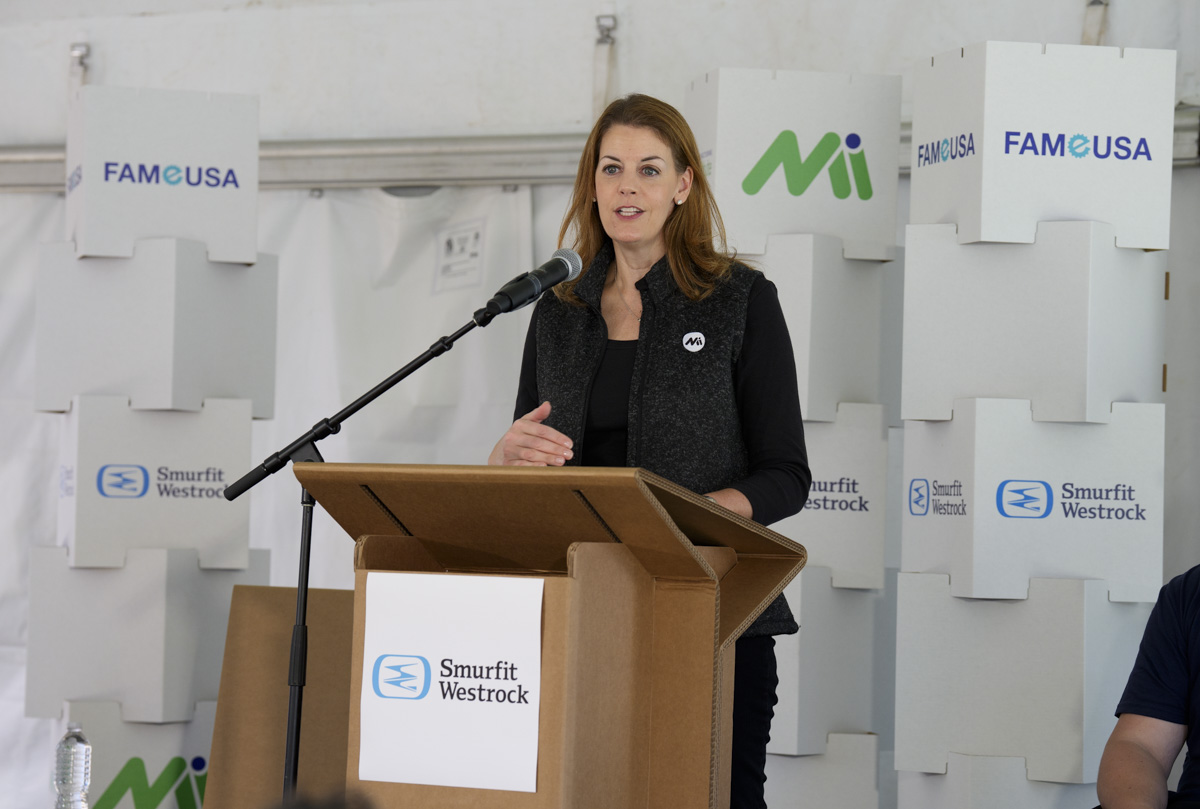
The positive impact of artificial intelligence on manufacturing requires an AI-ready workforce, Manufacturing Institute President Carolyn Lee writes in a recent Washington Reporter op-ed.
What’s going on: “If manufacturers in the United States truly want to remain globally competitive, now is the time to start treating workforce as the central strategy for American manufacturing dominance,” Lee writes.
- “At the Manufacturing Institute, we believe that AI won’t lead to a sweeping loss of American manufacturing jobs, but we do know a worker equipped with AI skills will outperform one without them.”
The challenge: While more than half of manufacturers in the U.S. already use AI in their operations, 82% say their staffs still lack the skills to use the technology effectively, Lee pointed out, citing research from the NAM’s digital transformation arm, the Manufacturing Leadership Council.
- What’s more, fewer than 20% of employers offer formal AI training, according to the MLC.
The solution: The U.S. needs workforce solutions designed to close this skills gap, Lee says.
- The MI, the NAM’s workforce development and education affiliate, is expanding its own offerings with the new AI Skills Training Initiative, which aims to give current and future manufacturing workers “a baseline understanding” of AI.
An example of success: Programs such as the MI’s Federation for Advanced Manufacturing Education (FAME) advanced manufacturing workforce training program show “what is possible when industry leads,” Lee continues.
- Founded in 2010 by Toyota and now run fully by the MI, FAME has chapters in 17 states and nearly 450 company partners.
- The program “achieves an 85% on-time graduation rate and a 95% placement rate while providing students with a debt-free pathway to high-paying, durable careers as in-demand advanced maintenance technicians.”
What’s still needed: Manufacturing has long faced a worker shortage, and as AI adoption accelerates and older workers retire, nearly 1.9 million jobs could go unfilled by 2033 if the industry fails to close its skills gaps, according to joint MI–Deloitte research.
- But “[t]he good news is that we have the blueprints,” Lee writes. “All that is left is for educators and business leaders to take up these winning strategies.”