
Manufacturing Wins
Tax reform in 2017 led to unprecedented levels of manufacturing job creation, wage growth and capital investment. But our progress is at risk: devastating tax increases are scheduled for the end of 2025. Manufacturers need Congress to preserve tax reform in its entirety so we can hire more workers, increase wages, expand facilities and invest for the future.
Key Facts
Fighting for Tomorrow
Millions of American workers are depending on the manufacturing sector to continue driving America forward. Pro-growth tax policies from the 2017 tax reforms, which were rocket fuel for manufacturers, proved this by keeping the U.S. economy competitive on a global scale.
By preventing pro-growth tax policies from expiring in 2025, Congress will preserve a competitive tax system that spurs job growth across our communities, secures the U.S. as a global leader in innovation and reinforces America’s competitiveness on the world stage.
2025 will be nothing short of a tax reckoning as Congress decides how to end the tax reform story. Allowing tax reform to sunset will undermine much of the progress we’ve made since 2017. At Husco, tax hikes will slow our growth and prevent us from investing in job-creating projects that support our community and our economy.

Taxes
Key Resources
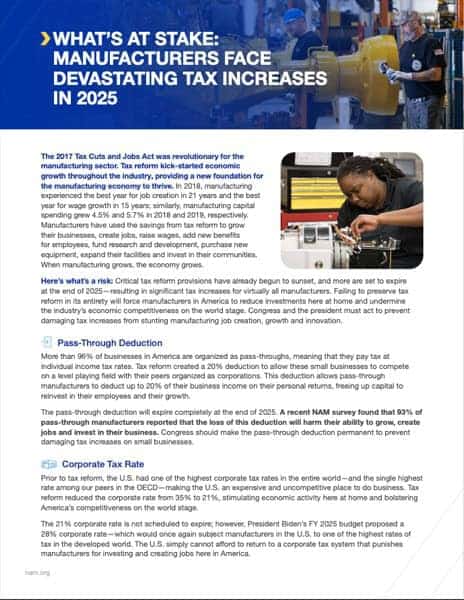
What’s at Stake: Manufacturers Face Devastating Tax Increases in 2025
This document provides a summary of the tax reform provisions set to expire at the end of 2025 and provides an outline of next steps that Congress and the president should take to prevent damaging tax increases from stunting manufacturing job creation, growth and innovation.
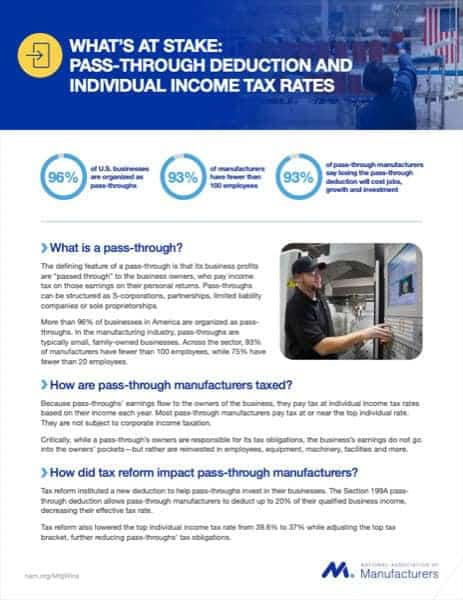
What’s at Stake: Pass-Through Deduction and Individual Income Tax Rates
More than 96% of businesses in America are organized as pass-throughs. In the manufacturing industry, pass-throughs are typically small, family-owned businesses. This is what’s at stake if the 20% pass-through deduction expires at the end of 2025.
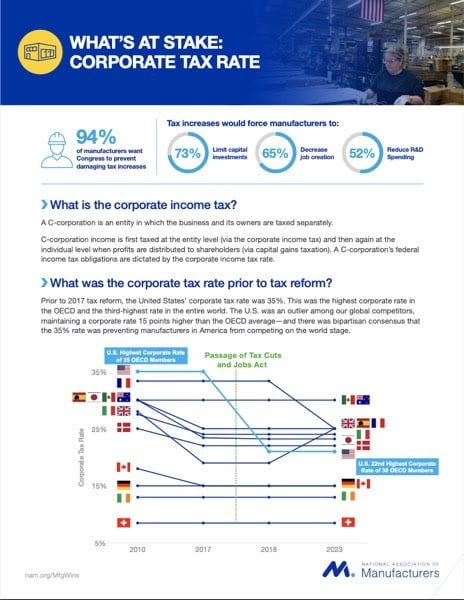
What’s at Stake: Corporate Tax Rate
Tax reform in 2017 lowered the corporate rate from 35% to 21%. But President Biden’s FY 2025 budget proposed a 28% corporate rate—which would once again subject manufacturers in the U.S. to one of the highest rates of tax in the developed world.

What’s at Stake: Estate Tax
Congress should preserve tax reform’s increased estate tax exemption threshold and maintain the tax code’s treatment of stepped-up basis. The NAM also supports full repeal of the estate tax.
