A Homegrown Solution: Schweitzer Engineering Laboratories Makes Printed Circuit Boards
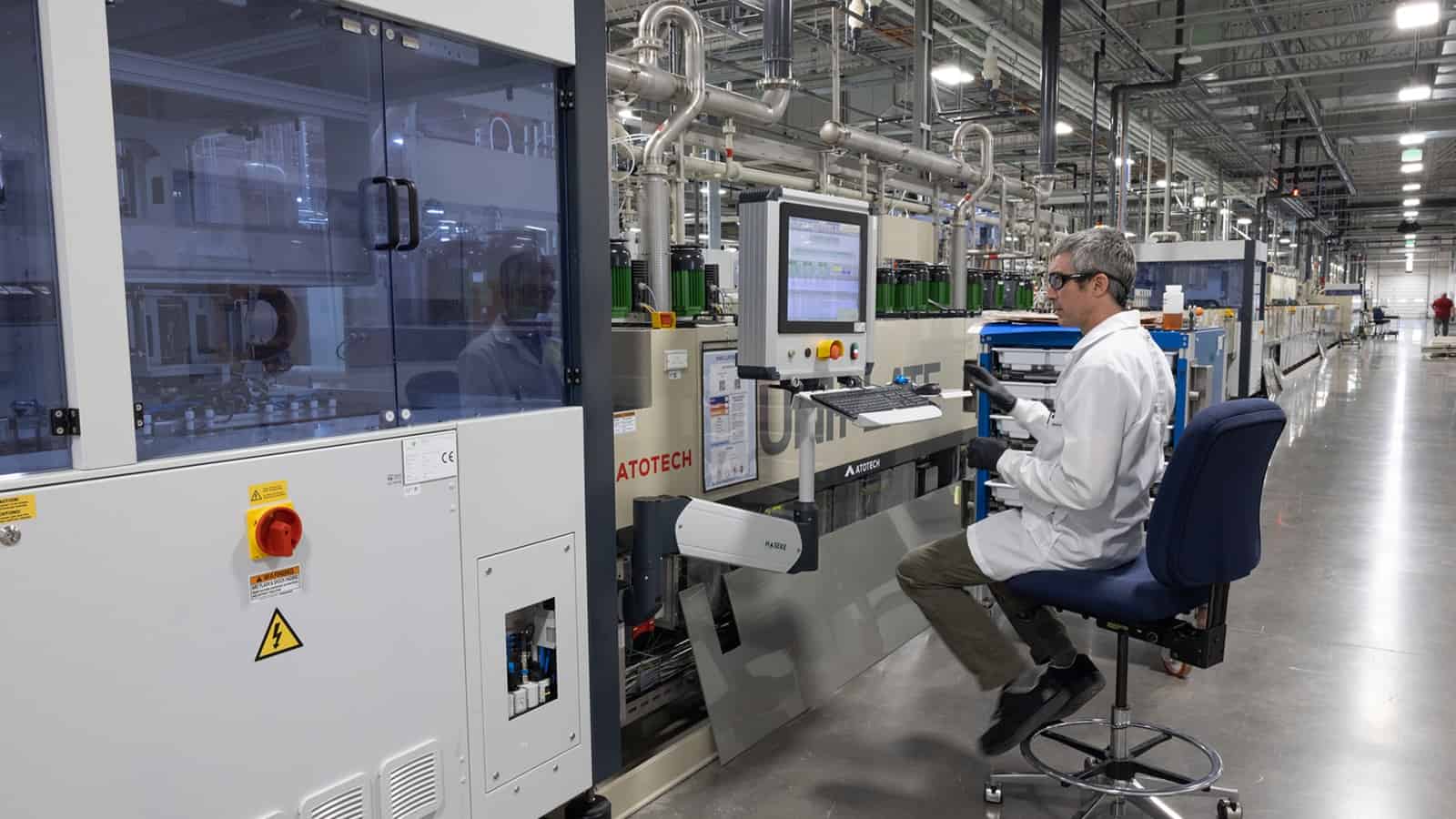
With one of its key components—printed circuit boards—in short supply, Schweitzer Engineering Laboratories chose the proactive solution: it would begin making them itself. Now that its new factory is up and running, SEL is receiving unexpectedly keen interest from other companies, and considering ramping up production for outside sales.
Fixing a supply chain problem: The Pullman, Washington–based electric power system protection solution manufacturer began manufacturing PCBs at its new $100 million, 162,000-square-foot factory in Moscow, Idaho, back in March.
- “Printed circuit boards take electronic components and interconnect them so they can interact with each other,” SEL CEO David Whitehead said. “Without them, you can forget about AI, forget about your cell phones—they’re in just about any electronic device.”
- The Moscow factory is running at about 25% capacity. When it reaches full production later this year, it will be one of the top PCB manufacturers in the U.S., according to Whitehead.
Domestic and accessible: The PCB “is a critical component that goes into our devices,” Whitehead continued. “Now, instead of sourcing PCBs from around the U.S., we can produce them ourselves.”
- The Moscow facility—which only produces the circuit boards for SEL—has increased the company’s supply chain resiliency and sped up its output, Whitehead told us. “Now, in a handful of days after designing a printed circuit board for a product, our engineers are in their labs testing it. It’s a big win for us.”
- Nearly half of manufacturers in the U.S.—44.9%—cite supply chain hurdles as one of their top business challenges, according to the NAM’s Q2 2023 Manufacturers’ Outlook Survey.
Self-funded and viable: SEL funded 100% of the facility’s construction costs, and it will have paid for itself in two to three years, Whitehead said.
- “I think that’s really a big deal for not only taxpayers but the local community generally,” he said. State and local governments “can take the funds [they didn’t use on us] and invest” elsewhere.
A good neighbor: The Moscow plant—which features a fume scrubber system that exceeds Environmental Protection Agency standards for volatile organic compounds—also uses a “zero-liquid discharge water treatment system that recycles and reuses all the water used to manufacture the printed circuit boards,” Whitehead said.
- A comparable factory would use about 90,000 gallons of water each day of production, while SEL uses about 500 to 600 gallons—the equivalent of only a few households’ daily usage, according to Whitehead. Most of that is for worker needs (drinking water and restrooms).
- The company also reclaims and reuses metals, such as tin, silver and gold, that are used in the production process.
- “We are very environmentally conscious about how we produce these boards,” Whitehead said.
What’s next? Since the facility began production, SEL has gotten numerous inquiries from other manufacturers interested in buying the PCBs. The company is likely to oblige them soon.
- “This is our next opportunity,” Whitehead said of producing boards for other manufacturers. “We love being vertically integrated, building as much as we can close to where we’re going to use the products. … As we get better at it for our own consumption, I can see us expanding it.”
DOE to Announce Carbon-Removal Project Winners

The Biden administration will soon announce the first grant winners of a multi-billion-dollar competition to speed up development of technology to “remove carbon dioxide from the sky,” according to E&E News’ CLIMATEWIRE (subscription).
What’s going on: The “awards for so-called direct air capture hubs could define the future of the nascent DAC industry in the United States as well as the broader CO2 removal sector, experts say.”
- The Department of Energy received more than a dozen proposals in response to the $3.5 billion DAC hub competition, which was created in 2021 as part of the historic bipartisan infrastructure legislation and seeks to increase the use of DAC technology.
- The projects expected to be announced this month could get “between $3 million and $500 million in matching funds” for efforts such as DAC undertakings capable of capturing and storing one million tons of carbon dioxide every year.
What it is: DAC plants use filters, power, piping and fans to remove carbon dioxide from the air and sequester it underground.
- Just 27 such facilities have been commissioned globally, and the largest of these can remove 4,000 tons of carbon dioxide from the atmosphere annually.
The economic challenge: “At the moment, it costs around $700 per ton for a DAC facility to remove carbon from the air, according to the industry data clearinghouse CDR. The Inflation Reduction Act, meanwhile, increased the tax incentives for DAC operators to $180 per ton for the CO2 they permanently store.”
- To bridge that cost gap, last year Congress ordered the Biden administration to start a pilot program to pay DAC firms and developers of carbon-removal technology to remove emissions from the air.
The final say: “Manufacturers view clean energy solutions—such as carbon capture and sequestration/storage technologies and hydrogen—as important parts of our country’s energy present and future,” said NAM Director of Domestic Economic Policy Brandon Farris.
- “Manufacturers are leading the charge in developing them and scaling them up for widespread use.”
Canadian Dockworkers, Employer Reach Deal

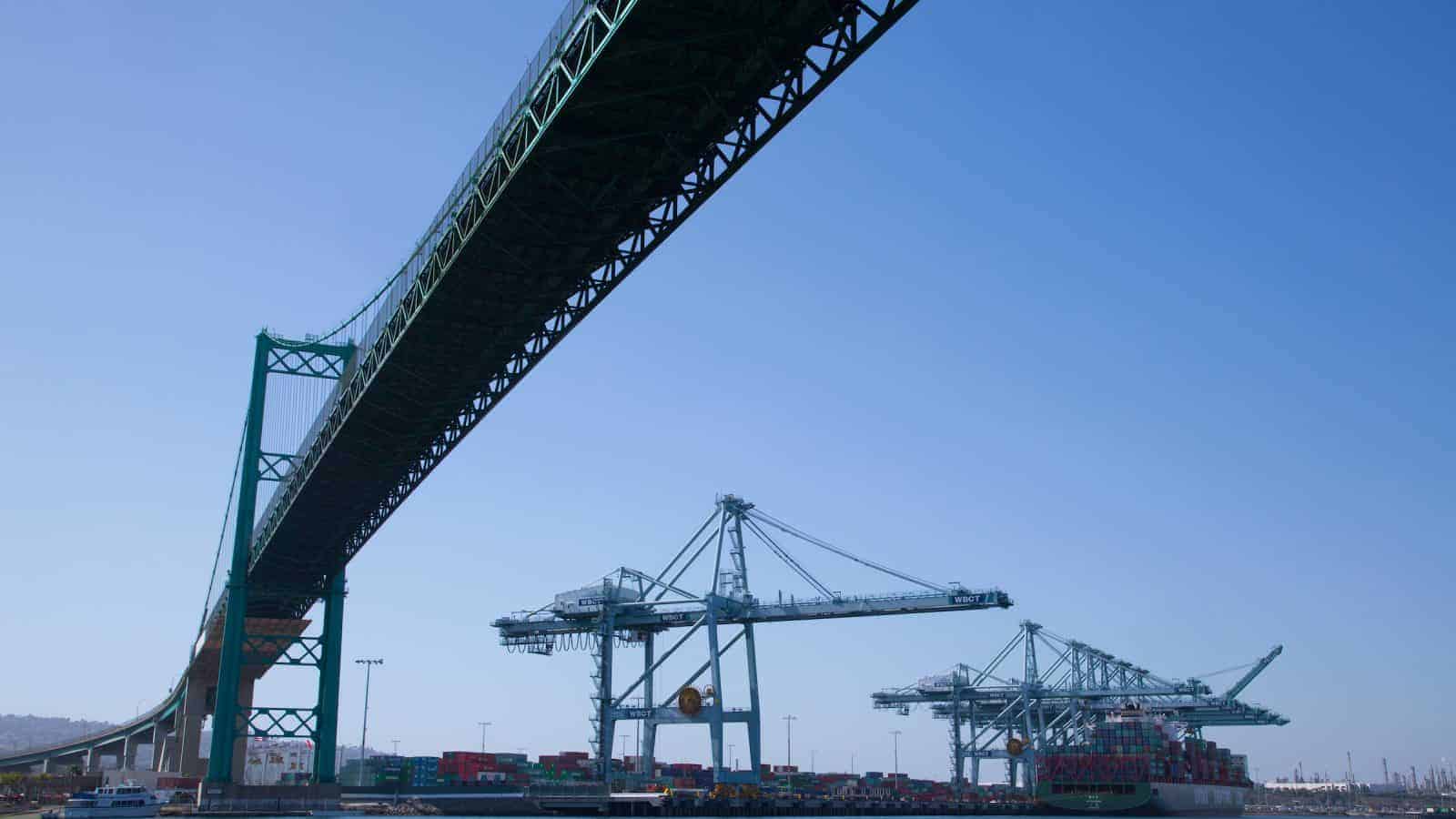
Canadian dockworkers and their employers in British Columbia agreed to a labor contract Sunday, ending the uncertainty that has plagued the North American port system for the past month, according to CNBC.
What’s going on: The International Longshore and Warehouse Union of Canada voted to ratify a four-year agreement with the British Columbia Maritime Employers Association following a tumultuous few weeks that included two dockworker strikes—one lasting 14 days and the other only a day.
- “The new deal includes increases in wages, benefits, and training,” according to BCMEA, which also said deal ratification would offer “certainty and stability for the future of Canada’s West Coast ports.”
Why it’s important: During the two-week strike, “[s]ome U.S. shippers reconsigned the destination of their containers to the U.S during that time. Other ocean carriers eventually went back to the Canadian ports and waited to unload both Canadian and U.S. freight.”
- Changes to shipping routes affect railroads, since fewer containers traveling by rail can be unloaded at ports during work disruptions.
- It could take the railroads weeks to clear the backlog of containers built up as a result of the work stoppage.
- While train trade from Canada to the U.S. is recovering, it still ended the week of July 29 with a 6.2% decrease, according to CNBC.
The NAM’s take: “Disruptions to the interconnected North American supply chain have been a constant challenge for manufacturers over the past several years,” said NAM Director of Infrastructure and Labor Policy. “We welcome the announcement that this agreement has been ratified and will continue urging swift resolution to labor negotiations that might further impede reliable and efficient freight movement.”
Utilities Scramble to Get Large Transformers

U.S. power companies are finding it increasingly difficult to get the large transformers they need to move electricity long distances—and the Department of Energy should step up to help them, the Government Accountability Office said this week, according to E&E News’ ENERGYWIRE (subscription).
What’s going on: A “GAO report called on DOE to create a plan, with deadlines, to overcome growing delays and difficulties U.S. utilities are facing in getting new large power transformers that are required to move electricity across more than 160,000 miles of U.S. high-voltage lines.”
- Most of the transformers are imported from overseas, and there is still a shortage due to pandemic-related supply chain disruptions.
- In some cases, delivery times have more than doubled, and the largest of the transformers can cost up to $10 million.
Why it’s important: “Transformers are critical for the future energy mix, as they are needed to create a larger grid for increased wind and solar generation, according to analysts.”
- In 2027 the demand by North American power companies for large transformers will likely be about twice what it was in 2020, according to the DOE.
What can be done: The DOE should create a plan to get more power companies to take part in voluntary programs to loan out spare large transformers during emergencies, the GAO recommends.
- The largest of these sharing agreements, the Edison Electric Institute’s Spare Transformer Equipment Program, had 57 participating utilities as of March.
- Thirty-one utilities in 28 states have signed onto a grid program to furnish spare transformers during cyberattacks or natural disasters.
The challenges: “[S]hortages of skilled manufacturing craftsmen able to build the transformers’ complex windings are a significant challenge … [DOE] said it is working on expanding apprenticeship programs to address the issue.”
Our take: “Transformers and transmission lines are critical to meet our growing energy security needs,” said NAM Director of Domestic Economic Policy Brandon Farris.
- “The NAM will continue working with the DOE and others to ensure that current and future needs are met, including developing the next generation of the manufacturing workforce and breaking down permitting barriers to expedite the buildout of our grid.”
NAM Pushes Back on New Emissions Standards
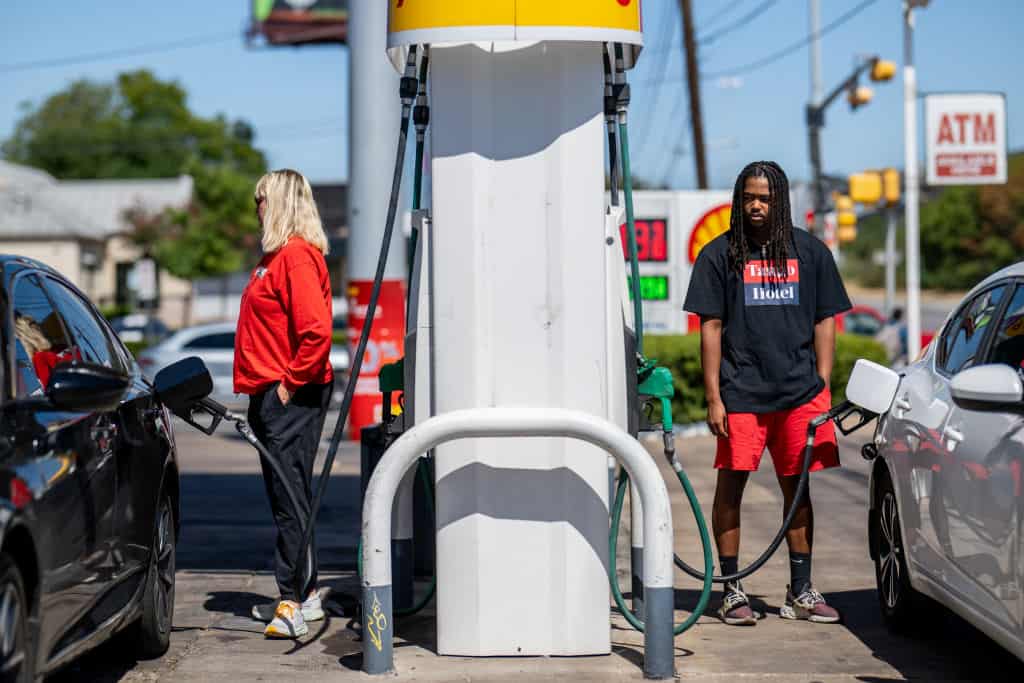
The Biden administration’s new fuel-economy standards are too aggressive and add conflicting mandates to on-the-books regulations, the NAM said Friday.
What’s going on: The Department of Transportation’s National Highway Traffic Safety Administration issued a proposal calling for a revision of current Corporate Average Fuel Economy standards for cars and light-duty trucks—to a fleet average of 58 miles per gallon by 2032.
- The draft rules are a complement to regulations released “in April that are the strictest on record and push automakers to make the majority of their sales electric vehicles,” reports Auto Dealer Today.
Why it’s problematic: “Auto manufacturers have been making historic investments to ensure that electric vehicles will have a growing place on America’s roads,” said NAM President and CEO Jay Timmons. “However, the NAM has concerns over the three different sets of standards governing light- and medium-duty vehicles. For instance, the Environmental Protection Agency’s proposed regulation on light- and medium-duty vehicles would require 67% of new manufactured vehicles to be battery electric by 2032 and is too aggressive.”
- Some of the rules that have been put forth recently by federal and state agencies conflict with one another, and some—particularly those released by the EPA—would increase the cost of both manufacturing and purchasing vehicles.
- “In addition, the federal government should not dictate the vehicle choices offered to consumers,” Timmons pointed out. “The administration should allow the market and consumers to grow the number of electric vehicles, rather than depending on a single technology to meet this goal.”
What can be done: “[T]hese regulations should be harmonized to create a single unified standard for vehicle emissions, so manufacturers do not have to navigate three often-conflicting targets, which raise costs for manufacturers and consumers,” Timmons continued.
What we’re doing: In June, the NAM and members of the NAM’s Council of Manufacturing Associations and Conference of State Manufacturing Associations launched Manufacturers for Sensible Regulations, a coalition aimed at addressing the negative effects of the multiple, often contradictory regulations being handed down by federal agencies.
Manufacturers to White House: Emissions Standards Adding Unnecessary Costs, May Stifle Innovation
Washington, D.C. – In response to the National Highway Traffic Safety Administration’s release of new Corporate Average Fuel Economy standards, National Association of Manufacturers President and CEO Jay Timmons released the following statement:
“Auto manufacturers have been making historic investments to ensure that electric vehicles will have a growing place on America’s roads. However, the NAM has concerns over the three different sets of standards governing light- and medium-duty vehicles. For instance, the Environmental Protection Agency’s proposed regulation on light- and medium-duty vehicles would require 67% of new manufactured vehicles to be battery electric by 2032 and is too aggressive.
“Federal and state agencies are promulgating competing rules, and the EPA’s rules, in particular, would make it costlier for manufacturers to make these vehicles and for consumers to purchase them. When you add the drastic need to build transmission lines to accommodate the demand for charging infrastructure and the challenge of obtaining critical minerals for batteries—many of which are extracted or processed in China—you create a scenario where an ambitious rule becomes a nearly impossible benchmark.
“Consumers and the industry need a more realistic path to reducing vehicle emissions. Federal and state agencies should draft rules that recognize the longer timeframe needed for our nation to build the charging infrastructure and a reliable supply chain for the critical minerals to make batteries to support more electric vehicles. Rules should also be structured to allow the industry additional time to make more electric vehicles available for consumers, and in the quantities needed to eventually achieve the administration’s goals. In addition, the federal government should not dictate the vehicle choices offered to consumers in meeting this goal. Plug-in hybrids, fuel cell electric vehicles and battery-electric cars can all help reduce vehicle emissions over time. The administration should allow the market and consumers to grow the number of electric vehicles, rather than depending on a single technology to meet this goal.
“Finally, these regulations should be harmonized to create a single unified standard for vehicle emissions, so manufacturers do not have to navigate three often-conflicting targets, which raise costs for manufacturers and consumers. The NAM looks forward to working with the administration to ensure vehicle standards meet consumer demand while providing manufacturers in the U.S. more opportunities to create jobs, develop new technologies and become even more globally competitive.”
Background: Recently, the NAM, members of the NAM’s Council of Manufacturing Associations and Conference of State Manufacturers Associations launched Manufacturers for Sensible Regulations, a coalition addressing the impact of the current regulatory onslaught coming from federal agencies.
According to the NAM’s Q2 2023 Manufacturers’ Outlook Survey, more than 63% of manufacturers report spending more than 2,000 hours per year complying with federal regulations, while more than 17% of manufacturers report spending more than 10,000 hours. The NAM survey also highlighted that only 67% of manufacturers are positive about their own company’s outlook, the lowest since Q3 2019. It shows the consequences of regulations: If the regulatory burden on manufacturers decreased, 65% of manufacturers would purchase more capital equipment, and more than 46% would increase compensation.
-NAM-
The National Association of Manufacturers is the largest manufacturing association in the United States, representing small and large manufacturers in every industrial sector and in all 50 states. Manufacturing employs nearly 13 million men and women, contributes $2.91 trillion to the U.S. economy annually and accounts for 55% of private-sector research and development. The NAM is the powerful voice of the manufacturing community and the leading advocate for a policy agenda that helps manufacturers compete in the global economy and create jobs across the United States. For more information about the NAM or to follow us on Twitter and Facebook, please visit www.nam.org.
Michigan Homebuilders Push Back on Air Quality Proposal

“Policy can’t be developed in a vacuum,” says Dawn Crandall, executive vice president of government relations for the Home Builders Association of Michigan. “People need to look at how one policy impacts that next thing. Everything is tied together.”
That’s Crandall’s message for the Environmental Protection Agency, as it considers a proposed air quality rule to restrict particles called PM2.5. While the regulations might not appear to impact the housing industry directly, they could prevent manufacturers from expanding facilities and creating jobs in Michigan—which does affect the housing market.
The concern: If manufacturers are unable to grow in the state or open new facilities, fewer people will need housing. That’s bad news for homebuilders.
- “If you put in these EPA regulations that are going to create a barrier for companies looking to move here, and then they decide they don’t want to, that’s going to impact Michigan’s ability to be an economic destination,” said Crandall.
- “And if you make it harder for businesses to employ employees, then they don’t need housing. That has a big impact on us.”
A shaky foundation: Michigan’s housing industry is still recovering from the significant downturn it experienced about 15 years ago.
- That slump was dramatic: according to Crandall, the number of permits filed in Michigan for single-family homes fell sharply from 54,721 in 2005 to around 15,000 two years later, bottoming out to about 6,900 in 2009.
- Although the industry has seen some recovery since then, new construction remains relatively low, and Crandall worries that shocks caused by the EPA’s proposed regulations could do further harm.
- “I think we’ve hit rock bottom, and we’re slowly coming out of it,” said Crandall. “But we’re only projecting 16,000 single-family permit builds this year—and anything that’s going to impact residential construction is not good for the state of Michigan.”
Another challenge: Ultimately, Crandall is concerned that the EPA’s proposed rule will simply add to a long list of challenges for homebuilders.
- “We’re already facing enough hurdles,” said Crandall. “There’s a lack of skilled workers who can do residential construction. Material costs peaked during COVID. We get a lot of our lumber from Canada, so these Canadian wildfires could have an impact. So if PM2.5 is going to affect economic development in our state, that’s going to have an impact on us, too.”
The big idea: “We’re all connected in some form or fashion,” said Crandall. “Michigan needs to grow our population, and we can’t do that if companies don’t bring people into our state who want to live, work and play here. We’re one big ecosystem.”
AV Advocates to Congress: Act on Self-Driving Cars

Regulatory inertia on self-driving cars is putting manufacturers in the U.S. at a disadvantage, but Congress can help by expanding automakers’ ability to test and ultimately sell the vehicles, industry advocates said at a House Energy and Commerce Committee hearing Wednesday, according to ABC News.
What’s going on: “Currently [automated vehicle] manufacturers can deploy a maximum of 2,500 self-driving vehicles for testing, provided they have permission from the National Highway Traffic Safety Administration. AV advocates have complained that the limits represent a bottleneck that is holding back the growth of the industry at a crucial time.”
What’s being requested: One of the bills considered during Wednesday’s markup is an updated version of a 2017 measure on AV regulations that passed the House but stalled in the Senate.
- AV advocates point to data that shows reports of accidents involving these cars are exaggerated and the cutting-edge safety technology can be more reliable than human drivers in avoiding crashes.
- The issue of liability in case of an accident, however, remains a major point of contention in legislative progress. “Each one of these [crashes] is still going to be subject to a plaintiff’s lawyer, an insurance company and a defense lawyer,” Rep. Kelly Armstrong (R-ND) said. “And until we’ve figured that out, this is just a science project.”
Safety data: An analysis of the first 1 million miles of AV use by Cruise AV—the self-driving vehicle unit of General Motors—showed the cars to have a significantly better safety record than human drivers, CEO Kyle Vogt said on an earnings call this week.
- There were 54% fewer collisions and 92% fewer crashes in which the AV was at fault, Vogt said.
The last word: “The expansion of AVs into our national transportation system is an opportunity to lead by enhancing safety on our roadways, improving transportation mobility and increasing efficient goods movement across our strained supply chains,” said NAM Director of Transportation Policy Ben Siegrist.
- “Manufacturers are on the cutting edge of vehicle technology research and development, and improving the federal regulatory landscape is a necessary step to grow the American AV industry into a global economic engine.”
Senate Moves to Onshore Uranium Production

The Senate voted overwhelmingly to create a Nuclear Fuel Security Program aimed at bolstering U.S. supplies of enriched uranium, according to the Senate Committee on Energy and Natural Resources.
What’s going on: On Thursday, the Senate voted 96–3 to include Sen. John Barrasso’s (R-WY) Nuclear Fuel Security Act amendment in next fiscal year’s National Defense Authorization Act.
- The “[a]mendment … directs the Department of Energy (DOE) to prioritize activities to increase domestic production of low-enriched uranium (LEU) for existing reactors and accelerate efforts to ensure the availability of high-assay, low-enriched uranium (HALEU) for advanced reactors,” according to the committee press release.
- The bipartisan measure was introduced in February by Sens. Barrasso, Joe Manchin (D-WV) and Jim Risch (R-ID); in May, it was passed by voice vote.
Why it’s important: Most of the advanced nuclear reactor concepts set to come online in the next few years require HALEU—and Russia is the only viable commercial supplier, according to E&E News’ ENERGYWIRE (subscription).
- “Russia now supplies 24% of our enriched uranium imports,” Sen. Barrasso said before the committee on Thursday. “We spend nearly $1 billion each year on Russian uranium. Russia uses these revenues to fund its invasion of Ukraine. Here in America, we have the resources to fuel our own reactors. My amendment authorizes the Department of Energy to take the steps necessary to expand U.S. nuclear fuel production.”
The NAM’s role: The NAM has strongly advocated for the development of nuclear energy, which will play a critical role in U.S. energy security and decarbonization efforts.
- As NAM President and CEO Jay Timmons told Congress in June, “Nuclear energy can help the U.S. generate more clean energy, stabilize our grids and improve our energy security.”
A Renewables Industry Faces Headwinds

The Biden administration is hoping offshore wind farms will provide enough power for 10 million homes by the end of this decade—but energy companies are having trouble financing the projects, according to POLITICO.
What’s going on: “Up and down the Northeast—the center of the burgeoning [wind power] industry … energy companies have struggled to finance their projects, going hat in hand to governors and utility regulators asking for more money so they can start building the turbines they have already promised to deliver.”
- Many consumers concerned about already increasing energy costs are wary of more taxpayer funds going to such projects—but without additional government funds, many current wind projects may not get built at all.
The big picture: “Offshore wind takes a combination of state and federal green lights to work. … Federal, state and local permits all have to be secured to make the projects a reality, which gives opponents numerous chances to stall or kill projects.”
- Thus far, federal regulators have approved just three offshore wind projects nationally—underlining the dire need for permitting reform, which the NAM has long called for.
- Meanwhile, “Only seven offshore wind turbines are producing power and just two of the larger projects are truly under construction,” according to POLITICO.
States struggle: Wind-power projects in New Jersey and Massachusetts are facing financial hurdles, with the costs for one project increasing 30% since approval two years ago.
- Geopolitics and the larger economy have weighed on U.S. wind power, too. “Inflation is up—the cost of steel has soared since the pandemic—interest rates are higher and the labor market is tighter. Paradoxically, the war in Ukraine made clear how important domestic energy is while at the same time driving up the costs to produce it.”
The NAM says: “Manufacturers depend on access to reliable and affordable energy, which is why the NAM strongly supports reforms that would foster transparent, streamlined and timely federal regulatory processes,” said NAM Vice President of Domestic Economic Policy Brandon Farris.
- “Our antiquated permitting system is driving up construction costs and has the potential to reduce energy security. The NAM will continue to fight for common-sense permitting reforms that expedite the development of many energy projects, including renewables.”