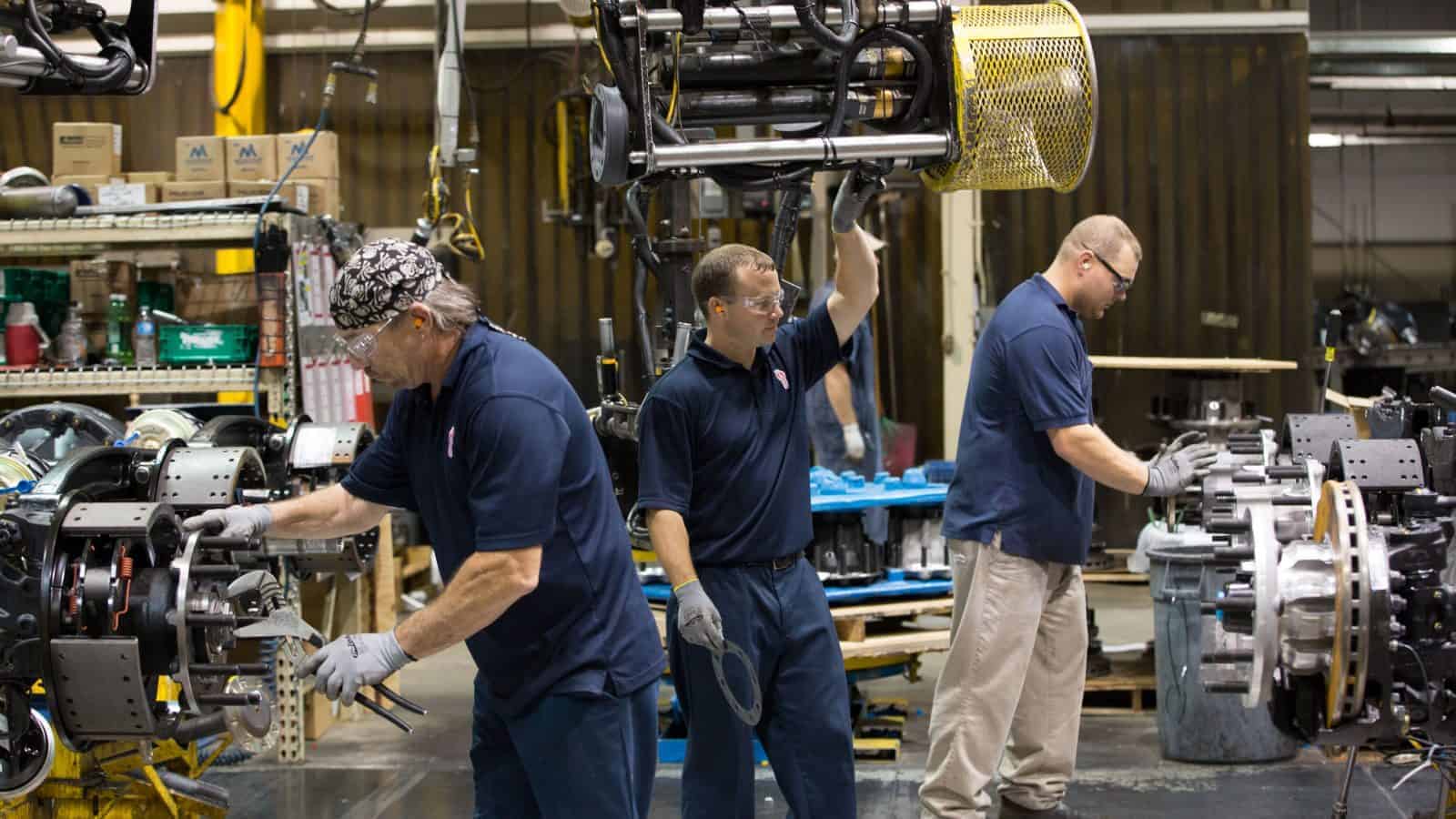
Manufacturers Celebrate Veterans at Heroes MAKE America Event
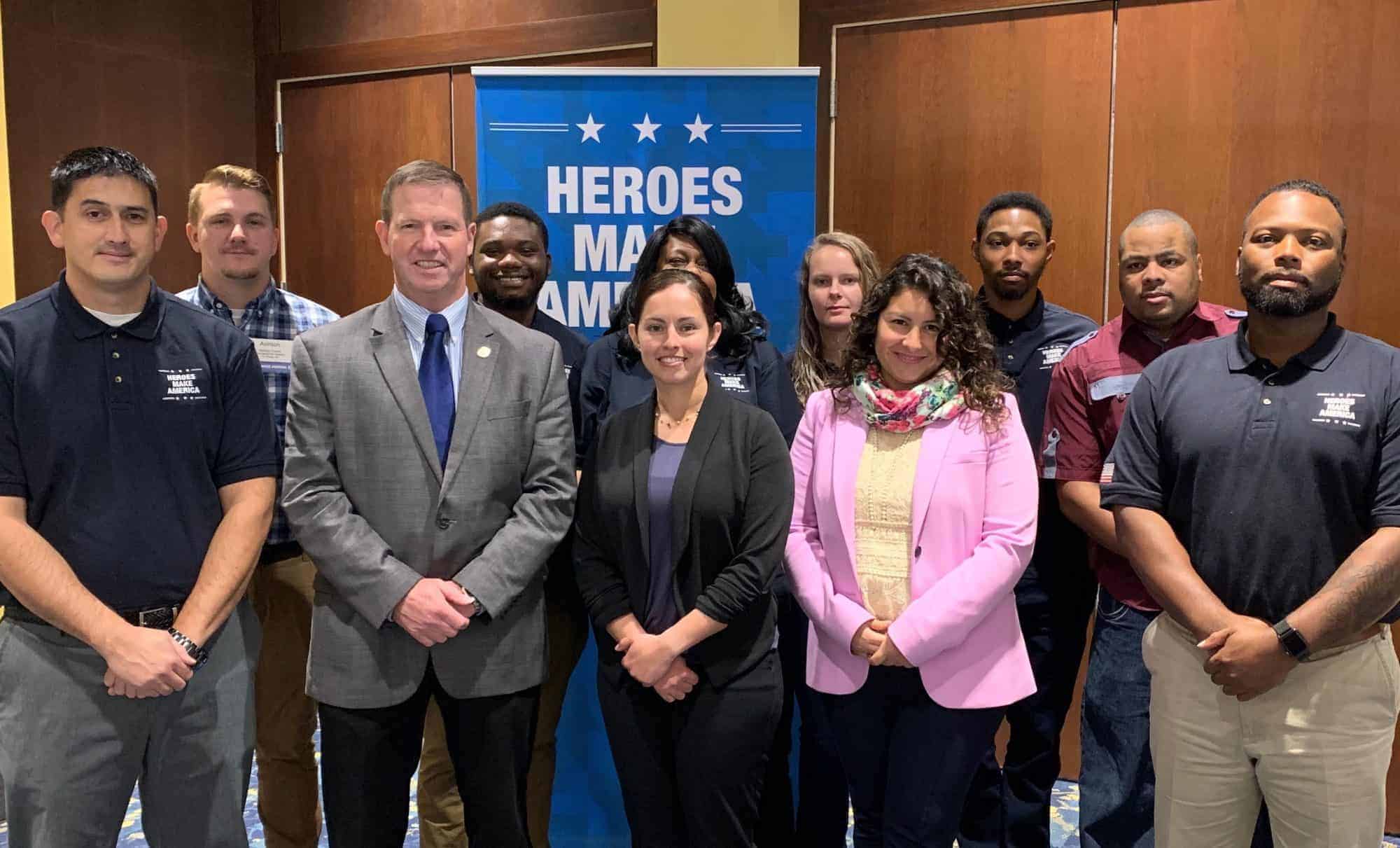
On Tuesday, North Carolina’s Fort Bragg was the site of an event to celebrate America’s veterans and to highlight opportunities available in manufacturing for transitioning service members and their families.
The event was presented by The Manufacturing Institute, the workforce and education partner of the National Association of Manufacturers. The program highlighted the Institute’s Heroes MAKE America program, which aims to build a mutually beneficial pipeline between the military and manufacturing. Major manufacturers like Samsung, Novelis and Ingersoll Rand and the Arconic Foundation have supported the program and continue to be partners in supporting veterans who are interested in the rewarding careers modern manufacturing offers.
“Heroes MAKE America helps transitioning service members develop a well-paying, interesting and productive career after they complete their service,” said Carolyn Lee, Executive Director of The Manufacturing Institute. “These individuals are in possession of the exact qualities and advanced skills that manufacturers seek, and the program prepares them be leaders in the industry.”
More than 200,000 men and women transition out of the military each year. There are about 500,000 jobs open in the manufacturing industry right now, and estimates suggest that manufacturers will need to fill 4.6 million jobs by 2028.
“The manufacturing industry presents an opportunity where specialized skills are utilized and workers contribute to projects that improve the world around them each and every day,” said Lee. “Heroes MAKE America connects transitioning service members to careers where they feel valued, inspired and where they can leverage the skills and training they developed in the military. Manufacturers that hire Heroes graduates also get workers with advanced specializations whose experiences make them prepared for new training and who show up on day one ready to lead and complete their new mission.”
The Heroes MAKE America program is growing rapidly, exploring new training options for 2020 and beginning to include participants from the National Guard as well as military spouses and fully separated veterans. The program is also planning to pilot online and hybrid models to encourage more participants who aren’t able to join full-time, diversifying its offerings and expanding its partnerships to include additional manufacturers and opportunities for veterans. So far this year, the program has graduated more than 125 individuals. More than half of all Heroes participants have over a decade of military service, and approximately one-quarter of Heroes graduates are in supervisory roles. The average salary of all graduates is nearly $70,000, with those in hourly roles making an average of $20 an hour.
The event’s program featured an informal reception, remarks by retired Army Sgt. Maj. Kenneth Preston and a panel of Heroes MAKE America graduates—including Joseph Smith, who has previously been profiled by the NAM.
Manufacturers Urge Support for DACA Ahead of SCOTUS Decision

The U.S. Supreme Court heard oral arguments today on the Deferred Action for Childhood Arrivals program, a case that will decide the future of more than 800,000 immigrants living in the United States and will have serious implications for America’s workforce. The National Association of Manufacturers filed an amicus brief with 143 companies calling for the Supreme Court to uphold DACA while outlining the importance of Dreamers to America’s workplaces and the American economy.
“Eliminating DACA will inflict serious harm on U.S. companies, all workers, and the American economy as a whole. Companies will lose valued employees. Workers will lose employers and co-workers,” the brief states. “Our national GDP will lose up to $460.3 billion, and tax revenues will be reduced by approximately $90 billion, over the next decade.”
Established in 2012, DACA allowed undocumented immigrants who had been brought to the United States as children to apply for protection from deportation and permission to work in the United States. In 2017, the Trump administration rescinded the program, leading to a series of lawsuits that has brought the case to the Supreme Court. DACA recipients, often called “Dreamers,” will lose their work authorization and face possible deportation if the program is rescinded.
“Dreamers have become an integral part of our society and our workforce and have the potential to offer so much more to our country if they can continue their pursuit of the American Dream,” said Linda Kelly, NAM senior vice president of legal, general counsel and corporate secretary. “The NAM supports DACA’s work authorization for more than 800,000 individuals to help meet the workforce challenges facing manufacturers and to allow those people to continue to contribute to their companies, communities and families—as well as this country, which for many is the only home they have ever known.”
Earlier this year, the NAM released “A Way Forward,” a comprehensive and practical proposal designed to fix our broken immigration system. The plan calls for a pathway to citizenship for DACA recipients as well as similar opportunities for the broader Dreamer community, which encompasses about 1.5 million people. Overall, “A Way Forward” highlights seven core areas of action that would bolster national security, uphold the rule of law and establish a modern, well-functioning system for welcoming new people to the United States. The uncertainty over the future of DACA recipients highlights the urgent need for Congress to pass bipartisan comprehensive immigration reform that achieves these goals.
The Supreme Court is expected to issue a decision on DACA by June 2020.
FAME Program Gives Student Jumpstart in Auto Career
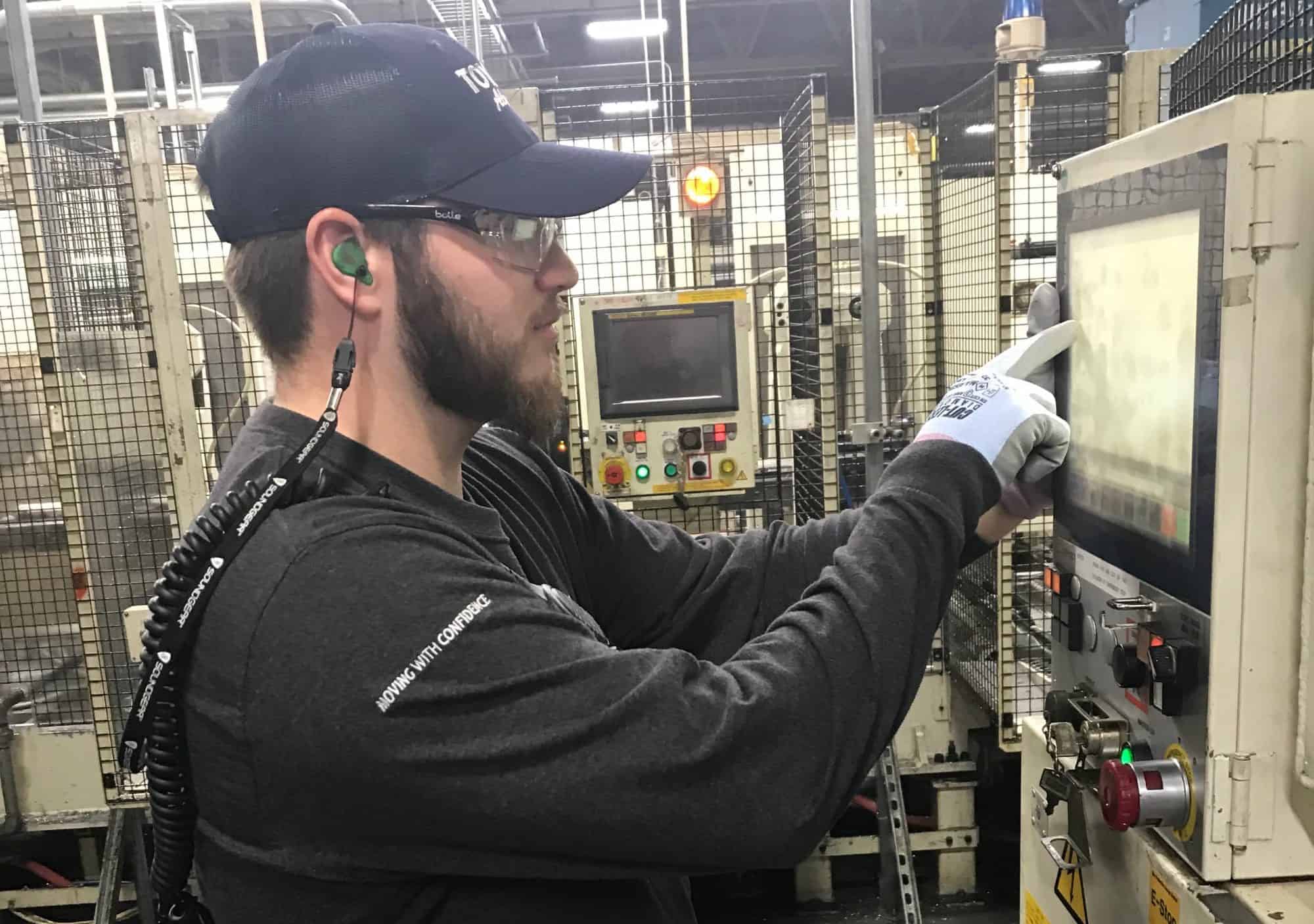
Austin Wilhite comes from a woodworking family. But even a few years ago, when he was a teen working in his uncle’s framing business, Austin Wilhite couldn’t have imagined that an apprenticeship program would lead him to a career in maintenance and manufacturing. Today, in his role as a Multicraft Maintenance Technician at Toyota Alabama, he’s excited about the opportunities he has unlocked.
“I always enjoyed building stuff and fixing things with my hands,” said Wilhite. “But I didn’t even know this career was a possibility.”
As a top student in his high school Agriculture Education class, he was encouraged by a teacher to attend a meeting about the Federation for Advanced Manufacturing Education (FAME). Originally developed and refined by Toyota, stewardship of the FAME program has recently transitioned to The Manufacturing Institute, the education and workforce partner of the National Association of Manufacturers.
FAME trains students of all ages and backgrounds, from recent high school graduates to experienced manufacturing employees looking to advance their careers. FAME is an earn-and-learn apprenticeship where students spend time in the classroom and on the shop floor. After two years, students graduate with an Advanced Manufacturing Technician degree and no student debt. FAME chapters are currently operating in 13 states, and the Manufacturing Institute intends to further expand the program nationwide.
“It was a really good program,” said Wilhite. “You go to work and you see the things you’re learning about in school, but then you also get to see the more advanced work you’re headed into. You can see the change—at the beginning, you’ve never been in a plant or seen any of this stuff. And then all of a sudden, you’re able to understand how to troubleshoot and fix machines the proper way.”
Three years after graduating from FAME, Wilhite is a testament to what graduates of this program can accomplish. His new career has opened financial doors for him; the money he earned during the FAME apprenticeship helped him replace his car so that he could get to and from work reliably. The year he graduated, he was able to purchase a new house, and a year later, he bought a new truck.
“I’m the only person I know who, at 20 years old, was able to buy a new house,” said Wilhite. “The program is a commitment, but I’ve been able to reward myself for making that commitment. Without the program, I definitely wouldn’t be where I am now.”
Wilhite is enthusiastic about his career prospects and proud of the new skills he has cultivated through the training he received in the FAME program.
“It’s a really good career,” said Wilhite. “Maintenance people are in really high demand. The program gives you the fundamentals of being able to work with your hands and fix things on your own. Plus, it’s a lot of problem-solving—and that’ll help you in your life.”
Learn more about the Manufacturing Institute’s FAME apprenticeship program.
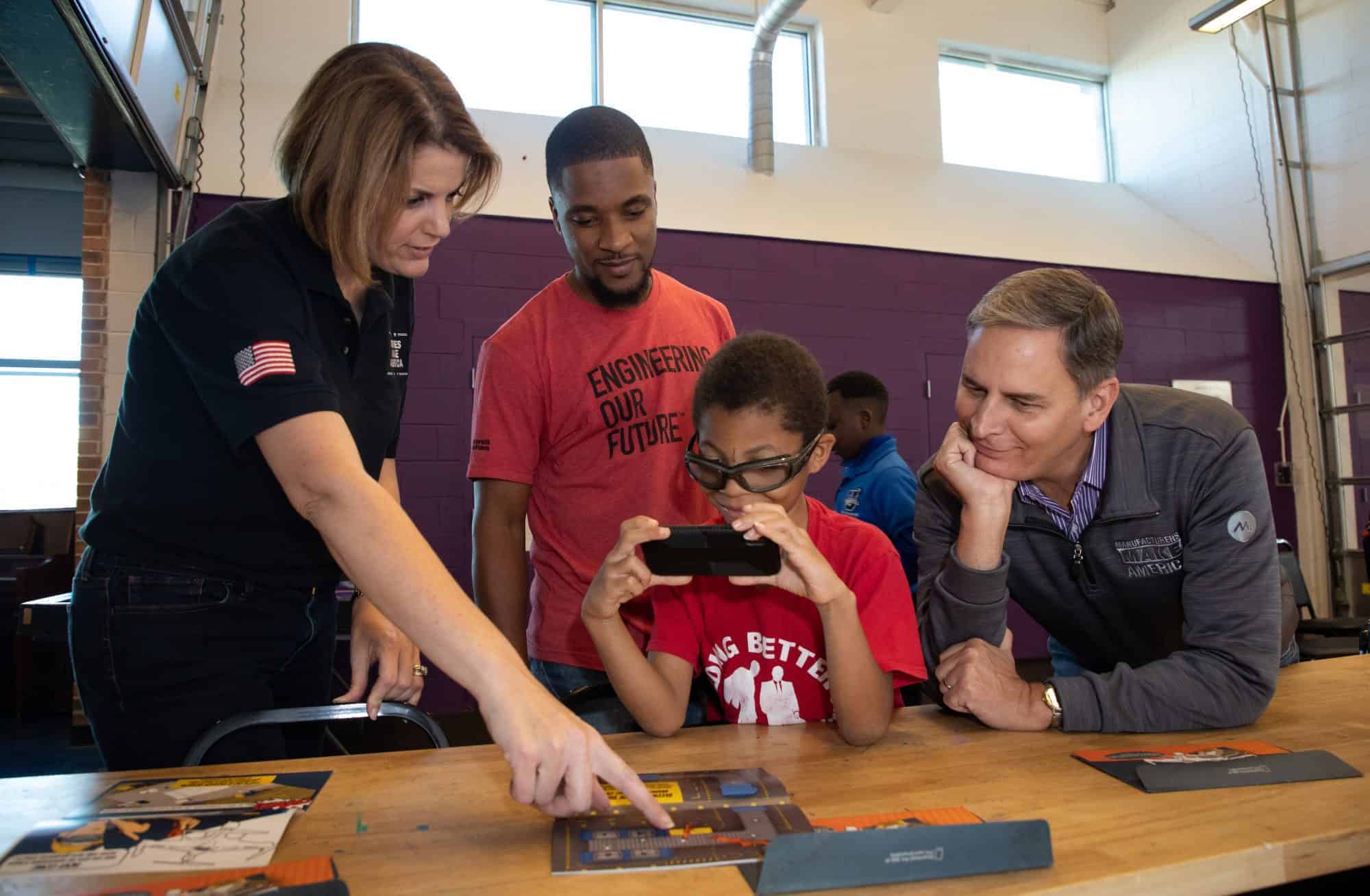
Today thousands of manufacturers and educational institutions across the country are opening their doors to students, parents, teachers and community leaders to celebrate Manufacturing Day. Led by The Manufacturing Institute, the National Association of Manufacturers’ workforce and education partner, Manufacturing Day shows students what a career in modern manufacturing looks like.
The Manufacturing Institute’s Executive Director Carolyn Lee will be in Greensboro, GA, at a Novelis facility.
#MFGDay19 is finally here! I’m headed to @Novelis in Greensboro, GA today. Can’t wait to show students what modern manufacturing looks like! https://t.co/OcDHgo0VYJ pic.twitter.com/efXtrG0Cbb
— Carolyn Lee (@cleeNAM) October 4, 2019
NAM’s President and CEO Jay Timmons will be joining a Manufacturing Day event at a Samsung facility in Newberry, SC.
In Newberry, SC, today to join @SamsungUS for their #MFGDay19 event! Going to be a great day showing students what a career in modern manufacturing can offer. Learn more: https://t.co/y4RjnAjie2 pic.twitter.com/e0m7oomFgk
— Jay Timmons (@JayTimmonsNAM) October 4, 2019
To keep up with the latest Manufacturing Day festivities, check out the MI and NAM on Twitter, plus the dedicated Manufacturing Day Twitter. Join the social media conversation by using the hashtag #MFGDay19 in related posts.
NAM in 5 Photos: Week of Sept. 9
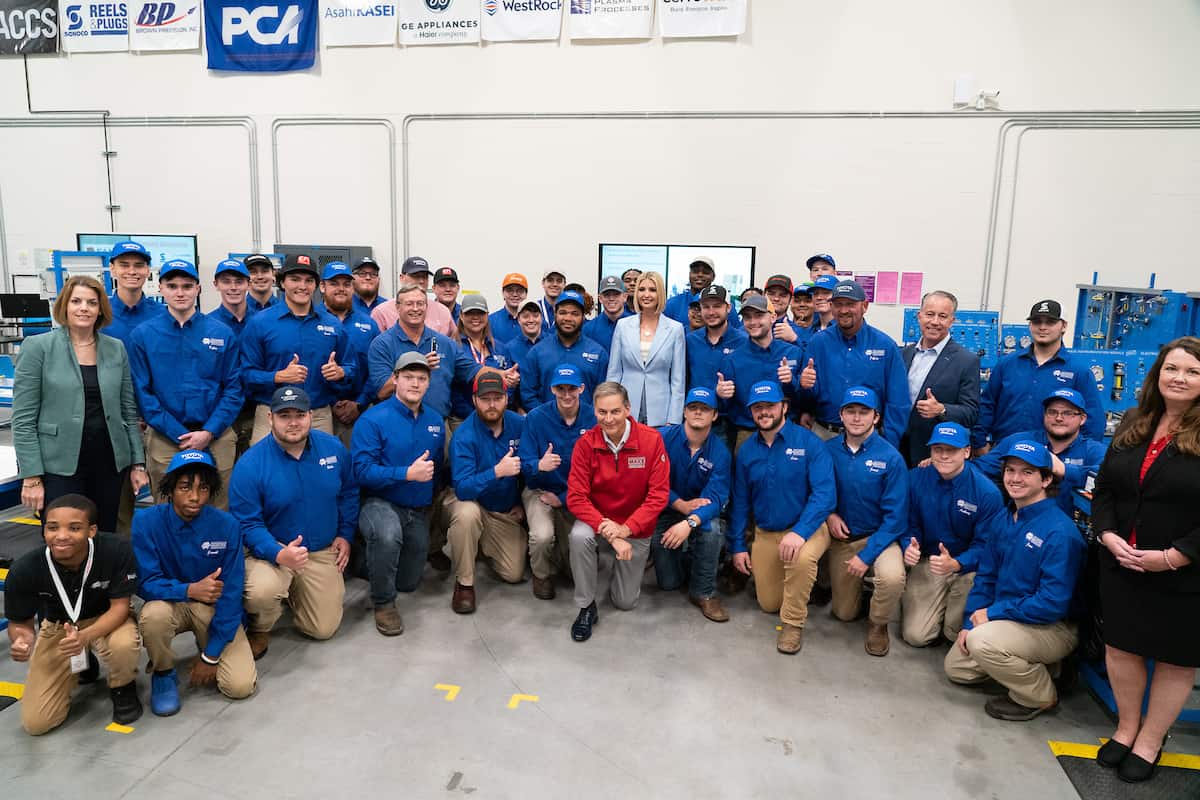
This week, the National Association of Manufacturers helped move the manufacturing industry forward on three major fronts.
- The NAM’s workforce and education partner, the Manufacturing Institute, announced it will expand Toyota North America’s successful FAME apprenticeship program nationwide. The MI’s Executive Director Carolyn Lee, the NAM’s CEO Jay Timmons, Special Advisor to the President Ivanka Trump, TMNA’s Executive Vice President Chris Nielsen and Ingersoll Rand CEO Michael Lamach shared this news during a roundtable with FAME apprentices.
- At the NAM’s headquarters, Export-Import Bank President and Chairwoman Kimberly Reed participated in a roundtable with manufacturers to discuss the critical bank reauthorization.
- Also at the NAM’s headquarters, Environmental Protection Agency Administrator Andrew Wheeler and Assistant Secretary of the Army for Civil Works R.D. James joined Timmons to announce the finalization of a rule to repeal the controversial 2015 Waters of the United States rule and clear the way for a new rule to protect America’s water resources without overstepping the bounds of the law.
Manufacturing Institute to Expand FAME Apprenticeship Program
The National Association of Manufacturers, the Manufacturing Institute and Toyota Motor North America on Tuesday announced the operational and stewardship transition of Toyota’s Federation for Advanced Manufacturing Education (FAME) program to the MI.
https://twitter.com/AlexGangitano/status/1171392933397966849
NAM CEO Jay Timmons and MI Executive Director Carolyn Lee were joined by Advisor to the President Ivanka Trump at Alabama Robotics Technology Park in Huntsville, AL, for the announcement.
Today, I am visiting the Alabama Robotics Technology Park to learn more about their FAME apprenticeship program and their partnership with @ShopFloorNAM (NAM signed our #PledgetoAmericasWorkers in July and committed to 1.2 Million NEW training opportunities!)
— Ivanka Trump (@IvankaTrump) September 10, 2019
FAME apprentices receive a two-year industrial degree, Advanced Manufacturing Technician, while working in their sponsor’s manufacturing facility. FAME trains students of all ages and backgrounds, from recent high school graduates to experienced manufacturing employees looking to advance their careers.
.@ToyotaPolicy has built an incredible apprenticeship program with FAME. I’m honored that the @TheMFGInstitute will continue and build on that success. https://t.co/66Vz5w8313 pic.twitter.com/qygxa3fHga
— Carolyn Lee (@cleeNAM) September 10, 2019
FAME chapters are currently operating in 13 states, and the MI will expand the program nationwide.
Toyota is proud to have started this workforce development program and see it grow so more American workers can benefit. https://t.co/bqzbgBbrxa
— Toyota Policy (@ToyotaPolicy) September 10, 2019
Education pathways to skilled careers and an expansion of apprenticeship programs are key goals of the NAM and MI’s Creators Wanted Fund, a campaign to inspire more Americans to pursue careers in modern manufacturing.
Thanks again to @IvankaTrump for coming to @TheMFGInstitute’s and @ToyotaPolicy’s FAME apprenticeship announcement! Our industry is stepping up to provide opportunities for Americans to find meaningful careers. https://t.co/qw9ljPPClU
— Jay Timmons (@JayTimmonsNAM) September 10, 2019
For more information, read the MI’s press release.
Attract the Next Generation by Getting Involved in Manufacturing Day
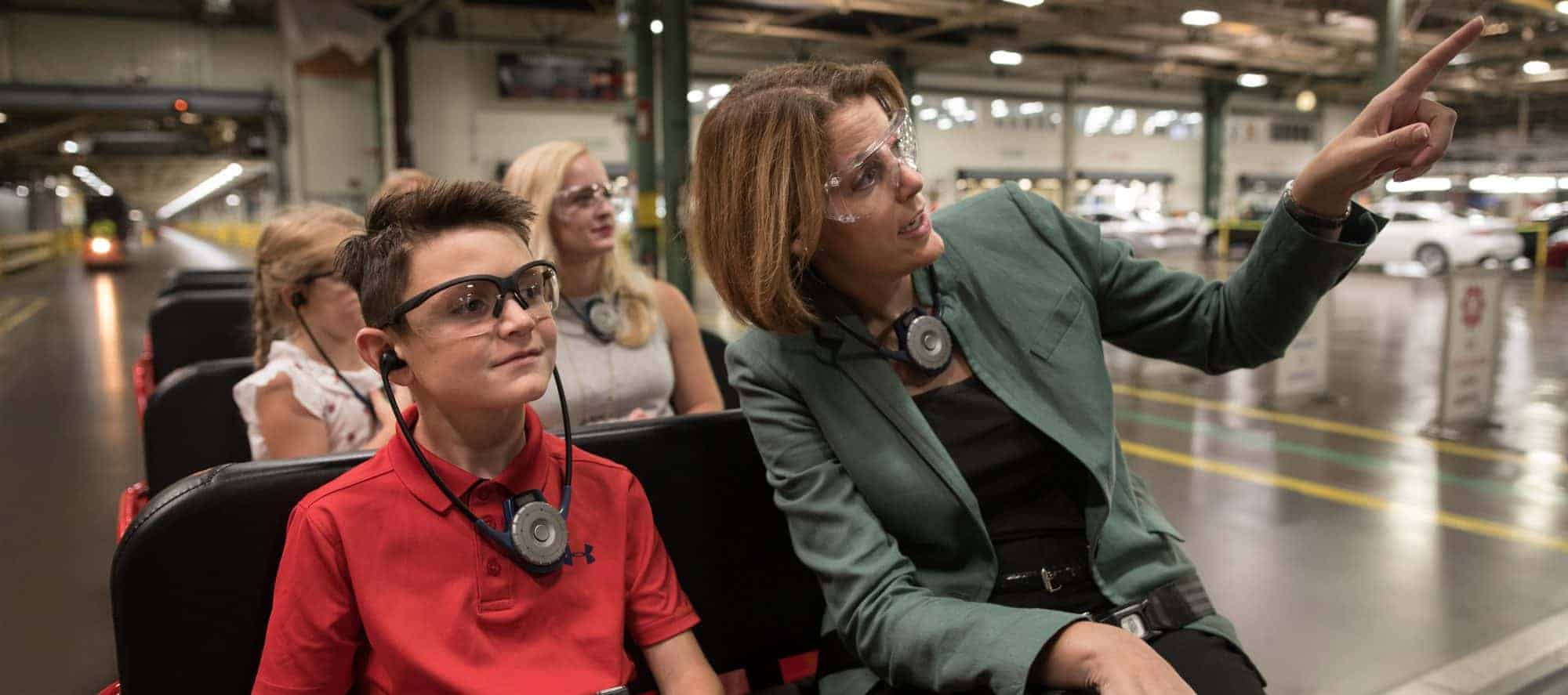
Manufacturing Day, led by the Manufacturing Institute and the National Association of Manufacturers, is kicking off on Oct. 4.
Carolyn Lee, the Manufacturing Institute’s executive director, explains what makes this event unique, why it’s personally important to her and how you can get involved.
What is Manufacturing Day?
Manufacturing Day shows off what modern manufacturing looks like. Kicking off on the first Friday in October—and continuing throughout the month—this annual event helps manufacturing companies and educational institutions open their doors to students, parents, teachers, community leaders and more. Manufacturing Day shows students why they should consider a career in manufacturing and what skills manufacturing companies are looking for in job candidates.
How does Manufacturing Day make a difference for students?
On Manufacturing Day last year, hard material manufacturer CERATIZIT hosted an event in Michigan. At the beginning of the day, they asked the group who was interested in a career in manufacturing. Only three or four students raised their hands. The students then spent the day taking the tour of the facility, trying out CERATIZIT’s products and using CAD software to make their own keychains. At the end of the day, they were asked the same question about who would be interested in a career in manufacturing. This time, there were only three or four students who didn’t raise their hands!
You might think you know what manufacturing looks like today, but seeing is believing — and seeing modern manufacturing firsthand can be life-changing for students. I hope that Manufacturing Day makes a difference in the lives of the students who attend, getting them to seriously consider a career in manufacturing.
Why is Manufacturing Day important to you?
I grew up in a manufacturing family. My dad, grandfather and even my grandmother for a short time worked in manufacturing. When I was a kid, manufacturing was a lot different than it is today — and I still thought it was cool! Now, it’s even more amazing. Manufacturing careers are increasingly high-tech, and technology is increasingly an integral part of the industry. Manufacturing employees are excited about technology, and they’re excited to learn and grow in their careers.
It’s always amazing to see what the manufacturing workforce makes and what goes into making the things that improve our lives every day and how they do it. Manufacturing Day is the way for everyone to see it for themselves.
How can I get involved in Manufacturing Day?
If you’re a manufacturer, plan an event for your community on Oct. 4 (or another day in October), and make sure to register it on Manufacturing Day’s website. If you’re a student, parent or teacher, find events being held in your area using the map on our website.
Heroes MAKE America Fuels Veteran’s Oil and Gas Career

As a child, Josh Matherne dreamed of joining the military. He realized that dream as a team supervisor in the U.S. Army infantry at Fort Hood, where he mentored younger soldiers and helped ensure that they were doing their jobs safely and successfully.
“My grandfather was in the Marines, and he really pointed me in the right direction,” said Matherne. “I always thought it was the right thing to do. As soon as I could serve, I wanted to serve.”
All the while, Matherne was interested in the oil and gas manufacturing industry. When he began to think about a civilian career, the Heroes MAKE America program was a natural fit. The program aims to build a mutually beneficial pipeline between the military and manufacturing, offering transitioning service members in-demand manufacturing skills and training, and educating manufacturers on how to recruit and retain members of the military and their families. As a student in the Heroes program, Matherne expanded his knowledge in manufacturing and tailored his resume to reflect his work ethic, determination and passion for the industry. Through the program’s regular networking opportunities, company tours and training support, the initiative helped him launch his new career.
“The Heroes program gave me an idea of what I was getting myself into,” said Matherne. “It eased my transition by getting me into the civilian mindset and taught me how to interact with civilian workers.”
Like many Heroes MAKE America participants, Matherne initially wondered if his skills would transfer into his field of interest. But shortly after he began his current role as a chemical operator at Occidental Chemical in La Porte, Texas, he found that his military training made him ideal for a position that required discipline and attention to detail. He has already been fast-tracked toward a promotion, and he has found a familiar rhythm that reminds him of his experience as an infantry team leader.
“It’s kind of like the military,” said Matherne. “The family-style team; being a part of something worth being a part of.”
Matherne continues to share open job opportunities within his company and other oil and gas companies in order to help other veterans like him find their next career in a well-paying, growing sector. He’s also mentoring new veteran hires, giving them a sense of what to expect during their transition and teaching them how they can use their past training to succeed in manufacturing.
“It’s a great atmosphere, has great people, and has a similar structure to the military,” said Matherne. “The manufacturing industry loves the drive we have and the discipline we have. They love seeing it, and they love hiring it.”
Learn more about the Manufacturing Institute’s Heroes MAKE America program.
What a Yield Curve Inversion Means for the Economy

Last Wednesday, as yields on shorter-term bonds surpassed those of longer-term bonds, the U.S. economy briefly experienced an “inverted yield curve”. Historically, such an inversion has been a reliable predictor of recessions to come.
Chad Moutray, chief economist for the National Association of Manufacturers, explains the significance of the yield curve and whether manufacturers should worry that a recession is on the way.
What is a yield curve?
In its simplest terms, if I lend money to you over several years, I would expect to get receive a higher interest rate to compensate me for giving up access to my money for a longer time frame. In a healthy economy, interest rates should be upward-sloping as the length of maturities increases.
What does it mean if a yield curve inverts?
An inverted yield curve means that the interest rate for short-term loans is higher than for longer maturities. This would imply that financial markets might be more pessimistic in its outlook.
An inverted yield curve can foreshadow a recession. The spread between 10-year and 2-year Treasury bonds is often seen as an important barometer. Since World War II, when this yield curve has inverted, the U.S. economy has entered a recession within the following 12 to 18 months.
The yield curve between 10-year and 2-year Treasury yields inverted last week. It’s positive now, but still close to inversion. The last time this spread inverted was June 2007, predating the start of the Great Recession by five months.
Should manufacturers be worried? Does that mean that a recession is just around the corner?
There are warning signs that we are closely following. Broadly, the global economy is clearly slowing, as noted in our most recent monthly report, and financial markets have been highly volatile in recent weeks, exacerbated by trade uncertainties. As a result, businesses in the U.S. have become more hesitant in their spending and there are worries that the economic slowdown abroad could find its way to the U.S. Within the manufacturing industry, production is contracting both in the U.S. and abroad, and hiring has slowed in the sector.
However, a yield curve inversion does not necessarily mean that a recession is imminent. Yields may be influenced by other factors, and there are positive economic signs too. Consumer spending remains strong, and the labor market remains near 50-year lows. The U.S. economy should also grow 2.3 percent in 2019.
What can policymakers do to avoid an economic downturn?
Central banks around the world are easing monetary policies to stimulate growth, or to provide an “insurance policy” for the economy so economic recovery can be sustained. These trends have pushed 10-year Treasury yields to their lowest levels since October 2016.
Manufacturers remain optimistic about the future, but in order to keep growing, we need to address the workforce crisis and resolve trade uncertainties. Namely, passing the USMCA, reauthorizing the Ex-Im Bank and securing a bilateral trade agreement with China are necessary to ensure manufacturers in the U.S. can continue to grow.
New Report Dives Into Retaining The Aging Manufacturing Workforce
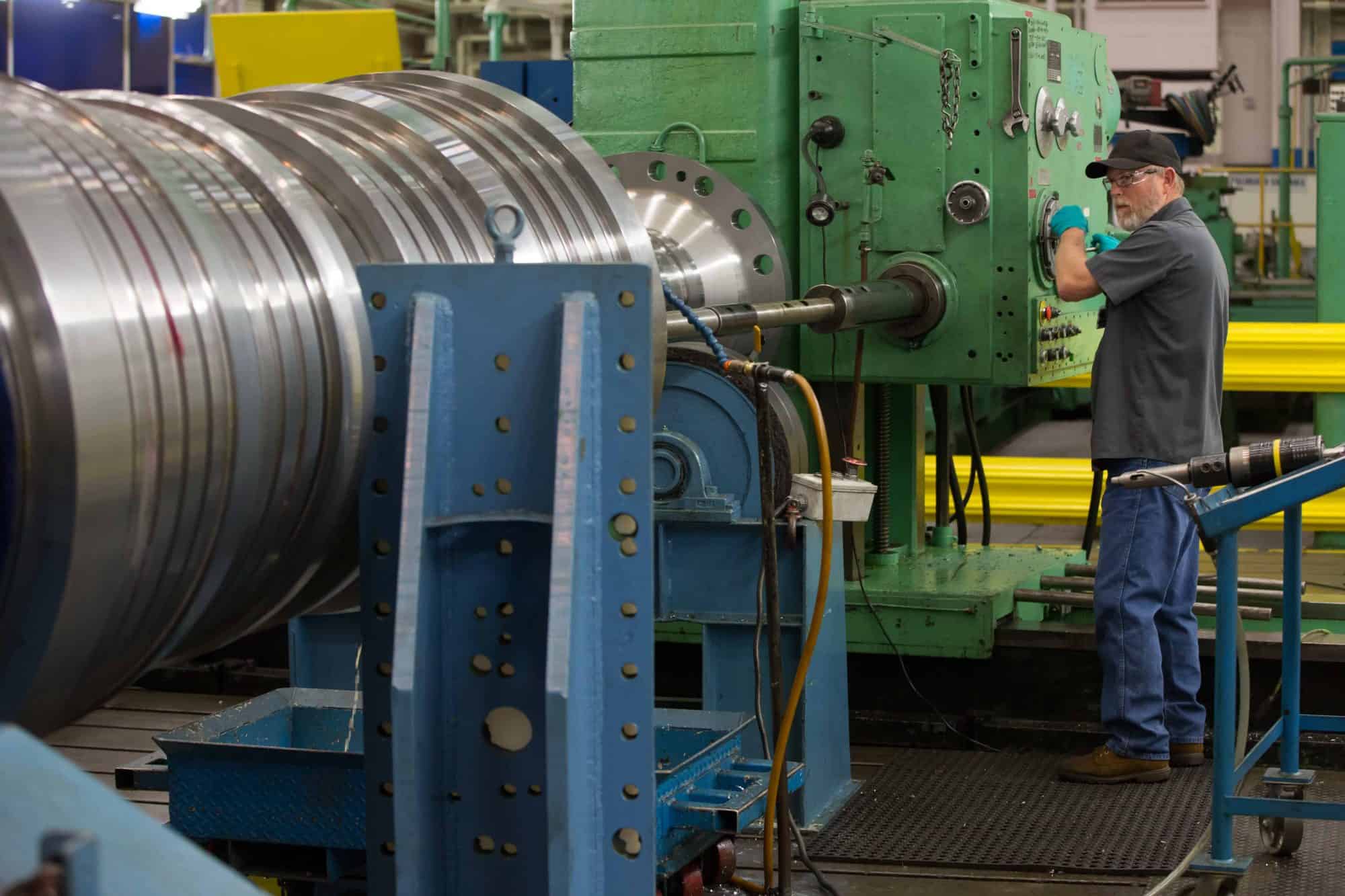
Right now, one-quarter of the manufacturing workforce is over 55 years old. Meanwhile, the manufacturing industry is struggling to attract enough younger workers with the right skills and qualifications. Facing a workforce crisis—with open jobs in manufacturing recently reaching an all-time high—manufacturers are finding that retaining older workers is not only a necessity but an asset.
The Manufacturing Institute’s Center for Manufacturing Research, in partnership with the Alfred P. Sloan Foundation, recently conducted a survey to discover how companies are addressing this shifting demographic challenges.
This workforce issue affects nearly all manufacturers, the study found. Ninety-seven percent of respondents reported that they fear losing institutional knowledge when these workers depart.
“Manufacturing is facing a demographic sea change—leaders in the industry know it, and many are proactively adapting to it,” said Chad Moutray, the Manufacturing Institute’s Center for Manufacturing Research director and the National Association of Manufacturers’ chief economist. “Given the current workforce crisis, other manufacturers should look to the successful initiatives being implemented in the industry and collectively expand on them to develop the workforce of tomorrow. The simple fact is that companies are very concerned about losing their top talent to retirement and are finding creative ways to keep them longer and to train younger workers.”
The study also examined the innovative approaches manufacturers can use to extend older workers’ productivity and help transfer institutional knowledge to the next generation. For example, manufacturers are implementing upskilling and training programs to address the challenges this demographic may experience. Sixty-nine percent of companies said they had on-the-job training programs, and 54 percent said they have internal technical training programs.
“Manufacturers are utilizing the expertise of their older workers, implementing policies and procedures to keep them longer and creating opportunities to pass on their knowledge and talents to the next generation,” said Carolyn Lee, the Manufacturing Institute’s executive director. “The reason for this is clear: unlocking the knowledge of today’s older manufacturing workers is critical to shaping tomorrow’s industry leaders.”