
NAM Campaign: Reform PBMs to Help Employers, Workers

Update: The National Association of Manufacturers has called on congressional leadership to support and advance legislation aimed at reforming the pharmacy benefit manager market in a later dated November 7th. Click here to read the letter. Click here to take action.
Pharmacy benefit managers—companies that were first established to manage the cost of prescription drugs—are contributing to soaring health care costs and driving up the price of medications. These entities cannot go unchecked, and Congress must act, an NAM ad campaign launched Thursday is advocating.
What’s going on: The campaign, which includes both TV and digital ads, calls out PBMs—“middlemen owned by large health insurers”—for pocketing sizeable discounts from drug manufacturers rather than passing on the discounts or rebates to workers or employers.
- “America’s manufacturing workforce has struggled with skyrocketing health care costs driven by insurer-owned PBM middlemen for far too long,” said NAM President and CEO Jay Timmons.
- “Manufacturers are committed to providing quality health care benefits to our employees, so we need reforms to stop insurer-owned PBMs from keeping discounts and driving up prescription drug costs.”
Why it’s important: PBMs emerged in the late 1960s as a way of helping insurance companies and employers contain spending on prescription medications—but their business model has evolved significantly in the past half-century.
- Now just a few PBMs—subsidiaries of bigger health care firms—control up to 89% of the prescription drug market and operate with limited federal oversight.
- And they exert even more control in the industry by steering business toward specific pharmacy networks, frequently ones owned by their parent companies.
Congressional moves: Congress is considering various legislative solutions to address PBM rebate, fee and payment structures.
The last word: “Manufacturers support reforms to the PBM model that increase transparency, ensure pharmaceutical savings are passed from the PBM to workers and plan sponsors and delink PBM compensation from the list price of medication,” said NAM President and CEO Jay Timmons. “Congress must reform the PBM system so employers can negotiate, compete and achieve profit savings.”
NAM in the news: POLITICO’s Influence newsletter highlighted the NAM’s campaign.
Tell Congress To Reform PBM’s Today
NAM Launches Six-Figure Campaign Calling on Health Care Middlemen to Pass Prescription Discounts to Workers and Employers
Washington, D.C. – The National Association of Manufacturers has launched a six-figure television and digital advertising campaign calling for reforms to ensure pharmacy benefit managers pass on prescription drug discounts directly to workers and employers. The campaign spotlights how these insurer-owned middlemen are contributing to skyrocketing health care costs and driving up the cost of medicines by pocketing big discounts from drugmakers instead of passing them on to America’s workforce.
“America’s manufacturing workforce has struggled with skyrocketing health care costs driven by insurer-owned PBM middlemen for far too long,” said NAM President and CEO Jay Timmons. “PBMs pocket big discounts from prescription drugmakers instead of passing them on to workers and employers. Manufacturers are committed to providing quality health care benefits to our employees, so we need reforms to stop insurer-owned PBMs from keeping discounts and driving up prescription drug costs.”
To view the latest television ad, click here.
-NAM-
The National Association of Manufacturers is the largest manufacturing association in the United States, representing small and large manufacturers in every industrial sector and in all 50 states. Manufacturing employs nearly 13 million men and women, contributes $2.90 trillion to the U.S. economy annually and accounts for 55% of private-sector research and development. The NAM is the powerful voice of the manufacturing community and the leading advocate for a policy agenda that helps manufacturers compete in the global economy and create jobs across the United States. For more information about the NAM or to follow us on Twitter and Facebook, please visit www.nam.org.
What’s Going on with Title 42?

Title 42 has been a fixture in the news in recent days—but what is it and what does its recent end mean? We break it all down here.
What’s going on? Title 42, which went into effect March 2020, was a COVID-19-era policy that allowed the U.S. to expel migrants for health reasons. Under it, more than 2.6 million people were sent back to their home countries, according to The Washington Post (subscription).
- Now that Title 42 has concluded, authorities are only permitted to expel individuals using Title 8, pre-pandemic immigration rules, The New York Times (subscription)
What should we expect? Though an expected weekend “surge” in border crossings did not materialize—in fact, there was a 50% drop in the three days ending Monday, according to the Associated Press—“the number of crossings is still exorbitantly high, with U.S. Customs and Border Protection stopping more than 10,000 immigrants per day this week, the highest levels ever,” the Washington Examiner reports.
- And southern border communities remain on “high alert” for a potential near-term spike in migrant crossings, according to CNN.
How is the administration addressing the change? The Department of Homeland Security—which has issued a proposed rule on asylum—put out a six-pillar plan to address an influx of migrants at the southern border. The measures aim to:
- Increase resources, personnel, transportation and medical support and facilities;
- Bolster CBP processing efficiency;
- Move quickly to mitigate potential overcrowding of CBP stations and alleviate the burden on the surrounding border communities;
- Administer consequences for unlawful entry, including removal, detention and prosecution;
- Boost the capacity of nongovernmental organizations to take in migrants following processing by CBP, during the wait for results of their immigration removal proceedings;
- Target and disrupt the criminal organizations and smugglers that profit off vulnerable migrants and seek to move illegal drugs into the U.S.; and
- Collaborate with international and federal authorities to deter undocumented migration.
What’s Congress doing? The House passed a border package, the Secure the Border Act of 2023, the day Title 42 expired.
- The House measure—which the White House has said it would veto—“would mandate that Customs and Border Protection hire enough Border Patrol agents to maintain a staff of 22,000 and develop a plan to upgrade existing technology to make sure agents are well-equipped. It also would require the homeland security secretary to resume construction of the border wall,” according to NBC News.
- The Senate has two proposals to secure the border. One, by Sens. Thom Tillis (R-NC) and Kyrsten Sinema (I-AZ), would give the U.S. temporary authority to expel for two years migrants who try to enter illegally or without proper documents. The other, the Securing Our Border Act from Sen. Tim Scott (R-SC) and others, would fund “nonintrusive border inspections” and border-wall construction, as well as retention bonuses for CBP agents, and would end the current “catch and release” policy.
What’s the NAM doing? The NAM continues to advocate immigration reform through “A Way Forward,” its immediately implementable policy blueprint for legislators, meetings with key congressional leaders, member-story and news coverage (see here, here and here for a few examples), the Competing to Win Tour and more.
Ultragenyx Fights for Cures Amid Rising R&D Costs
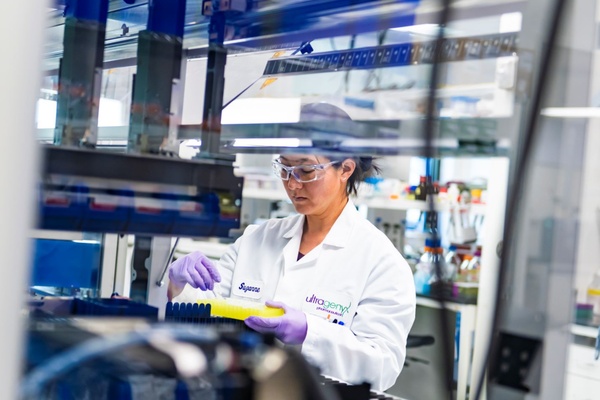
About 30 million people in the United States have a rare disease, according to the National Institutes of Health, which equates to about one in every 10 individuals. Approximately 95% of these rare diseases have no treatment at all—and Ultragenyx, a biopharmaceutical company focused on new and effective therapies for patients with rare and ultra-rare diseases, is working to change that.
- “In the aggregate, rare is not that rare,” said Ultragenyx Executive Director of Public Policy and Public Affairs Lisa Kahlman. “Half of those 30 million people are children. It’s a huge unmet medical need.”
Founded in 2010, Ultragenyx has four commercial products, with about 20 more in pre-clinical and clinical development. But a new change in tax policy poses a very real threat to Ultragenyx’s ability to develop as many treatments for rare diseases as possible.
The issue: Until a year ago, businesses could deduct 100% of their R&D expenses in the same year they incurred the expenses. Starting in 2022, however, a tax policy change requires businesses to spread their R&D deductions out over a period of five years, making it more expensive to invest in growth and innovation. For research-heavy companies like Ultragenyx, that change could divert funds intended for the development of therapies toward tax obligations.
- “Ultragenyx is different,” said Kahlman. “There are a lot of companies that do some work in rare diseases, but usually that’s only a fraction of what they do. We’re exclusively built to focus on rare and ultra-rare diseases, and that requires research.”
The impact: As a small, largely precommercial start-up company that focuses on research, Ultragenyx spends about 70% of its total operating expenses on R&D. In 2021, Ultragenyx spent approximately $497 million on R&D—nearly $150 million more than it earned in revenue.
- If the tax change stands, the company’s financial statement losses, which approximate decreases in the company’s cash reserves, will be adjusted for tax purposes to reflect significant taxable income, resulting in very large tax liabilities over a short period of years.
- This will occur during late stages of the company’s development programs just when costs escalate quickly. Altogether, money will be diverted to taxes and away from critical development programs at precisely the wrong time.
The human cost: If Ultragenyx and other research-heavy biotech companies that are focused on developing treatments for rare diseases must divert funds away from development and toward covering tax obligations, patients living with rare diseases will have even more limited options.
The bottom line: “The therapies we’re developing are really transformational, but in some cases, there might be only about 200 patients in the developed world with one of these diseases—so if we don’t have the money for R&D, there won’t be any incentive for anyone else to develop treatments,” said Kahlman. “For these patients, there is no alternative.”
Our move: At the NAM, we’re pushing Congress to reverse this change and allow manufacturers to invest in jobs, communities and innovation. Learn more and take action at www.nam.org/protect-innovation.
Watch: Timmons Talks Workforce on CBS
NAM President and CEO Jay Timmons joined CBS Mornings today to discuss manufacturing’s number one challenge: finding enough skilled workers to fill available jobs.
Manufacturers: Lawmakers Who Support Manufacturing in America Should Oppose This Reconciliation Bill
Washington, D.C. – Following news of a potential reconciliation agreement among Senate Democrats, National Association of Manufacturers President and CEO Jay Timmons released the following statement:
“This proposal is nothing more than a repackaging of the same bad ideas with a new name slapped on it. It is especially harmful because it will undermine manufacturers’ competitiveness at a time when the industry is reeling from supply chain disruptions and record inflation. Manufacturers kept our promises after the 2017 tax reforms, hiring more workers, investing in our communities and raising wages and benefits. Raising taxes now will hurt manufacturers’ ability to keep delivering for our people and mean fewer opportunities for Americans already worried about their financial future.
“Government price controls on pharmaceutical manufacturers are no less destructive. They will weaken our ongoing work to develop lifesaving cures to complex diseases like cancer and Alzheimer’s and harm our responses to health crises. It’s bad for Americans’ health. It’s wrong for our economy.
“While the language purportedly calls for comprehensive permitting reform to be passed by the end of the fiscal year, there is nothing that prohibits Congress from doing exactly that right now. Any member of Congress who is voting for the bill based solely on that language should not do so and should instead push to have a standalone bill considered.
“Lawmakers who support manufacturing in America should oppose this reconciliation bill. It will make manufacturing less competitive and America economically weaker.”
-NAM-
The National Association of Manufacturers is the largest manufacturing association in the United States, representing small and large manufacturers in every industrial sector and in all 50 states. Manufacturing employs more than 12.8 million men and women, contributes $2.77 trillion to the U.S. economy annually and accounts for 58% of private-sector research and development. The NAM is the powerful voice of the manufacturing community and the leading advocate for a policy agenda that helps manufacturers compete in the global economy and create jobs across the United States. For more information about the NAM or to follow us on Twitter and Facebook, please visit www.nam.org.
NAM Launches Six-Figure Television Ad Campaign Opposing Reconciliation
NAM Urges Senate to Vote “No” on Government Price Controls That Harm Manufacturers
Washington, D.C. – The National Association of Manufacturers has launched a six-figure broadcast and cable television advertising campaign ahead of a potential reconciliation bill that threatens manufacturing innovation and competitiveness. The campaign calls on senators to oppose government price controls that would undermine the development of lifesaving medicines and the livelihoods of manufacturing workers across America who deliver them.
“Government price-setting schemes that undermine our ongoing work to develop lifesaving cures to diseases like cancer and Alzheimer’s and respond to health crises are never the answer,” said NAM President and CEO Jay Timmons. “At a time when manufacturers are already facing extraordinary economic pressures, the Senate should be focused on bolstering our industry’s competitiveness, not undermining it. We are calling on senators to vote ‘no’ on reconciliation and stand with manufacturers and the hardworking Americans who are integral to battling this pandemic and discovering future cures.”
To view the latest television ad, click here.
-NAM-
The National Association of Manufacturers is the largest manufacturing association in the United States, representing small and large manufacturers in every industrial sector and in all 50 states. Manufacturing employs more than 12.8 million men and women, contributes $2.77 trillion to the U.S. economy annually and accounts for 58% of private-sector research and development. The NAM is the powerful voice of the manufacturing community and the leading advocate for a policy agenda that helps manufacturers compete in the global economy and create jobs across the United States. For more information about the NAM or to follow us on Twitter and Facebook, please visit www.nam.org.
Manufacturers on Supreme Court Decision
Washington, D.C. – National Association of Manufacturers President and CEO Jay Timmons released this statement following the Supreme Court’s ruling in Dobbs v. Jackson Women’s Health Organization:
“America is at its best when we address difficult questions in a spirit of compassion and empathy, with respect for each other’s deeply held views. That is the example that we will strive to set at the NAM. Our mission is to uphold the values of free enterprise, competitiveness, individual liberty and equal opportunity, which we know have made America exceptional and kept manufacturing strong.
Even amid all positions and strongly held views, many businesses must now discern how best to support employees and families within the framework of the law. The NAM will work to connect our member companies with the legal, HR and health care information and resources they need to navigate the effects of the ruling.”
-NAM-
The National Association of Manufacturers is the largest manufacturing association in the United States, representing small and large manufacturers in every industrial sector and in all 50 states. Manufacturing employs more than 12.7 million men and women, contributes $2.71 trillion to the U.S. economy annually and accounts for 58% of private-sector research and development. The NAM is the powerful voice of the manufacturing community and the leading advocate for a policy agenda that helps manufacturers compete in the global economy and create jobs across the United States. For more information about the NAM or to follow us on Twitter and Facebook, please visit www.nam.org.
WTO TRIPS Decision Jeopardizes Pandemic Response, Manufacturing Competitiveness
Washington, D.C. – Following a decision by the World Trade Organization to lift intellectual property protections for COVID-19 products, National Association of Manufacturers President and CEO Jay Timmons released the following statement:
“This damaging decision will undermine American innovation, competitiveness and technology leadership—weakening manufacturing in America and threatening the jobs of manufacturing workers. Even worse, the agreement could exacerbate the supply chain and logistical hurdles that represent the biggest current challenges to global efforts to ensure access to critical COVID-19 products.
“It is alarming and disappointing that the United States would join other countries to give away manufacturers’ innovations to our commercial rivals. Our industry has been on the front lines of efforts to fight COVID-19—developing, manufacturing and distributing vaccines and other essential products needed to save lives and strengthen our economy. American innovation has been at the heart of the manufacturing response to the pandemic and will be just as critical for our ability to lead the world and respond to future global health crises.
“Manufacturers have been vocal supporters of effective solutions at the WTO that leverage trade to fight the pandemic—but this waiver is not one of them. Manufacturers call on the Biden administration to reverse course on this decision and take immediate action to protect this vital technology, American workers and global health.”
-NAM-
The National Association of Manufacturers is the largest manufacturing association in the United States, representing small and large manufacturers in every industrial sector and in all 50 states. Manufacturing employs more than 12.7 million men and women, contributes $2.71 trillion to the U.S. economy annually and accounts for 58% of private-sector research and development. The NAM is the powerful voice of the manufacturing community and the leading advocate for a policy agenda that helps manufacturers compete in the global economy and create jobs across the United States. For more information about the NAM or to follow us on Twitter and Facebook, please visit www.nam.org.
NAM Honors Nephron CEO Lou Kennedy for Extraordinary Commitment to Manufacturing in America
Scottsdale, AZ –– The National Association of Manufacturers today honored NAM board member and Nephron Pharmaceuticals CEO and Owner Lou Kennedy with the Manufacturing Icon Award during the NAM’s spring board meeting in Scottsdale, Arizona. The award recognizes leaders who inspire Americans to promote, perpetuate and preserve manufacturing in America.
“Lou Kennedy embodies the spirit of manufacturing, possessing a fearless commitment to solving some of our nation’s and the world’s most pressing challenges,” said NAM President and CEO Jay Timmons. “With trademark enthusiasm, Lou inspires those around her and brings together people from all sorts of backgrounds around a common purpose. In channeling her drive and dedication toward the NAM and The Manufacturing Institute’s Creators Wanted campaign, she is changing lives not just in South Carolina but across America. Her support has been game changing, and her passion for building the manufacturing workforce has helped us see our own vision for Creators Wanted more clearly. We’re honored to present this award to Lou in recognition of her exceptional leadership.”
Kennedy serves as co-chair of Creators Wanted. Last year, Nephron Pharmaceuticals hosted the Creators Wanted Tour Live in West Columbia, South Carolina.
The NAM and the MI’s “Creators Wanted” campaign is a member-driven initiative to inspire, educate and empower more Americans to pursue careers in modern manufacturing and to shift perceptions about careers in the industry. The campaign supports MI initiatives for students, women, veterans and other underrepresented communities and features a first-of-its-kind mobile experience and tour. It seeks to cut the skills gap by 600,000 workers by 2025 and increase the number of students enrolling in technical schools, vocational schools and apprenticeships by 25%. The campaign also seeks to increase the percentage of parents who would encourage their children to pursue a career in modern manufacturing to 50% from 27%.
In 2019, Kennedy was named a STEP Ahead Award Honoree. The MI’s STEP Ahead Awards honor women in science, technology, engineering and production careers who have demonstrated excellence and leadership across all levels of the manufacturing industry. Kennedy continues to work with the MI to help increase women’s representation in manufacturing and support the next generation of female talent.
-NAM-
The National Association of Manufacturers is the largest manufacturing association in the United States, representing small and large manufacturers in every industrial sector and in all 50 states. Manufacturing employs more than 12.5 million men and women, contributes $2.57 trillion to the U.S. economy annually and has the largest economic multiplier of any major sector and accounts for 58% of private-sector research and development. The NAM is the powerful voice of the manufacturing community and the leading advocate for a policy agenda that helps manufacturers compete in the global economy and create jobs across the United States. For more information about the NAM or to follow us on Twitter and Facebook, please visit www.nam.org.