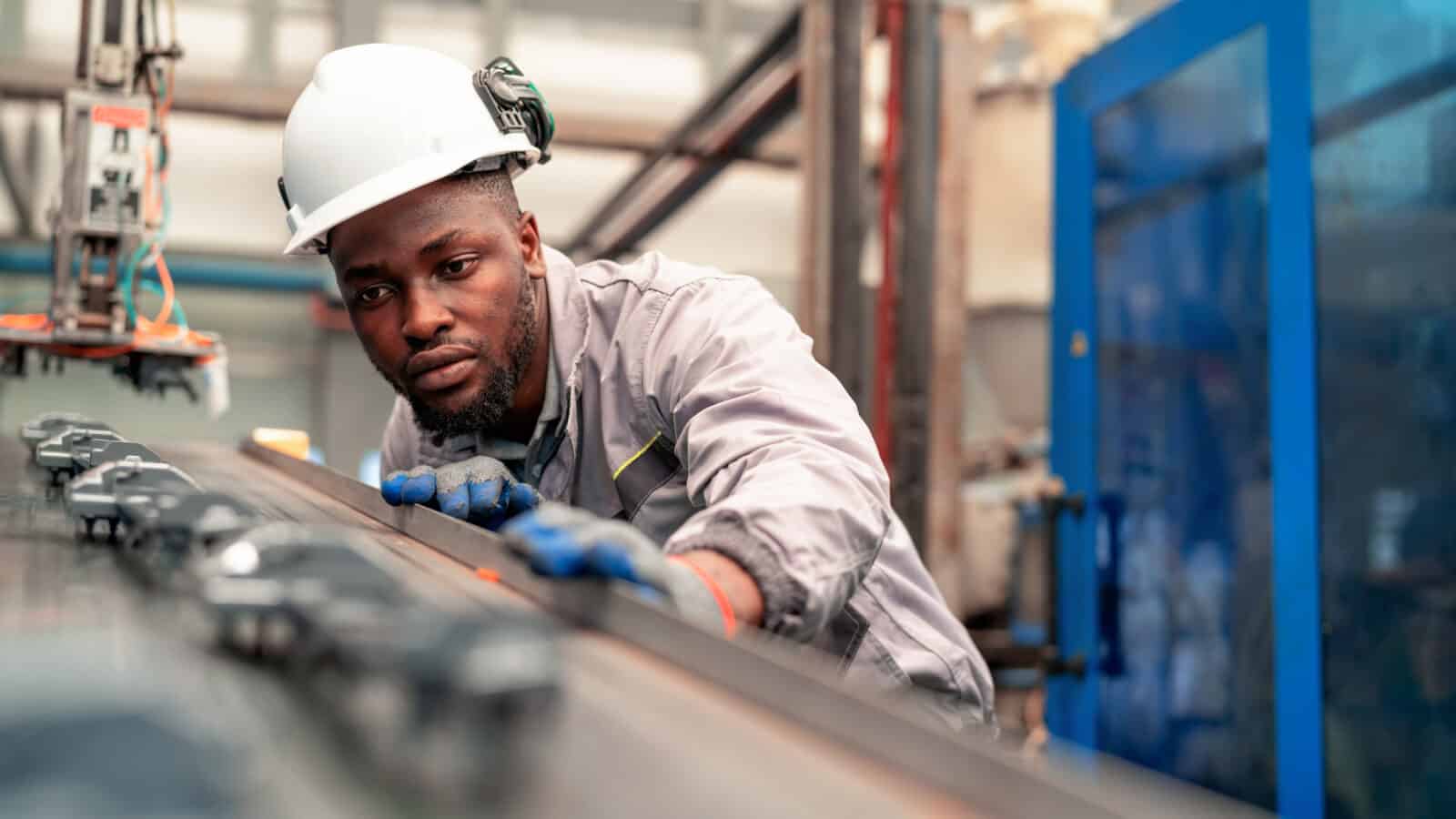
Siemens on Capitol Hill: Industrial AI Is Changing Manufacturing for the Better

Continued U.S. global competitiveness in manufacturing necessitates more than abstract artificial intelligence—it “requires deployment of the technology on factory floors and shipyards and across production systems where it generates measurable productivity gains,” Siemens Digital Industries Software Vice President Brittany Ng told Congress this week.
What’s going on: “I lead Siemens’ maritime business in the United States, where we work hand in hand with shipyards and manufacturers,” Ng said at a Tuesday Senate Commerce, Science and Transportation Subcommittee on Science, Manufacturing and Competitiveness hearing on how AI can “improve lives, create jobs and drive economic growth.”
- “We are … seeing firsthand how AI is most powerful when it connects data to operational decisions in the real world. Through our maritime work, shipbuilders are using our physics-based, AI-enabled digital shipbuilding platform to connect design simulation and production planning so that teams can identify bottlenecks before they occur.”
- It’s not just shipbuilding, however. “Industrial AI, alongside digital twins and software-defined automation, is transforming manufacturing across industries,” Ng told the subcommittee members.
Why it’s important: “We are seeing machine downtime reduced by 50%, energy consumption cut by 20% and quality control with 99.99% accuracy,” she continued.
- “Industrial AI is helping manufacturers to achieve up to 40% in productivity improvements, and it’s transforming traditional factories into flexible digital enterprises.”
Not “coming” for humans’ jobs: The manufacturing sector has a shortage of approximately 400,000 workers, she went on, citing data from a joint report by Deloitte and the NAM’s 501(c)3 workforce development and education affiliate, the Manufacturing Institute.
- “The issue is not AI coming for industrial jobs. It’s a shortage of skilled workers amid increasing production complexity. Industrial AI doesn’t just solve the workforce shortage; it changes the entire equation. These technologies reduce repetitive and hazardous tasks while elevating the skillsets of workers.”
What Congress should do: Lawmakers should take three steps with regard to industrial AI, Ng said:
- First, distinguish between industrial and consumer AI.
- Focus on industrial AI adoption by “integrat[ing] digital modernization from the outset and accelerat[ing] deployment through public–private collaboration programs.”
- Send a clear message “that digital capability is core industrial infrastructure.”