Philadelphia Manufacturing Growth Slows in February
In February, Philadelphia’s regional manufacturing activity continued to expand but at a slower rate than in January. The index for current general business activity fell from 44.3 to 18.1 but remains above the index’s long-run nonrecession average. Nearly 41% of firms reported increased activity this month, while 22.5% saw decreases in February compared to just 6.6% reporting declines in January. Meanwhile, 34.7% experienced no change. The indexes for new orders and shipments both dropped to 21.9 and 26.3, respectively, but remained above their long-run averages. Additionally, employment expectations remained positive but fell from 11.9 to 5.3. The average employee workweek index dropped from 20.5 to 2.9.
Both price indexes rose to the highest readings in over two years and remain above their long-term averages. The prices paid index increased nearly nine points to 40.5, the highest reading since October 2022, and the prices received index rose more than three points to 32.9. As has been the case for many months, the prices received index remains lower than the prices paid index, indicating manufacturers were absorbing a sizable portion of those higher costs paid.
Looking ahead, all future indicators decreased. The index for future general business activity fell from 46.3 in January to 27.8 in February. A higher proportion of firms (18.5%) expect decreases in activity, compared to last month’s reading of 7.2%, but nearly half (46.3%) still expect activity to improve. Additionally, the future new orders and shipments indexes declined roughly 24 points, to 33.1 and 36.5, respectively. While still positive, the index for future employment dropped from 40.4 to 23.7. The capital expenditures index decreased 25 points to 14.0, the lowest reading since August 2024. The future prices paid index fell nine points to 58.6, while the future prices received index fell eight points to 46.1, indicating manufacturers remain concerned about future costs rising but not as much as before.
New York Manufacturing Rebounds Sharply in February
Manufacturing activity in New York state improved dramatically in February, with the headline general business activity index rising 18.3 points to 5.7. The new orders index jumped 20.0 points to 11.4, while the shipments index rose 15.9 points to 14.2, reflecting significant improvements in both orders and shipments. Unfilled orders increased to 1.1 from -4.7, and inventories inched up from 5.8 to 8.7. Delivery times lengthened slightly, rising 1.9 points to 5.4, while supply availability was slightly lower, slipping to -2.2 from 0.0.
Employment decreased slightly in February, with the index for the number of employees falling from 1.2 to -3.6. The average employee workweek rose to -1.2, signaling that there was no significant change in hours worked. Both input and selling price increases picked up markedly, as reflected in the prices paid index rising 11.1 points to 40.2, the fastest pace of increase in nearly two years, and the prices received index increasing 10.3 points to 19.6.
Although manufacturing indictors improved broadly and firms still expect conditions to get better over the next six months, manufacturers’ optimism plummeted. The index for future business activity decreased 14.5 points to 22.2. Employment and the average employee workweek are forecasted to weaken slightly. New orders are anticipated to increase, but at a slower rate than previously expected. Meanwhile, supply availability is forecasted to drop significantly.
Trend of the Week: Enabling Innovation in Manufacturing
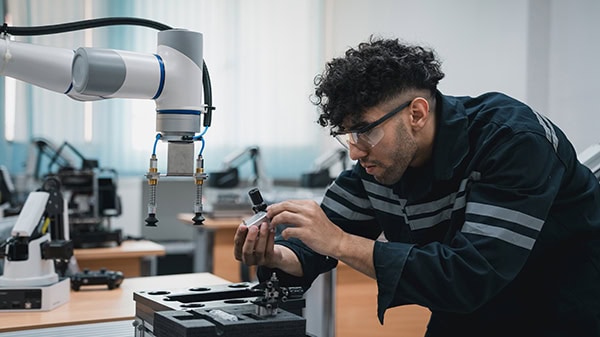
At the NAM, we’re examining some of the top trends that are shaping manufacturing this year, and offering the resources you need to take action.
Today, we’re taking a look at the industry’s efforts to enable innovation—and how manufacturers are working to stay on the cutting edge.
Applying technology: Digitalization can increase the speed and agility of innovations in areas like prototyping, iteration, simulation and modeling. And by using AI and data analytics to improve decision-making, manufacturers can build resilient, transparent supply chains that are more efficient and effective.
Upscaling workforces: Because of the rapid pace of technological advancement and adoption, manufacturers will have to create a workforce that is ready for the future—and processes designed to transfer knowledge and skills effectively and continuously.
Harnessing partnerships: Manufacturers can lean into collaborations that help to accelerate innovation. By connecting with manufacturing peers, government institutions and academia, industry leaders can develop unique and inventive paths forward.
Expert insight: According to CEO and Co-Founder of Narratize Katie Trauth Taylor, tools like generative artificial intelligence can accelerate and automate manufacturing innovation—with human ingenuity at the helm.
- “Human-led AI methodologies enhance teams’ ability to analyze opportunities, translate complex concepts into compelling business cases and think deeply about their innovative work,” said Taylor. “With reduced documentation and improved communications, product teams can reallocate their time value-generating work—deeper market research, sharper strategy and accelerated development.”
Resources for you: Want to dive deeper? Check out some additional resources from the NAM.
- Explore the Innovation Research Interchange, a division of the NAM that focuses on value creation and top-line growth through the management of innovation.
- Join one of the Manufacturing Leadership Council’s Plant Tours in person—or read summaries of past tours—to get an inside look at how other manufacturers have reshaped processes to advance their businesses.
The State of the Manufacturing Workforce in 2025
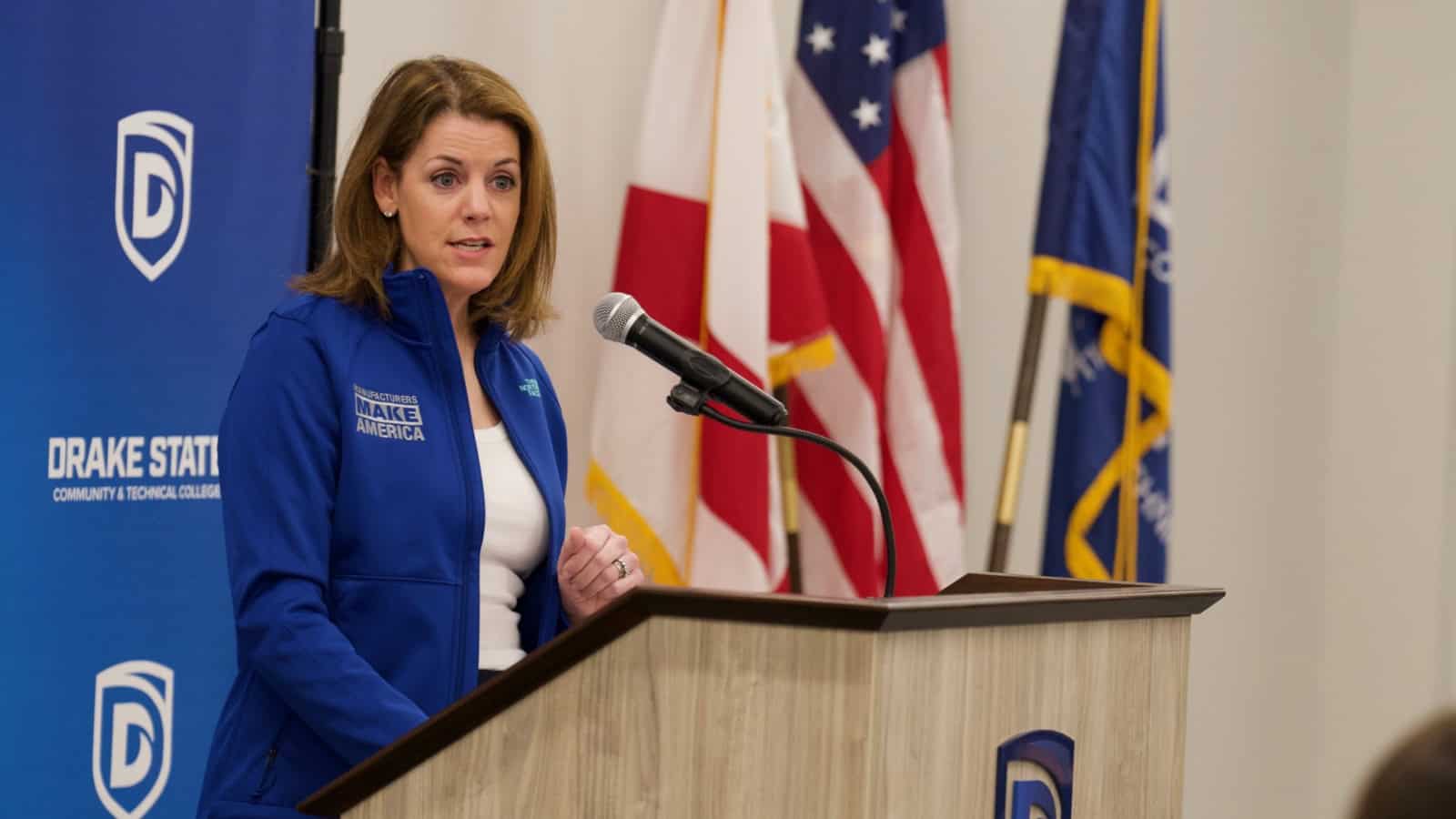
The NAM kept up a breakneck pace on the third day of its 2025 Competing to Win Tour, with the Manufacturing Institute delivering the first-ever State of the Manufacturing Workforce Address at Drake State Community and Technical College in Huntsville, Alabama, before an audience of students, faculty, manufacturers and local and state officials.
Opportunity—for all: Taking the stage to give the MI’s assessment of the manufacturing worker base in 2025, Carolyn Lee, president of the Manufacturing Institute, the NAM’s 501(c)3 workforce development and education affiliate, homed in on the theme of opportunity.
- “Manufacturing is not just about innovation and economic growth; it’s about opportunity. It’s about ensuring that every community, every aspiring maker, builder and creator—no matter their background—can have access to the skills, training and careers that will define the future.”
- But because the industry stands at a crossroads, part of that opportunity today is to help manufacturing maintain its momentum, Lee said, echoing a theme of NAM President and CEO Jay Timmons’ 2025 State of Manufacturing Address on Tuesday.
Finest hours ahead: Lee was joined at the event by Rep. Dale Strong (R-AL), who spoke about the strength of Alabama’s manufacturing sector.
- “I think we’ve proven here in Alabama, and North Alabama especially, advanced manufacturing is part of our DNA,” he said. “You look at the jobs that we’ve brought in the last 10 or 15 years. You start with GE Aviation, Polaris, Toyota Motor Manufacturing, Mazda Toyota. We’ve proven that the Alabama workforce has the ability. I think our finest hours are still ahead.”
A world-changing job: Timmons echoed that sentiment. “You’re stepping into one of the most important and innovative fields in the world,” he told the Drake State students.
- “The products, the materials, the technologies that you will help create, they won’t just be used in your hometown or even all across our country. They’re going to help change economies … They’re going to strengthen the very foundation of America’s security and prosperity.”
A shortfall: But manufacturing today faces an immense challenge, Lee told the crowd: “a structural workforce deficit.”
- “[I]f we don’t act boldly, the U.S. faces a shortfall of 1.9 million manufacturing workers by 2033; 3.8 million positions will open up, but nearly half could go unfilled. That’s not just a workforce issue—it’s an economic and national security issue.”
- That’s despite the average annual earnings—including pay and benefits—for a manufacturing employee coming in at more than $102,000.
- The dearth of workers in the sector is driven by both retirements and growth.
How to overcome it: “[W]e have to inspire more Americans to see themselves in manufacturing,” Lee said. “That starts early, with programs that spark curiosity and excitement for careers in our industry. And when I say early, I mean as young as 9 or 10 years old—because today’s 4th graders will graduate in 2033 and may be our future team members.”
- To this end, the MI partners each year with manufacturers on MFG Day, which kicks off a full month of events at which companies show young people, students and job seekers what a modern manufacturing career looks like.
- The MI, with the support of Honda, has also created a new interactive experience to interest youngsters in the industry: “Innovators Quest,” which combines elements of board games and popular fantasy and storytelling activities.
The FAME factor: Under the MI’s auspices, the Federation for Advanced Manufacturing Education USA, a workforce program started by Toyota in 2010 and entrusted to the MI in 2019, has grown considerably. (Drake State is home to one of the public–private partnership’s newest chapters.)
- FAME participants attend classes and earn while they learn in hands-on apprenticeships with manufacturers.
- The program—in which a participant can easily earn more than $30,000 over two years—has become “the gold standard for how employers, educators and communities should work together” on manufacturing workforce training, Lee said.
Other efforts: The MI helps manufacturers actively recruit groups often overlooked in manufacturing hiring initiatives: veterans, women and previously incarcerated individuals.
- The Heroes MAKE America program helps connect former members of the military with manufacturing jobs. Walmart provides crucial funding to the program; in 2022, it gave a six-figure grant to fund the development of a model that translates skills acquired in the military to ones recognized by manufacturing employers.
- The Women MAKE America Initiative is the nation’s premier program aimed at closing the gender gap in the sector.
- “The MI is helping manufacturers develop second chance hiring strategies, recognizing that talent is talent—and potential shouldn’t be wasted,” Lee said to the audience.
Working together: “As we look ahead, manufacturers, educators and policymakers must work together to strengthen our talent pipeline,” Lee and Drake State Community and Technical College President Dr. Patricia G. Sims wrote in a Thursday op-ed for the Alabama Political Reporter.
Manufacturing in Alabama: On Thursday afternoon, the NAM and MI contingent continued its manufacturing-facility tour, visiting Toyota Motor Manufacturing Alabama and Bruderer Machinery—both in Huntsville—and Milo’s Tea Company in Bessemer.
- “I plan on making my career here,” said Drew, a 2024 FAME graduate, during a discussion before a tour of the shop floor. Drew is now working as a maintenance team member at Toyota Alabama. The talk focused on how the FAME program prepared participants for a rewarding career in auto manufacturing. Toyota Alabama—2,400-plus team members strong—has created 10,000 jobs in the state.
- Lee visited Bruderer Machinery, a leading manufacturer of high-precision stamping presses that provides solutions for the automotive, aerospace and electronics industries. Bruderer is also a key supporter of the FAME apprenticeship model.
- Timmons and the rest of the NAM team finished the day at Milo’s Tea, the fastest-growing tea company in America. The family-owned business, founded by CEO Tricia Wallwork’s grandparents Milo and Bea Carlton, has won 40% of the refrigerated iced tea market share in the U.S. “This reminded me of my grandmother’s iced tea,” said Timmons. “You could see how special Milo’s is by just walking the shop floor and seeing the smiles and camaraderie.”
Timmons: Tax Reform Paramount for Manufacturing Growth
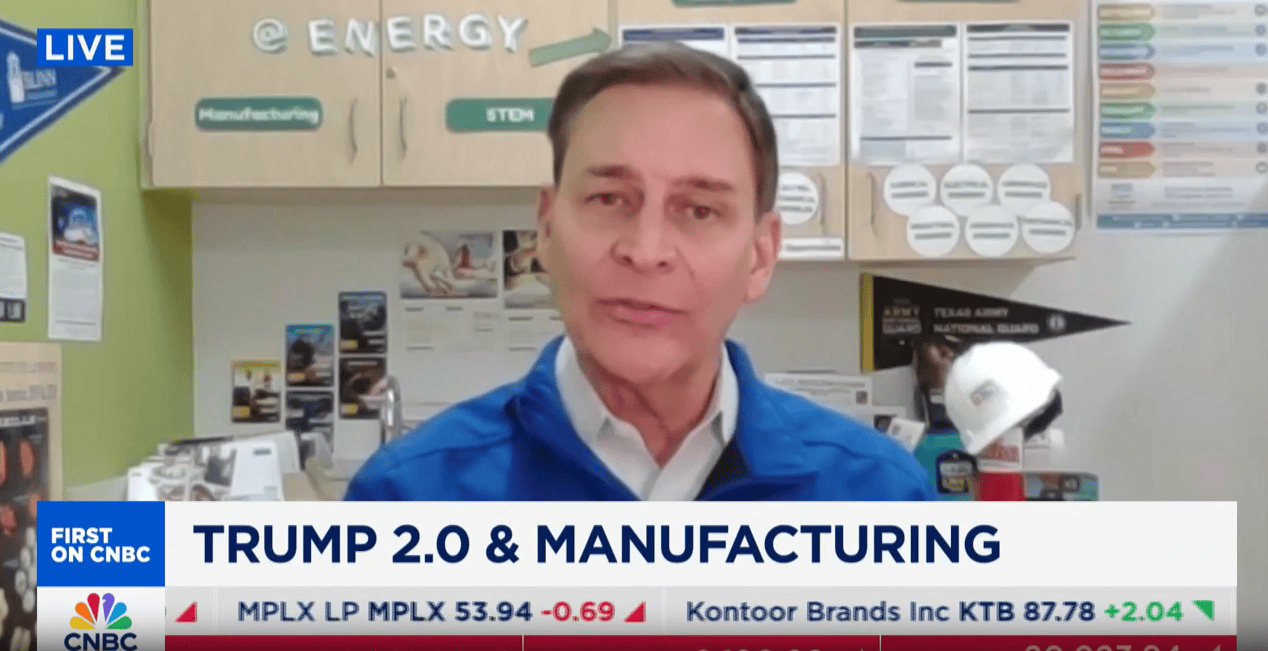
Manufacturers need an integrated, comprehensive strategy for expanding their sector, and a large part of that is preserving and bringing back tax reforms, NAM President and CEO Jay Timmons said on CNBC’s “The Exchange” Wednesday.
What’s going on: Timmons spoke to the news channel from a teacher workroom at the Energy Institute High School in Houston, Texas, a stop on the first leg of the NAM’s 2025 Competing to Win Tour. He told show host Kelly Evans that any plans to bolster manufacturing in the U.S. must “start with renewing those tax reforms from 2017.”
- “A smart strategy is going to involve reducing the cost of doing business for manufacturers here in the United States,” he said, praising Republican House leadership for being “able to move” forward a House budget bill “that’s going to set the framework for those tax rates to be set, hopefully, permanently in stone.”
- The 665-student Energy Institute High School, led by Principal Lori Lambropoulos, is the first high school in the U.S. dedicated to preparing students for careers in the energy industry.
What else is needed: Timmons echoed some of the major themes from the NAM State of Manufacturing Address, which he gave Tuesday in Ohio.
- “We also are looking at regulatory reform,” he told Evans. “We’re looking at expanding our energy dominance. We’re looking at workforce policy … and then, of course, we have to have a sensible trade policy as well.”
But back to taxes: Bringing back expired provisions from the 2017 Tax Cuts and Jobs Act, and making them and other, scheduled-to-expire provisions from the legislation permanent, is critical to manufacturing’s future success, Timmons continued.
- “Ninety percent of my 14,000 members are small and medium manufacturers. Most of them benefit from the pass-through deduction that expires this year. And I don’t think what you want to see is a huge tax increase that will cost 6 million jobs in the economy happen if we don’t renew those reforms,” he said, citing data from a recent NAM study on the effects of a congressional failure to act on tax reforms.
- “That’s why the Speaker’s actions in the last day or so have been so incredibly important to get this thing moving forward. President Trump actually endorsed that bill—the ‘one big, beautiful bill,’ as he calls it—and that will help make America great again for manufacturing.”
Energy dominance: Also critical to the success of manufacturing and the U.S. economy as a whole: the right energy policies, Timmons said. Promising to “unleash the energy sector,” President Trump lifted the previous administration’s ban on liquefied natural gas exports on his first day in office.
- Yesterday, the NAM got to see first-hand some of the effects of that kept promise, when the team visited Freeport LNG’s liquefaction facilities near Houston.
- More than 9,000 construction jobs were created during the construction of those facilities, which now directly employ about 400 people. Their operations have an estimated total positive economic impact on the U.S. economy of more than $5 billion a year.
- “Energy is … a critical national security component,” Timmons said on CNBC.
Emphasis point: The tour also stopped at Bray International, a global leader in flow control and automation solutions, supporting U.S. energy dominance, LNG exports and high-tech manufacturing.
- The visit helped underscore why policies that support manufacturing investment and provide certainty to manufacturers are essential to America’s economic future.
Up next: Today, the NAM is in Alabama, where this morning Manufacturing Institute President and Executive Director Carolyn Lee gave the Manufacturing Institute’s State of the U.S. Manufacturing Workforce Address at Drake State Community & Technical College in Huntsville. (The MI is the NAM’s 501(c)3 workforce development and education affiliate.) The theme: building the workforce of the future.
- This afternoon, the team will tour Toyota Motor Manufacturing Alabama in Huntsville, the manufacturing facilities of Bruderer Machinery in Huntsville and Milo’s Tea Company in Bessemer.
State of Manufacturing 2025: When Manufacturing Wins, America Wins
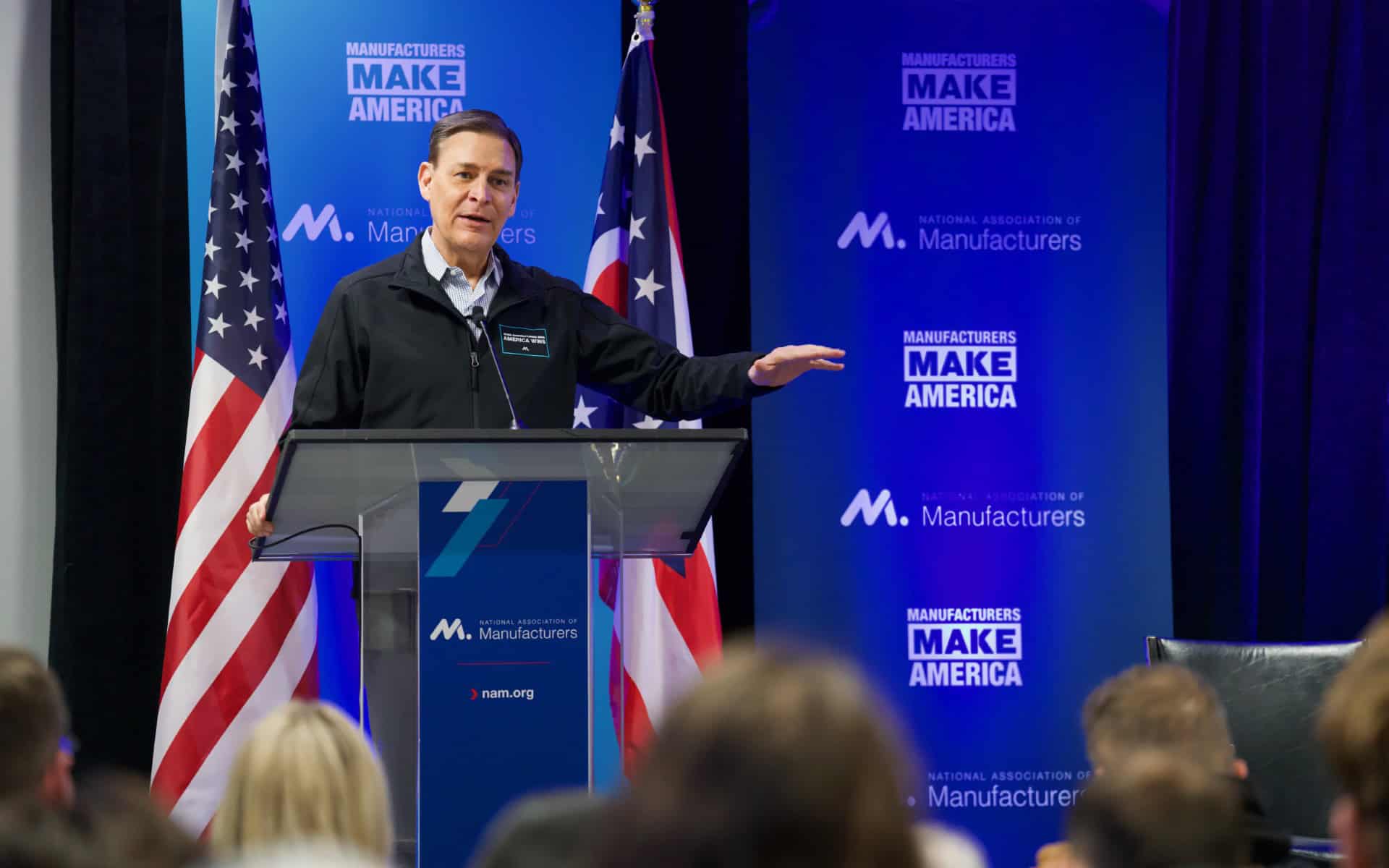
“Manufacturing in the U.S. has momentum”—and to keep it going, manufacturers will need to push, NAM President and CEO Jay Timmons said Tuesday in the NAM’s annual State of Manufacturing Address.
What’s going on: Speaking to an audience of manufacturers and congressional and state officials at Armstrong World Industries in Hilliard, Ohio, Timmons, who was joined by NAM Board Chair and Johnson & Johnson Executive Vice President and Chief Technical Operations & Risk Officer Kathy Wengel, emphasized the “defining moment” for the industry and said that for manufacturing, “what happens next really matters.”
- “Uncertainty is the enemy of investment,” he told the crowd. “Manufacturing is a capital-intensive industry. We make decisions months and years in advance. … That’s why we need certainty. We need a clear, actionable, multistep strategy from our government—one that says, ‘We want you to invest here, hire here and succeed here.’”
- Timmons’ annual speech kicked off the NAM’s 2025 Competing to Win Tour, starting with a whirlwind four-states-in-four-days tour of manufacturing facilities, schools, government offices and more.
- “In Ohio, manufacturers have thrived because our leaders have taken decisive actions to keep our industry competitive,” Ohio Manufacturers’ Association President Ryan Augsburger said at the kickoff event. But now, “manufacturers across Ohio and the nation are facing critical challenges, from tax uncertainty, project delays and workforce shortages to supply chain vulnerabilities and price pressures that threaten our ability to grow. … These issues cannot wait.”
What manufacturing needs: Certainty from the federal government should come in several forms, Timmons said, including the following:
- Preserving tax reform: The 2017 tax reforms were “rocket fuel” for manufacturing in America—but key provisions have expired and others are scheduled to sunset. Congress must bring them back and improve and extend the package. “Every day that Congress delays because of process and politics, manufacturers face rising uncertainty, delayed investments and fewer jobs,” said Timmons.
- Regulatory clarity and consistency: Manufacturers today spend a total of $350 billion just to comply with regulations. “Commonsense regulation is critical to American manufacturers to continue to innovate, to compete against foreign manufacturers and to improve the lives of American citizens,” Austin So, general counsel, head of government relations and chief sustainability officer for Armstrong World Industries, told the crowd.
- Permitting reform: President Trump’s lifting of the liquefied natural gas export permit ban was a start, but to reach our full potential as energy leader, we must require “federal agencies to make faster decisions and reduc[e] baseless litigation,” said Timmons.
- Energy dominance: “America should be the undisputed leader in energy production and innovation. But … we are seeing opportunities for energy dominance fade in the face of a permitting process that takes 80% longer than other major, developed nations,” Timmons said, adding that we must cut red tape, require federal agencies to make faster decisions and reduce meritless litigation.
- Workforce strategy: By 2033, manufacturing faces a shortfall of 1.9 million manufacturing employees, Timmons said. To fill those positions, the sector needs a “real workforce strategy,” one that includes apprenticeships, training programs and public–private partnerships.
- Commonsense trade policy: If President Trump continues to use tariffs, “we need a commonsense policy … that provides manufacturers with the certainty to invest” and “a clear runway to adjust,” according to Timmons.
State of manufacturing: “Manufacturing in the United States is moving forward,” Timmons said. “Like a press at full speed, like a production line firing on all cylinders, like the workers who show up before dawn and leave long after the job is done—manufacturing in the United States is driving us forward.” And Timmons added that now it’s time “to make America Great for Manufacturing Again.”
On the move: Following the speech, Timmons, Wengel and Augsburger joined state lawmakers, including state Sens. Kristina Roegner and Andrew Brenner, and local business leaders for a visit to the Ohio Statehouse for an event focused on the importance of tax reform for Ohio and its manufacturing sector.
- A recent NAM study found that, if key provisions of tax reform are allowed to expire, Ohio would risk losing 208,000 jobs and $18.9 billion in wages.
What’s at stake: Tax reform was transformational for Humtown Products, the Columbiana, Ohio–based family-owned sand cores and molds manufacturer, President and CEO Mark Lamoncha told the audience at the Ohio Statehouse tax event.
- “We have been at the forefront of 3D-printed manufacturing for years and have invested significantly in the machinery and equipment required, including the purchase of 3D printers—one of which can easily cost over $1 million,” he said.
- “Since the 2017 tax reform, Humtown has invested over $9 million in capital expenditures related to 3D printing and averages around $100,000 annually in R&D costs. Under the 2017 tax reform, we were able to deduct 100% of those costs, generating around $1.6 million in accelerated tax savings.”
- “That amount alone allowed us to purchase another 3D printer, fueling continued growth. That’s what tax certainty allowed us to do. But right now, that certainty is slipping away. As these provisions begin to expire, our tax burden is increasing.”
Creators Wanted: The group also fit in a stop at Columbus State Community College, which serves approximately 41,000 students, to visit with students in the semiconductor and mechanical drive classes.
The last word: The NAM recently “stood shoulder-to-shoulder with congressional leaders—delivering a clear, urgent message on tax reform” and is “driving the agenda on regulatory certainty, on energy dominance, on permitting reform, health care and workforce development,” Wengel told the audience. “The NAM is not waiting for Washington to act; we are making sure Washington acts for you, for manufacturers.”
- Added NAM Executive Vice President Erin Streeter: “The NAM is on [these issues], and we’re going to keep fighting, as we do every day with the right leaders, the right strategies and the right vision for the future.”
SEC Guidance Rescission a Win for Manufacturers

The Securities and Exchange Commission this week reversed Biden-era guidance that required publicly traded companies to include environmental and social activist shareholder proposals on proxy ballots (InvestmentNews).
What’s going on: In a move that NAM President and CEO Jay Timmons called a “depoliticiz[ation of] the proxy process” and “a crucial plank of President Trump’s pro-manufacturing deregulatory agenda,” the SEC rescinded Staff Legal Bulletin 14L, which had allowed activists to mandate consideration of social policy proposals on corporate proxy ballots—even when the policies in question were unrelated to a company’s business.
Why it’s important: SLB 14L “empowered activists at the expense of manufacturers and Main Street investors—turning the proxy ballot into a debate club, forcing businesses to court controversy and divert resources from growth and value creation,” Timmons continued.
- Replacing SLB 14L with the new SLB 14M “return[s] the SEC’s review of shareholder proposals to a company-specific process based on relevance to a business’s operations and its investors’ returns,” which will “allow manufacturers to focus on what they do best: investing for growth, creating jobs and driving the American economy.”
What we’ve been doing: Since SLB 14L was adopted in 2021, the NAM has been a leading voice calling on the SEC to reverse course.
- Most recently, the NAM, along with more than 100 manufacturing associations, outlined for President Trump more than three dozen regulatory actions the new administration could take across federal agencies to boost the manufacturing economy and end the regulatory onslaught—including rescinding SLB 14L.
- The NAM also has called on President Trump’s nominee to chair the SEC, Paul Atkins, to take steps to depoliticize the proxy process.
Manufacturers: AI Regulations Should Support Innovation and U.S. Leadership
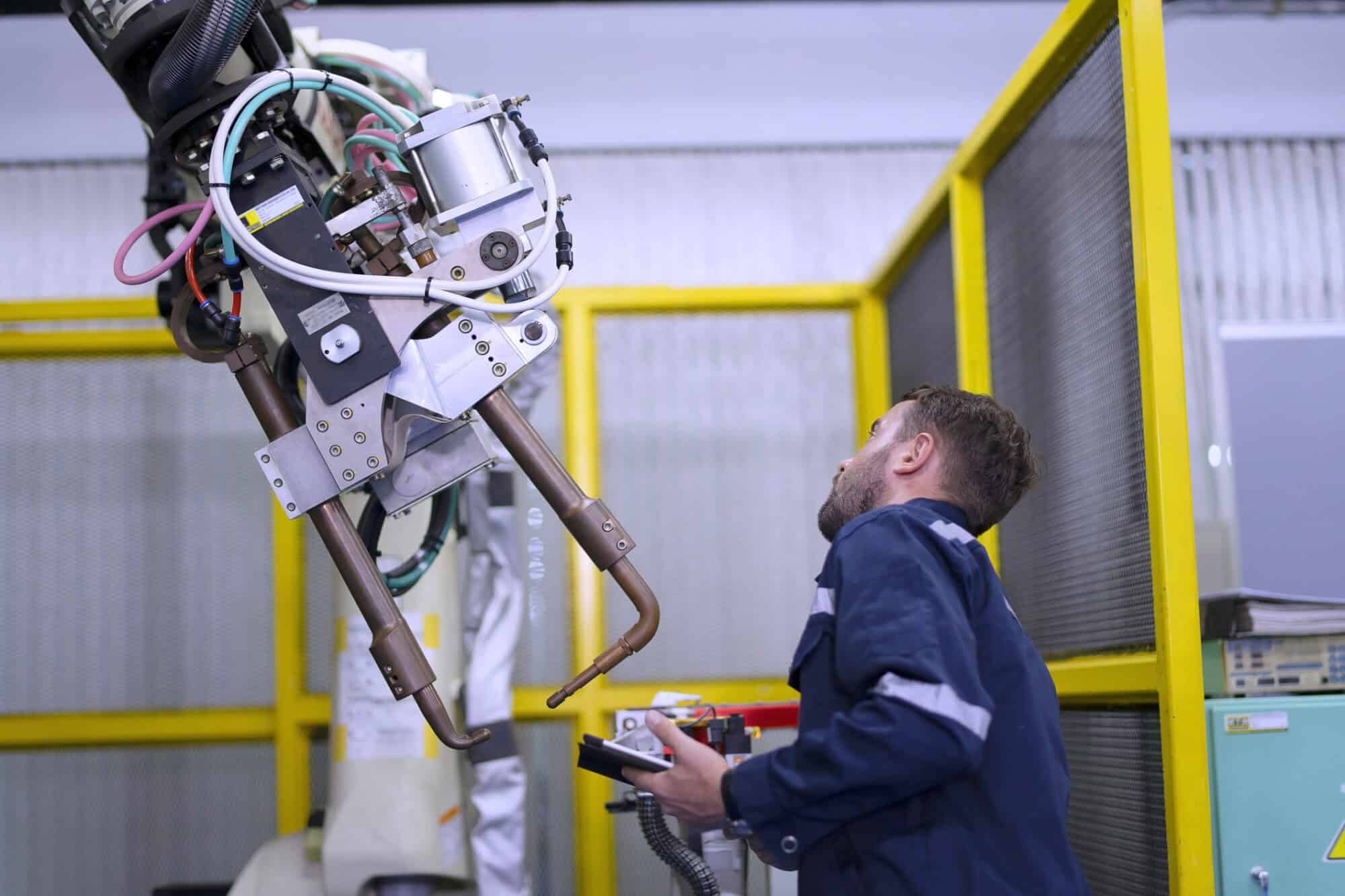
The introduction of artificial intelligence has been a boon to manufacturing, and the technology will continue to have a positive impact—as long as regulations are “right-sized,” manufacturers told Congress this week.
What’s going on: “Manufacturers are utilizing AI in myriad ways on the shop floor and throughout their operations,” the NAM told the House Subcommittee on Commerce, Manufacturing and Trade in a statement for the record at Wednesday’s hearing, where data was cited.
- “The diverse use-cases of AI in manufacturing suggest a need for a cautious regulatory approach to this groundbreaking technology: one that supports innovation and U.S. leadership in AI while providing context-specific, risk-based, right-sized rules of the road for manufacturers,” the NAM said.
- Giving testimony at the hearing, Siemens USA President and CEO and NAM Board Member Barbara Humpton discussed the many benefits of using AI in manufacturing and emphasized the need to ensure that AI regulations include “targeted” rather than “overly broad” definitions.
Industrial vs. consumer-focused AI: First, it’s important to distinguish between industrial and consumer-facing AI, Humpton told the subcommittee members.
- “Industrial AI is different from consumer AI,” she said. “Industrial AI uses controlled data from the manufacturing environment to help manufacturers create business value. Think better products, more efficient operations, a more prepared workforce. … AI will enable all companies—from startups to small and medium enterprises to industrial giants—to thrive in this new era of American manufacturing.”
- In written testimony, she added that “the core distinction of industrial AI is that it is trained on highly monitored data from sensors and machines, providing a more reliable foundation for training AI models.”
Simple, singular and targeted: Regulation of AI should be undertaken with a light touch and following a full accounting of on-the-books laws to prevent duplicative and/or contradictory rules, the NAM said.
- “[P]olicymakers should always review existing laws and regulations before enacting new ones, because most uses of AI correspond to tasks and objectives that industry has faced for a long time and that are thus highly likely to have already been addressed by existing laws and regulations,” said the NAM, which also referenced its first-of-its-kind AI report, “Working Smarter: How Manufacturers Are Using Artificial Intelligence,” released last May.
- “Similarly, policymakers must right-size any compliance burden associated with AI regulation,” the NAM continued. “The ubiquitous use of AI throughout modern manufacturing, as well as manufacturing’s dependence on innovation, underscore the need for rules that enable rather than hinder manufacturers’ development and adoption of AI systems.”
Protect without hindering: Congress “must advance industrial AI by prioritizing strong rules for digital trade, especially to include strong protections for source code and algorithms,” Humpton went on in her written testimony. “We encourage policymakers to build upon the success of previous U.S.-led efforts to protect intellectual property.”
- Legislators must also safeguard privacy and protect against baseless legal claims, the NAM said. “[I]t is … crucial that Congress take steps to maintain the privacy of personal data when utilized in AI contexts. … A federal standard should avoid a patchwork of state-level rules by fully preempting state privacy laws; it also should protect manufacturers from frivolous litigation.”
The last word: “The range and importance of uses of AI—transforming every aspect of the core of manufacturers’ operations—make it clear that AI has become integral to manufacturing,” said the NAM. “With the right federal policies, manufacturers in the U.S. will continue to devise new and exciting ways to leverage AI to lead and innovate and stay ahead of their global competitors.”
SMM Chair: Extend Pro-Growth Tax Policy, Prioritize Permitting and Regulatory Reform

To lift much of the burden on manufacturers in the U.S., Congress must reinstate pro-growth tax measures, enact commonsense regulatory reforms and undertake comprehensive permitting reform. That was the main message of Click Bond CEO and NAM Small and Medium Manufacturers Group Chair Karl Hutter to legislators yesterday on Capitol Hill.
What’s going on: “American businesses now shoulder a staggering $3 trillion annually in regulatory costs—disproportionately impacting manufacturers,” Hutter told the House Committee on Small Business at Wednesday’s hearing.
- “Unfortunately, small companies get hit twice—with unworkable regulations that apply to them [and again with] compliance and reporting requirements that larger firms are forced to pass down. Fortunately, Congress and the Trump administration have the opportunity to reverse course.”
Rocket fuel for manufacturing: The 2017 Tax Cuts and Jobs Act “was rocket fuel for Click Bond,” said Hutter—whose Carson City, Nevada–based family business makes adhesive-bonded fasteners used by the U.S. military, commercial aviation industry and NASA.
- “The new 21% corporate tax rate allowed us to raise wages for production employees, invest in capital equipment, strengthen our employee tuition support program and accelerate the timeline for constructing a new facility. The new 20% pass-through deduction likewise empowered our suppliers and partners to reinvest in their businesses, readying them to support our growth.”
Changes for the worse: But growth was halted in 2022 and 2023, when provisions from the TCJA began to expire. Worse still: More pro-growth tax measures are due to expire at the end of this year—unless Congress intervenes.
- “It is now more expensive for Click Bond to conduct R&D, the lifeblood of both our product and process innovation,” according to Hutter. “It’s more expensive for us to purchase capital equipment, the tools that will unleash the productivity of our team. And it’s more expensive for us to finance job-creating investments such as that state-of-the-art, sustainable manufacturing facility.”
Ill effects: According to a recent study released by the NAM, nearly 6 million American jobs and more than $1 trillion of U.S. GDP will be at risk if Congress fails to act by the end of this year to preserve TCJA’s pro-manufacturing provisions.
What should be done: Manufacturers everywhere are struggling under the weight of both these provisions’ expiration and needless, out-of-date government requirements, Hutter went on. To fix these problems, he said, Congress should:
- Unwind “outdated chemicals reporting requirements that force us to look backward in time and deep into our supply chain”;
- Stop unnecessary permitting roadblocks by the Environmental Protection Agency at the state and local levels;
- Roll back expensive energy and labor mandates;
- Undertake “comprehensive permitting reform”; and
- Make permanent the pro-manufacturing tax provisions scheduled to sunset at the end of 2025 and bring back already expired provisions that boosted the sector and the U.S. economy as a whole.
The final say: “Congress has a critical opportunity to right-size the regulatory landscape, put an end to permitting delays and protect manufacturers from devastating tax increases,” Hutter concluded. “I encourage you to seize [it] … because when manufacturing wins, America wins.”
Timmons, Chairman Smith: Preserve Tax Reform Now
For a stronger, more competitive America, Congress must make permanent the pro-growth tax provisions from President Trump’s 2017 Tax Cuts and Jobs Act, NAM President and CEO Jay Timmons and House Ways and Means Committee Chairman Jason Smith (R-MO) wrote in a recent op-ed for the Washington Examiner.
What’s going on: “The choice is clear. Congress must deliver the results the American people voted for on Election Day by extending and expanding Trump’s pro-growth tax policies, which have worked so well.”
- The reforms allowed manufacturers “to hire, expand and invest in their communities” at historic rates, with a particularly positive effect on small and medium-sized businesses.
- Georgia-based Winton Machine Company, which produces machinery used in tubular parts and coaxial cable fabrication, would not have been able to expand its workforce, raise employee pay or purchase critical technology had it not been for the TCJA, as Winton CEO and Co-Owner and NAM board member Lisa Winton told Congress in 2023.
- Austin Ramirez, president and CEO of hydraulic and electromechanical control systems maker Husco in Wisconsin and NAM Executive Committee member, told legislators that tax reform allowed his family-owned company “to create jobs, expand research and development, compete globally and invest in its future, including the most significant renovation of his business in 70 years,” Timmons and Chairman Smith wrote.
What’s at stake: “Key provisions of the 2017 Trump tax reforms have already expired, and many more are set to lapse later this year,” Timmons and Chairman Smith continued.
- “Without swift action, manufacturers will miss out on tax incentives for research and development and equipment purchases, while small businesses and family-owned manufacturers will see their tax rate double to as high as 43.4%—all at a time when global competition is intensifying.”
According to a recent NAM study cited in the op-ed, if Congress fails to preserve tax reform by the end of this year:
- Nearly 6 million U.S. jobs—more than 1 million of them in manufacturing—will be lost; and
- America will lose some $1.1 trillion in GDP and $540 billion in wages.
What must be done: Congress must act now to restore the pro-manufacturing tax provisions that have already sunset and make permanent those that are scheduled to expire, Timmons and Chairman Smith concluded.
- “With Trump leading the charge, it is time for Congress to deliver, protect these reforms and set American workers up for success in 2025 and beyond. Together, we can ensure the next chapter in America’s story is one of growth, opportunity and strength.”