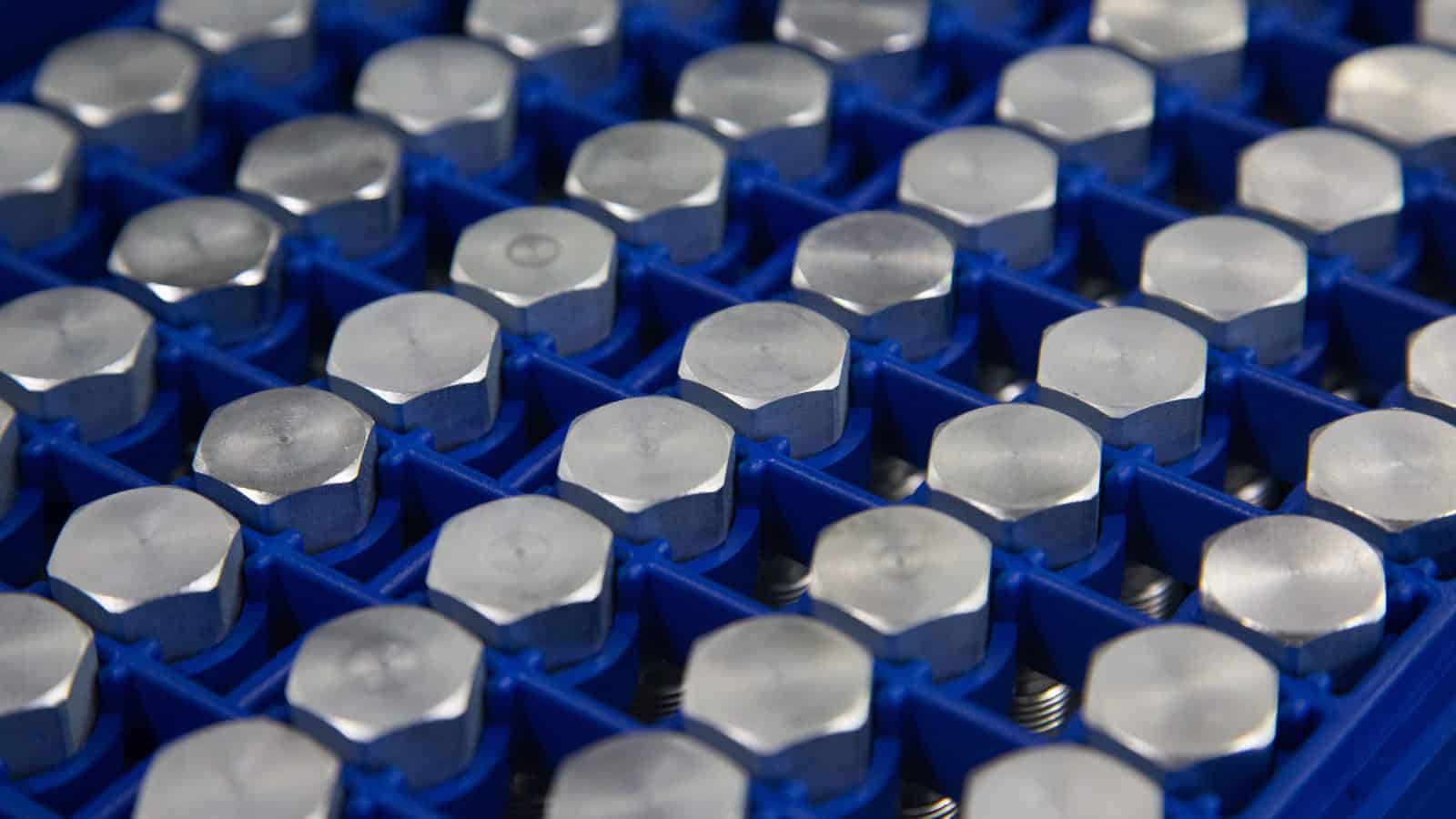
EIA: China Monopolizes Global Critical Minerals Market

China dominates the global battery mineral market, from sourcing and mining to production, according to the U.S. Energy Information Administration.
What’s going on: “China imported almost 12 million short tons of raw and processed battery minerals, accounting for 44% of interregional trade, and exported almost 11 million short tons of battery materials, packs and components, or 58% of interregional trade in 2023, according to regional UN Comtrade data.”
- These minerals’ importance will only increase as the appetite for electric vehicles and renewable energy technologies grow.
- However, as the NAM recently told the Commerce Department, Section 232 tariffs will not increase domestic sourcing of these critical minerals or decrease U.S. reliance on China for them.
- Instead, to shore up domestic critical minerals supply, the U.S. needs permitting reform, incentives for producers and enhanced trade relationships with partners other than China.
Mining and production: China either produces domestically or has large ownership stakes in companies that produce these minerals.
- In 2023, the country produced about 18% (33,000 short tons) of the world’s mined lithium, and Chinese firms “control 25% of the world’s lithium mining capacity.”
- Chinese companies also have sizable investments in mining operations in the “lithium triangle,” an area in Chile, Argentina and Bolivia that holds half of the world’s lithium stores.
- “China produced 79%, or 1.27 million short tons, of the world’s natural graphite in 2024, according to the U.S. Geological Survey.”
- Chinese firms own 80% of cobalt production in Congo-Kinshasa, the location of more than 50% of the world’s cobalt production.
Trade: After production, raw battery minerals are exported—and in 2023, China accounted for nearly half (46%) of global raw battery mineral import trade.
- That year, the world’s largest lithium producer, Australia, sent almost all its lithium exports to China.
Processing: China has the global critical minerals processing market cornered, too.
- It processes more than 90% of the world’s graphite.
- In 2022, “Chinese companies accounted for over two-thirds of the world’s cobalt and lithium processing capacity.”
- The next year, China imported 20% of global processed battery minerals, mostly African cobalt. Also in 2023, China exported 58% of the world’s processed battery minerals, primarily synthetic graphite, elsewhere in Asia and to Oceania.
Battery materials manufacture and trade: “China accounted for 53% of the world’s battery material export trade in 2023.”
- In 2022, the country made 85% of the world’s anodes, 82% of its electrolytes, 74% of its separators and 70% of its cathodes.
- In 2023, China controlled almost 85% of “battery cell production capacity by monetary value.”
Timmons: Uncertainty Requires a Tax Bill from Congress Now

If the administration wants manufacturing in the U.S. to succeed, it needs a planned strategy—one that includes extending the pro-growth provisions from the 2017 Tax Cuts and Jobs Act and gets the tax bill containing most of President Trump’s legislative agenda passed quickly. That was the message from NAM President and CEO Jay Timmons on Fox Business’ “Maria Bartiromo’s Wall Street” last week.
What’s going on: “Manufacturers were very excited that we had a new president in January who said, ‘We’re going to get this … [tax] bill done. We’re going to extend the cuts from 2017,’” Timmons told show host Maria Bartiromo on May 30 on location at the 2025 Reagan National Economic Forum in Simi Valley, California. “But now we have the uncertainty … that really requires this bill to be done as soon as possible. It’s urgent now.”
- The Senate returned this week from its Memorial Day recess with the legislative agenda as its top priority.
- The GOP hopes to extend the TCJA tax cuts permanently, while Democrats want the nonpartisan parliamentarian of the United States to determine whether an extension without an end date would violate the Senate’s Byrd rule.
Why it’s important: More than 85% of manufacturers in the U.S. say Congress must preserve the TCJA’s provisions in response to trade uncertainty, according to the NAM’s latest Manufacturers’ Outlook Survey, which Bartiromo cited.
- At risk if it doesn’t preserve the measures: some 6 million jobs and a $1 trillion economic hit.
Certainty on trade: But more is needed, Timmons said.
- The trillions of dollars in U.S. investments secured recently by the administration are definite wins—but only “as long as we have that strategy in place,” which, in addition to sound tax policy, includes regulatory certainty.
- “Trade is going to be critical,” Timmons told Bartiromo. “We need to have the certainty around whatever the rules of the game are regarding our trading practices and the work we do with our trading partners, because if we don’t have the right policies in place, and imports do end up costing us a lot of money for critical inputs for manufacturing, we can’t build those facilities.”
- For every dollar of manufactured inputs imported to the U.S., “we get $1.40 of output,” Timmons went on. “And so if we tariff everything the same, we may be in a little bit of trouble when it comes to making those investments.”
The latest resources for the NAM’s tax campaign may be found on the “Manufacturing Wins” webpage.
A Manufacturer of Thermal Batteries Foresees an Industrial Boom
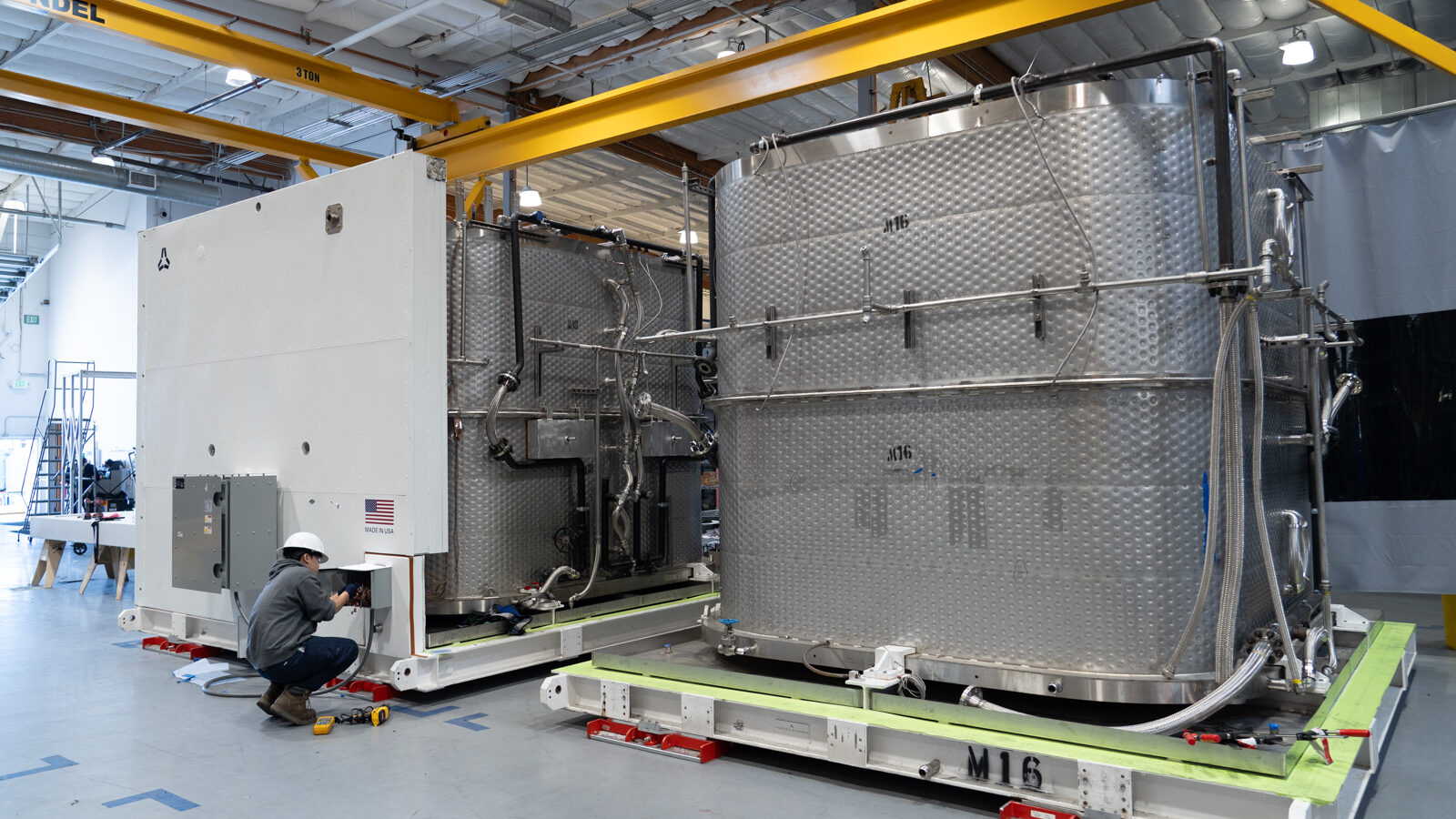
Antora Energy has an energy storage solution that could transform American manufacturing.
Antora builds thermal batteries that draw in locally produced electricity when it’s cheap and plentiful, converting it into heat stored in solid blocks of carbon. That energy can be delivered 24/7 to manufacturers as affordable, reliable energy. It’s a solution that is both modular and scalable, capable of serving small and large manufacturers alike.
- “We’re taking local energy from sources that are already near factories, at times when nobody else wants it and it would otherwise be wasted, and delivering it to American manufacturers,” said Antora Chief Operations Officer Justin Briggs. “It helps the factory become more competitive and stabilizes the local grid.”
Promoting U.S. energy: Antora’s batteries are manufactured in the U.S., using a domestic supply chain that avoids reliance on critical minerals (which must often be imported from China).
- The core of the battery is a form of inexpensive, low- to medium-grade graphite that is often a byproduct of coal mining or petroleum refining—an abundant resource across the U.S.
- “This is an opportunity to build a new technology class in the United States, with American materials and American supply chains,” said Briggs. “From the very beginning, we can build in America to support U.S. manufacturers.”
Creating jobs: The company is excited about the opportunity to create jobs in the United States—both at Antora itself and at the factories it supports.
- “We’re currently operating our first factory—a thermal battery gigafactory in San Jose, California—but that’s just the beginning,”
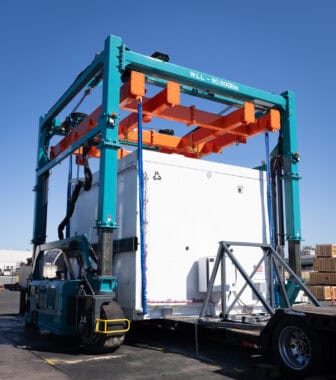 said Briggs. “We’re already looking at a second factory, and more beyond that. We’re talking about being able to create a tremendous number of jobs around manufacturing hubs in the U.S.”
Leading a renaissance: Antora sees the chance not only to build a new industry, but also to help support the next generation of American manufacturing and global technological leadership.
- “[The U.S. has] a chance for a renaissance—to tap into these domestic, abundant energy resources and support manufacturing industries, from concrete and steel to chips and data centers,” said Briggs. “These are all sectors that need energy, and we can supply it cost-effectively.”
Overcoming hurdles: Briggs notes that electricity markets have been around for a long time—and as a result, regulatory hurdles designed by long-ago policymakers can get in the way of this new technology.
- “The rules that govern electricity markets were not designed to contemplate scenarios like this one,” said Briggs. “Thermal batteries bring huge benefits to industry and the electric grid, but it can be hard to do from a regulatory perspective. We’re working with regulators to open up markets to support these great project opportunities.”
- “We’re just trying to make sure there aren’t antiquated rules in the way, so we can help make American industry more competitive.”
The bottom line: “This is an opportunity to drive a resurgence in American manufacturing through cheap energy,” said Briggs. “We’re putting this energy to use to repower American industry.”
Supreme Court Limits Scope of Environmental Reviews

The U.S. Supreme Court has put limits on a procedural requirement that has become a major roadblock for infrastructure and energy projects: environmental review under the National Environmental Policy Act.
The background: The predecessor of substantive statutes like the Clean Water and Clean Air Acts, NEPA is the “the single most litigated environmental statute,” NAM Vice President and Deputy General Counsel Erica Klenicki told us.
- In this case, local government and environmental groups brought a NEPA challenge to the Surface Transportation Board’s approval of an 88-mile rail line in Utah’s Uinta Basin, which would connect to the national rail network and carry crude oil to refinery markets along the Gulf Coast.
- The board approved the project after issuing a comprehensive, 3,600 page environmental impact statement under NEPA.
- But that wasn’t enough—the D.C. Circuit blocked the board’s approval, ruling that its exhaustive analysis failed to consider the repercussions of more oil production made possible by the rail line. It contended that the board should have considered the potential impact of increased oil refining on Gulf coast communities thousands of miles away—even though the board had no power at all to control for those effects.
The issue: The NAM filed an amicus brief in the case, urging the court to reject the premise adopted by the D.C. Circuit—that NEPA requires agencies to analyze the effects of upstream or downstream projects over which they do not exercise regulatory authority.
- Yesterday, the justices ruled 8–0 (Justice Neil Gorsuch recused himself) that the board did not have to consider such sweeping effects when evaluating whether to approve a project.
What they said: “NEPA is a procedural cross-check, not a substantive roadblock,” Justice Brett Kavanaugh wrote . “The goal of the law is to inform agency decision-making, not to paralyze it.”
- “Courts should review an agency’s [environmental impact statement] to check that it addresses the environmental effects of the project at hand. The EIS need not address the effects of separate projects,” Kavanaugh wrote. “In conducting that review, courts should afford substantial deference to the agency as to the scope and contents of the EIS.”
The NAM’s advocacy: The NAM has been a tireless proponent of limiting regulatory overreach, especially the out-of-control permitting process that strangles important new infrastructure and energy projects.
- “The congressional intent behind NEPA when it was passed was to make sure a specific project could be reviewed for its environmental impact—not to slow down progress on important economic growth,” said NAM Director of Energy and Resources Policy Michael Davin. “The U.S. should learn from other nations and review projects for environmental impacts without taking years and years to approve them.”
Manufacturers’ Optimism Drops, Signaling Need for Tax Reform

The NAM’s Q2 Manufacturers’ Outlook Survey, released today, shows that manufacturers’ optimism about the future is dropping precipitously.
The headline number: Only 55.4% of respondents report a positive outlook for their companies—a nearly 15-percentage-point drop from Q1 and the lowest level since the height of the COVID-19 pandemic in Q2 of 2020.
- Manufacturers do have a prescription for renewed confidence, however, as 85.4% of respondents believe Congress should preserve pro-growth tax policies in response to trade uncertainty.
Worried about trade: Trade uncertainty remained the top business concern for the second consecutive quarter, cited by 77.0% of respondents.
- Almost as alarming is the increase in raw material costs, which was cited by 66.1% of respondents.
The NAM says: “These numbers are yet another indicator that manufacturers need increased policy certainty. Congress must act urgently to preserve tax reform and empower manufacturers to make the long-term investments that drive the American economy,” said NAM President and CEO Jay Timmons.
- “The stakes are high: preserving tax reform will prevent the loss of 6 million jobs and avoid a $1 trillion hit to the economy—that’s why manufacturers are calling on the Senate to preserve pro-manufacturing tax policies from the House-passed reconciliation bill, while also taking steps to ensure the final package is maximally beneficial for our industry.”
- “Pro-manufacturing tax policies are a critical component of a comprehensive manufacturing strategy; this quarter’s results also show that manufacturers need a strategic approach to trade policy that allows our industry to reduce costs and access the inputs we need to make things in America.”
Trump Executive Order Will Speed Up Deployment of New Reactors

President Trump signed several executive orders on Friday that call for the reform of the Nuclear Regulatory Commission and will speed up the permitting of new reactors in the U.S. (CNBC).
What’s involved: “Trump said Friday the orders focus on small, advanced reactors that are viewed by many in the industry as the future. But the president also said his administration supports building large plants.”
- “We’re also talking about the big plants—the very, very big, the biggest,” Trump said. “We’re going to be doing them also.”
Going faster: Building new power plants has been a tedious effort thanks to the long licensing and regulatory approval processes.
- Yet the appetite for more nuclear power is there, thanks to the electricity demand from the data centers powering the AI revolution.
- “Three Mile Island is expected to return to service with financial support from Microsoft . . . and Alphabet and Amazon are investing in small, advanced reactors,” CNBC noted.
More uranium: The EOs also aim to boost uranium mining in the U.S. and to increase domestic enrichment and processing capacity, according to an administration official.
- In addition, the orders also “aim to speed up reactor testing at the Department of Energy’s national laboratories.”
The NAM says: “These actions mark an important and timely step toward unleashing American energy dominance safely and responsibly. Nuclear-generated power is an important part of an all-of-the-above energy strategy, which is necessary to meet the power needs of a growing manufacturing sector, and the nuclear fuel supply chain is a critical manufacturing industry that we need to bring home,” said NAM President and CEO Jay Timmons.
- “Rebalancing regulations and expediting permitting reform to unleash American energy are key pillars of a comprehensive manufacturing strategy that Congress must act on so manufacturers can grow, hire and compete—and these orders reflect that vision by reforming the licensing and permitting systems that place burdens on manufacturers.”
- “The NAM looks forward to working closely with the National Energy Dominance Council, under the leadership of Secretary of the Interior Doug Burgum and Energy Secretary Chris Wright, as well as Congress to ensure these policies translate into durable results for manufacturers.”
NAM: Manufacturers Need “Smarter” AI Policy Solutions

A big majority of manufacturers expect AI to become essential to their operations by 2030—but they need policymakers to support all that growth and innovation, as a new report from the Manufacturing Leadership Council, the NAM’s digital transformation division, lays out.
By the numbers: The report found that 51% of manufacturers already use AI in their operations.
- Meanwhile, 61% expect investment in AI to increase by 2027.
- That number only grows as manufacturers look further into the future. By 2030, 80% say AI will be essential to growing or maintaining their business.
Current barriers: Right now, manufacturers say some barriers prevent them from implementing AI to its fullest potential.
- They name data quality and availability as the top challenges, with 65% of respondents reporting they lack the right data for AI applications and 62% citing data that is unstructured or poorly formatted.
The policy angle: Manufacturers don’t just need to overcome the technical, logistical or workforce challenges of rolling out AI solutions—challenges that include everything from modernizing data architectures to upskilling and training workers on new tools. They also need a pro-growth policy framework, which the NAM has supplied for policymakers. The key recommendations are:
- Adopt a pro-AI regulatory approach: Given the growing number and variety of use cases of AI in manufacturing, the industry requires an optimized regulatory environment.
- Develop the manufacturing workforce of the AI age: Policymakers should support training programs, career and technical education institutions and STEM education and immigration. According to the MLC’s report, 82% of manufacturers cite a lack of AI-ready skills as the top workforce challenge.
- Advance energy and permitting reform: AI needs a lot of power, and energy and permitting reform is necessary to support AI-related data center growth.
- Protect personal data: Congress should pass a comprehensive privacy law that preempts state laws, provides liability protections that prevent frivolous litigation and adopts a risk-based approach that enables innovation and AI.
- Support U.S. manufacturing of AI chips: Policymakers should execute funding agreements with chip manufacturers and renew the Advanced Manufacturing Investment Credit.
- Incentivize U.S. AI innovation: Congress must pass the One Big Beautiful Bill Act that preserves pro-manufacturing tax policies.
Manufacturers say: “AI continues to drive innovation, efficiency and better outcomes for manufacturers across America. From accelerating drug discovery and development to optimizing manufacturing operations, AI enables companies to make smarter, faster and more impactful decisions,” said Johnson & Johnson Executive Vice President and Chief Technical Operations and Risk Officer and NAM Board Chair Kathy Wengel.
- “Importantly, AI empowers employees at all levels, when we equip them with the knowledge and understanding to help shape the implementation of these new technologies. AI is proving to be an essential partner on the shop floor, and we must continue to ensure manufacturing employees have the skills they need to build the future of our industry.”
The last word: “The latest report from the MLC reinforces the need for modernized, agile, pro-manufacturing AI policy solutions, so that manufacturers can continue to innovate on shop floors across America,” said NAM President and CEO Jay Timmons.
- “Manufacturers welcomed President Trump’s early commitment to maintaining and advancing America’s global AI dominance, and we look forward to continuing to champion American AI leadership and manufacturing in America, which starts with adopting a pro-AI regulatory framework and pursuing policies that bolster innovation.”
Court Strikes Down Trump’s “Reciprocal” Tariffs

The U.S. Court of International Trade, which hears disputes involving international trade and customs laws, struck down President Donald Trump’s International Emergency Economic Powers Act tariffs yesterday.
What happened: In a unanimous opinion, the three-judge panel found that the IEEPA “does not authorize the President to impose unbounded tariffs” and the administration exceeded its authority in imposing the “reciprocal” and fentanyl IEEPA tariffs.
What it means: The finding strikes down the 10% baseline additional “reciprocal” tariffs announced on April 2 as well as the “reciprocal” tariffs of between 20% and 50% on another 65 or so trading partners with which the U.S. runs trade deficits.
- Those tariffs that are currently “paused” were scheduled to snap back into place on July 9 if trade deals were not reached by then.
- The court further nullified the 25% fentanyl IEEPA tariffs on products from Canada and Mexico and the 20% fentanyl IEEPA tariff on products from China.
Refunds? The court also ordered that the IEEPA tariffs collected so far be “vacated,” raising questions about possible refunds.
- The court gave Customs and Border Patrol 10 days to implement the ruling, but the U.S. government may ask for a stay of enforcement—relieving the government of obligation to issue refunds—pending appeal, which could result in CBP continuing to collect but not liquidate tariffs.
An appeal: The DOJ quickly filed an appeal with the U.S. Court of Appeals for the Federal Circuit, and said that it may ask the Supreme Court to pause the ruling as soon as Friday.
Section 232: The ruling does not affect other tariffs the administration has or might impose under Section 232 of the Trade Expansion Act of 1962 on national security grounds.
Supreme Court Clears Way for Rio Tinto Copper Mine

The U.S. Supreme Court rejected an appeal by a Native American group that would have halted the development of North America’s largest copper mine, a partnership between Rio Tinto and BHP Group (Bloomberg, subscription).
The situation: The appeal attempted to prevent the transfer of federal land to the mining project, due to the religious significance of one area to some members of the San Carlos Apache Tribe.
Why it matters: This site is the third-largest known copper deposit in the world and will be instrumental in the efforts—led by the Trump administration and backed by the NAM—to increase domestic sources of key minerals.
- “Projects such as Resolution have been tied up in legal challenges for years, making the U.S. one of the most challenging places to develop new mines,” Bloomberg noted.
The benefits: “The companies say the mine would supply as much as 25% of U.S. demand and as much as 40 billion pounds of copper over 40 years amid a soaring need for the metal in electric vehicles.”
Next steps: The land transfer may occur as soon as June 16, once the U.S. Forest Service issues a mandatory draft environmental impact statement and record of decision. The companies are still awaiting several federal, state and local permits, however.
The NAM says: “Manufacturers are eager for Resolution Copper to get underway to support strong domestic supply chains of critical materials after years of permitting delays, as well as to create thousands of high-paying jobs,” said NAM Vice President of Domestic Policy Chris Phalen. “The U.S. has an acute need for more mineral production and processing capacity. Policymakers should work to support many more such projects.”
NAM Forge Your Path Series: Meet Hoffer Plastics Corporation Co-CEO Alex Hoffer

Hoffer Plastics Corporation Co-CEO Alex Hoffer didn’t plan on joining the family business. His journey began with a summer job cleaning air conditioners atop the company’s South Elgin, Illinois, facility—a task that initially deterred him from the plastics industry. However, after stints in personal training and education, he returned to Hoffer Plastics in 2008.
Alex progressed through various roles, including estimator, sales associate and director of packaging, before ascending to executive leadership. In 2020, alongside his sisters Gretchen Hoffer Farb and Charlotte Hoffer Canning, he was appointed Co-CEO, forming a collaborative leadership model known internally as “G3,” now guiding the third-generation, family-owned company.
Beyond operational excellence, Alex is deeply committed to the company’s core values of family, integrity, service and trust—principles established by his grandparents, Bob and Helen Hoffer, when they founded the company in 1953. His personal blog, “Bald in Business,” reflects his dedication to integrating faith and leadership, offering insights into leading with compassion and purpose.
In the latest installment of the NAM’s “Forge Your Path” series, Alex shares his thoughts on what it means to be a leader, the accomplishments of his company that make him the most proud, where he sees his company in the next five years and more.
Q: What is one lesson or insight you’ve gained in leadership that you haven’t widely shared before but that has been a key part of your company’s success? How did you come to this realization, and how has it impacted your leadership?
Alex: “The most important job of a leader is setting clear standards and aligning the team to those standards. I believe this happens best through in-person one-on-one conversations. Our conversations revolve around role success statements, which are three to five clear statements that explain what success looks like at a high level. These are then measured by KPIs. The process of creating the role success statements leads to clarity, and clarity leads to alignment. The team member can then rate their monthly performance using these two dashboards.
“The process of writing success statements, and measuring them monthly, feels a little elementary. But that is the lesson I have come to learn: Leadership is often doing the things that feel elementary—and doing them repeatedly.”
Q: Can you share a quote or mantra that defines your approach to leadership? How has this mantra influenced your decision-making and leadership?
Alex: “Leadership is the process of doing things with and through other people. Leaders are people worth following that take people from point A to point B. These two statements capture the core of what I believe about leadership. The process is always about others, hence the words ‘with’ and ‘through.’ Being the kind of person worth following means that you do this with integrity, honesty and compassion. It means that you have the tough conversation, and you do so in a compassionate way. Finally, as the leader you are always pointing others to a better future. These are the things that capture what it means to be a leader, and not someone who has a title and some level of positional authority.”
Q: What accomplishments at your company are you the most proud of and why?
Alex: “The accomplishments that make me the proudest are threefold: First, our family is most satisfied in the business when we see the fruits of the business impact people on our team. In 2024, we had three team members retire who were with the company for a minimum of 45 years. Hearing what the company meant to them and their family gave wind to our souls.
“Secondly, I am similarly uplifted when I see how the products we manufacture improve the lives of other people and positively impact their livelihoods. I have seen this play out on production floors in Kentucky, Spain and various places in between.
“Finally, our grandfather taught us that any success we have needs to be good news for the local community. So, I am proud of that legacy and challenged to be the kind of steward he was.”
Q: Where do you see your company in the next five years, and what are you hoping to achieve?
Alex: “I am most excited about the growth of our team and our business in the next five years. We have the opportunity of bringing on new team members and that will bring new ideas, innovation and improvement. The next generation will see things differently, and that will grow us. It will also allow us to serve our customers in ways that we thought were not possible. It might take us into new markets and new relationships, which will further our appreciation for what we get to do.”
Q: What are the past three books you’ve read that you would recommend to your peers and why?
Alex: “Here are the books I would recommend:
“The Bible: This might be a cop-out because I am recommending 66 books and not one! However, no book has come close to impacting me the way the Bible has. Looking for a bite-sized sample? Read one chapter of the book of Mark each day for the next month (a five-minute commitment), and you will be through one of the four Gospels by month’s end.
“‘From Strength to Strength’ by Arthur C. Brooks: My doctor recommended this book to me, and it profoundly challenged me to see the second half of my life differently than the first. I am only 43, so I hope I have a few years to go before getting to ‘halftime.’ This book will help get me, and you, ready!
“‘The Boys in the Boat’ by Daniel James Brown (Narrated by Edward Hermann): I read (and often listen to) a lot of history and biographies, so there are countless books I would recommend. Having said that, the audio version of this book is one that I come back to for several reasons. First, it reminds me of so many teamwork lessons, and how the bonds of team never fade. My golf teammates stood up in my wedding, my best man was the guy I set screens for in 6th grade basketball. Secondly, it is set in an era—the onset of World War II—that I have deep interest in. Third, the epilogue reminds me that these men grew old and eventually died. This floods my emotions with memories of my four grandparents and that is probably why I return to the book often.”