
Rockwell’s Moret Looks Forward to Guiding the NAM

Blake Moret has big plans for his tenure as NAM Board Chair (Milwaukee Business Journal, subscription).
What’s going on: The Rockwell Automation Chairman and CEO “looks forward to chairing the National Association of Manufacturers during a period of economic uncertainty and rapidly changing technology—most notably artificial intelligence.”
- Moret, who recently confirmed that Rockwell’s new approximately 1-million-square-fooot plant will be built in New Berlin, Wisconsin, took on the role at the NAM because of his strong belief in the importance of manufacturing.
- “[M]anufacturing is at the absolute core of the American economy,” he told the Milwaukee Business Journal. “It’s important that it’s successful.”
Permitting reform: One of the NAM’s top advocacy issues is permitting reform—and getting it done is a passion Moret shares.
- “Streamlining permitting and making sure that the regulations are necessary, that they don’t add unnecessary delays in new investment. … There is certainly permitting with respect to the environment that is absolutely needed. But there’s also a lot of streamlining and efficiencies that can be introduced to get these new projects done.”
Overcoming challenges: Moret said, “A chief hurdle for manufacturing in the U.S. today is the uncertainty surrounding tariffs and the workforce shortage.” But he has recommendations.
- “A stable environment [on tariffs] would unleash more spending,” Moret said.
- On the labor pool: “Rockwell has the Academy of Advanced Manufacturing for training returning veterans for technician-level jobs. The NAM has a similar program,” he said, referring to the Federation for Advanced Manufacturing Education (FAME), a program founded in 2010 by Toyota and now run by the NAM’s 501(c)3 workforce development and education affiliate, the Manufacturing Institute.
- “First, attract new entrants to fill jobs but also have the capabilities to interact with the technology. That’s really the winning hand,” Moret advised.
AI moves: Moret is a big believer in the importance of artificial intelligence, and Rockwell is making AI investments in its facilities worldwide. What’s next?
- “[E]ducating policymakers is really important,” he told the Journal. Those “who are considering existing and proposed rules need to understand how AI can be used. Also, understanding what the risks are—there is obvious risk to workforce disruption and cybersecurity. The bad guys use AI as well as the good guys. Just being able to present that from a manufacturer’s point of view will be an important role.”
Manufacturing Institute Address Spotlights Workforce

In the Manufacturing Institute’s State of the U.S. Manufacturing Workforce Address, MI President Carolyn Lee had a clear message for industry leaders: “Workforce is not a side issue. It is the strategy.”
An exciting moment: Speaking at NTT Data’s North American headquarters in Dallas, Lee observed that manufacturers have an exciting opportunity before them.
- “Across the country, people are rethinking the way they approach learning. They’re reimagining the way to build a career. More and more, they are turning to other pathways as launchpads to their future,” she said.
- “Young people today have started to see more value in a different kind of job. A recent Harris poll found that the share of Gen Z-ers interested in blue-collar careers stood at 50%—more than twice as high as Americans overall.”
- “So as more young people seek out skilled pathways, we must seize the opportunity to ensure they see manufacturing as a sector in which they apply those skills for a durable career,” she continued.
Cultivating the right skills: Lee pointed out that these young people interested in the manufacturing industry must be equipped with the skills to succeed in it. She urged manufacturing companies to design and sustain strategies that will build this new workforce.
- “When manufacturers open their doors to students, parents and educators—through plant tours, classroom visits or MFG Day events—they do more than promote their companies. … For many young people, that first exposure is the moment they realize there is a home for them in this industry; that manufacturing is a place where they can build, solve and contribute,” she said.
- “But an employer’s role doesn’t stop here. It must continue through partnerships with high schools, community colleges and universities; through internships, mentorships and apprenticeship programs that blend classroom instruction with paid, hands-on learning.”
- If all these steps are taken, students will “see a pathway forward—not just a first job, but a future,” Lee added.
MI in action: Lee highlighted the MI’s groundbreaking work in expanding talent pipelines and increasing access to rewarding manufacturing careers.
- “For example, through Heroes MAKE America, we are turning military excellence into manufacturing careers. We’ve expanded from entry-level on-site training and networking to offering in-demand high-skilled training. We’ve built and launched the Manufacturing Readiness Badge program, which translates military experience into validated, industry-recognized skills that manufacturers understand.”
- She also spotlighted the “rapid growth of the MI’s FAME program—the nation’s premier ‘earn and learn’ apprenticeship model for manufacturing. Since the MI took over stewardship of FAME from Toyota six years ago, FAME has more than doubled in size. Today, it includes nearly 500 companies across 17 states, boasting an incredible 85% job placement rate with sponsoring employers.”
The promise of AI: On the subject of AI, Lee observed that “people who can leverage new technologies into the way they operate—who can use it to help them solve problems, make better decisions and get more done—will succeed in the job market and power the future.”
- [A]s AI evolves the way work is done, it’s opening doors to roles and opportunities we’re only beginning to see,” she continued. “Just as past technological shifts have changed the workplace, they’ve also created new paths for people to grow and contribute.”
- “That reality makes workforce development and upskilling urgent—and essential. In order for America to dominate AI and leverage these technologies to their fullest potential, we need to ensure our manufacturing workforce is ready with the right skills.”
A call to action: Lee ended her speech by invoking the history of American manufacturing and its record of increasing our nation’s security and prosperity.
- “Manufacturing has never waited for permission to lead. We build opportunities. We solve challenges. And we know from our history—from the factories that powered the Industrial Revolution to the assembly lines that mobilized an arsenal of democracy, from the boom that built the middle class to the advanced production that created the modern economy—when manufacturing steps up, America moves forward.”
- “Today, we have an opportunity again to share what leadership looks like—by putting people at the center of progress and by building a workforce ready not just for today, but for what comes next.”
- “When manufacturing leads, America works.”
Centrus, Fluor Partner to Expand Ohio Uranium Enrichment Site
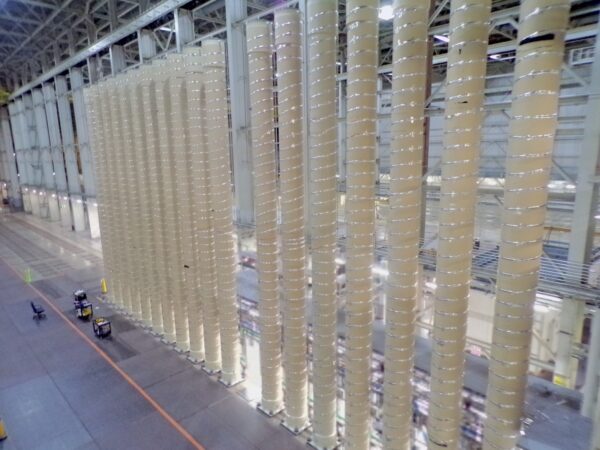
The subsidiary of U.S. uranium enrichment company Centrus has contracted with engineering firm Fluor for the multibillion-dollar expansion of its uranium enrichment facility in Piketon, Ohio (Centrus).
What’s going on: American Centrifuge Operating LLC—the wholly owned daughter company of Bethesda, Maryland–based Centrus—has engaged Fluor “to serve as its engineering, procurement and construction (EPC) contractor as Centrus proceeds with its previously announced” Ohio facility buildout.
What it will entail: “Under the multiyear contract, Fluor will lead engineering and design of the expanded capacity in Ohio, manage the supply chain and procurement of key materials and services, oversee construction at the site and support the commissioning of the new capacity.”
About the undertaking: The Piketon project includes substantial production of Low-Enriched Uranium (LEU) “to address [the] commercial LEU enrichment contingent backlog of $2.3 billion and growing demand from existing reactors.”
- Centrus will also build “12 metric tons of High-Assay, Low-Enriched Uranium (HALEU) annual capacity for next-generation reactors.”
Related news: In January, Centrus announced that it had been selected by the Department of Energy for a $900 million task order to expand its enrichment and centrifuge manufacturing capabilities at Piketon and its facility in Oak Ridge, Tennessee.
- The company said later last month that it would invest more than $560 million to turn its Oak Ridge centrifuge factory into a “high-rate manufacturing” site.
The NAM’s take: “Current and future energy demand requires a strong domestic nuclear fuel supply chain,” said NAM Senior Director of Energy and Resources Policy Mike Davin.
- “The expansion of Centrus’ Ohio enrichment facility—and the news of the company’s partnership with Fluor to make the project happen—is a win for manufacturing and the U.S. in general.”
NAM to FDA: Expand Nonprescription Drug Access to Cut Manufacturers’ Health Care Costs

Greater access to nonprescription drugs can reduce health care costs for manufacturers and improve quality of life for their employees, the NAM told the Food and Drug Administration this week.
What’s going on: The FDA put out a request for information on how to increase access to nonprescription drugs. The NAM shared manufacturers’ longstanding commitment to providing health benefits to their workers as both an effective tool to attract and retain employees and to maintain a healthy and productive workforce. It also explained how rising health care costs have been a great challenge for the industry.
- Expanding access to over-the-counter medications—which are typically affordably priced, widely available and can be purchased and taken as soon as they are needed—can save time and money for employers and employees alike.
The benefits: “Prescription drugs require doctor’s visits, which involve not just the time spent at the appointment itself, but also the time needed to schedule an appointment or locate an in-network provider if a patient does not already have one, as well as the financial cost of a copay or coinsurance,” the NAM said, explaining why people need access to OTC drugs, in addition to prescriptions.
- “Manufacturing workers taking time off from work to see a doctor reduces workplace productivity at a time when the industry is already facing a manufacturing worker shortage. OTC drugs can help workers to recover more quickly and return to work sooner.”
What else should be done: Manufacturers commend the administration for its efforts to expand access to OTC medications. The NAM recommended several steps the FDA can take to increase access, including:
- Rebalance regulations and reduce unnecessary burdens in the nonprescription drug regulatory process;
- Broaden the risk/benefit assessment for nonprescription drugs to include the consideration of benefits beyond those to the individual patient, such as to population health, the health care system overall and the economy;
- Broaden the FDA consideration of which drugs can be switched from prescription to nonprescription;
- Include specialized care professionals and patient advocates on advisory councils; and
- Maintain the three-year exclusivity incentive for some prescription to OTC drug switches that require significant financial investment.
The last word: “Increased access to nonprescription drugs is crucial for manufacturers as providers of employer-sponsored insurance, and for manufacturers of consumer health care products, who strive every day to improve the health and lives of Americans,” said NAM Vice President of Domestic Policy Jake Kuhns and NAM Director of Health Care Policy Jess Wysocky.
Home Price Indexes Point to Broad Cooling Across Regions
In November, the S&P Cotality Case-Shiller U.S. National Home Price NSA Index recorded a 1.4% annual gain, consistent with the gain in October. The 10-City Composite increased 2.0%, up from 1.9% the previous month, while the 20-City Composite rose 1.4% year-over-year, up from 1.3%. Among the 20 cities, Chicago posted the highest annual gain at 5.7%, followed by New York at 5.0% and Cleveland at 3.4%. Tampa again posted the lowest annual return, with prices falling 3.9%.
On a month-over-month basis, the U.S. National Index declined 0.1% before seasonal adjustment. At the same time, the 10-City Composite inched up 0.1%, while the 20-City Composite edged down less than 0.1%. After seasonal adjustment, the U.S. National Index rose 0.4%, while the 10-City and 20-City Composites both grew 0.5%.
The combination of high financing costs and prices continue to cap growth. Before seasonal adjustment, 15 of the 20 major metro areas saw price declines in November. The Northeast and Midwest continue to outperform other regions as overall conditions cool. Meanwhile, in addition to Tampa, the Sun Belt and Western markets continue declining, including Phoenix (down 1.4%), Dallas (down 1.4%) and Miami (down 1.0%).
Any short-term momentum from last year has slowed across regions. Home price gains continue to trail inflation, weakening home values over the past year. The new equilibrium of minimal price growth and elevated costs is leaving home values essentially flat in real terms.
Powell Points to Strong Economy Amid Mixed Signals on Future Rates
As anticipated, the Federal Open Market Committee maintained its interest rate target range at 3.50%–3.75% at its January meeting. In a change to its previous statement, the FOMC noted that economic activity has been expanding at a solid pace, while the unemployment rate has shown signs of stabilization, no longer necessitating a rate cut. On the other hand, two FOMC members—Stephen Miran and Christopher Waller—dissented, preferring to lower the target range by 25 basis points. In addition, at its annual organization meeting, the FOMC reaffirmed its “Statement on Longer-Run Goals and Monetary Policy Strategy,” which articulates its approach to monetary policy. The statement is identical to the version adopted in August 2025.
In the press conference following the meeting, Federal Reserve Chairman Jerome Powell noted that the economy goes into 2026 on a firm footing, with job gains staying low while inflation remains elevated. Chairman Powell noted that the FOMC is well positioned to determine the extent and timing of additional adjustments to its policy stance. In addition, the improved outlook for economic activity should have a positive impact on labor demand and employment.
The FOMC’s summary of economic projections, which maps out the Federal Reserve’s expectations for where interest rates may be headed in the future, generally is released in conjunction with every other FOMC meeting. Since the December meeting included a release of economic projections, there was not a release in conjunction with the January FOMC meeting. The December summary signaled a mixed stance regarding where monetary policy should go in 2026. Twelve Federal Reserve officials projected additional rate cuts across 2026, while four anticipated no additional rate cuts, and three predicted a 25-basis-point hike.
Final Demand Service Prices Jump While Goods Prices Remain Flat
The Producer Price Index for final demand (also known as wholesale prices) rose 0.5% over the month in December, after prices ticked up 0.2% in November. Over the year, producer prices moved up 3.0% in December, unchanged from November. Meanwhile, prices for final demand excluding foods, energy and trade services increased 0.4% over the month in December after rising 0.2% in November. Prices for these goods advanced 3.5% from December 2024.
Within final demand, prices for services jumped 0.7% in December after staying the same in November. Meanwhile, prices for goods stayed the same in December, after rising 0.8% in November. Within the final demand services index, margins for machinery and vehicle wholesaling moved up 4.5%, accounting for more than 40% of the December increase. Within the final demand goods index, prices for nonferrous metals climbed 4.5%, while prices for diesel fuel fell 14.6%.
Processed goods for intermediate demand inched down 0.1% in December, following a 0.5% increase in November. The decrease was driven by a 2.4% decline in the index for processed energy goods, in particular the drop in prices for diesel fuel. On the other hand, the index for processed materials less foods and energy advanced 0.7%. Over the year, the index rose 3.4% after a 0.1% increase in December 2024.
Meanwhile, prices for unprocessed goods for intermediate demand grew 2.3% in December, the largest increase since January 2025, after moving up 0.5% in November. The gain was led by a 34.8% jump in the index for natural gas. At the same time, prices for slaughter hogs declined 10.1%. Over the year, prices for unprocessed goods for intermediate demand decreased 0.3% after moving up the same amount in November.
Current Component Measures Weaken, While Future Expectations Strengthen
Manufacturing activity in the Fifth District contracted in January, but at a slightly slower pace than the previous month, with the composite manufacturing index inching up from -7 to -6. At the same time, the local business conditions index improved from -9 in December to -8 in January. Despite current weakness, manufacturers are more optimistic about the future, with the outlook for future local business conditions rising from 16 in December to 19 in January. The Fifth District consists of Virginia, Maryland, the Carolinas, the District of Columbia and most of West Virginia.
Among its components, shipments remained negative but contracted at a slower pace, increasing from -11 to -5. New orders improved slightly, ticking up from -8 to -6 in January. Employment worsened, falling from -1 to -6, and the vendor lead time index declined from 9 to 0. Meanwhile, the share of firms reporting backlogs worsened, decreasing from -7 to -13. The average growth rate of prices paid quickened, while average growth of prices received slowed in January.
Looking ahead, firms expect both price indexes to increase in the next 12 months, with both rising at a slightly faster pace than forecasted in December. Expectations for future shipments climbed from 28 to 34, while new orders increased from 27 to 36. Expectations for backlogs inched down from 5 to 4. Meanwhile, firms’ expectations about equipment and software spending turned negative, declining from 0 to -3. At the same time, expectations for capital expenditures improved but remained negative, increasing from -6 to -4. In sum, businesses in the Fifth District remain optimistic about future business conditions but pessimistic about future investment plans.
Texas Manufacturing Shows Renewed Strength Despite Mixed Signals
In January, Texas factory activity expanded notably after contracting the prior month. The production index increased from -3.0 to 11.2, moving above the series average of 9.6. The new orders and capacity utilization indexes also turned positive, rising 18.4 points to 11.8 and 11.7 points to 7.1, respectively. Meanwhile, shipments jumped 22.5 points to 12.0. The Eleventh District consists of all of Texas, northern Louisiana and southern New Mexico.
Consistent with the growth seen across indexes in January, perceptions of manufacturing business conditions strengthened, with the general business activity index increasing 10.1 points to -1.2. At the same time, the company outlook index rose 15.2 points to 2.9. On the other hand, the uncertainty index moved up 4.8 points from 0.0, remaining below the series average of 16.9.
Labor market indicators suggest strong growth in headcounts but almost no change in the workweek in January, with the employment index rising 9.6 points to 8.2 and the hours worked index stepping up 8.5 points to 0.7. Nearly 21.5% of firms reported net hiring, while a smaller percentage (13.3%) noted net layoffs.
Price pressures accelerated while wage pressures weakened in January. The prices paid for raw materials index inched up 1.9 points to 37.1. Meanwhile, the prices received for finished goods index jumped 9.7 points to 18.5, more than double the series average. The wage and benefits index decreased 4.3 points to 17.4, staying below the series average of 20.9.
The outlook for future manufacturing strengthened in January, despite the future production index declining 3.7 points to 29.2. Moreover, the future general business activity index and future company outlook index both moved up, increasing to 16.6 and 23.2, respectively.
What the Latest Data Show Across Manufacturing Sectors
New orders for manufactured goods increased 2.7% in November, following a 1.2% decline in October. Meanwhile, new orders for manufactured goods grew 3.4% over the year. When excluding transportation, new orders inched up 0.2% over the month and 0.7% year-over-year in November. Orders for durable goods jumped 5.3%, following a 2.1% decrease in October. Year to date, durable goods orders rose 7.3%. Nondurable goods orders stayed the same in November after declining 0.3% in October. Nondurable goods orders edged down 0.3% over the year.
New orders for nondefense aircraft and parts led the increase in durable goods orders, surging 97.6%, following October’s 17.9% drop. In November, the largest monthly decrease occurred in defense search and navigation equipment, which fell 9.7% after increasing 2.5% the prior month. The largest over-the-year changes occurred in nondefense aircraft and parts (up 111.8%) and mining, oil field and gas field machinery (down 6.8%).
Factory shipments declined 0.1% in November, after ticking up 0.1% in October. Shipments over the year rose 1.5%. Shipments excluding transportation increased 0.2% in November, following a 0.1% decrease the previous month. Shipments for durable goods dropped 0.3% in November, following a 0.5% rise in October, and are up 3.3% year to date. Meanwhile, nondurable goods shipments stayed the same after moving down 0.3% the prior month, and are down the same amount year to date.
Unfilled orders for all manufacturing industries increased 1.4% in November, after inching up 0.2% in October. Unfilled orders over the year jumped 9.4%. Inventories rose 1.1% year-over-year. The inventories-to-shipments ratio remained unchanged at 1.56 in November. The unfilled orders-to-shipments ratio for durable goods moved up to 7.04 in November from 6.93 in October.