EPA’s Power Plant Rule Is Unachievable Without Substantial Permitting Reform
America’s Energy Security Is Threatened
Washington, D.C. – Following the release of the Environmental Protection Agency’s new regulations on greenhouse gas emissions standards for certain power plants, National Association of Manufacturers President and CEO Jay Timmons released the following statement:
“Manufacturers appreciate the EPA removing existing gas plants from its new regulation, following manufacturers’ warnings about the initial proposal. However, the rest of the rule causes serious concern because Congress and the president have not enacted permitting reform—making it impossible to achieve the EPA’s highly aspirational mandates. We call on Congress to get serious by enacting significant and meaningful permitting reform this year. That is essential to ramping up the use of renewables, carbon capture, hydrogen and nuclear, for example, to meet future demand.
“The final rule threatens grid reliability because of the unrealistic timeline for power plants to adopt technologies within the next 10 years that have yet to even be proven at scale. Our nation should be doing everything possible to make sure our families, businesses and manufacturers have a modern, strong and reliable electrical grid, especially at a time when global turmoil threatens our energy security. This new rule does the opposite, creating a threat to our national and economic security that literally could leave Americans in the dark and factories offline. In short, the EPA is rolling the dice with Americans’ electricity and therefore with President Biden’s manufacturing legacy.
“Our industry has made transformational investments in these technologies and clean energy solutions, and we are leading the way in their deployment. The EPA should be partnering with us—not undermining this progress. We will continue to press the administration to achieve a more balanced regulatory framework to help reach our climate goals.”
-NAM-
The National Association of Manufacturers is the largest manufacturing association in the United States, representing small and large manufacturers in every industrial sector and in all 50 states. Manufacturing employs nearly 13 million men and women, contributes $2.89 trillion to the U.S. economy annually and accounts for 53% of private-sector research and development. The NAM is the powerful voice of the manufacturing community and the leading advocate for a policy agenda that helps manufacturers compete in the global economy and create jobs across the United States. For more information about the NAM or to follow us on Twitter and Facebook, please visit www.nam.org.
Noncompete Ban Would Disrupt Manufacturing in the U.S.

The Federal Trade Commission’s vote this week to prohibit noncompete agreements between employers and their employees threatens manufacturing in the U.S., the NAM said Tuesday.
What’s going on: In a 3–2 vote Tuesday, commissioners finalized a rule that, like a draft version circulated last year, “would deem practically any noncompete clauses for paid staff, independent contractors and unpaid workers to be an unfair method of competition rendered unenforceable, and [would require] employers to tell current and former employees they’ve stopped enforcing them” (Law360, subscription).
- The final rule is set to go into effect 120 days after it is published in the Federal Register, but lawsuits have been filed against it already, and additional legal action is expected.
What’s changed: One change made to the final rule following the receipt of more than 26,000 comments on it allows existing noncompete agreements with senior-level executives to remain in effect.
- Another difference between the rule’s prior iteration and the final is to the ban’s sole exception. The draft “permitted noncompetes for individuals selling their business or a substantial stake of at least 25%.” That threshold is not in the final version.
Why it’s problematic: The rule “is unprecedented and threatens manufacturers’ ability to attract and retain talent,” said NAM Managing Vice President of Policy Chris Netram.
- “In addition, [it] puts at risk the security of intellectual property and trade secrets—anathema to an industry that accounts for 53% of all private-sector R&D.”
- A noncompete ban would disrupt the majority of U.S. manufacturing operations, a 2023 NAM survey found.
What’s next: The NAM is considering all options in response to the final rule and is in active discussion with congressional leadership and the relevant committees of jurisdiction.
New Overtime Rule Will Cost Employers and Workers

A new final overtime rule from the U.S. Department of Labor will reduce flexibility for employees and could force manufacturers to make difficult choices about their workforces, the NAM said Tuesday.
What’s going on: The new regulation “changes the salary threshold used to determine whether a worker is exempt from overtime pay” so that, beginning Jan. 1, 2025, most employees earning less than $58,656 will be owed time-and-a-half wages for hours worked over 40 in a single workweek (Bloomberg Law, subscription).
- The current salary threshold is $35,568.
- The new rule will go into effect July 1, following publication in the Federal Register.
Why it’s problematic: The change promises to present significant challenges to employers and employees alike.
- “Quarter after quarter, manufacturers cite workforce issues, such as attracting and retaining skilled employees, as their biggest business challenge,” said NAM Managing Vice President of Policy Chris Netram. The “rule places new constraints on employers, reduces flexibility for the workers who will be reclassified and may force companies to make painful choices that limit both job creation and growth opportunities available to employees.”
What’s next: The NAM is weighing all actions to protect manufacturers across the country.
Manufacturers: Noncompete Decision Threatens Manufacturers’ Ability to Protect IP
Washington, D.C. – Following the Federal Trade Commission’s vote in favor of a rule that would prohibit employers and their employees from entering noncompete agreements, National Association of Manufacturers Managing Vice President of Policy Chris Netram released the following statement:
“The FTC’s rule banning noncompete agreements is unprecedented and threatens manufacturers’ ability to attract and retain talent. In addition, today’s action puts at risk the security of intellectual property and trade secrets—anathema to an industry that accounts for 53% of all private-sector R&D.
“An NAM survey found that 66% of respondents—manufacturers of all sizes—said the ban would interfere with their operations, and nearly half said it would impact employee training programs. The ban could force manufacturers to revamp their human capital operations completely, enact burdensome controls or silo parts of their operations from each other, which would result in less training for employees, less collaboration, less innovation and less efficiency. The NAM will weigh all options in response to the commission’s vote, so that well-paying manufacturing jobs and innovation are not compromised.”
-NAM-
The National Association of Manufacturers is the largest manufacturing association in the United States, representing small and large manufacturers in every industrial sector and in all 50 states. Manufacturing employs nearly 13 million men and women, contributes $2.89 trillion to the U.S. economy annually and accounts for 53% of private-sector research and development. The NAM is the powerful voice of the manufacturing community and the leading advocate for a policy agenda that helps manufacturers compete in the global economy and create jobs across the United States. For more information about the NAM or to follow us on Twitter and Facebook, please visit www.nam.org.
Manufacturers: DOL Overtime Rule Will Exacerbate Workforce Crisis
Washington, D.C. – Following the release of the Department of Labor’s Wage and Hour Division rule concerning updates to the overtime regulations, National Association of Manufacturers Managing Vice President of Policy Chris Netram released the following statement:
“Quarter after quarter, manufacturers cite workforce issues, such as attracting and retaining skilled employees, as their biggest business challenge. Yet today’s rule places new constraints on employers, reduces flexibility for the workers who will be reclassified and may force companies to make painful choices that limit both job creation and growth opportunities available to employees. In addition, this latest regulatory hurdle will complicate manufacturers’ efforts to fill the millions of jobs our industry is projected to create within a decade.”
-NAM-
The National Association of Manufacturers is the largest manufacturing association in the United States, representing small and large manufacturers in every industrial sector and in all 50 states. Manufacturing employs nearly 13 million men and women, contributes $2.89 trillion to the U.S. economy annually and accounts for 53% of private-sector research and development. The NAM is the powerful voice of the manufacturing community and the leading advocate for a policy agenda that helps manufacturers compete in the global economy and create jobs across the United States. For more information about the NAM or to follow us on Twitter and Facebook, please visit www.nam.org.
Proposed “Right-to-Repair” Exemptions Would Hurt Manufacturers, Consumers
The NAM testified before the U.S. Copyright Office last week, explaining how two proposed exemptions from copyright protections would weaken manufacturers’ intellectual property rights, do significant harm to their businesses and potentially endanger consumers.
What’s going on: The Copyright Office is considering whether to recommend two exemptions from the Digital Millennium Copyright Act that would allow users to circumvent measures protecting copyrighted content.
- One proposal was designed to allow the so-called “right-to-repair” by enabling access to operational data (including diagnostic and telematics data) from automobiles, agricultural vehicles, marine vessels and more. The other is focused on industrial equipment.
NAM speaks out: “The basis of the so-called ‘right-to-repair’ movement hinges on the false notion that owners do not have the ability to repair their own equipment,” NAM Vice President of Domestic Policy Charles Crain said at the recent hearing. “The truth, however, is that the majority of [original equipment manufacturers] already provide a wide range of resources and tools that allow users—and third-party repair businesses—to maintain, diagnose and repair products.”
- The NAM previously submitted comments urging the Copyright Office not to adopt the proposed exemptions.
Why it’s important: “These exemptions would undermine manufacturers’ IP rights in service of right-to-repair—and the record does not support their adoption,” Crain continued.
- The exemptions are too broad and inadequately defined, and their proponents have “failed to show that users will be adversely affected absent the ability to circumvent [copyright law].”
- What’s more, the exemptions “would expose proprietary information to public consumption and use, likely endangering consumers and allowing for unlawful modifications of government-mandated safety and emissions limits.”
The last word: “In short, right-to-repair is a solution in search of a problem,” Crain said.
Manufacturers: Unprecedented Use of CERCLA Authority Will Hamper President’s Manufacturing Vision
Washington, D.C. – Following the release of the Environmental Protection Agency’s rule designating perfluorooctane sulfonic acid, also known as PFOS, and perfluorooctanoic acid, also known as PFOA, as hazardous substances under the Comprehensive Environmental Response, Compensation and Liability Act, National Association of Manufacturers Managing Vice President of Policy Chris Netram released the following statement:
“Manufacturers support efforts to mitigate harmful chemicals from impacting our environment and the health of our nation, but this unprecedented use of CERCLA authority by the EPA will only hamper President Biden’s vision of growing the manufacturing sector in the U.S. The unique and unmatched chemical bond of these compounds means that there are no existing replacements for the critical products they make up.
“The NAM is not opposed to commonsense regulations of PFAS chemicals, and manufacturers are committed to environmental stewardship, while recognizing in many cases we will need to continue to use these chemicals for the foreseeable future. However, designating these compounds as hazardous substances is a blunt, overreaching decision that will make it harder for our industry to create innovative products and jobs.”
-NAM-
The National Association of Manufacturers is the largest manufacturing association in the United States, representing small and large manufacturers in every industrial sector and in all 50 states. Manufacturing employs nearly 13 million men and women, contributes $2.89 trillion to the U.S. economy annually and accounts for 53% of private-sector research and development. The NAM is the powerful voice of the manufacturing community and the leading advocate for a policy agenda that helps manufacturers compete in the global economy and create jobs across the United States. For more information about the NAM or to follow us on Twitter and Facebook, please visit www.nam.org.
Manufacturer to Congress: Support the American Dream
Austin Ramirez is living proof that the American dream still works—when the right policies are in place.
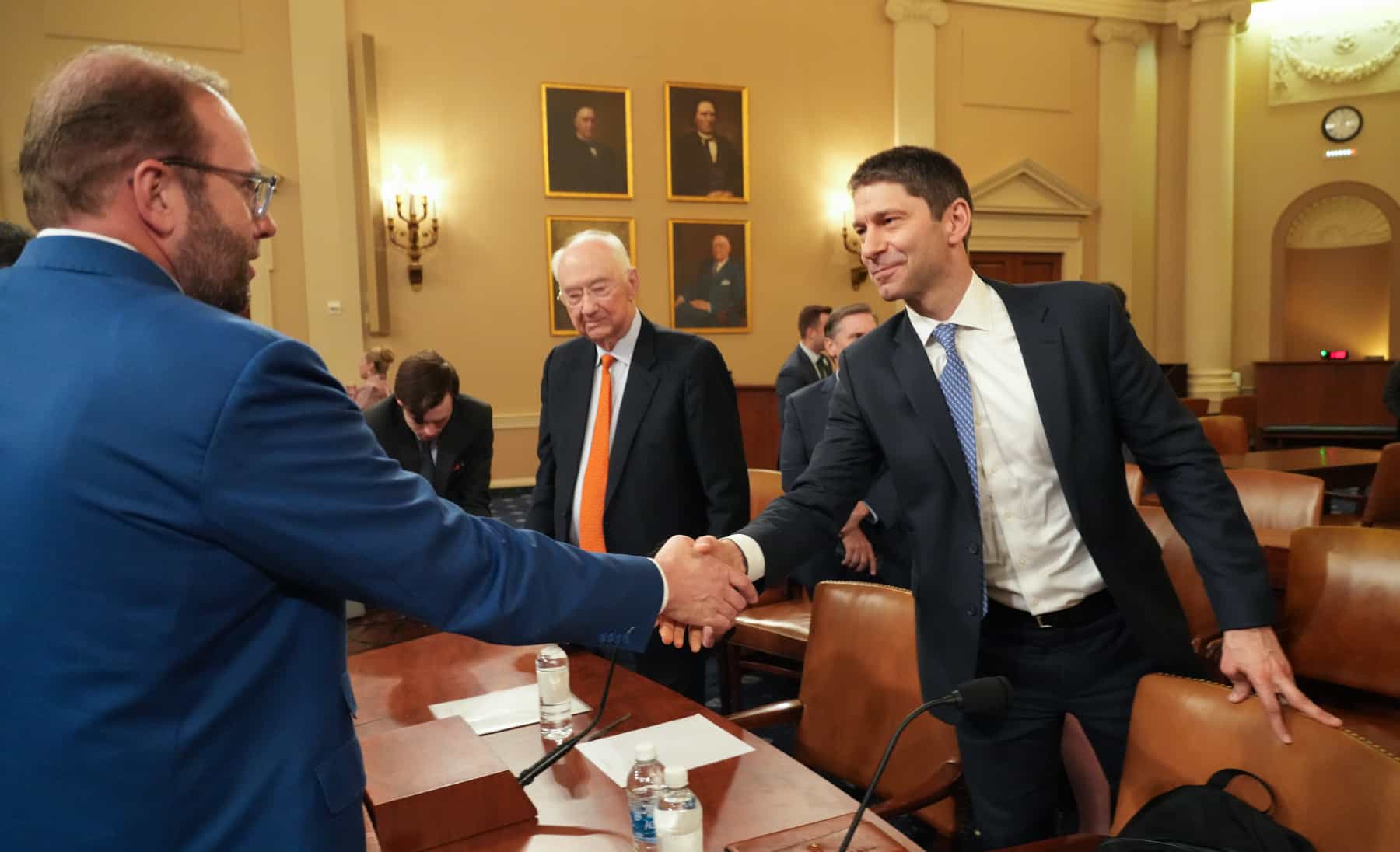
The president and CEO of family-owned Husco, a Waukesha, Wisconsin-based, hydraulic and electromechanical control systems manufacturer, told lawmakers Thursday that his family was able to found and expand a successful business in large part thanks to pro-growth tax policies.
All in the family: “My dad came to the states from Puerto Rico as a 6-year-old and grew up to earn a master’s in aerospace engineering and a Harvard M.B.A.,” Ramirez said at a hearing of the House Ways and Means Committee.
- “In short, our story is the embodiment of the American dream. But it was made possible by American reality—the laws that all of you write in this very room have a direct, concrete impact on our ability to succeed.”
Impact of expirations: The 2017 Tax Cuts and Jobs Act made it possible for manufacturers across the country to invest in new equipment, pay for renovations and expansions, hire much-needed workers and more. It was “unquestionably a success,” according to Ramirez.
- But the 2022 and 2023 expiration of three manufacturing-critical tax provisions in the legislation—immediate expensing for domestic research and development, enhanced interest deductibility and full expensing, which the NAM has been urging legislators to reinstate—has already hit Ramirez’s business, and hard.
- “Husco now has to amortize our R&D expenses, making it far more costly for us to design customized, proprietary products for our customers,” Ramirez went on. “Debt financing is now more expensive … [a]nd we can no longer immediately expense the full cost of our capital equipment purchases, forcing [us] to make smaller investments, spread out over many years.”
More tax increases coming: Ramirez also highlighted the TCJA provisions that are set to expire next year and the economic damage the expiration would cause.
- “At the end of 2025, individual tax rates will increase and individual tax brackets will decrease,” he said. “These changes mean that pass-through businesses like Husco will have more of our income subject to a higher rate of tax. At the same time, the pass-through deduction will expire completely, doubling down on the tax hikes that we face. … [A]llowing tax reform to sunset will undermine much of the progress we’ve made since 2017.”
What must happen: Ramirez thanked the committee for passing the Tax Relief for American Families and Workers Act—and reminded them of work still to be done.
- “Congress must act now to restore expired provisions—and be prepared to act in 2025 to forestall even more damaging tax increases. Only by preserving the Tax Cuts and Jobs Act can Congress ensure that uniquely America stories like Husco remain possible.”
NAM: EPA’s National PFAS Drinking Water Standard Threatens Manufacturing

Municipal water systems will soon be required to remove six types of per- and polyfluoroalkyl substances, or PFAS, from drinking water, The New York Times (subscription) reports.
- But the move could backfire and have adverse effects on manufacturers, the NAM said Thursday.
What’s going on: The Environmental Protection Agency on Wednesday announced the first-ever national rule limiting PFAS “to near-zero levels.”
- PFAS are compounds that have been used for decades due to their rare ability to douse fires and resist grease, corrosion and stains. They’re found in everything from semiconductors to medical devices and renewable-energy production equipment.
- But under the new mandate water systems across the U.S. will have three years to monitor the chemicals and a further two years to put into place technology to reduce the compounds’ levels in the water.
- The utilities “would be required to notify the public and reduce contamination if levels exceeded the new standard of 4 parts per trillion for [PFOA and PFOS]. Previously, the agency had advised that drinking water contain no more than 70 parts per trillion of the chemicals.”
The background: The rule comes just over a year after the EPA proposed the first federal limits on two PFAS chemicals, known as PFOA and PFOS.
The funding: The 2021 Bipartisan Infrastructure Law set aside $9 billion to help communities with PFAS removal. The government will make $1 billion of it available to states and territories to help defray the cost of testing and treatment over the next few years.
Higher prices, less security: The new standard is wholly infeasible, NAM Managing Vice President of Policy Chris Netram said, and will lead to cost increases throughout the supply chain and make our national defense more difficult.
- “In many instances, there is no viable alternative for these chemicals, and companies may be forced to change plans dramatically” to comply with the new rule, he said. “The severity of the proposed regulations will mean higher prices for everything—community water and waste systems, medical treatments and electronics. More alarming, the regulations will make it more difficult to produce the equipment our military needs to defend our nation.”
What we’re doing: The NAM is weighing legal options for reversing the final rule, according to Netram.
Manufacturers: EPA Chemical Decision Will Directly Threaten Our Ability to Innovate, Create Jobs and Defend Our Nation
Washington, D.C. – Following the release of the Environmental Protection Agency’s rulemaking surrounding the monitoring for per- and poly-fluoroalkyl substances (PFAS) in municipal water systems, National Association of Manufacturers Managing Vice President of Policy Chris Netram released the following statement:
“Manufacturers support efforts to remove potentially harmful chemicals from our water systems, but again the EPA has set standards that are not feasible and will directly threaten manufacturers’ ability to invest, innovate and create jobs in America. In many instances, there is no viable alternative for these chemicals, and companies may be forced to change plans dramatically to grow facilities and hire new workers.
“The severity of the proposed regulations will mean higher prices for everything—community water and waste systems, medical treatments and electronics. More alarming, the regulations will make it more difficult to produce the equipment our military needs to defend our nation. The final rule requires water systems to monitor, sample and treat at near zero levels, which will increase costs throughout the supply chain. We are looking at all options to reverse this harmful decision and to slow the regulatory onslaught that directly undermines the president’s efforts to grow manufacturing in the United States.”
-NAM-
The National Association of Manufacturers is the largest manufacturing association in the United States, representing small and large manufacturers in every industrial sector and in all 50 states. Manufacturing employs nearly 13 million men and women, contributes $2.89 trillion to the U.S. economy annually and accounts for 53% of private-sector research and development. The NAM is the powerful voice of the manufacturing community and the leading advocate for a policy agenda that helps manufacturers compete in the global economy and create jobs across the United States. For more information about the NAM or to follow us on Twitter and Facebook, please visit www.nam.org.