Solution Series: Recruitment Workshop
Solution Series: Recruitment Workshop
The MI recently convened a group of manufacturers to discuss recruitment challenges and identify ways to address them. After hearing from experts on topics ranging from the current labor market, second chance hiring, the gig economy and the importance of speed in recruitment, participants broke out into small groups to discuss the top challenges they were facing and brainstorm solutions.
KEY TAKEAWAYS:
- Determine who owns what part of the recruitment process as well as how team members will be held accountable.
- Advertise the position effectively, streamline the application process and screen as many people in as possible.
- Invest time and resources into sourcing talent.
Check out our recap article of the event here. Stay tuned for an in-depth summary report highlighting the solutions that manufacturers are testing and implementing to address recruitment challenges.
Timmons Receives Bryce Harlow Business-Government Relations Award
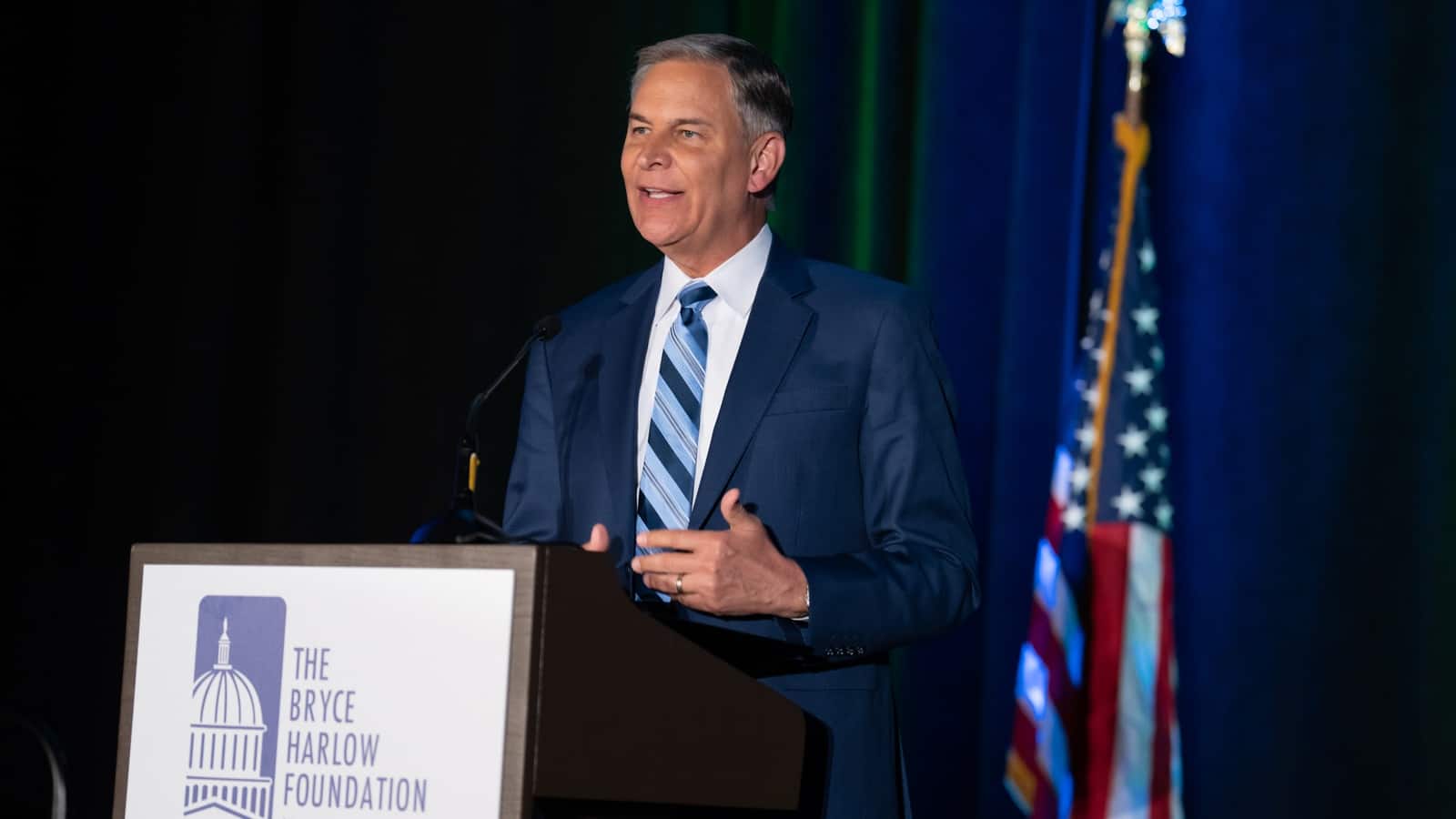
Every year the Bryce Harlow Foundation gives its Business–Government Relations Award to an individual who’s given their all to a career in professional advocacy—and this year, that person was NAM President and CEO Jay Timmons.
Honorees: On Wednesday evening in Washington, D.C., the foundation held its 42nd Bryce Harlow Foundation Annual Awards reception and dinner. The night’s awardees were Timmons and Rep. Debbie Dingell (D-MI), the winner of the foundation’s other honor, the Bryce Harlow Award.
- Timmons was introduced by Dow Inc. Chairman and CEO (and NAM Board Chair) Jim Fitterling, who called the NAM leader “ethical down to his bones” and said, “Jay has a reputation of working honestly and earnestly with Democrats, Republicans and Independents, and he earned that reputation because fundamentally he’s committed to policy solutions that create a win–win, not only for both political parties, but also for American manufacturers and American workers.”
- Dingell also praised Timmons’ steadfast, post-partisan approach to manufacturing advocacy. “He has worked to make sure Democrats and Republicans are part of the discussion about manufacturing and understand how critical it is to this country. … To be honored in the same year as you, Jay, means more than you’ll ever know.”
- In his own remarks, Timmons praised both Bryce Harlow Foundation President Barbara Faculjak’s “outstanding leadership” and Rep. Dingell’s “incredible example for [the next] generation.”
Pep talk: Also honored at the dinner were the 2022–2023 Bryce Harlow fellows, a group of 30 graduate students pursuing careers in advocacy through government relations or lobbying. Timmons spoke directly to them for most of his speech.
- “Over the course of your careers, you will face important decisions,” he said. “You’ll ask yourself questions like, ‘Where should I work?’ ‘What will I do next?’ ‘How much can I make?’ … I want to encourage you to ask another: ‘Why?’”
- “The question matters … because if you can answer honestly and feel yourself standing up a little straighter with a sense of purpose, then you’re in the right profession,” he said. “If your ‘why’ is right … then the ‘what,’ ‘where’ and ‘how much’ will take care of themselves.”
- Timmons went on to tell the fellows part of his own story: how he dropped out of college to move to D.C. and “join the Reagan Revolution”—against his parents’ wishes. But even then he was able to answer his own “why.”
The manufacturing “why”: For the NAM, the organizational “why” is “to advance the values of free enterprise, competitiveness, individual liberty and equal opportunity.”
- Timmons told the students that part of their jobs “as advocacy leaders” would be to defend democracy, now under attack in Russia’s war against Ukraine and elsewhere in the world. While not perfect, Timmons said, democracy has done more to improve people’s quality of life than any other system in history.
Your authentic self: “[T]here was always something or someone who told me to change course or that I wasn’t right for a job—including those voices that told me to pack it up when I was outed as a gay man at a time when that wasn’t exactly an asset for a career,” Timmons said. “If I’d listened, I wouldn’t be here.”
- Today Timmons is the president and CEO of the country’s largest manufacturing association and is happily married with three children.
- “So bring your authentic self to the table,” he concluded. “Soak in all the knowledge and wisdom you can from others. But ultimately, have confidence in your own inner voice, your own judgment and your own vision.”
Click here for Timmons’s full remarks.
Professional Development Resource: Building Your Personal Brand
On February 16, the Manufacturing Institute held a professional development virtual event on building your personal brand, presented by branding expert Cat O’Shaughnessy Coffrin, Founder and CEO of CaptivatingCo.
View the recording here and the slide deck here.
TOPLINE TAKEAWAYS
Your personal brand consists of:
- Proposition: The value you create
- Persona: Your X factor
- Purpose: What drives you
Steps you can take to start building your personal brand:
- Self-Reflect: What role do you play on your team? What skills do you bring? Look for patterns in your career on how you approach your job and get things done.
- Ask For Feedback: Connect with your colleagues and friends and ask how they would describe the attributes, attitudes and skills you bring to the table. This external perspective is valuable for shaping your narrative.
- Connect and Reconnect: Remember that teacher who had a profound impact on you? Or a former colleague who you lost touch with? Reach out to them and schedule a coffee to catch up and remind yourself how many people are in your corner wanting you to succeed.
- Revisit Your LinkedIn: There are two simple step you can take right now to enhance your online presence; make sure your ‘About’ section is drafted in the first person (LinkedIn is a social platform!) and identify, follow and engage with leaders of topics that interest you.
Manufacturers: Find Our Open Jobs and Pathways to Careers at CreatorsWanted.org
Amid a workforce crisis, the National Association of Manufacturers and the Manufacturing Institute partner with FactoryFix to launch a new resource
Washington, D.C. – With the number of manufacturing job openings in the United States averaging 830,000 per month over the past year, the National Association of Manufacturers and the Manufacturing Institute have partnered with FactoryFix to launch and power Creators Connect, a new digital career resources platform designed to help students, parents, career influencers and job seekers easily explore and pursue the wide range of pathways available in modern manufacturing.
“Addressing the workforce crisis is among the top concerns for manufacturers across the country,” said NAM President and CEO and Manufacturing Institute Board Chair Jay Timmons. “While we cannot fully solve this challenge without immigration reform, manufacturers are determined to lift up more people in the United States with the promise and reward of modern manufacturing careers—and Creators Wanted’s new digital career resources platform is another way that manufacturers are leading with solutions.”
Creators Connect is the first and only unified platform to search and explore career pathways, job openings and job training programs across the entire manufacturing industry while making it easier for manufacturing professionals to attract and identify talent to fill the skills gap.
“We’ve made tremendous strides in inspiring a new generation of manufacturers at the Manufacturing Institute and across the industry, but what’s been missing is a single resource for manufacturing jobs and pathways opportunities,” said MI President Carolyn Lee. “Today, we bring an unmatched tool—in terms of volume and quality of jobs—to help us close the skills gap and change more misperceptions about modern manufacturing.”
Creators Connect is live on CreatorsWanted.org, home of the NAM and MI’s Creators Wanted campaign, which is the largest industry campaign to build the workforce of today and tomorrow. Since 2021, Creators Wanted has built an email network of more than 1 million students, early career entrants and potential career influencers. FactoryFix is already the leading manufacturing recruitment platform in the U.S., hosting more than 400,000 job openings and having its own talent network of more than 650,000 manufacturing workers. The partnership is the first of its kind for the industry’s largest and oldest manufacturing trade association.
“It’s an incredibly exciting opportunity for FactoryFix to be the engine behind Creators Connect and a part of the Creators Wanted campaign,” said FactoryFix CEO and Founder Patrick O’Rahilly. “As a one-stop recruiting solution for manufacturers to find qualified and engaged candidates, we’re looking forward to increasing our impact in addressing the labor shortage and helping more Americans create their future in modern manufacturing.”
By powering Creators Connect, FactoryFix representatives will join the NAM and the MI’s Creators Wanted workforce campaign as it continues its roadshow in 2023 and expands its digital campaign across the United States. By 2025, Creators Wanted aims to recruit 600,000 new manufacturing team members; increase the number of students enrolling in technical and vocational schools or reskilling programs by 25%; and increase the positive perception of the industry among parents and career influencers to 50% from 27%.
To explore Creators Connect, visit CreatorsWanted.org.
-NAM-
The National Association of Manufacturers is the largest manufacturing association in the United States, representing small and large manufacturers in every industrial sector and in all 50 states. Manufacturing employs more than 12.9 million men and women, contributes $2.81 trillion to the U.S. economy annually and accounts for 55% of private-sector research and development. The NAM is the powerful voice of the manufacturing community and the leading advocate for a policy agenda that helps manufacturers compete in the global economy and create jobs across the United States. For more information about the NAM or to follow us on Twitter and Facebook, please visit nam.org.
-Manufacturing Institute-
The MI grows and supports the manufacturing industry’s skilled workers for the advancement of modern manufacturing. The MI’s diverse initiatives support all workers in America, including women, veterans and students, through skills training programs, community building and the advancement of their career in manufacturing. As the workforce development and education partner of the NAM, the MI is a trusted adviser to manufacturers, equipping them with resources necessary to solve the industry’s toughest challenges. For more information on the MI, please visit https://www.themanufacturinginstitute.org.
-FactoryFix-
FactoryFix is the leading recruitment automation solution for manufacturing companies, combining the power of a talent network with specialized recruitment technology. Our platform helps HR manufacturing teams save time and budget by automating tedious tasks, streamlining recruitment efforts and providing a consistent flow of engaged candidates.
Founded in 2017 in Chicago, Illinois, FactoryFix has nearly 650,000 manufacturing professionals in its talent network and is the exclusive recruiting partner of the National Association of Manufacturers, Manufacturing Institute and Creators Wanted. Hundreds of the top manufacturing companies in the country trust FactoryFix to help meet their hiring goals. For more information, please visit https://www.factoryfix.com.
WATCH: 2023 State of Manufacturing Address
Presented by Jay Timmons, President and CEO of the National Association of Manufacturers, the 2023 State of Manufacturing Address was given from Husco International in Waukesha, Wisconsin. Special remarks were given by Kurt Bauer, President and CEO, Wisconsin Manufacturers & Commerce. Special thanks to Husco President and CEO Austin Ramirez and his team for hosting this year’s address.
Read the official remarks here.
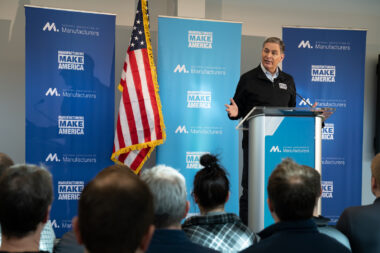
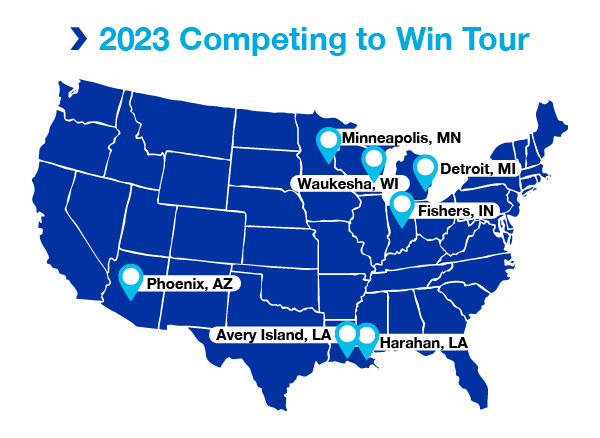
We’re hitting the road. This year’s NAM State of Manufacturing Address officially kicked off the 2023 leg of the NAM’s Competing to Win Tour. The tour will continue to spotlight the industry’s rapid transformation, while also focusing on manufacturing’s well-paying careers, diverse workforce and real-world solutions for the industry’s continued growth.
Upcoming stops: Waukesha and Pewaukee, Wisconsin (Tue, Feb 21); Fishers, Indiana (Wed, Feb 22); Harahan and Avery Island, Louisiana (Thurs, Feb 23)
Creators Connect Launched
As part of the Creators Wanted campaign, the NAM and the Manufacturing Institute have partnered with FactoryFix, a leading one-stop solution for manufacturing recruitment, to launch Creators Connect.
The digital career-resources platform aims to address the skills gap and misconceptions about the manufacturing industry, providing manufacturers with a powerful new tool to help build their workforce.
What it is: The platform, which is housed on Creatorswanted.org and powered by FactoryFix, is free to use. It is the first and only unified platform where users can search and explore job openings, career pathways and job training programs across the entire manufacturing sector.
- With more than 400,000 listed job openings, Creators Connect builds on the success of its parent initiative, Creators Wanted.
- It is also working to boost the number of students enrolling in technical and vocational schools or reskilling programs by 25% and to increase the positive perception of the manufacturing industry among parents and career influencers.
Learn more about how to get the most out of Creators Connect by visiting the FAQ page here or reading an article on the launch here. Questions? Contact the Creators Wanted team here.
What to Know about Hiring Military Talent
With 200,000 people transitioning out of the military annually in addition to veterans, reservists and military spouses, the military population represents a highly skilled workforce. At a recent roundtable, panelists from Smithfield Foods, Dow and National Gypsum discussed how the manufacturing industry can leverage this population’s strengths.
Key Insights
- Manufacturers should identify a leader with military background in their organization to support the hiring process, particularly in parsing military and manufacturing lingo in job descriptions and resumes.
- Manufacturers should communicate if they will accept military experience as an equivalency to an associate’s or bachelor’s degree in their job descriptions.
- Networking can be the determining factor in getting an interview and landing a job offer. The MI will be hosting a virtual hiring fair in late February. Keep an eye on our website for more updates!
- Employee resource groups can be an excellent resource for newly hired military talent and can advocate for population-specific needs.
Read the full article here.
Watch: Timmons Talks Workforce on CBS
NAM President and CEO Jay Timmons joined CBS Mornings today to discuss manufacturing’s number one challenge: finding enough skilled workers to fill available jobs.
What Manufacturers Should Know about Hiring Military Talent
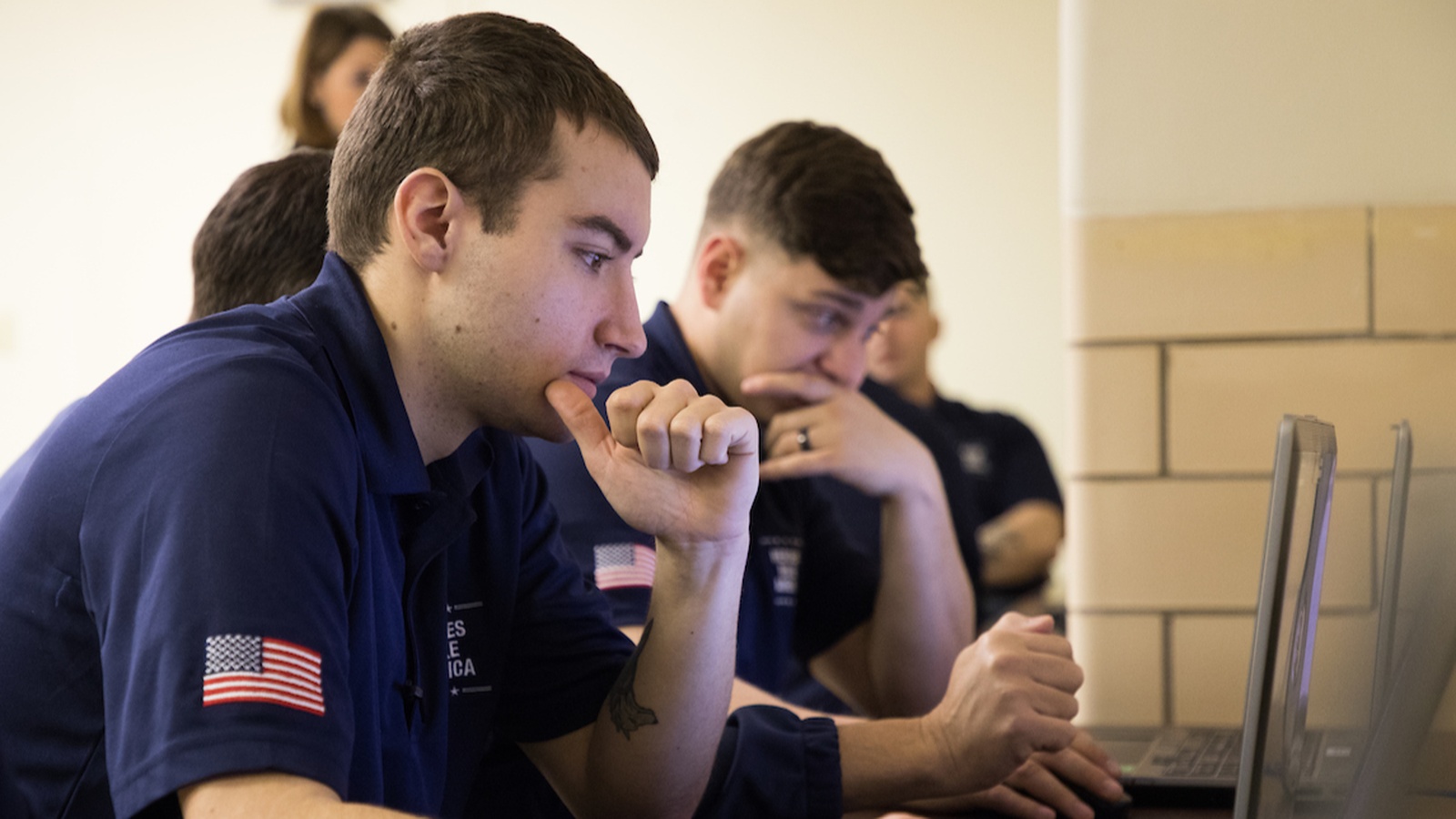
With 200,000 people transitioning out of the military annually, in addition to veterans, reservists and military spouses, the military population represents a highly skilled talent pool that manufacturers are eager to tap. But how should they go about doing so?
At a recent roundtable, the Manufacturing Institute—the NAM’s 501(c)3 workforce development and education partner—brought together veterans who have transitioned successfully out of the military into manufacturing careers, as well as manufacturers who have prioritized attracting and retaining military talent. The panelists discussed how companies can leverage this talent, and here’s some of what they had to say.
A great fit: “If you look at manufacturing, a large part of the job is doing things well, day after day after day—and that’s essentially what happens in the military. It’s that military discipline. It’s one of the most compelling reasons why we should be aggressively hiring military veterans,” said Dow Global Business Director Greg Bunker.
- “We’ve got three principles in our organization that we call ROI: responsibility, operational excellence and innovation. We know that veterans bring each of these to the table,” said UnitedHealth Group Director of People Analytics Troy Vandenberg (formerly director of people analytics at Smithfield Foods).
Networking matters: Transitioning from the military to the civilian workforce can be difficult, but veterans who make direct connections with manufacturers often land excellent job offers. The MI’s Heroes MAKE America program facilitates those connections, offering veterans opportunities to meet manufacturers as well as support in the job search process.
- Nicole Rena, an Army veteran and now a shift operations manager at Smithfield Foods, applied to five jobs at Smithfield and didn’t hear back on any of them. But then the program manager at HMA contacted Smithfield’s talent acquisition department to ask if they could speak with Rena about why she wasn’t chosen, so she could be more successful moving forward.
- As Rena put it, “The first 15 minutes of the call was about what I could do better on my resume, but after talking about my background and what I was looking for, the talent acquisition lead said he was going to count this as my first interview.”
- She landed the job! In her 18 months at Smithfield, Rena has been promoted twice.
Language can be a barrier: Rena’s experience speaks to one of the disconnects identified by veterans and manufacturers alike—the language used in job descriptions and resumes. Veterans often do not know how to best describe their skills and experiences in a way that civilian employers can understand.
- To avoid missing out on great talent, the panelists advised, manufacturers should ensure that a leader with a military background is involved in the hiring process, to translate military lingo and skills into more familiar manufacturing terms.
- Manufacturers should also specify in their job descriptions whether they will accept military experience as equivalent to an associate’s or bachelor’s degree, Bunker advised.
Support is crucial: Once veterans have been hired, the company must ensure they are set up for success. “Transitioning is a really scary process for veterans. It’s very stressful. The support that a company can provide is huge,” said Meg Zehringer, a Coast Guard veteran and a corporate environmental engineer at National Gypsum.
- Employee resource groups are a great way to provide support to veterans while also serving as a platform to advocate for population-specific needs, the panelists agreed.
- To be most effective, ERGs should be run by employees, not human resources departments, noted Vandenberg. Bunker added that establishing connections between the ERG and company leaders is also key.
The last word: “Equally as important as the wording of your job descriptions and preferred skills is creating a culture that invites a diverse group of people. That’s going to play a huge factor in attracting veterans,” said Zehringer.
Get involved: If you are interested in learning more about HMA, its next Heroes Connect event will be a networking opportunity with Johnson & Johnson on Wednesday, Jan. 25.
- You can also tune in to (or share with interested veterans) this Veterans Learning Series workshop on how to use LinkedIn effectively, coming up on Thursday, Jan. 26.
- And last, HMA will be hosting a virtual hiring fair in late February. Keep an eye on the MI website for updates!
How Will AI Impact the Manufacturing Workforce?

AI is changing the way manufacturers do business—from the production line to the back office and across the supply chain. At the Manufacturing Leadership Council’s Manufacturing in 2030 Project: Let’s Talk about AI event last month in Nashville, Tennessee, panelists discussed how those sweeping changes would alter, and enhance, the manufacturing workforce.
A collaboration between the MLC (the NAM’s digital transformation arm) and the MI (the NAM’s 501(c)3 workforce development and education partner), the event provided key insights for manufacturers into how technology and workforce trends interact with each other. Here are a few key takeaways.
Net positive: “The history of technology adoption is about improving the job quality of individuals on the shop floor. AI helps them to do the job better, provide them with better tools, gives them greater authority and ultimately increases the value-add of their jobs. All of that is a net positive for those individuals,” said MI Vice President of Workforce Solutions Gardner Carrick.
- By leveraging data and enabling greater efficiency, AI will improve communication, increase collaboration across disciplines and stimulate innovation, according to the panel.
- In addition, “AI can even inform the workforce’s creativity by working with it to design a new product or system,” said Jacey Heuer, lead, data science and advanced analytics, Pella Corporation.
Skills needed: While you might expect that implementing AI requires workers skilled in programming, data science and machine learning, manufacturers will also need to expand their bench of critical thinkers and problem-solvers. The panelists had a few tips to help companies along.
- Invest in upskilling programs to make the AI integration process at your company smoother and develop the talent you already have.
- Update job descriptions to reflect the skill sets the company will need in the next five to seven years.
- Consider recruiting for and teaching adaptive skills—skills that enable individuals to adapt easily to changing demands and environments—which can increase the flexibility of your workforce.
- Build partnerships with local schools, community colleges and technical and vocational schools to develop talent pipelines that will meet your needs.
The human-AI collaboration: While AI will take over monotonous, repetitive tasks, the panelists predicted that the industry will continue to center around human labor.
- “You can teach AI to do X. You can teach AI to do Y. [However,] combining the two may be really difficult for AI, while a human can do it better. You’re going to continue to see humans in roles that center on making decisions and telling stories,” said Asi Klein, managing director, industrial products and organization transformation, Deloitte Consulting.
- Meanwhile, AI adoption will likely lead to an increase in available jobs, as more skilled workers will be needed to guide and inform these new processes.
The last word: “Over the last 12 years, we’ve seen a lot of technology adoption, but we have not seen a lot of job loss. In fact, we’ve seen job gains,” said Carrick. “There is a lot of opportunity to reimagine jobs to add value that AI will help to illuminate.”