Manufacturers Help Hurricane-Hit Communities

Hurricane Ian’s devastating landfall in Florida Wednesday afternoon marked the second significant storm to hit the U.S. and territories in less than two weeks. But as is usually the case when catastrophe strikes, manufacturers are already among those leading the charge to help the communities affected.
Manufacturers mobilize: In Puerto Rico, where approximately one-third of all residents remain without power following Hurricane Fiona Sept. 18, manufacturers including Dow, UPS, Coca-Cola, Ecolab and Toyota are funding product donations across the island through NAM partners Good360 and SBP.
What’s happening: These NAM partner organizations are providing on-the-ground updates and working to get products where they’re needed most. Items of greatest need include:
- Solar-powered power generators;
- Nonperishable foods and ready-to-eat meals;
- Mold remediation products;
- Oxygen tanks;
- Hygiene kits and supplies;
- Drinking water;
- New clothing; and
- School supplies.
Meanwhile, the work is just beginning in Florida to respond to Hurricane Ian, with anticipated items including drinking water, nonperishable foods, hygiene kits, tarps, blankets and mold remediation products.
NAM in action: The NAM’s Emergency Response Committee is an employee-led, volunteer group that works year-round with nonprofit partners, including Good360, SBP and Project HOPE, to provide NAM members with disaster-preparedness resources and training.
- These resources, which include e-learning modules, fact sheets and webinars, enable manufacturers to support their employees ahead of, during and in the aftermath of disasters.
- The NAM’s ERC also helps manufacturers activate to aid their communities when disaster strikes—and it works to identify and highlight members that are leading this critical work.
Be prepared: In a webinar sponsored by the NAM’s ERC, Amanda Gallina, SBP community engagement manager, and Matt Woodruff, vice president of public and government affairs for Texas-based tank barge operator Kirby Corporation, gave their suggestions for hurricane preparation.
For businesses: Woodruff provided some commonsense advice for employers:
- Have a plan: Have a hurricane-preparedness plan and ensure that all employees understand it—before hurricane season starts.
- Make a list: Create a checklist of tasks that must be done during the season, starting with the first day.
- Set up: Create and offer remote work sites for affected communities and employees.
- Support: Provide support to the families of employees who live in disaster-hit areas.
The last word: “The NAM stands ready to provide resources and support for its manufacturing members and the communities in which they operate in all conditions,” said NAM Director of Member and Board Relations Isabelle Powell.
- “We urge members to contact their membership directors with questions on how to better prepare their team or support people in their communities.”
For more information on manufacturer disaster preparedness or to be added to the NAM’s ERC mailing list, please email [email protected].
Manufacturers: Kigali Ratification a Blueprint for Bipartisan Climate Action
Washington, D.C. – Following the Senate’s 69–27 vote to ratify the Kigali Amendment to the Montreal Protocol, National Association of Manufacturers Vice President of Energy and Resources Policy Rachel Jones released the following statement:
“The Senate’s vote to ratify the Kigali Amendment is a blueprint for the type of bipartisan climate action that meets science-based targets while strengthening manufacturing competitiveness. It will reduce emissions by the equivalent of 80 billion metric tons of CO2 by 2050, with the potential to create up to 150,000 more U.S. jobs by 2027. This action proves that if we work together—if we rise above politics and partisanship and focus on solving problems—we can make our vision of a brighter tomorrow into reality.
“Manufacturers have supported the ratification of the Kigali Amendment for years. This treaty will be a boon for manufacturing, for global trade and for products that protect health, safety, comfort and productivity worldwide. Ratification further strengthens our global leadership on the phasedown of hydrofluorocarbons and will help the U.S. hold countries like China and India accountable on emissions. This shows that we can tackle climate change while strengthening our global competitiveness as we deploy next-generation technologies.”
-NAM-
The National Association of Manufacturers is the largest manufacturing association in the United States, representing small and large manufacturers in every industrial sector and in all 50 states. Manufacturing employs more than 12.8 million men and women, contributes $2.77 trillion to the U.S. economy annually and accounts for 58% of private-sector research and development. The NAM is the powerful voice of the manufacturing community and the leading advocate for a policy agenda that helps manufacturers compete in the global economy and create jobs across the United States. For more information about the NAM or to follow us on Twitter and Facebook, please visit www.nam.org.
Manufacturers Wake Up to Welcome News of Railway Agreement
Washington, D.C. – Following news of a tentative agreement between U.S. railroad companies and unions to avoid a strike, National Association of Manufacturers President and CEO Jay Timmons released the following statement:
“This morning’s announcement of a tentative agreement between the railroads and their workers is a welcome relief. Manufacturers had been putting into place contingency plans as they were facing disruptions with moving their supplies and products. Manufacturers thank President Biden, Secretary Walsh, Secretary Buttigieg and others in the administration who understood the stakes and stepped in to help prevent a very serious nightmare for the supply chain.”
-NAM-
The National Association of Manufacturers is the largest manufacturing association in the United States, representing small and large manufacturers in every industrial sector and in all 50 states. Manufacturing employs more than 12.8 million men and women, contributes $2.77 trillion to the U.S. economy annually and accounts for 58% of private-sector research and development. The NAM is the powerful voice of the manufacturing community and the leading advocate for a policy agenda that helps manufacturers compete in the global economy and create jobs across the United States. For more information about the NAM or to follow us on Twitter and Facebook, please visit www.nam.org.
Manufacturers Call for Quick Resolution to Rail Negotiations
Timmons: Delays in concluding the rail negotiations will exacerbate the pain of inflation and supply chain disruptions, and failing to reach an agreem
Washington, D.C. – Following news that White House aides and Cabinet officials spent Tuesday reviewing contingency plans for a work stoppage, including outreach to shippers, truckers and air-freight lines to keep goods moving, National Association of Manufacturers President and CEO Jay Timmons released the following statement on the ongoing negotiations between Class I railroads and labor unions representing the freight rail workforce:
“For years now, America’s manufacturing workers have endured the effects of rapidly rising material costs and severe supply chain disruptions, and our member surveys have shown quarter after quarter that these are among the top challenges affecting manufacturing growth in America. Further delays in concluding the rail negotiations will exacerbate the pain of inflation and supply chain disruptions, and failing to reach an agreement before Friday’s deadline would devastate the movement of manufactured products that families depend on,” said Timmons. “The Presidential Emergency Board has announced reasonable recommendations that nearly all parties have accepted, so now is the time to resolve remaining issues. We appreciate the administration’s proactive approach, and Congress should be ready to act as a last resort. But manufacturers still believe that the parties have it within their power to resolve these talks before they inflict severe economic damage.”
Currently, the American freight rail network accounts for nearly 40% of total freight volume, and a strike or delay in finalizing a long-term contract would have devastating impacts across surface supply chain networks and economic output. The Association of American Railroads recently released a report that found a nationwide freight rail interruption could cost more than $2 billion per day in lost economic activity.
Background: On Monday, Sept. 12, the NAM sent a letter to congressional leaders reiterating support for the work of the Presidential Emergency Board, which has aided in the talks. The NAM also urged Congress to use its statutory authority to institute the PEB’s recommendations should it become necessary to intervene. The NAM supported President Biden’s selection of an independent and objective PEB and believes that the recommendations announced on Aug. 16 have provided an appropriate framework to avoid disruption to freight rail operations.
-NAM-
The National Association of Manufacturers is the largest manufacturing association in the United States, representing small and large manufacturers in every industrial sector and in all 50 states. Manufacturing employs more than 12.8 million men and women, contributes $2.77 trillion to the U.S. economy annually and accounts for 58% of private-sector research and development. The NAM is the powerful voice of the manufacturing community and the leading advocate for a policy agenda that helps manufacturers compete in the global economy and create jobs across the United States. For more information about the NAM or to follow us on Twitter and Facebook, please visit www.nam.org.
Book Tax Would Disproportionately Burden Manufacturers
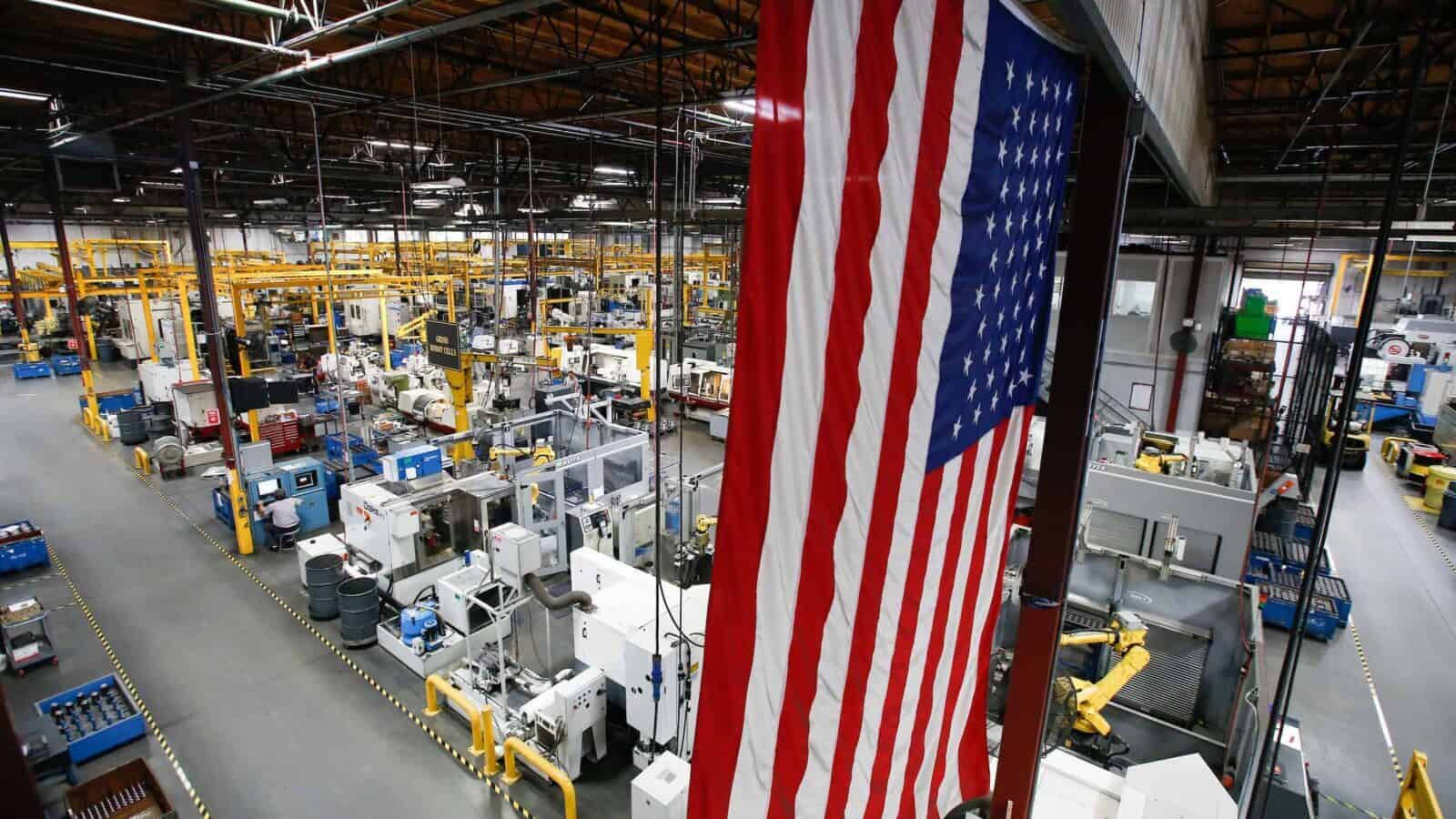
The proposed “book tax” in the Senate’s reconciliation bill “would overwhelmingly hit U.S. manufacturers,” according to a new analysis by the Joint Committee on Taxation, Congress’s non-partisan tax scorekeeper.
What’s going on: The reconciliation bill, the outline of which was released Wednesday by Senate Majority Leader Chuck Schumer (D-NY) and Sen. Joe Manchin (D-WVA), proposes a 15% minimum corporate levy, or “book tax,” on certain companies.
- The provision is estimated to raise $313 billion, and JCT finds that manufacturers would be responsible for paying nearly half of it.
What it means: The impact would be swift and devastating to manufacturers and the economy as a whole, said NAM Chief Economist Chad Moutray, who conducted his own analysis of the bill’s effects on the manufacturing sector.
Including direct, indirect and induced effects, in 2023 alone the impact would include:
- A real GDP reduction of $68.45 billion
- 218,108 fewer workers in the overall economy
- A labor-income decrease of $17.11 billion
Targeting manufacturers: “‘This is a domestic manufacturing tax, plain and simple,’” said Senate Finance Committee Ranking Member Mike Crapo (R-ID), who asked for the JCT analysis.
- “Despite Democrats’ claims, the book minimum tax does not close tax loopholes. Treatment of capital investments, like those made by American manufacturers, differ for book and tax purposes—for good reason,” according to a press release from Senate Finance Republicans.
- “Congress intentionally designed tax depreciation rules to support domestic investment. Democrats’ tax on U.S. manufacturing would eliminate that benefit.”
Manufacturers: Legislation Is a Bold, Important Step Toward Ramping Up the Domestic Manufacturing of Essential Inputs
Timmons: Every manufacturer will benefit. But there is more to be done.
Washington, D.C. – Following the House’s passage of the CHIPS-Plus Act, National Association of Manufacturers President and CEO Jay Timmons released the following statement:
“This legislation is a bold, important step toward ramping up the domestic manufacturing of essential inputs used by virtually every part of our industry. Every vote for the CHIPS-Plus Act was a vote for a more competitive manufacturing industry in America. This bipartisan legislation shows that Congress is taking the problems of supply chain disruptions and inflation seriously. Every manufacturer will benefit. But there is more to be done.
“Once President Biden signs it into law, manufacturers will work with lawmakers to build on the momentum and continue our advocacy for important measures that did not make it into the final CHIPS-Plus legislation, including trade measures, anti-counterfeiting protections and other workforce development priorities.
“But if lawmakers are truly serious about competing with China, they will now oppose the tax increases and attacks on pharmaceutical innovation in the latest reconciliation bill proposal, which will certainly lead to continued inflationary pressures. Congress should stay focused on bipartisan solutions, not legislation that weakens our economy and makes us less competitive with other countries.”
-NAM-
The National Association of Manufacturers is the largest manufacturing association in the United States, representing small and large manufacturers in every industrial sector and in all 50 states. Manufacturing employs more than 12.8 million men and women, contributes $2.77 trillion to the U.S. economy annually and accounts for 58% of private-sector research and development. The NAM is the powerful voice of the manufacturing community and the leading advocate for a policy agenda that helps manufacturers compete in the global economy and create jobs across the United States. For more information about the NAM or to follow us on Twitter and Facebook, please visit www.nam.org
New Study: Ports Stoppage Would Be Devastating Hit to Manufacturers’ Competitiveness
Cost Economy Half a Billion Dollars a Day, Destroy 41,000 U.S. Jobs
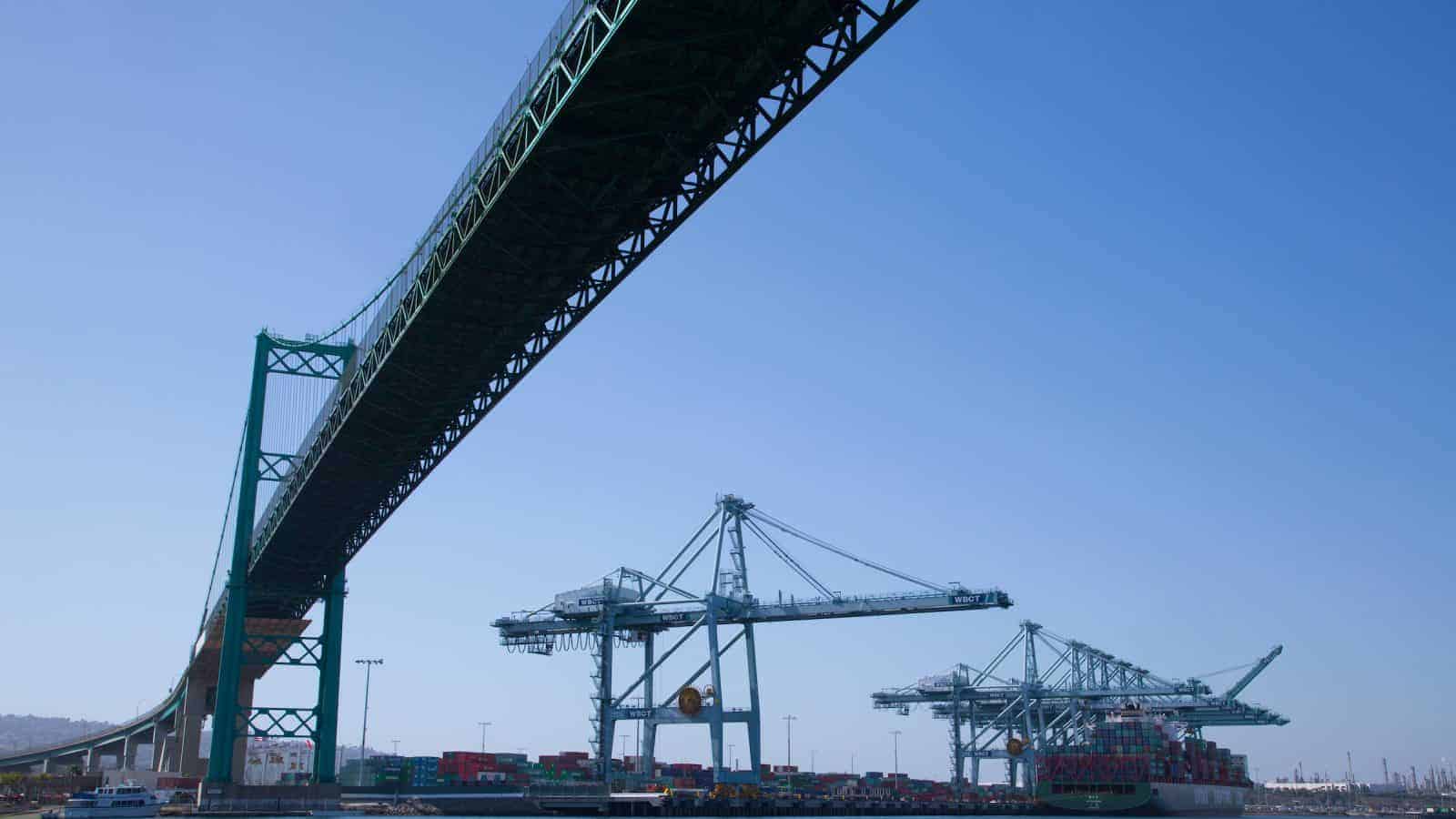
Washington, D.C. – As negotiations between the Pacific Maritime Association and International Longshore and Warehouse Union near a critical deadline, manufacturers are sounding the alarm about potential economic consequences of a port stoppage if disruption were to occur over two weeks at the ports of Los Angeles and Long Beach, the nation’s largest port complex. According to a study by Inforum Economics, a 15-day disruption would cost the U.S. economy nearly half a billion dollars a day—for a total of $7.5 billion—and destroy 41,000 jobs, including more than 6,100 in manufacturing.
As the industry continues to grapple with historic supply chain challenges, inflationary pressures and rising transportation and energy costs, manufacturers are calling on the parties to reach an agreement immediately to avoid this continued uncertainty.
“The ports of Los Angeles and Long Beach support a major share of cargo relied upon by American businesses and consumers, supporting supply chains across the entire country. With supply chains already stretched thin, inflation at its highest level in four decades and concerns of a recession rising, any disruption would mean a devastating hit to our economy and to manufacturers’ competitiveness,” said National Association of Manufacturers President and CEO Jay Timmons. “The disruption would be felt immediately. Manufacturing jobs will be lost if parts and supplies don’t arrive. New equipment, machinery and products can’t be built when ships are backed up and there is no one available to unload and process cargo. Our overseas customers won’t wait for us to fix these disruptions, either—they’ll simply find other suppliers, weakening U.S. manufacturing competitiveness in the process.
“This is why the Pacific Maritime Association and the International Longshore and Warehouse Union must not allow a disruption at these ports. Manufacturers, our millions of employees and the countless others whose lives and livelihoods depend on the products we make are counting on the PMA and the ILWU to reach a resolution and keep the ports running.”
Background: At the time of publication, the PMA and ILWU are engaged in labor negotiations. The NAM commissioned an analysis using the Inforum LIFT economic model to quantify the impacts of a 15-day closure at the Los Angeles and Long Beach ports. Specifically, it estimates how such a closure would impact U.S. employment, output and income. These ports have experienced historic disruptions and bottlenecks since late 2020, and nearly 84% of manufacturers now list freight and transportation costs as a key driver of inflation.
-NAM-
The National Association of Manufacturers is the largest manufacturing association in the United States, representing small and large manufacturers in every industrial sector and in all 50 states. Manufacturing employs more than 12.7 million men and women, contributes $2.71 trillion to the U.S. economy annually and accounts for 58% of private-sector research and development. The NAM is the powerful voice of the manufacturing community and the leading advocate for a policy agenda that helps manufacturers compete in the global economy and create jobs across the United States. For more information about the NAM or to follow us on Twitter and Facebook, please visit www.nam.org.
Manufacturers Launch Ad Campaign to Protect Manufacturing Competitiveness
Tax Increases Do Nothing to Reduce Energy Costs, Address Supply Chain and Inflation Challenges
Washington, D.C. – Amid historic supply chain challenges and inflationary pressures, along with increasing energy costs, the National Association of Manufacturers is launching a six-figure ad campaign calling on Congress to protect manufacturing jobs by opposing new taxes on the industry, including those meant to punish the very energy manufacturers that are being asked to produce more. The print, radio and digital ads will run in Washington, D.C., and in key states across the country.
“Manufacturers have kept our promises—especially after the 2017 tax reforms—to create jobs, raise wages and benefits and invest in our communities. To keep up this winning record, we need Congress to enact policies consistent with our manufacturing competitiveness agenda. That’s how we’ll strengthen supply chains, expand access to affordable, reliable energy and tamp down inflation. Our industry is ready to keep solving problems and create well-paying jobs—but returning to outdated tax policies will impede our progress,” said NAM President and CEO Jay Timmons.
Background on manufacturing growth following the enactment of tax reform in 2017:
- In 2018, manufacturers added 260,000 new jobs. That was the best year for job creation in manufacturing in 21 years.
- In 2018, manufacturing wages increased 3.1% and continued going up—by 2.9% in 2019 and 3.0% in 2020. Those were the fastest rates of annual growth since 2003.
- Manufacturing capital spending grew 4.5% and 5.7% in 2018 and 2019, respectively.
- Overall, manufacturing production grew 3.2% in 2018, the best since 2010.
The NAM has published research on the impact of rolling back tax reform (study available here and click here for a summary of the study’s findings) and increasing the U.S. Global Intangible Low-Taxed Income (GILTI) tax burden (study available here).
-NAM-
The National Association of Manufacturers is the largest manufacturing association in the United States, representing small and large manufacturers in every industrial sector and in all 50 states. Manufacturing employs more than 12.7 million men and women, contributes $2.71 trillion to the U.S. economy annually and accounts for 58% of private-sector research and development. The NAM is the powerful voice of the manufacturing community and the leading advocate for a policy agenda that helps manufacturers compete in the global economy and create jobs across the United States. For more information about the NAM or to follow us on Twitter and Facebook, please visit www.nam.org.
Successful Indo-Pacific Framework Critical for Manufacturers
Washington, D.C. – Following the Biden administration’s announcement on the launch of the Indo-Pacific Economic Framework for Prosperity, National Association of Manufacturers Vice President of International Economic Affairs Ken Monahan released the following statement:
“NAM President and CEO Jay Timmons pressed the administration on critical components to the IPEF earlier this year, and manufacturers are encouraged that the framework will address key manufacturing priorities we have outlined in areas such as digital economy, resilient supply chains and transparency and good governance. These priorities are essential for manufacturing businesses and workers for a region that represents more than two-fifths of total U.S. manufacturing trade and is a market for U.S. exports that support nearly 2 million American jobs.
“As discussions continue, we’re looking for U.S. leaders to support manufacturing jobs by taking an approach that opens markets, strengthens U.S. innovation and technology leadership, raises global standards and establishes best-in-class trade rules.”
Background: NAM President and CEO Jay Timmons stressed in a February letter to senior administration officials that high-standards trade with the Indo-Pacific is critical to manufacturers’ success and global competitiveness. Additionally, the NAM submitted comments on the IPEF in April to the Office of the U.S. Trade Representative.
-NAM-
The National Association of Manufacturers is the largest manufacturing association in the United States, representing small and large manufacturers in every industrial sector and in all 50 states. Manufacturing employs more than 12.7 million men and women, contributes $2.71 trillion to the U.S. economy annually and accounts for 58% of private-sector research and development. The NAM is the powerful voice of the manufacturing community and the leading advocate for a policy agenda that helps manufacturers compete in the global economy and create jobs across the United States. For more information about the NAM or to follow us on Twitter and Facebook, please visit www.nam.org.
Manufacturers: A Time of Challenge and Uncertainty
Timmons: “More committed than ever to focus on policy—not politics, personality or process”
Washington, D.C. – National Association of Manufacturers President and CEO Jay Timmons today released the following statement in response to President Biden’s State of the Union address:
“President Biden rightly focused on many policies that will keep manufacturing strong in America amid a global crisis. We strongly agree that the bipartisan infrastructure law was an accomplishment of historic proportion, and we continue to support its swift implementation.
“We are ready to work with anyone to advance policies that will strengthen the industry, but we strongly oppose proposals that would weaken our industry and threaten our recovery, including undoing the progress of tax reform and imposing policies that would disrupt our workplaces. Manufacturers are working hard to fill more than 800,000 open jobs and connect more Americans with rewarding careers, and some of the actions outlined tonight would make it harder for us to solve this top challenge.
“We couldn’t agree more, however, that supply chain issues must remain a focus for lawmakers, and we’re going to continue working with both parties to deliver final competitiveness and supply chain legislation and build on the steps the administration is taking. In this time of challenge and uncertainty, we’re more committed than ever to focus on policy—not politics, personality or process.
“As the United States and our allies continue to lend support for Ukraine’s fight for its democracy, President Biden used his State of the Union address tonight to rally Americans and the world in support of the cause and rightly emphasized the importance of American leadership and defending our shared values when so much is at stake. Manufacturers join this call for unity.”
-NAM-
The National Association of Manufacturers is the largest manufacturing association in the United States, representing small and large manufacturers in every industrial sector and in all 50 states. Manufacturing employs more than 12.5 million men and women, contributes $2.57 trillion to the U.S. economy annually and has the largest economic multiplier of any major sector and accounts for 58% of private-sector research and development. The NAM is the powerful voice of the manufacturing community and the leading advocate for a policy agenda that helps manufacturers compete in the global economy and create jobs across the United States. For more information about the NAM or to follow us on Twitter and Facebook, please visit www.nam.org.