NAM to EPA: Reverse WOTUS Rule

The Environmental Protection Agency’s recently issued rule governing regulation of “navigable waters” is unnecessary, confusing and inconsistent—and the NAM stands ready to work with Congress to overturn it.
The background: In December, the EPA and the U.S. Army Corps of Engineers announced the new regulation, which repealed the Navigable Waters Protection Rule and altered the definition of “Waters of the United States.”
- This month, House Transportation and Infrastructure Committee Chairman Sam Graves (R-MO) introduced a joint resolution of disapproval of the rule under the Congressional Review Act. An identical measure was introduced in the Senate.
- The NAM this week hailed the congressional moves. “Manufacturers welcome action from Congress to challenge the EPA’s proposed WOTUS Rule,” said NAM President and CEO Jay Timmons.
What’s going on now: Ahead of a Transportation and Infrastructure Committee hearing Wednesday, NAM Senior Director of Energy and Resources Policy Nile Elam urged the “educat[ion of] the public and policy stakeholders regarding the immense permitting regulatory efforts necessary under local and state jurisdictions, and the need for a complementary WOTUS rule that advances permitting protections at the federal level while providing certainty for the regulated community.”
- Though many Supreme Court decisions have “touched on” the definition of navigable waters, neither the court nor the EPA has clarified sufficiently, Elam told Water Resources and Environment Subcommittee Chairman David Rouzer (R-NC) and Ranking Member Grace Napolitano (D-CA).
- The new rule also “expands federal jurisdiction beyond traditional navigable waters,” Elam said. “Because of these expansions and ambiguous terms, the careful balance between local and state regulators is unpredictable and can leave permit seekers with little guidance, aside from the need for more time and money to achieve their permitting requests.”
What should come next: Congress must work with stakeholders, the EPA and the Corps on creating clear, predictable and common-sense WOTUS regulations, Elam told the committee. Doing so will “enhanc[e] manufacturers’ ability to deliver their goods, expand their operations and grow their workforce.”
Timmons: America’s Success and Leadership Depend on a Strong, Competitive Manufacturing Industry
Washington, D.C. – National Association of Manufacturers President and CEO Jay Timmons released the following statement in response to President Biden’s 2023 State of the Union address:
“President Biden rightly celebrated the significant growth and job creation that manufacturers have achieved in these past two years. Indeed, more manufacturing jobs have been created in the first two years of the Biden administration than at any point since the Reagan administration. Like his recent predecessors, he recognizes manufacturing’s vital role in our economy and our country. America’s success and leadership depend on a strong, competitive manufacturing industry.
“The President should be commended for the historic, bipartisan accomplishments of the past two years—including the infrastructure law and the CHIPS and Science Act. These measures are already making life better and spurring new manufacturing jobs. We agree with President Biden that there is now an urgent need to build on that progress by tackling immigration reform in a smart, bipartisan way. There are millions of people ready to work in the U.S., and manufacturers have hundreds of thousands of unfilled jobs. Not only is the broken immigration system creating a border crisis, but it is also standing in the way of a stronger economy for every American.
“However, the President misses the mark in not recognizing that the historic tax reforms of 2017 and the previous administration’s efforts to promote regulatory certainty helped lay the foundation for the recent success in creating jobs, increasing investment and raising wages. Instead of the Biden administration’s misguided suggestions for restrictions on pharmaceutical innovation and for destructive tax increases, Congress should immediately reinstate critical tax deductions for the costs of research, machinery purchases and key business investments. Restoring these tools is essential to keep up the pace of manufacturing job creation and to out-innovate and outcompete China. And to truly unleash manufacturing investment, fully realize the potential of the infrastructure law and achieve energy security in America, we need a smarter, balanced approach to regulations and significant permitting reform so that projects don’t languish for years in a bureaucratic mess just waiting for government approvals. After all, manufacturers are already making great strides in reducing emissions. Now is not the time to add top-down air regulations that will cost us jobs and snarl supply chains.
“The State of the Union address is one of the sacred traditions of our democracy. And as we approach the one-year mark of Russia’s war on Ukraine, we are reminded just how precious those traditions and our institutions are. Democracy is the foundation of the values that keep our industry strong and have made America exceptional—free enterprise, competitiveness, individual liberty and equal opportunity. And that is why manufacturers stand firm in our belief that democracy must be respected, protected and defended at home and abroad.”
Background: The NAM’s “Competing to Win” policy agenda for manufacturing competitiveness can be found here. Its in-depth proposal for immigration reform, “A Way Forward,” is available here. In the NAM’s most recent Manufacturers’ Outlook Survey, two-thirds of manufacturers said that immigration reform should be a priority for the 118th Congress.
-NAM-
The National Association of Manufacturers is the largest manufacturing association in the United States, representing small and large manufacturers in every industrial sector and in all 50 states. Manufacturing employs nearly 13 million men and women, contributes $2.81 trillion to the U.S. economy annually and accounts for 55% of private-sector research and development. The NAM is the powerful voice of the manufacturing community and the leading advocate for a policy agenda that helps manufacturers compete in the global economy and create jobs across the United States. For more information about the NAM or to follow us on Twitter and Facebook, please visit www.nam.org.
Timmons: Debt Ceiling Uncertainty Will Derail Manufacturing Growth
Manufacturers Call on Administration and Congress to Act Swiftly
Washington, D.C. – National Association of Manufacturers President and CEO Jay Timmons released the following statement regarding negotiations to raise the debt ceiling:
“It is imperative that Congress and the administration reach a resolution to the debt limit issue as swiftly as possible. Waiting to act until extraordinary measures are exhausted constitutes dangerous brinkmanship that would inject uncertainty into the global economy and increase the risk of a default that would derail manufacturing growth in America, tank markets and put jobs at risk.
“We did not become the greatest nation in the world by shirking our responsibilities. Manufacturers have been working overtime to rebuild our economy, strengthening supply chains, creating jobs at record rates and helping defend against threats from around the world. All of those achievements will be erased if the United States does not find a path forward on the debt limit and fiscal responsibility. Let’s rise above this challenge so that manufacturers can do what we do best: improve lives and livelihoods here and around the world.”
-NAM-
The National Association of Manufacturers is the largest manufacturing association in the United States, representing small and large manufacturers in every industrial sector and in all 50 states. Manufacturing employs more than 12.9 million men and women, contributes $2.81 trillion to the U.S. economy annually and accounts for 55% of private-sector research and development. The NAM is the powerful voice of the manufacturing community and the leading advocate for a policy agenda that helps manufacturers compete in the global economy and create jobs across the United States. For more information about the NAM or to follow us on Twitter and Facebook, please visit www.nam.org.
Congress Fails to Advance Manufacturing Tax Priorities
Bipartisan Provisions Like R&D Incentives Are Critical to Small Manufacturers’ Ability to Invest
Washington, D.C. – The National Association of Manufacturers is calling on lawmakers to immediately address critical tax provisions that were left out of the 2023 Omnibus spending package, highlighting the negative impact to small manufacturers and their workers.
“Congress’ failure to reverse tax policies that make it more costly to perform research, buy machinery and finance job-creating investments has put hundreds of thousands of American jobs and manufacturing competitiveness at risk. Despite overwhelming support for addressing these issues, Congress’ inaction will now undercut small manufacturers’ ability to invest in their workers, facilities and communities,” said NAM President and CEO Jay Timmons.
Ketchie President and Owner and Incoming Chair of the NAM Small and Medium Manufacturers Group Courtney Silver recently highlighted that congressional action on these tax priorities will help prevent small manufacturers from feeling “stuck between a rock and a hard place. It’s very important that we take action on expanding and locking in that pass-through deduction, increasing those incentives around R&D and protecting those provisions around full expensing and interest deductibility,” said Silver.
“Although the appropriations package included important manufacturing priorities, including the INFORM Consumers Act, with its protections for consumers against counterfeit goods, and the Electoral Count Reform Act, which supports a clear and secure democratic process, pro-competitiveness tax policy changes would have made a big difference for businesses of all sizes across our industry,” continued Timmons. “As the next Congress convenes, we urge lawmakers to prioritize these policies, and we will continue to work with manufacturing champions from both parties to provide tax certainty to the nearly 13 million people who work in manufacturing today.”
Read more about how these critical tax priorities impact small manufacturers across the country here.
-NAM-
The National Association of Manufacturers is the largest manufacturing association in the United States, representing small and large manufacturers in every industrial sector and in all 50 states. Manufacturing employs more than 12.9 million men and women, contributes $2.77 trillion to the U.S. economy annually and accounts for 55% of private-sector research and development. The NAM is the powerful voice of the manufacturing community and the leading advocate for a policy agenda that helps manufacturers compete in the global economy and create jobs across the United States. For more information about the NAM or to follow us on Twitter and Facebook, please visit www.nam.org.
Manufacturers: Permitting Reform Essential to Manufacturing Growth and Competitiveness
Washington, D.C. – Following consideration today of a permitting amendment in the U.S. Senate, National Association of Manufacturers President and CEO Jay Timmons released the following statement:
“Red tape and permitting delays have plagued the manufacturing industry for decades, and the need for reform has only grown more urgent in recent years. Manufacturers have long called for Congress to repair the broken permitting process to minimize delays and reduce needless litigation that stands in the way of energy and resources projects and other investments. That will ensure we can get to work quickly on the investments that the bipartisan infrastructure law and the CHIPS and Science Act make possible. It will also ensure manufacturers have access to reliable and affordable energy while the grid evolves and as we work to improve air quality and reduce greenhouse gases.
“Ultimately, permitting reform effects every part of the American supply chain—from modernizing energy projects to building new manufacturing facilities. Today’s Senate vote, while unsuccessful, should serve as a step toward true bipartisan reform. Manufacturers appreciate the efforts of Sens. Joe Manchin and Shelley Moore Capito to push this priority forward, and we will continue to work with both chambers to achieve this goal.”
-NAM-
The National Association of Manufacturers is the largest manufacturing association in the United States, representing small and large manufacturers in every industrial sector and in all 50 states. Manufacturing employs more than 12.9 million men and women, contributes $2.77 trillion to the U.S. economy annually and accounts for 55% of private-sector research and development. The NAM is the powerful voice of the manufacturing community and the leading advocate for a policy agenda that helps manufacturers compete in the global economy and create jobs across the United States. For more information about the NAM or to follow us on Twitter and Facebook, please visit www.nam.org.
Manufacturers: President Biden and Congress Have Averted a Holiday Crisis
Washington, D.C. – National Association of Manufacturers President and CEO Jay Timmons released the following statement after President Biden signed H.J. Res. 100 into law, concluding the collective bargaining process between Class I railroads and all labor unions representing the freight rail workforce and eliminating the threat of a disastrous rail strike.
“Thanks to swift action from President Biden and his administration, and bipartisan cooperation in Congress, a holiday supply chain disaster has been averted.
“Earlier this year, manufacturers called for and supported the creation of the Presidential Emergency Board to rectify the stalemate between the unions and railways. But when it became clear they wouldn’t reach a negotiated resolution, we called on Congress to act, as a freight rail shutdown would have been devastating to the manufacturing industry, the U.S. economy and all American families.
“We thank President Biden, Secretaries Walsh and Buttigieg as well as manufacturing allies in Congress for listening to our industry and working quickly to avert this crisis.”
-NAM-
The National Association of Manufacturers is the largest manufacturing association in the United States, representing small and large manufacturers in every industrial sector and in all 50 states. Manufacturing employs more than 12.9 million men and women, contributes $2.77 trillion to the U.S. economy annually and has the largest economic multiplier of any major sector and accounts for 58% of private-sector research and development. The NAM is the powerful voice of the manufacturing community and the leading advocate for a policy agenda that helps manufacturers compete in the global economy and create jobs across the United States. For more information about the NAM or to follow us on Twitter and Facebook, please visit www.nam.org
Rail Unions Move Closer to National Strike

Another large labor union has voted to reject the rail deal brokered in part by the Biden administration, moving the industry closer to a strike, according to CNBC.
Split decision: Two of the largest railroad labor unions in the United States went separate ways during their contract ratification votes, which were announced on Monday. The Sheet Metal, Air, Rail and Transportation Workers – Transportation Division voted against the proposed agreement by a slim margin, while the Brotherhood of Locomotive Engineers and Trainmen voted to ratify it.
What it means: This latest action raises the likelihood of a rail work stoppage in early December. In total, 8 of 12 unions have now ratified the tentative agreement concluded in September while the rank-and-file membership of 4 unions have rejected it.
- Should one union choose to go on strike, the broad impact would cripple the national freight rail network.
The impact: The railroad industry and major shipping groups have found that a strike would likely cost around $2 billion per day, also according to CNBC. It would affect every major rail operator.
- “The American Chemistry Council, which represents companies including 3M, Dow, Dupont, BP, Exxon Mobil and Eli Lilly, said a rail strike would impact approximately $2.8 billion in chemicals cargo a week, and lead to a GDP decline and renewed inflation.”
- “Other industries, from agriculture to retail, have warned of the economic risks of a strike.”
Next steps: Negotiations will continue through a cooling-off period that runs until early December. If a deal is not reached by 12:01 a.m. EST on Dec. 5, a strike could occur. The NAM and others have urged Congress to take action under the Railway Labor Act and pass legislation that would avert a strike if railroads and rail unions cannot reach such a deal.
What we’re saying: “Manufacturers are disheartened by today’s news on the further unraveling of rail negotiations,” said NAM President and CEO Jay Timmons. “It’s clear that Congress, both Democrats and Republicans, must be prepared to work together immediately to avert a rail strike and prevent further damage to our supply chain.”
Manufacturers Urge Swift Resolution to Ongoing Rail Negotiations
Washington, D.C. – National Association of Manufacturers President and CEO Jay Timmons released the following statement as negotiators work to reach an agreement between Class I railroads and all labor unions representing the freight rail workforce. Several organizations have not yet ratified the deal tentatively agreed to by union leadership and rail industry representatives in September that delayed the possibility of a strike.
“Manufacturers are urging congressional leaders to be prepared to bring stability and predictability to the economy if a rail strike and shutdown occurs. We already face economic turmoil with rising costs, product shortages and high inflation. Any nationwide rail strike or shutdown will cause even more economic pain. Manufacturers urge all parties to work rapidly—for the good of the country—to conclude this collective bargaining process.”
Background: A rail strike could begin as soon as 12:01 a.m. EST on Saturday, Nov. 19. Currently, the majority of the unions representing the rail workers have agreed to extend that deadline to Friday, Dec. 9, though a unanimous decision to maintain the status quo is required for that extension.
On Thursday, Oct. 27, the NAM joined hundreds of other associations in calling on President Biden to ensure a swift resolution and reiterating support for the work of the Presidential Emergency Board, which has aided in the talks.
Currently, the American freight rail network accounts for nearly 40% of total freight volume, and a strike or delay in finalizing a long-term contract would have devastating impacts across surface supply chain networks and economic output.
-NAM-
The National Association of Manufacturers is the largest manufacturing association in the United States, representing small and large manufacturers in every industrial sector and in all 50 states. Manufacturing employs more than 12.9 million men and women, contributes $2.77 trillion to the U.S. economy annually and has the largest economic multiplier of any major sector and accounts for 58% of private-sector research and development. The NAM is the powerful voice of the manufacturing community and the leading advocate for a policy agenda that helps manufacturers compete in the global economy and create jobs across the United States. For more information about the NAM or to follow us on Twitter and Facebook, please visit www.nam.org.
NAM VP Monahan Talks International Economics
As the manufacturing industry grapples with disruptive forces in the U.S. and around the world, companies are looking for more certainty and opportunity.
NAM Vice President of International Economic Affairs Ken Monahan spoke about these issues with UPS President of International Public Affairs Penelope Naas in a panel discussion during the UPS Supply Chain Solutions virtual conference on Oct. 5.
The big idea: “Manufacturers of all sizes must be able to compete in a global economy by selling not just to consumers in the U.S., but also to billions of consumers globally,” said Monahan.
- “For us, international economic growth is core to our DNA—and it is absolutely critical that we increase opportunities for those 95% of the global population that lives outside of the U.S.”
- The NAM emphasized these broad priorities in its just-released “Competing to Win” policy agenda.
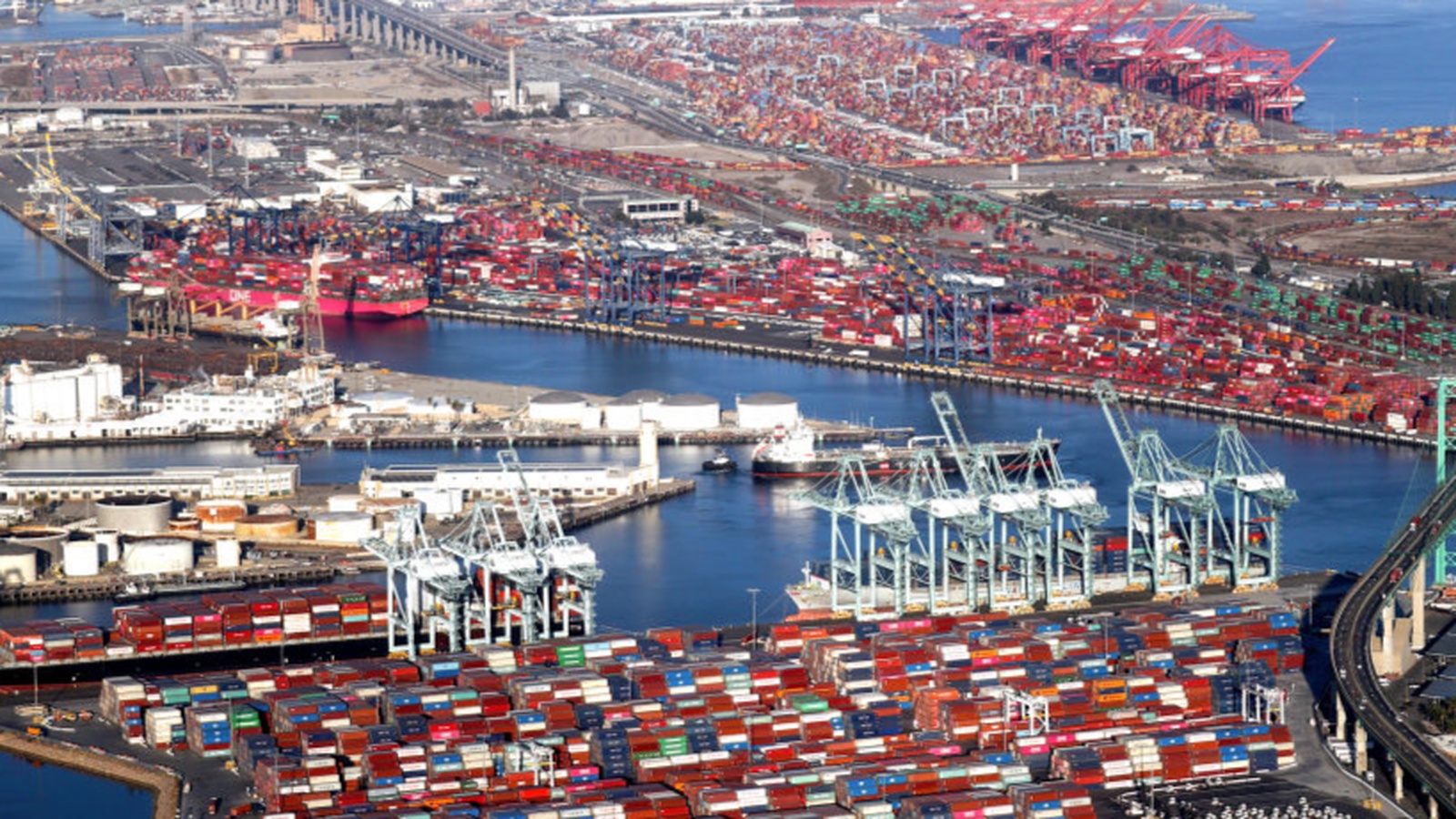
The challenge: “We’ve just seen wave after wave of supply chain disruptions, and the impact that that’s happening on the ability of manufacturers to operate and engage not just in the U.S. but globally,” said Monahan. “In a recent quarterly survey [of NAM members], 78% of our leaders listed supply chain instructions as a primary business challenge.”
- According to Monahan, the global nature of manufacturing underscores “the importance of our industry working to ease the types of global supply chain bottlenecks that are impacting so many businesses around the world … easing uncertainty and … knocking down unfair trade barriers that continue to stymie the growth of economic activity globally.”
Problems and solutions: Monahan named COVID-19, the Russian invasion of Ukraine and disclosure requirements that require more scrutiny of supply chains as key factors impacting manufacturers—and emphasized the need for diverse sources of products to ensure supply chain resiliency in the future.
Building partnerships: Monahan pointed to the importance of robust trade agreements and partnerships with economic allies to secure resilient supply chains and promote fair competition.
- “When it comes to trade, we need to think through ways in which we can deepen our partnerships with our friends and allies,” said Monahan. That means “seeking trade agreements and cutting-edge, best-in-class frameworks with our trading partners to encourage increasing standards to U.S. levels.”
Monahan also noted a series of ongoing U.S. efforts with global trading partners, including in the Indo-Pacific region, Europe, the Americas and Kenya. He made clear that the NAM is working to promote new agreements that open markets, strengthen U.S. innovation and technology standards and increase global standards around trade rules, among other priorities.
- Such U.S. global engagement is “demonstrating to manufacturers that the U.S. is back on the field,” said Monahan. “But at every opportunity, we are pushing the administration to think bigger, be even more ambitious and take this opportunity in front of it.”
Promoting transparency: Monahan spoke about the importance of manufacturers’ insight into their supply chains.
- “Companies need to be knowledgeable about as many tiers of their supply chains as possible and have strong due diligence and compliance programs in place to ensure to the maximum extent possible that goods are not being sourced or sold to entities that use forced labor or are on various export control lists,” he said.
The last word: “We need to be able to really put forward and advance the same principles globally that we do here at home as manufacturers: nondiscrimination, fairness, equal opportunity and competition,” said Monahan. “We are at our best when we are advancing those priorities globally and in the U.S.”
Timmons Lays Out Manufacturing Priorities
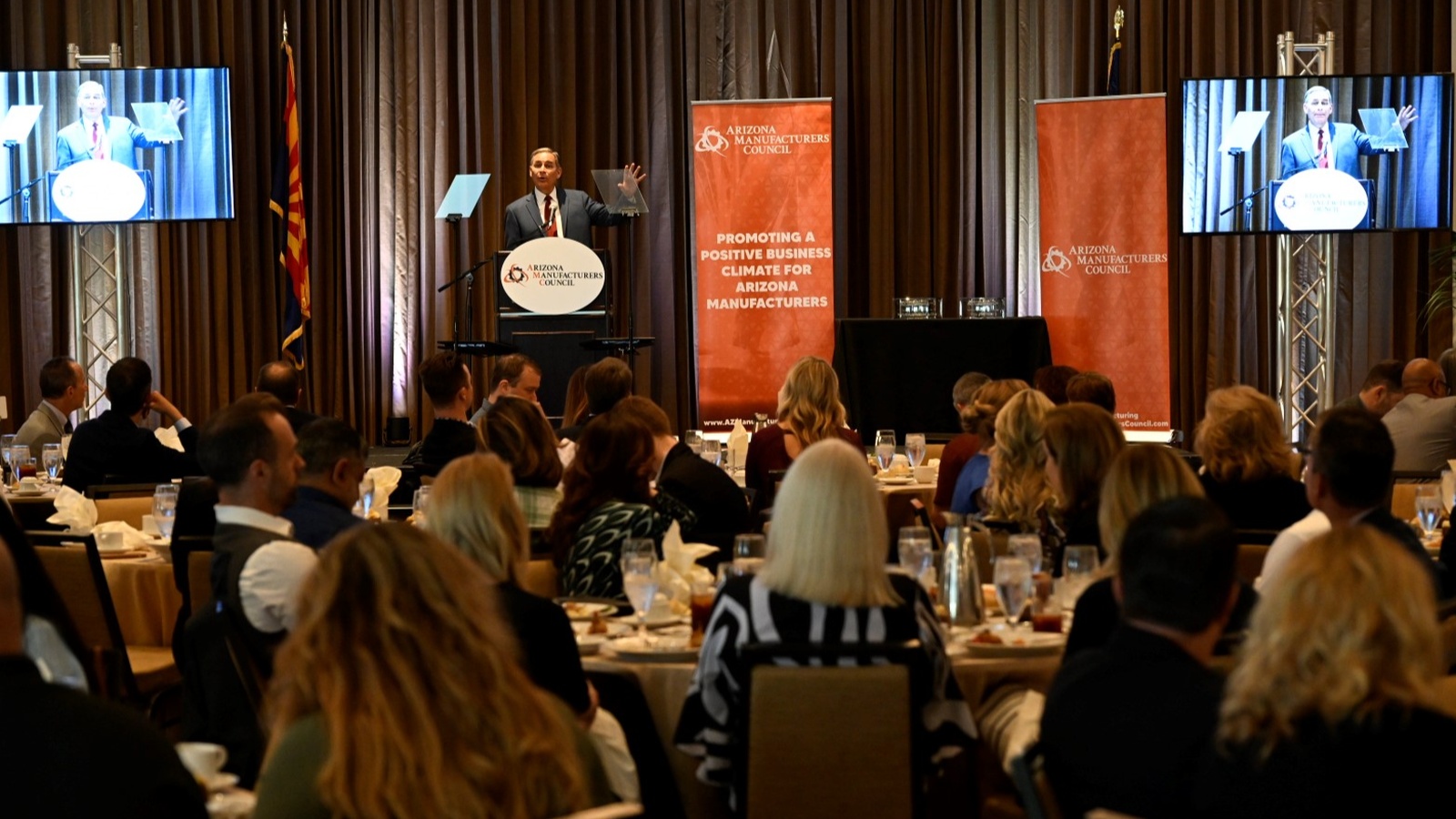
NAM President and CEO Jay Timmons is on a barnstorming tour of the U.S., to raise more support among leaders for addressing supply chain challenges, creating more manufacturing jobs and making the country more resilient. He brought this message to the 2022 Arizona Manufacturing Summit in Phoenix, Arizona, yesterday.
Manufacturing’s strength: “I’m pleased to report that manufacturers are shattering expectations across the United States,” said Timmons. “Here’s one encouraging fact: manufacturers have now recovered all the jobs the industry lost at the start of the pandemic—and then some. There are more than 12.8 million people working in manufacturing… And that’s because we’re doing what we’ve always done. We’re solving problems, we’re innovating and leading into the future.”
Challenges ahead: “Inflation has reached the highest level in decades,” said Timmons. “Supply chains are still strained, making it harder to move resources and products. Global instability—especially Russia’s war on Ukraine—shows us it’s more important than ever that we secure domestic energy supplies.”
- “We’re facing a workforce crisis, with less than six job seekers for every ten jobs in America. And almost 70% of Americans today say the country is on the wrong track. Now, we’ve seen some moments of historic bipartisan action in Washington … But there is so much more to be done.”
Competing to Win: Timmons pointed to the NAM’s policy roadmap, “Competing to Win,” which offers an agenda for manufacturing competitiveness on issues including the following:
- Taxes: “We need U.S. tax policy to keep up and encourage more industrial investment here,” said Timmons. “So, we’re calling for making the 20% deduction for pass-through income permanent—and expanding it. The small and medium-sized businesses here deserve confidence that they won’t lose that all-important tool. And we need to fix provisions of the tax law that are making R&D and capital investment more expensive starting this tax year.”
- Trade: “While we’re working on tax policy here at home, we also need to expand opportunities to sell our products overseas,” said Timmons. “Exports are part of our industry’s lifeblood. That means policymakers should hold countries accountable for practices that harm manufacturers in the U.S. We should continue pursuing cutting-edge trade deals, while ensuring that the agreements already in place are delivering for our industry. And we should reject policies at international bodies like the World Trade Organization that would take away intellectual property rights.”
- Immigration: “We need Congress to fix the broken, unreliable immigration system,” said Timmons. “Clearly, we need border security, and we need more avenues for people to come legally and work. It’s critical to our economic competitiveness—and consistent with our values.”
The way forward: “It can be disheartening to know that so many Americans don’t believe the country is on the right track,” said Timmons. “But a focus on policy—getting things done, rather than blaming each other—can change that. And manufacturers are positioned to lead. The work we do to create jobs and to improve the quality of life is essential, and we can’t let up. We won’t let up.”