
NAM: Auto Worker Strike Would Harm Economy

As manufacturers continue to reel from supply chain disruptions, the NAM is calling for a swift resolution to forestall a potentially devastating United Auto Workers strike.
What’s going on: The UAW is negotiating a new labor agreement with important automotive manufacturers, as the current contract expires Sept. 14.
Why it’s important: The automotive manufacturing industry in the U.S. is one of the strongest and most productive in the world, and it significantly supports the health of the U.S. economy.
- A strike of 143,000 UAW members against Detroit’s “Big Three” auto manufacturers could mean an economic loss of $5.617 billion after just 10 full days, according to a new report by Anderson Economic Group.
- Nationwide, every $1 spent in the transportation-equipment sector causes another $1.59 to be spent elsewhere—for a total economic impact of $2.59, according to NAM calculations using 2021 IMPLAN data.
- In 2022, the total value-added in motor vehicles and parts in the U.S. was $171.6 billion, according to the Bureau of Economic Analysis.
State-level impact: In 2019, a 42-day auto-worker strike at one of the Detroit manufacturers “sent the state of Michigan into a one-quarter recession” and resulted in an economic loss of $4.2 billion, according to reporting by The Detroit News.
- As of 2021, the latest year for which this data is available, Michigan’s total output from motor vehicles, bodies and trailers, and parts manufacturing was $37.5 billion, accounting for 37% of total manufacturing output in the state, according to the BEA.
- At the same time, Michigan had 175,745 full- and part-time employees in the sector, or 28.7% of all manufacturing employees in the state.
- Meanwhile, the total output of Illinois’ auto sector accounted for 19.3% of the state’s total manufacturing output, while employment came to 23.6% of the state’s manufacturing employees.
Undermining manufacturing in the U.S.: “Manufacturers in America, especially in the automotive sector, operate in an integrated supply chain, which means that small and medium-sized manufacturers around the country—in union and non-union shops—would endure the consequences of a stoppage. As we continue to emerge from the global pandemic and work to get our economy on a sustainable track, a strike would be devastating for working families across our country,” said NAM President and CEO Jay Timmons.
- “President Biden has prioritized strengthening manufacturing in America, but that will be quickly undermined if a strike occurs. The administration should be encouraging a swift resolution to avoid ripple effects throughout the broader manufacturing economy and in communities from coast to coast.”
House Majority Whip Emmer, NAM Spotlight Cost of Regulations and Policies to Boost Manufacturing
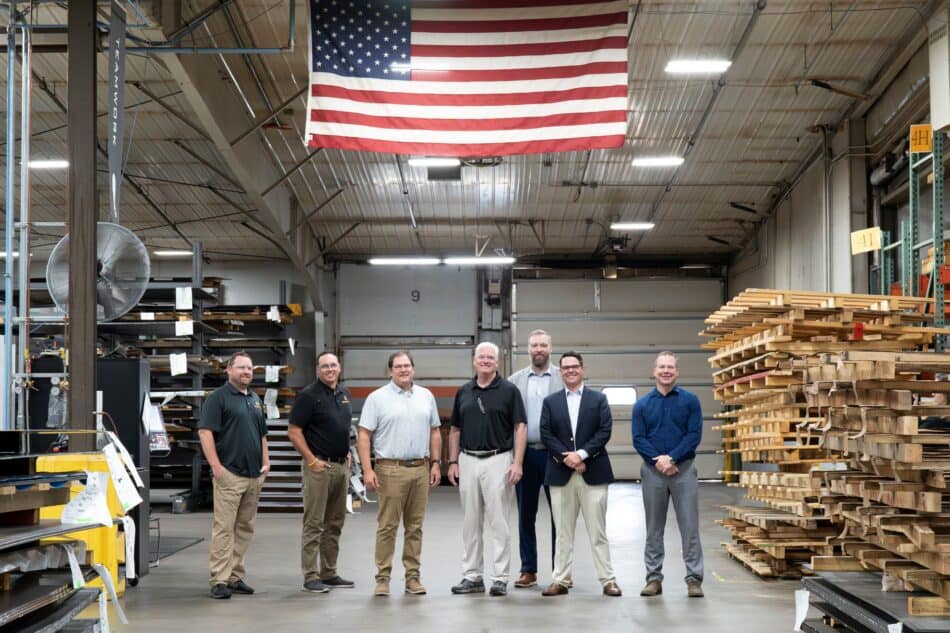
Princeton, MN – The National Association of Manufacturers hosted House Majority Whip Tom Emmer (R-MN) at Glenn Metalcraft for a facility tour on Monday to discuss the impact of the current regulatory burden manufacturers are facing across federal agencies.
Leaders also discussed manufacturers’ policy priorities as outlined in the latest version of “Competing to Win,” the NAM’s comprehensive blueprint to bolster manufacturers’ competitiveness.
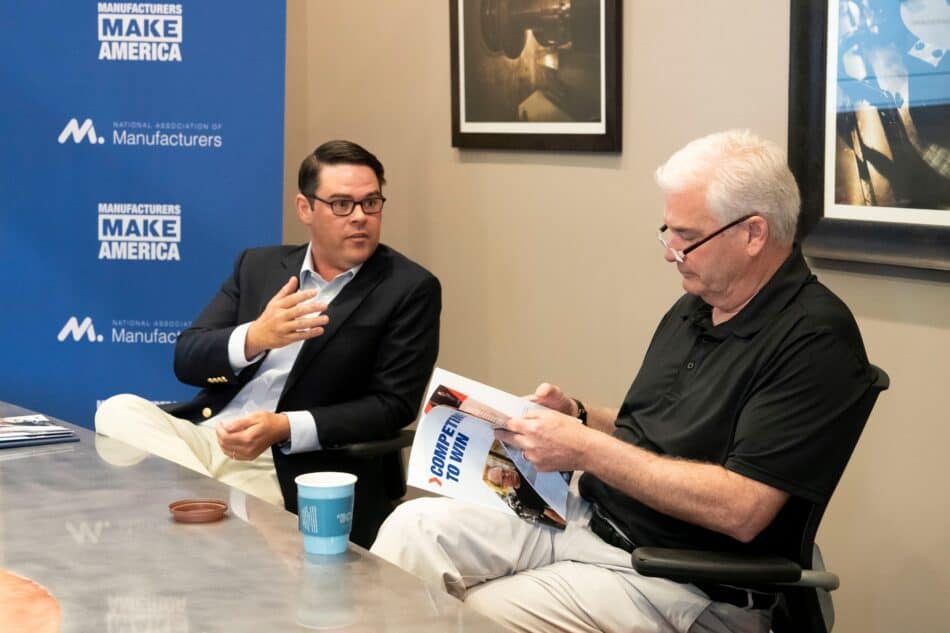
“My visit to Glenn Metalcraft demonstrated the need to address the regulatory state overwhelming manufacturers in the heartland. Small and medium-sized manufacturers are working hard to grow their businesses and increase compensation for employees, but those efforts are undermined by new regulations and the lack of permanent, competitive tax policies to promote research and development and capital investment,” said House Majority Whip Tom Emmer. “I want to thank the National Association of Manufacturers and Glenn Metalcraft for providing insight that will guide my work in Congress.”
“Manufacturers across the country are fighting to thrive under the weight of an increasing number of unbalanced and often unfeasible regulations from agencies across the federal government—all amid an uncertain economic environment,” said Glenn Metalcraft President and CEO Joe Glenn. “Glenn Metalcraft would like to thank Whip Emmer and the National Association of Manufacturers for giving us a voice and calling attention to this issue.”
“Manufacturers are struggling to navigate substantial regulations from Washington on top of the deluge of new laws from St. Paul. We appreciate Whip Emmer for expanding our state-level efforts on the national stage,” said Minnesota Chamber President and CEO Doug Loon. “The National Association of Manufacturers is an excellent partner in championing policies for businesses to grow and compete globally. We appreciate their efforts with the Biden administration and Congress to hold agencies accountable and deliver sensible regulations.”
“The barrage of federal regulations from Washington has created serious concern across our industry, with manufacturers reporting that it’s standing in the way of job creation, investment and wage growth. Manufacturers have made it clear that the administration’s regulatory agenda could easily derail manufacturing’s recent success. Glenn Metalcraft and so many others are forced to make tough decisions as agencies issue unbalanced regulations that threaten our sector’s ability to grow and compete,” said NAM President and CEO Jay Timmons. “The positive effects of tax reform, the Bipartisan Infrastructure Law and the CHIPS and Science Act are all being undermined by the growing regulatory burden, and I want to thank Whip Emmer for spotlighting this threat in his home state of Minnesota.”
Background: Recently, the NAM, members of the NAM’s Council of Manufacturing Associations and Conference of State Manufacturers Associations launched Manufacturers for Sensible Regulations, a coalition addressing the impact of the current regulatory onslaught coming from federal agencies.
According to the NAM’s Q2 2023 Manufacturers’ Outlook Survey, more than 63% of manufacturers report spending more than 2,000 hours per year complying with federal regulations, while more than 17% of manufacturers report spending more than 10,000 hours. The NAM survey also highlighted that only 67% of manufacturers are positive about their own company’s outlook, the lowest percentage since Q3 2019. It shows the consequences of regulations: If the regulatory burden on manufacturers decreased, 65% of manufacturers would purchase more capital equipment, and more than 46% would increase compensation.
-NAM-
The National Association of Manufacturers is the largest manufacturing association in the United States, representing small and large manufacturers in every industrial sector and in all 50 states. Manufacturing employs nearly 13 million men and women, contributes $2.90 trillion to the U.S. economy annually and accounts for 55% of private-sector research and development. The NAM is the powerful voice of the manufacturing community and the leading advocate for a policy agenda that helps manufacturers compete in the global economy and create jobs across the United States. For more information about the NAM or to follow us on Twitter and Facebook, please visit www.nam.org.
How Manufacturers Can Tap into a Large, Talented Workforce
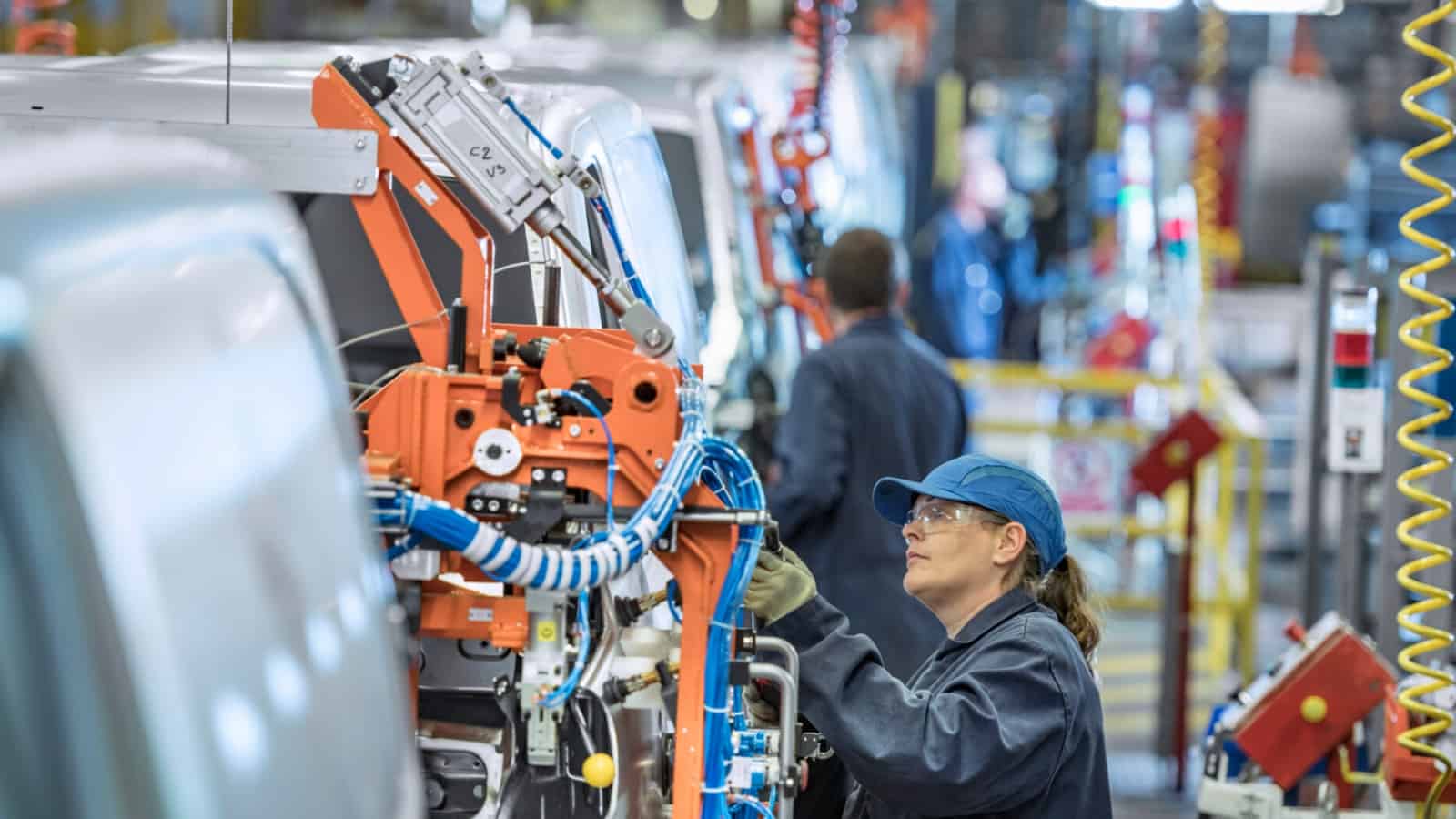
Discipline, reliability, a team-player mindset, leadership—manufacturers are looking for all these qualities in the talent they recruit. What if companies could tap into a population not only equipped with these skills but experienced in using them in high-stakes situations?
Well, the Manufacturing Institute—the workforce development and education affiliate of the NAM—has good news, if you haven’t heard it already: this population exists, and it’s military talent. Transitioning service members, veterans, National Guard members, reservists and military spouses have a wealth of skills and experience that translate easily into a manufacturing context.
So how can manufacturers reach these workers and make the best use of them? The MI recently convened both military and manufacturing leaders in Fayetteville, North Carolina, for its third Workforce Solution Series event, where they answered this question and offered a range of useful advice. Here are some of the highlights.
Generally speaking: Major General Eugene J. LeBoeuf, Deputy Commanding General, U.S. Army Reserve Command, highlighted the talents and skillsets that Army reservists can offer the manufacturing industry, including agility, a can-do attitude and a thorough grounding in engineering, logistics and mechatronics.
- With nearly 190,000 soldiers, the Army Reserve comprises much of the readiness force of the U.S. Army. Many of these reservists are underemployed or unemployed, which means they represent an opportunity for manufacturers.
- Manufacturers interested in hiring from this labor pool can partner with the Private Public Partnership Office, which connects companies with reservists at no cost.
Reaching military talent: Several panelists emphasized the importance of developing recruitment processes that encourage military talent to apply and interview for manufacturing jobs.
- “Make sure that the requirements you’re listing in your position descriptions are actually required. Do you really need someone to have a master’s degree to get the job done?” asked Rob Patton, vice president of Fayetteville Cumberland Economic Development Corporation.
- As a recently transitioned service member, James Goppert, HR business partner at WestRock, explained some of the challenges that military talent may face when entering the workforce. “Having to explain military skills and certifications to a civilian in an interview was strange. It would have been helpful to have someone on the other side who understood my experiences.”
Open to all possibilities: Jennifer Goodman, senior manager of talent initiatives at Coca-Cola Consolidated, drew on her experiences as a military spouse. “Military spouses are 92% women and have a 22% unemployment rate. That’s a huge labor pool that’s going underemployed or unemployed.”
- While relocation is often a concern for companies, Goodman points out that it does not have to be a disadvantage. “Think of manufacturers who have locations across the country. Maybe you can start a military spouse at one location and then move them to another. Or, if they’ve proven themselves after a few years, you could transition them to remote work.”
- “The benefits don’t stop with the one military spouse you hire,” she added. “We’re a very loyal community with great word of mouth and a larger referral network.”
The last word: “Don’t underestimate the value of an event like this Solution Series can have. You can take the information, energy and passion that you get from meeting with people who have the same goal of building a stronger economy and use it to power you forward,” said Nathan Huret, economic development director for Catawba County.
Learn more: To get started—or continue—with hiring military talent, check out the extensive resources of the MI’s Heroes MAKE America initiative, which prepares prospective military workers for new and rewarding careers in manufacturing.
Manufacturers: DOE Gas Stove Rules Revision Is Step in Right Direction
Washington, D.C. – Following the announcement that the U.S. Department of Energy has modified its proposed energy-efficiency rules for gas stoves to be less restrictive, National Association of Manufacturers Managing Vice President of Policy Chris Netram released the following statement:
“Manufacturers depend on regulatory clarity and certainty. Throughout the year, the Department of Energy has proposed an unprecedented slew of regulations, and many were aimed at home appliances. The DOE is now taking steps toward a solution that is less likely to raise production costs significantly for manufacturers, and less likely to reduce the available features, performance and affordability for consumers.
“Manufacturers remain committed to working with the DOE and all federal agencies to ensure that proposed rules and regulations are practical, feasible and environmentally sound without harming our ability to create well-paying jobs and investment in the United States.”
The NAM, along with members of the Manufacturers for Sensible Regulations, have been highlighting the negative impact of unbalanced regulations on manufacturers, noting the agency’s own data showed that 96% of existing gas stove models currently available would not comply.
Background: According to the NAM’s Q2 2023 Manufacturers’ Outlook Survey, more than 63% of manufacturers report spending more than 2,000 hours per year complying with federal regulations, while more than 17% of manufacturers report spending more than 10,000 hours. The NAM survey also stressed that only 67% of manufacturers are positive about their own company’s outlook, the lowest since Q3 2019. It shows the consequences of regulations: If the regulatory burden on manufacturers decreased, 65% of manufacturers would purchase more capital equipment, and more than 46% would increase compensation.
-NAM-
The National Association of Manufacturers is the largest manufacturing association in the United States, representing small and large manufacturers in every industrial sector and in all 50 states. Manufacturing employs nearly 13 million men and women, contributes $2.91 trillion to the U.S. economy annually and accounts for 55% of private-sector research and development. The NAM is the powerful voice of the manufacturing community and the leading advocate for a policy agenda that helps manufacturers compete in the global economy and create jobs across the United States. For more information about the NAM or to follow us on Twitter and Facebook, please visit www.nam.org.
Manufacturers to White House: Emissions Standards Adding Unnecessary Costs, May Stifle Innovation
Washington, D.C. – In response to the National Highway Traffic Safety Administration’s release of new Corporate Average Fuel Economy standards, National Association of Manufacturers President and CEO Jay Timmons released the following statement:
“Auto manufacturers have been making historic investments to ensure that electric vehicles will have a growing place on America’s roads. However, the NAM has concerns over the three different sets of standards governing light- and medium-duty vehicles. For instance, the Environmental Protection Agency’s proposed regulation on light- and medium-duty vehicles would require 67% of new manufactured vehicles to be battery electric by 2032 and is too aggressive.
“Federal and state agencies are promulgating competing rules, and the EPA’s rules, in particular, would make it costlier for manufacturers to make these vehicles and for consumers to purchase them. When you add the drastic need to build transmission lines to accommodate the demand for charging infrastructure and the challenge of obtaining critical minerals for batteries—many of which are extracted or processed in China—you create a scenario where an ambitious rule becomes a nearly impossible benchmark.
“Consumers and the industry need a more realistic path to reducing vehicle emissions. Federal and state agencies should draft rules that recognize the longer timeframe needed for our nation to build the charging infrastructure and a reliable supply chain for the critical minerals to make batteries to support more electric vehicles. Rules should also be structured to allow the industry additional time to make more electric vehicles available for consumers, and in the quantities needed to eventually achieve the administration’s goals. In addition, the federal government should not dictate the vehicle choices offered to consumers in meeting this goal. Plug-in hybrids, fuel cell electric vehicles and battery-electric cars can all help reduce vehicle emissions over time. The administration should allow the market and consumers to grow the number of electric vehicles, rather than depending on a single technology to meet this goal.
“Finally, these regulations should be harmonized to create a single unified standard for vehicle emissions, so manufacturers do not have to navigate three often-conflicting targets, which raise costs for manufacturers and consumers. The NAM looks forward to working with the administration to ensure vehicle standards meet consumer demand while providing manufacturers in the U.S. more opportunities to create jobs, develop new technologies and become even more globally competitive.”
Background: Recently, the NAM, members of the NAM’s Council of Manufacturing Associations and Conference of State Manufacturers Associations launched Manufacturers for Sensible Regulations, a coalition addressing the impact of the current regulatory onslaught coming from federal agencies.
According to the NAM’s Q2 2023 Manufacturers’ Outlook Survey, more than 63% of manufacturers report spending more than 2,000 hours per year complying with federal regulations, while more than 17% of manufacturers report spending more than 10,000 hours. The NAM survey also highlighted that only 67% of manufacturers are positive about their own company’s outlook, the lowest since Q3 2019. It shows the consequences of regulations: If the regulatory burden on manufacturers decreased, 65% of manufacturers would purchase more capital equipment, and more than 46% would increase compensation.
-NAM-
The National Association of Manufacturers is the largest manufacturing association in the United States, representing small and large manufacturers in every industrial sector and in all 50 states. Manufacturing employs nearly 13 million men and women, contributes $2.91 trillion to the U.S. economy annually and accounts for 55% of private-sector research and development. The NAM is the powerful voice of the manufacturing community and the leading advocate for a policy agenda that helps manufacturers compete in the global economy and create jobs across the United States. For more information about the NAM or to follow us on Twitter and Facebook, please visit www.nam.org.
CHIPS Office Has Unique Job to Do

A new Commerce Department office tasked with dispensing tens of billions of federal funding for domestic semiconductor manufacturing faces a challenging job, according to Roll Call.
What’s going on: “The experts at the CHIPS program office are charged with enticing the world’s largest chipmakers to the U.S. to fashion cutting-edge semiconductors used in weapons and supercomputers, as well as in more ordinary devices like thermostats. The goal is to break the dependence that many American manufacturers of missiles, spy satellites, telecom gear and medical devices have on suppliers primarily based in Taiwan and South Korea.”
- Congress allocated $52 billion for the effort last year.
Why it’s important: “Deploying taxpayer funds and the federal government’s power puts the department and the CHIPS office in a unique position of executing a novel industrial policy: one focused on both national security as well as economic well-being, and one that is expected to back manufacturing plants as well [as] research and development efforts.”
- In recent decades, the most successful U.S. industrial policy interventions have been similar to this one: funding for “high-risk, high-reward” R&D, according to a Peterson Institute study cited by Roll Call.
Making it count: Sens. Mark Warner (D-VA) and John Cornyn (R-TX) are adamant that the money must be doled out judiciously.
- “This is not an economic proposition,” Sen. Cornyn said. “It’s obviously important from an economic standpoint, but national security is the main reason why Sen. Warner and I undertook the legislation.”
Keen interest: The new office has received more than 400 statements of interest from semiconductor manufacturers. Preliminary applications will be accepted starting in September.
- Top chipmakers, including Intel and others, “have indicated they may invest as much as $400 billion in the U.S. provided they get some support from the government.”
- Six expert teams will review the applications and decide on the amounts each firm will receive. National security experts will weigh applications based on companies’ security measures and supply chain resiliency capabilities.
The NAM says: “Bolstering domestic chip manufacturing is a security and economic imperative for the U.S.,” NAM Director of Domestic Policy Julia Bogue said.
- “That’s why the NAM supported passage of the CHIPS and Science Act and continues to advocate for actions that will see the U.S. manufacturing more semiconductors.”
Manufacturers Should Be Cautiously Optimistic About the Economy

With a recession so far failing to materialize and inflation showing signs of weakening, manufacturers may begin to grow less wary about the economy. Recent data suggests that despite continuing risks, the bright spots may win the day.
Growth: GDP grew at a 2.4% annual rate in the second quarter of 2023. This number is notably higher than the 2.0% growth that analysts had expected for the quarter.
Employment: The overall employment rate sits at a very low 3.6%, defying expectations that the Fed’s inflation-reduction moves might create a surge in unemployment. Meanwhile, women in particular are enjoying an employment renaissance, including in manufacturing.
- Manufacturing had about 3,786,000 female employees in June, meaning that women made up 29.1% of the industry’s workforce, according to NAM Chief Economist Chad Moutray.
- That number is just slightly lower than the 3,788,000 found in May, which was the highest number of female workers in manufacturing since September 2009.
Wages: At the same time that overall economic strength is growing, the United States is also seeing positive signs in wage inequality, with average income for the lowest-earning 50% of Americans increasing faster than all other population groups except for the ultra-wealthy.
Inflation: Inflation has been a significant pain point for manufacturers, but it now seems to be moderating. According to the latest Consumer Price Index data, inflation rose 3% in June from a year earlier—a big drop from the whopping 9.1% annual inflation rate in June 2022.
The last word: “Real GDP data suggests that while demand and output in the manufacturing sector remain challenged, there are other pockets of strength in the larger macroeconomy,” said Moutray.
- “The Federal Reserve is working to navigate a ‘soft landing’—something that is possible, even as recession risks continue to permeate the conversation.”
Treasury to Revisit Foreign Tax Credit Changes

The U.S. Treasury is considering possible modifications to heavily criticized changes it made to foreign tax credit rules last year, POLITICO Pro (subscription) reports. While it does so, businesses can rely temporarily on the old rules.
The background: The U.S. tax code has long provided a foreign tax credit, which is intended to prevent double taxation for U.S. businesses that have foreign income subject to both U.S. and foreign income tax.
- The new rules were “finalized last year in response to the rise of digital service taxes in other countries. Businesses say the rules have gone too far.”
What’s going on: When the changes were made final, “the Treasury Department and the IRS received questions regarding the application of the … final regulations and requests to modify those regulations,” reads a notice from the IRS.
- While Treasury revisits the changes, businesses can use the old regulations for taxable years beginning on or after Dec. 28, 2021, and ending on or before Dec. 31, 2023.
- “[A]dditional temporary relief” may also be provided, according to the notice.
Why it’s important: In 2021, when the agency was considering the changes to the foreign tax credit regime, the NAM weighed in, warning that “proposals to limit the foreign tax credit should take into consideration the potential impact on the ability of manufacturers to effectively compete in a global market.”
- When Treasury ultimately released the final regulations, the NAM and a coalition of business groups called on it to withdraw and repropose the regulations, saying the rules would limit significantly the ability of manufacturers to claim the foreign tax credit.
Our take: “The NAM welcomes the decision by Treasury and the IRS to revisit the harmful changes made to the foreign tax credit rules, which tilted the playing field against globally engaged manufacturers,” said NAM Senior Director of Tax Policy David Eiselsberg.
- “Throughout the process, the NAM made it clear that any changes should not hurt the ability of manufacturers to effectively compete in today’s global economy.”
Overregulation Hurts Manufacturing

Manufacturing is booming in Ohio, as payrolls swell and economic output in the sector breaks records—but continued success could be in jeopardy if Washington continues its current regulatory onslaught, Ohio Manufacturers’ Association President Ryan Augsburger writes in a recent Cleveland Plain Dealer (subscription) op-ed.
What’s going on: “The latest survey conducted by the National Association of Manufacturers (NAM) finds that U.S. manufacturers’ concerns over federal regulations have reached a six-year high as nearly 100 new major regulations—from 30 federal agencies and offices—threaten jobs and investment,” Augsburger notes.
- In the next year, the Biden administration plans to issue even more regulations—approximately 3,200, including about 280 “major rules” and 1,326 “significant rules.”
- Meanwhile, “More than 63% of manufacturers are spending more than 2,000 hours per year complying with federal regulations, diverting resources that would otherwise go towards employee compensation, new hires and additional investment in U.S. facilities,” Augsburger writes, citing the NAM’s Q2 2023 Manufacturers’ Outlook Survey.
Why it’s important: All these rules will cost manufacturers dearly, according to Augsburger, who highlights a few particularly burdensome regulations, including:
- The Environmental Protection Agency’s proposed particulate matter rule, which is expected to cost “up to $197.4 billion in U.S. economic activity and endanger as many as 973,900 current U.S. jobs”;
- The Securities and Exchange Commission’s proposed climate-disclosure requirement, which the NAM recently advocated against in testimony before the House; and
- The Federal Trade Commission’s proposal to ban noncompete agreements, which 70% of manufacturers use to safeguard their intellectual property.
What can be done: The NAM and the Ohio Manufacturers’ Association have been in contact with the White House to coordinate the designation of a senior adviser, who will work to ensure that the regulations put forth align with President Biden’s promise to promote manufacturing.
The final say: “Time and again, we’ve seen regulatory uncertainty and over-regulation stymie new hiring and kill manufacturing jobs. When the U.S. does not manufacture, investment shifts to other countries that do not share our commitment to environmental stewardship and worker safety,” Augsburger said.
Wages Overtake Inflation

U.S. wages are now growing faster than inflation for the first time in two years, helping workers but muddling Federal Reserve attempts to lower price increases, according to The Wall Street Journal (subscription).
What’s going on: “Inflation-adjusted average hourly wages rose 1.2% in June from a year earlier, according to the Labor Department. That marked the second straight month of seasonally adjusted gains after two years when workers’ historically elevated raises were erased by price increases.”
- In manufacturing, wages are up 5.6% over a year ago, according to NAM Chief Economist Chad Moutray.
More to enjoy: “In addition to enjoying solid wage growth, Americans are taking comfort in slower price increases for everyday items—such as gasoline and groceries—that have the biggest influence on their perception of inflation.”
- However … Adjusted for inflation, pay growth “remains below the trend in the five years before the pandemic,” one source told the Journal.
Why it’s important: If wages continue to surpass cost increases, they could encourage more spending, which could help the economy avoid a recession.
- In recent months, Journal-polled economists have been less confident that there will be a recession in the next 12 months. However, Americans in general continue to expect a recession, according to the article.
The Fed’s role: The Federal Reserve has increased the benchmark interest rate 10 times in the past 16 months and has indicated it will raise it again later this month.
- “‘It’s great to see wage increases, particularly for people at the lower end of the income spectrum,’ [Federal Reserve Chairman Jerome] Powell said [in June]. ‘But we want that as part of the process of getting inflation back down to 2%, which benefits everyone.’”
The last word: “With manufacturers continuing to cite workforce challenges, even in a cooling labor market, wage growth remains significant,” Moutray said. “The average manufacturer pays $26.41 [an hour] nationally for production and nonsupervisory workers, up 5.6% from one year ago, a very solid rate. Relief on growth in consumer inflation will allow those employees to realize the purchasing power of those dollars more fully.”
Further resources: For more workforce solutions and insights, check out the resources of the Manufacturing Institute, the NAM’s 501(c)3 nonprofit workforce development and education affiliate.