Lucid Revs Up the Domestic Graphite Supply Chain
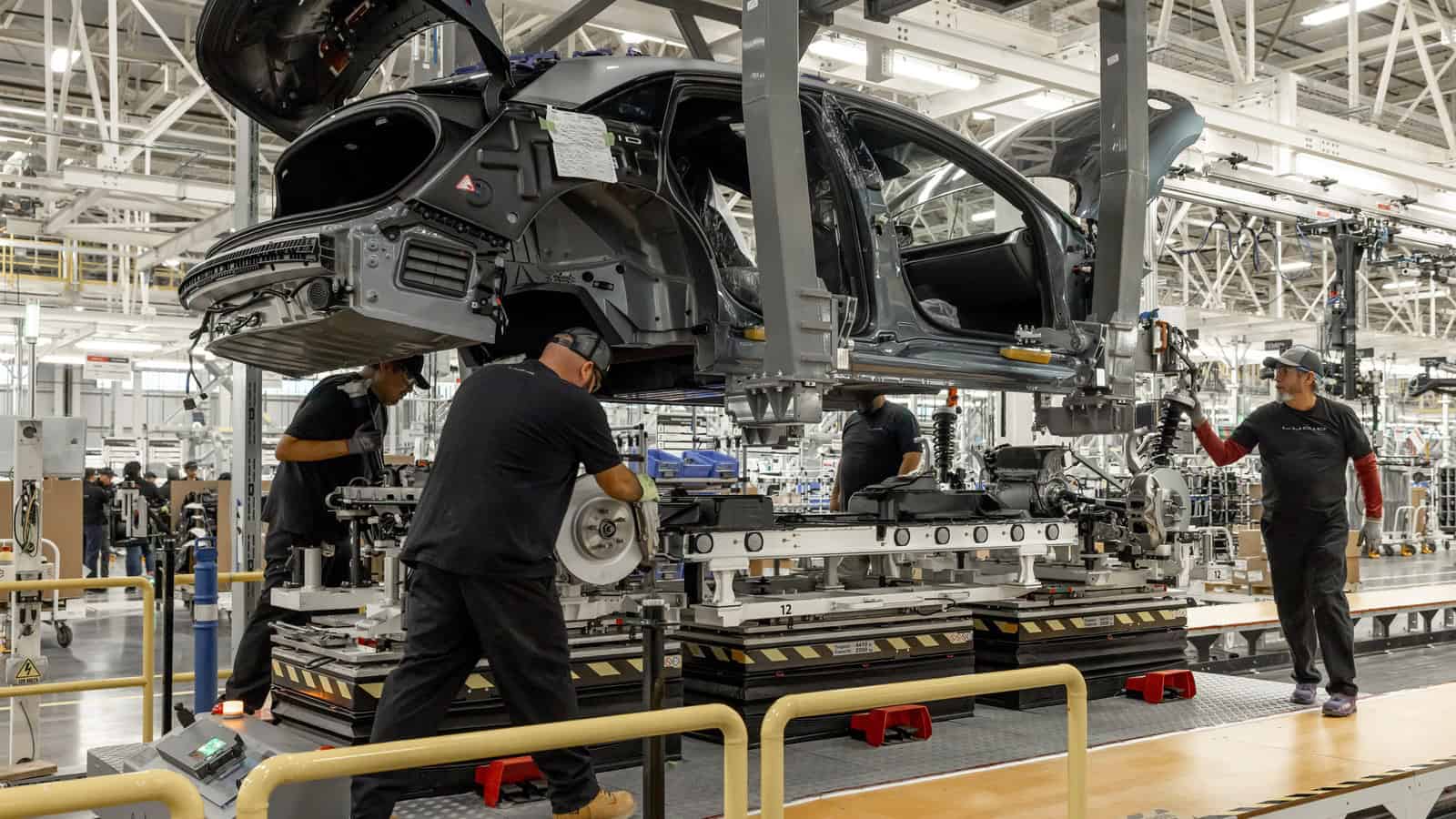
Lucid has already made one of the most energy-efficient cars on the market. Now the company is on a mission to strengthen supply chains for the critical materials powering its award-winning vehicles.
Supply chain warrior: The California-based electric vehicle manufacturer—whose 2025 Air Pure sedan is the first EV to achieve a milestone 5 miles of range per kilowatt of energy—recently reached an agreement with Alaskan mining exploration company Graphite One to purchase synthetic graphite for its vehicles’ battery packs.
- The deal, which goes into effect in 2028, is a crucial first step toward cementing a domestic supply chain of graphite, a mineral that makes up about half of every EV’s battery composition. EV batteries require both synthetic and natural graphite.
- “Today 100% of the graphite for batteries assembled in the U.S. comes from overseas,” said Lucid Motors Supply Chain Group Manager of Battery Raw Materials Michael Parton. “Building a robust domestic supply chain ensures the United States and Lucid will maintain technology leadership in this global race.”
Pandemic lesson: The global pandemic revealed the downside of depending on other nations for critical materials, and the importance of cultivating domestic sources instead.
- In 2020, “every company experienced major challenges when it came to shutdowns and global trade,” Parton said. “Having a domestic supply reduces production risk, accelerates response time and agility and lowers the need to carry higher levels of inventory.”
A midstream gap: When it comes to EV batteries and their supply chains, “much of the discussion is on localizing the bookends of the supply chain, the downstream battery production and the upstream mineral extraction,” Parton told us.
- Less discussed is the “midstream environment,” which comprises the precursor cathode active materials (P-CAM) and cathode active materials (CAM) stages. Materials used during these phases in the battery production process include critical minerals such as lithium, nickel and cobalt.
- The P-CAM market has been a difficult one to navigate, Parton added. For years, the P-CAM stage has been outsourced to countries with more cost-effective production. The problem: These countries also have less stringent environmental regulations than the U.S.
- “There’s limited investment announced [in the U.S.] in the refining and chemical conversion process at these stages, but it’s where the real need is,” Parton continued. “To promote localized sources of supply for mined and recycled minerals, there needs to be a domestic option for both P-CAM and CAM.”
A bipartisan issue: Lucid’s advocacy for a strong domestic supply chain has won bipartisan support in Congress.
- “There’s something in it for everyone when it comes to efficiency,” said Lucid Motors Senior Manager of International and Trade Policy Emily Patt, citing the environmental and self-sufficiency benefits of a resilient domestic supply chain.
What’s next: Lucid is expanding its vehicle lineup beyond the Air and the vehicle’s four trim levels.
- By the end of 2024, the company is scheduled to start production of the seven-passenger Lucid Gravity. The company has also teased an upcoming midsize platform, which is expected to start production in late 2026.
The grand vision: “The pursuit of efficiency drives Lucid as a company,” Patt said. “We’re not just making zero-emission cars; we’re committed to making the best use of the world’s resources to maximize the benefits for electrification and the planet.”
Manufacturer Sentiment Declines

Manufacturer sentiment fell in the third quarter of this year, according to the NAM’s Q3 2024 Manufacturers’ Outlook Survey, out Wednesday.
What’s going on: Results of the survey, which was conducted Sept. 5–20, reflect “preelection uncertainty,” NAM President and CEO Jay Timmons said—but also larger economic concerns.
- “The good news is that there is something we can do about it,” said Timmons. “We will work with lawmakers from both parties to halt the looming tax increases in 2025; address the risk of higher tariffs; restore balance to regulations; achieve permitting and energy security; and ease labor shortages and supply chain disruptions.”
Key findings: Notable data points from the survey include the following:
- Some 62.9% of respondents reported feeling either somewhat or very positive about their business’s outlook, a decline from 71.9% in Q2.
- A weaker domestic economy was the top business challenge for those surveyed, with 68.4% of respondents citing it.
- Nearly nine out of 10 manufacturers surveyed agreed that Congress should act before the end of 2025 to prevent scheduled tax increases on manufacturers.
- The overwhelming majority—92.3%—said the corporate tax rate should remain at or below 21%, with more than 71% saying a higher rate would have a negative impact on their businesses.
- More than 72% said they support congressional action to lower health care costs through the reform of pharmacy benefit managers.
The last word: “When policymakers take action to create a more competitive business climate for manufacturers, we can sustain America’s manufacturing resurgence—and strengthen our can-do spirit,” Timmons said.
- “This administration and Congress—and the next administration and Congress—should take this to heart, put aside politics, personality and process and focus on the right policies to strengthen the foundation of the American economy.”
NAM Emphasizes USMCA, Protecting Investors in Mexico Meetings

In high-level meetings with government, manufacturing and trade group leaders held in Mexico last week, the NAM hammered home a key message: For North American manufacturing to remain globally competitive, Mexico must protect investor holdings in the country.
What’s going on: During a jam-packed three-day visit to Mexico City, NAM President and CEO Jay Timmons and an NAM contingent met with top officials in the new Sheinbaum administration, as well as leadership at multiple agencies and associations.
- These included newly appointed Deputy Trade Minister Luis Rosendo Gutiérrez, the Business Coordinating Council (CCE), the Confederation of Industrial Chambers of Mexico (CONCAMIN), the Mexico Business Council (CMN), the National Council of the Export Manufacturing Industry (INDEX) and others.
What they said: The NAM’s main message at each gathering was the same: Companies investing in Mexico need assurance that their portfolios will be protected regardless of the fate of proposed judicial reforms in the country.
- The NAM also underscored the importance of the U.S.–Mexico–Canada Agreement, which is due for review in 2026, and the necessity of ensuring that the deal is upheld for all three parties.
- If its terms are respected, USMCA could help North American manufacturing outcompete China.
On China: This week, just days after his office’s meeting with the NAM, Gutiérrez announced that the Sheinbaum administration will seek U.S. manufacturers’ help to reshore—mainly from China—the production of some critical technologies (The Wall Street Journal, subscription).
- “We want to focus on supporting our domestic supply chains,” he told the Journal, adding that talks with U.S. companies are still in the informal stage.
The NAM says: “Manufacturing is at the heart of the USMCA,” said NAM Vice President of International Policy Andrea Durkin, who was part of the NAM group on the ground in Mexico. “The NAM intends to work to ensure that the agreement strengthens the competitiveness of manufacturers.”
New DOD Loan to Fund “Critical Technologies” Manufacturing

The Defense Department’s Office of Strategic Capital is now accepting applications for flexible direct loans to build, expand and/or modernize “critical technologies” facilities (Federal Register).
- It’s also seeking input from companies and trade associations on the Defense Department’s loan program, via a Request for Information open through Oct. 22 (Federal Register).
What’s going on: The OSC’s credit program, launched Sept. 30, aims “to attract and scale private capital in industries and technologies that are critical to America’s national and economic security,” according to the Defense Department. This is part one of the application process.
- The financing is geared toward manufacturers that must spend significantly on industrial or specialty equipment to create new assembly lines in existing facilities.
- The money is also intended to help them cover “soft” expenses, such as factory preparation and installation, associated with critical technology projects.
Why it’s important: “The funding from this program could benefit manufacturers of all sizes that are working to expand their businesses and product lines in critical areas of the economy,” said NAM Director of Energy and Natural Resources Policy Mike Davin.
- The OSC loans offer flexible terms, a U.S. Treasury-comparable interest rate, long repayment periods and deferred payments.
Who’s eligible: Manufacturers within the 31 “Covered Technology Categories”— which include advanced manufacturing, cybersecurity, battery storage and spacecraft—are encouraged to apply.
- There is no company-size or employee-number threshold or limit, and manufacturers with existing federal grants are eligible.
J&J: Price Controls, PBMs Problematic

Drug price controls will “chill” critical innovation in pharmaceutical manufacturing and do nothing to address the underlying causes of high medication costs, Johnson & Johnson leaders said recently.
What’s going on: J&J Chairman and CEO Joaquin Duato and Executive Vice President and Chief Financial Officer Joseph Wolk told Bloomberg TV earlier this month that the pharmaceutical price controls mandated by the 2022 Inflation Reduction Act do a disservice to patients everywhere.
- “[T]he Inflation Reduction Act … is something that is misguided, and it’s going to chill innovation,” Duato told Bloomberg’s David Gura earlier this month. “When you chill innovation on investment in [research and development], then you have [fewer] cures.”
- The IRA gave the federal government authority to set prices for certain prescription medications in Medicare. In August, the Biden administration released the first 10 Medicare prescription drugs subject to those price controls, which go into effect in 2026.
- “I’d like to see a much more fact-based dialogue around the topic of drug pricing,” Wolk added. “About six years ago, Johnson & Johnson … was paying about 25% in discounts and rebates off [the] list price [of medications]. Today, that [figure is] 60%, yet the patients aren’t receiving the benefit of those discounts.”
The background: Pharmacy benefit managers are supposed to pass the manufacturer discounts they receive on to health plans and patients—but instead, they frequently pocket the discounts, the NAM has told Congress on several occasions.
- That’s one of several problematic business practices Congress must end by enacting comprehensive PBM reform, the NAM has said.
- Such legislation would do far more to benefit consumers than capping drug prices.
Cause and effect: The result of price controls will be fewer breakthrough cures and treatments for patients suffering from various illnesses, J&J told Bloomberg TV.
- “The number of medicines that will be there will be [lower], just because [fewer] investors would be putting money into developing new medicines,” Duato continued. “It’s going to be less attractive for investors to put money there.”
- And as Wolk said in another Bloomberg segment: “Investing in R&D, prioritizing R&D years in advance for [a drug] that may happen 10 years down the road is critically important.”
What should be done: If Congress truly wants to help patients with the cost of medications, it must focus on “the middlemen who are really driving up prices: pharmacy benefit managers,” NAM President and CEO Jay Timmons said recently.
NAM-Supported Bills Clear House Committee

The NAM this week advocated the passage of two pieces of manufacturing-critical legislation, successfully driving the agenda of a Wednesday House Energy and Commerce Committee markup.
What’s going on: The committee—with the NAM’s strong support—approved two bills that address longstanding manufacturing priorities:
- A congressional resolution disapproving of the Environmental Protection Agency’s harmful PM2.5 rule
- A bill instituting important pharmacy benefit manager reforms
Reversing an unworkable PM2.5 standard: The EPA announced a new, more restrictive particulate matter standard in February, reducing allowable levels from 12 micrograms per cubic meter of air to 9 micrograms—despite a standard of 9 being “essentially background levels in some of the country,” as the NAM has pointed out.
- “Manufacturers have sharply reduced particulate matter emissions, or PM2.5; as a result, industry in the United States has some of the cleanest and most efficient operations in the world,” NAM Vice President of Domestic Policy Chris Phalen told the committee.
- “Now, the vast majority of emissions are from sources well outside of our control, with fires, dirt roads and other nonpoint sources accounting for 84% of PM2.5 emissions,” Phalen continued. “[T]he EPA’s rule will make it more difficult for states to issue permits for the construction of new facilities or expansions of existing factories.”
- The committee’s PM2.5 resolution, offered under the Congressional Review Act, seeks to overturn the EPA’s unworkable standard.
Reforming PBMs: PBMs are unregulated middlemen whose business practices drive up health care costs for manufacturers and manufacturing workers.
- “By applying upward pressure to list prices that dictate what patients pay at the pharmacy counter, pocketing manufacturer rebates and failing to provide an appropriate level of transparency about their business practices, PBMs increase health care costs at the expense of all patients in America,” NAM Vice President of Domestic Policy Charles Crain said.
- Provisions in the NAM-supported Telehealth Modernization Act would increase transparency into PBMs’ business practices and delink their compensation from medicines’ list prices.
The last word: “Manufacturers commend the Energy and Commerce Committee for approving these important bills, which will reduce costs and enhance growth at manufacturers across the country—allowing our industry to continue to create jobs here at home and drive U.S. competitiveness on the world stage,” said NAM Managing Vice President of Policy Chris Netram.
Rep. Garbarino, NAM Talk CIRCIA Flaws
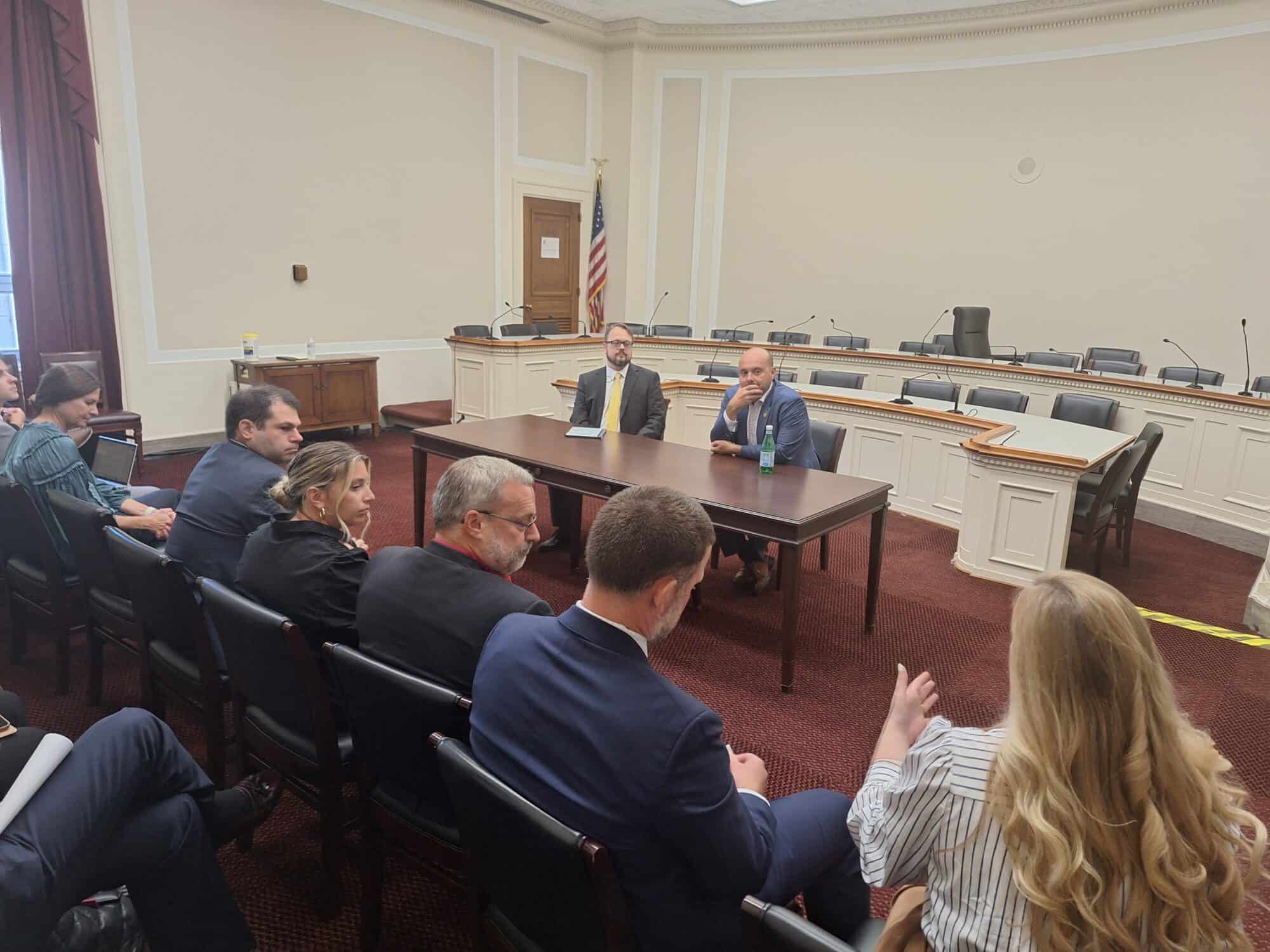
A draft Department of Homeland Security rule requiring that certain sectors expedite cyber-incident reporting has several shortcomings that must be addressed before the rule becomes final in the fall of 2025, the NAM told Rep. Andrew Garbarino (R-NY) in a meeting this week.
What’s going on: Rep. Garbarino, chair of the House Homeland Security Subcommittee on Cybersecurity and Infrastructure Protection, met with manufacturers and the NAM Technology Policy Committee Tuesday to talk cybersecurity issues.
- Much of the discussion focused on draft rulemaking published in April by the DHS’s Cybersecurity and Infrastructure Security Agency. It would require “covered entities” in “critical infrastructure sector[s]” to report any major cybersecurity incidents to CISA within 72 hours.
- Under the Cybersecurity Incident Reporting for Critical Infrastructure Act, CISA must finalize the rule by October 2025.
Why it’s a problem: The NAM agrees with the concerns Rep. Garbarino raised with CISA, including:
- The burden associated with imposing onerous reporting mandates on companies recovering from cyberattacks;
- An overbroad scope, which forces into compliance both organizations that are not truly “critical infrastructure” and those that are too small to have the resources needed to complete the required actions;
- An overbroad definition of incidents requiring reporting;
- An excessive amount of required information;
- An unreasonably high cost of compliance and the diversion of resources away from cyber-incident response; and
- The risk that the proposed rule will jeopardize CISA’s role as a trusted partner of industry.
NAM in action: The NAM submitted comments in response to CISA’s proposal earlier this year outlining these concerns, as well as calling for a reduction in both the number of entities required to file incident notifications and the number of incidents they have to report.
The NAM says: “CISA needs to significantly rethink its approach to CIRCIA’s implementation,” said NAM Senior Director of Technology Policy Franck Journoud.
- “The proposed rule requires far too much information about far too many incidents from far too many companies. CISA should not mandate that companies under attack from hackers divert precious security resources to generate mountains of incident data that CISA will not have the means to process or act upon.”
Take precautions: If you are looking to strengthen your company’s cyber protections, check out NAM Cyber Cover, an affordable, broad security program for NAM members that provides proactive monitoring with automated alerts at no extra cost.
NAM Launches Ad Campaign for PBM Reform

The NAM has launched a new wave of ads in D.C. and nine states, extending its seven-figure campaign urging policymakers to reign in pharmacy benefit managers, underregulated middlemen who drive up the costs of prescription medications for manufacturers and manufacturing workers.
A quick refresher: PBMs sit in the middle of the health care industry, negotiating with employer health plans, insurers, biopharmaceutical manufacturers, pharmacies and other players to determine what prescriptions employees can access and what they pay for them. While their job is ostensibly to reduce the costs of medicines, often they do the exact opposite.
- PBMs have been found to steer patients toward pricier options, inflict steep mark-ups and hidden fees and even pocket large portions of the rebates that biopharmaceutical manufacturers intend for American workers and their families.
NAM in action: The NAM has been a staunch voice supporting PBM reform on Capitol Hill, recently laying out manufacturers’ concerns for the House Committee on Oversight and Accountability.
- The committee conducted its third hearing on PBM overreach in July, when it also released a highly critical report on PBMs that echoed many of the NAM’s concerns.
- In addition, the NAM is supporting several key measures to increase oversight of PBMs’ business models and reform their pricing strategies, including the DRUG Act and the PBM transparency provisions in the Lower Costs, More Transparency Act.
What Congress should do: The NAM is advocating for three major reforms to the PBM system, including:
- Increasing transparency in PBMs’ business models, including how their compensation influences health care decisions and how their policies dictate a medicine’s cost and formulary placement;
- Rebate pass-through, which will ensure health care savings are passed directly to manufacturers and their workers rather than being pocketed by PBMs; and
- Delinking PBMs’ compensation from a medicine’s list price, removing their incentive to put upward pressure on list prices to maximize their own profits.
Benefits for all: The NAM is calling on Congress to enact these reforms in the commercial insurance market, not just in government programs like Medicare and Medicaid, so that all Americans can enjoy lower-cost health care benefits.
What to watch: The NAM is calling on Congress to act on this issue during the lame-duck session following the election.
Click Bond Brings AI into Supply Chains

Manufacturers have always been on the cutting edge of tech development and integration—and it’s no different with artificial intelligence. Today, Click Bond, Inc., a manufacturer of adhesive-bonded fasteners for aerospace and industrial use, is finding applications for AI in the supply chain.
The challenge: Supply chain management is an inexact art, according to Click Bond Chief Executive and NAM SMM Vice Chair Karl Hutter, and technology like AI has the capacity to strengthen operations.
- “There are many spots … [where] a guess has to be taken or padding has to be put in because of the known unreliability of data,” said Hutter. “This is where technology has a big role to play.”
Improving efficiency: AI can break through these challenges, separating signal from “noise” and avoiding presumptions that can cause inefficiencies.
- “We need to have a better sense of the supply, the demand, the schedule,” Hutter said. “This is where those kinds of tools can fit in—so we as a supplier can optimize our production runs, meet our customers’ needs efficiently and be responsive to just-in-time supply.”
- “AI does that key job of finding what matters and correlating historic data and making predictions in a way a human can’t,” he continued.
Translating data: Because there is no single, industry-wide method for formatting data, it can be difficult for manufacturers to combine their knowledge. Happily, AI can help.
- “My data tables might look different than my customers’ and suppliers’,” said Hutter. “AI can understand the rules of data structure, and that of our customers and suppliers, and it can be a translator between them.”
- For example, Click Bond has supplied products to the Boeing Company for almost 40 years, contributing to every type of product made across its military, civil and space divisions. AI stands to take that collaboration to an even higher level.
Enhancing production: AI tools also help manufacturers during the production process by translating different kinds of data and pointing toward solutions.
- “[AI’s translation capability] applies to the technical data environment, too—how you go from a model and simulation to a produced part,” said Hutter. “It’s the same thing. How do you do technical data interchange confidently and securely? This technology [can help].”
Advice for other manufacturers: Hutter recently took part in a workshop on these tools, and he encourages manufacturers who are curious about the technology to find similar opportunities.
- “There is nothing that makes these concepts come to life [like] getting your hands on them,” said Hutter. “You can sit there and furrow your brow and read a bunch of articles, but the best thing to do is to find one of the many opportunities for some hands-on education—and you’ll start to understand what these tools can do.”
NAM Leads Effort to Reform PBMs

Middlemen created to manage the price of prescription drugs are instead driving up health care costs for manufacturers and manufacturing workers, the NAM told the House Committee on Oversight and Accountability on Tuesday, the same day the committee released a report on pharmacy benefit managers’ practices and held a hearing on the matter.
What’s going on: “PBMs’ business models have the direct effect of increasing health care costs at the expense of manufacturers and manufacturing workers,” NAM Vice President of Domestic Policy Charles Crain said in advance of the hearing, the latest in a series examining PBM practices.
Crain told lawmakers PBM reform legislation should include:
- “Increased transparency into PBMs’ business models and the many factors that contribute to a drug’s costs, formulary placement and the PBMs’ compensation;
- Rebate passthrough, which will ensure 100% of negotiated pharmaceutical savings are passed from the PBM to the health plan sponsor and workers; and
- Delinking of PBM compensation from the list price of medication.”
Report highlights: The committee’s report, the culmination of a 16-month investigation, is in line with the NAM’s longstanding advocacy. The report found that PBMs:
- Drive increased drug prices, which inflate PBM profits;
- Extract high rebates from biopharmaceutical manufacturers, often pocketing a significant portion of any savings rather than reducing costs for patients;
- Dictate whether and how medicines appear on formularies, which determine insurance companies’ coverage decisions and patients’ out-of-pocket costs;
- Steer patients toward drugs based on PBMs’ profit margins rather than patient costs; and
- Operate without sufficient transparency into their business practices.
What it all means: The committee “identified numerous instances where the federal government, states and private payers have found PBMs to have utilized opaque pricing and utilization schemes to overcharge plans and payers by hundreds of millions of dollars,” the report states.
- The report indicates that the present role of PBMs in prescription drug markets is failing and requires change, something the NAM has long advocated. “Congress and states must implement legislative reforms to increase the transparency of the PBM market and ensure patients are placed at the center of our health care system, rather than PBMs’ profits.”
The last word: “Manufacturers provide health care benefits so they can effectively attract and retain employees, to maintain a healthy and productive workforce and because they believe it is the right thing to do—but PBMs are a meaningful cause of the skyrocketing costs of health care,” Crain said.
- “Congress must enact reforms to the PBM system so that employers can negotiate, compete and achieve health care savings for their workers.”