
Facility Tours
Facility visits for members of Congress and their staff build relationships, show how policy plays out on the shopfloor and increase support for the agenda driving America's competitiveness. This guide walks you through planning, hosting and following up.
Showcase Your Facility, Build Relationships
Conducting manufacturing facility visits for members of Congress and their staff is a powerful way to build relationships for your company and increase support for an agenda that is driving America’s competitiveness. Facility tours give lawmakers the chance to meet their constituents, hear manufacturers’ success stories and challenges, and see first-hand how their policies work in real life.
These visits can also provide excellent press opportunities for your company — and the member of Congress will remember your role in the community and your hospitality. This guide will help you plan, prepare for and conduct a successful facility tour.
Manufacturers are driving our competitiveness agenda, and it’s the NAM’s job to support you along the way. We encourage you to contact us with any thoughts or questions on hosting a successful tour.
What a Visit Accomplishes
- Lawmakers meet the constituents their policies affect — on the shopfloor.
- Your employees see their work represented in the policy debate.
- Local press covers a positive story about your company and the industry.
- A relationship with the member and district staff that outlasts the visit.
Facility Tour Checklist
Seven phases, from the first invitation to the follow-up note. Every item is explained in the step-by-step guide below.
Setting up the facility tour
- Decide who to invite.
- Send the invitation.
- Track and confirm RSVPs and follow up as necessary.
- Coordinate the length of the event with congressional staff.
- Distribute a memo of the visit to employees.
Planning for the media
- Clear media participation with the congressional office.
- Draft a media advisory, if desired.
- Prepare an area for the news media.
- Prepare a message from the CEO.
Organizing the facility tour
- Put together an internal planning group.
- Decide who will meet with the legislator.
- Craft the lawmaker’s introduction.
- Establish the look and feel of the welcome area.
- Reserve a room for the guest to address your staff.
- Create name badges for guest and staff.
- Determine required safety equipment.
- Brief your tour guide(s).
- Craft a tour script.
- Designate a photographer.
- Prepare an information package.
- Research the lawmaker’s background.
- Research talking points, your company story, current events and legislative asks.
- Prepare a map of the tour route.
- Write out questions for the lawmaker.
Preparing displays and literature
- Determine a product display, if applicable.
- Gather company literature and background materials.
- Display NAM materials, if appropriate.
- Provide a list of attendees’ names and companies.
Preparing for arrival
- Designate a note taker.
- Determine what machinery will be in operation.
- Provide directions to the facility.
- Welcome your guest on arrival.
Conducting the tour
- Provide safety equipment to tour guests.
- Show the lawmaker how your production line works.
- Let your visitor be an active participant.
- Work in your talking points.
Following up after the tour
- Send a thank-you note.
- Thank your own staff.
- Send photos to the member’s office.
- Tell the NAM about the tour.
- Provide press coverage.
- Recap the tour on social media.
- Keep the conversation going.
The Step-by-Step Guide
Every checklist item, explained.
Setting up the facility tour
Decide who to invite. Is this a visit for members of Congress, congressional staff or both? Consider starting with a local or state staff person and working up to a visit from the elected official. A staff-level visit can be just as important as a member visit.
Send the invitation. Send a letter to the office explaining who you are and what you would like to showcase (see the sample invitation below). Include directions to the facility and a requested amount of time. Be flexible and offer several dates. Once a date is set, be prepared for last-minute schedule changes. The ideal time to schedule a tour is during a congressional recess: Martin Luther King Jr. Day (mid-January), Presidents’ Day (mid-February), Easter/Passover (March or April), Memorial Day (late May), Independence Day (July 4), the August recess (through the week after Labor Day), Rosh Hashanah and Yom Kippur (late September or early October), Columbus Day (early October), Veterans Day (early November), Thanksgiving and late December through early January.
Track and confirm RSVPs and follow up as necessary. Call the scheduler to make sure the invitation was received, and follow up if you have not heard back. Don’t be discouraged if a visit is not scheduled immediately — be flexible and persistent. Invite the member to drop by for a tour and a cup of coffee the next time he or she passes through town. Leave the date open-ended and the office may take you up on it.
Coordinate the length of the event with congressional staff. Once the scheduler confirms, work out how much time the member has. The tour itself should last approximately 30 to 60 minutes.
Distribute a memo of the visit to employees. Share the news of the planned visit and encourage employees to attend.
Planning for the media
Clear media participation with the congressional office. Once the office approves media attendance, contact your local outlets — large daily newspapers as well as local weeklies. Offer to send your own report and photos.
Draft a media advisory, if desired. Include the date, time, specific location, parking and any lighting requirements. Note whether the tour itself is open to press and whether the member will take questions afterward. Email the draft to the member’s local press officer for approval, then send the advisory with a press kit and company information to everyone on your press list (see the sample media advisory below).
Prepare an area for the news media. Arrange a space outside the facility for presentations, a ribbon-cutting if appropriate and informal discussions with reporters — ideally in front of your company’s signage or logo.
Prepare a message from the CEO. Draft an op-ed or letter to the editor from your CEO on an issue related to the visit. Better yet, arrange a meeting with the newspaper’s editorial board, and reach out to local radio stations for an interview.
Organizing the facility tour
Put together an internal planning group. The group is responsible for the logistics of the tour.
Decide who will meet with the legislator. Don’t be concerned with party affiliation. Your intent is to develop a good rapport with public officials who may influence the future of your company and your industry.
Craft the lawmaker’s introduction. Decide who will provide remarks and the topics you want to cover in welcoming the elected official.
Establish the look and feel of the welcome area. Decide how the entrance should appear when your guest arrives — signage, displays and where they will be set up.
Reserve a room for the guest to address your staff. Set up a podium and microphone if necessary, arrange seating and decide whether refreshments will be served.
Create name badges for guest and staff. For your guest, any accompanying staff and your own employees.
Determine required safety equipment. Helmets, goggles, gloves — whatever your facility requires.
Brief your tour guide(s). What machinery will be shown, who the guest will meet and where, and how long the tour runs.
Craft a tour script. Outline what you hope to cover during the tour.
Designate a photographer. Photos publicize the event and help the member remember the visit.
Prepare an information package. Materials that emphasize the benefits good manufacturing jobs bring to workers, suppliers and your area’s economy, plus a one-pager on your company’s characteristics and accomplishments.
Research the lawmaker’s background. Biography, committee and subcommittee assignments, and voting record — identify areas of common interest and match your agenda with theirs.
Research talking points, your company story, current events and legislative asks. Share personal stories and examples of how regulations and policies affect manufacturing and your workers. Don’t just talk economic data.
Prepare a map of the tour route. Note areas containing proprietary information or safety hazards; those are off-limits to the legislator, staff and press.
Write out questions for the lawmaker. On regulations and policies currently in effect, proposed legislation, manufacturing in general and more.
Preparing displays and literature
Determine a product display, if applicable. Proudly display your product. A special exhibit, promotional materials and company literature enhance the visit.
Gather company literature and background materials. Company history, philanthropic efforts, employee team news and more — the story of your business.
Display NAM materials, if appropriate. NAM policy materials and literature serve as a reminder of your commitment to manufacturing.
Provide a list of attendees’ names and companies. Great for networking and putting names with faces.
Preparing for arrival
Designate a note taker. Assign a team member to capture the discussion.
Determine what machinery will be in operation. Especially if you plan to highlight a particular piece of equipment.
Provide directions to the facility. Make sure your guest knows which entrance to use, and reserve a parking space.
Welcome your guest on arrival. Greet officials at the designated area, provide an umbrella if it is raining, hand out name badges and prepare guests for any security screening.
Conducting the tour
Provide safety equipment to tour guests. A helmet, safety goggles, gloves — whatever the tour requires.
Show the lawmaker how your production line works. How your machinery works, how items come together, the technologies in use and your workers’ productivity.
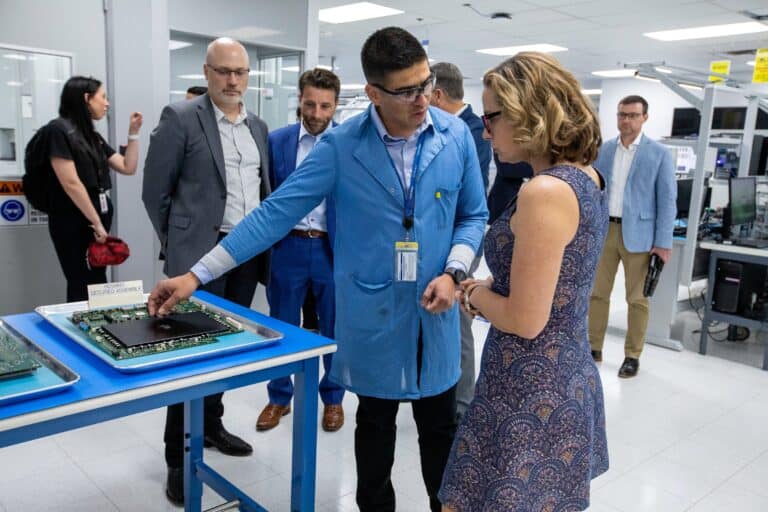
Let your visitor be an active participant. If feasible without shutting down production, offer the member a chance to address your workforce, and have him or her do something physical — shake hands, run a machine, examine your product, participate in a ribbon-cutting. These are prime photo opportunities.
Work in your talking points. You have an important story to tell, particularly about your company’s impact on the district. Cover your success stories and community contributions, the products you make and where they are sold (including exports), the jobs and training programs you support, payroll and benefits (and how each wage dollar multiplies in the community), trade facts and your company’s tax contributions and local purchasing.
Following up after the tour
Send a thank-you note. Reiterate the key issues discussed and invite the legislator to return — to your annual picnic or another company outing, for example.
Thank your own staff. Recognize the employees who contributed their time and expertise.
Send photos to the member’s office. Photos often appear in constituent newsletters and on the office’s wall, website and social media.
Tell the NAM about the tour. Send us how it went, photos and press clippings so the NAM can elevate your success.
Provide press coverage. Share your company newsletter and any publicity the visit generated with the office.
Recap the tour on social media. Publish photos and details on your channels, and coordinate with the NAM’s communications team to post on the NAM’s platforms.
Keep the conversation going. Offer substantive policy advice, track how your legislator votes on future legislation and express your thanks when he or she votes with manufacturers.
Sample Invitation and Media Advisory
Copy, paste and personalize.
Sample invitation to a member of Congress
The Honorable [FIRST LAST]
United States House of Representatives / United States Senate
Washington, DC 20515 / 20510
Dear Representative/Senator [LAST NAME]:
I am writing to invite you to tour our facility here at [COMPANY NAME]. As a member of the National Association of Manufacturers (NAM), we encourage every member of Congress to visit the facilities of their local manufacturers for the opportunity to see how we’re competing to win.
[Insert two or three sentences describing your company, including the number of employees.] This tour is an informal opportunity for you to see our facility and speak candidly with our employees. The format usually includes the tour, brief refreshments, an open discussion with our employees (including a question-and-comment period) and a photo opportunity. We expect the entire event to take no more than 60 minutes. Let me suggest the following dates:
[Day, Month, Date — suggested time frame]
[Day, Month, Date — suggested time frame]
[Day, Month, Date — suggested time frame]
We sincerely hope you will accept our invitation. Please let me know at your earliest convenience if one of these dates works; if not, feel free to suggest alternatives or reach me directly at [PHONE] or [EMAIL]. Thank you, and I look forward to working with you.
Sincerely,
[NAME, TITLE]
Sample media advisory
FOR IMMEDIATE RELEASE
[DATE]
[NAME OF COMPANY]
[CONTACT NAME] | [EMAIL ADDRESS] | [PHONE NUMBER]
Media Advisory: [HEADLINE FOCUSED ON THE EVENT]
What: [Company name and city, state] will host [name of lawmaker] for a facility tour as part of an effort to make legislators more aware of the benefits manufacturers bring to their communities and the challenges facing America’s manufacturing sector. The member of Congress will observe the facility’s production of [brief description of what the lawmaker will see] and offer brief remarks to employees.
[Company name] is a member of the National Association of Manufacturers (NAM), the largest industrial trade association in the United States, representing manufacturers in every industrial sector and in all 50 states.
Who: [NAME OF LAWMAKER]; [COMPANY NAME]
Where: [COMPANY NAME], [FACILITY ADDRESS], [CITY, STATE ZIP]
When: [DATE AND TIME]
Hosted a Tour? Tell the NAM.
Send us how it went, photos and press clippings so the NAM can elevate your success across our channels — and connect with the advocacy team before your next visit.
