
Building to Win Toolkit
Leading on Infrastructure Investment & Supply Chain Resilience
What’s Going On

The Infrastructure Investment and Jobs Act and the CHIPS and Science Act represented historic wins for manufacturers over the past two years, and the NAM remains hyper focused on helping policymakers maximize these massive investments to support competitiveness across the supply chain.
The NAM led advocacy for both of these pieces of legislation, and the NAM’s “Competing to Win” policy roadmap continues to guide policymakers in resolving unprecedented supply chain challenges.
Critical Highlights:
As outlined in our Competing to Win agenda, and our Building to Win infrastructure proposal, the NAM’s solutions have helped policymakers pass bipartisan legislation and helped manufacturers navigate supply chain bottlenecks and execute on critical infrastructure projects. Below are a few examples of these legislative milestones:
- Bridges and Roads: Secured by the IIJA, $350 billion in federal aid highway funding is being allocated to states for road, bridge and infrastructure projects of local significance and benefit. The Federal Highway Administration allocated nearly $60 billion to support state projects, an increase of more than $15 billion from 2021. Funding for the federal bridge improvement program increased by 391%.
- Permitting: Agency environmental and permit review processes have been modified by codifying One Federal Decision, a policy within the IIJA that streamlines previously duplicative reviews and sets firm timelines for approval and response to review applications for major projects.
- Ports and Maritime: Through the IIJA, $17 billion is being directed to new port infrastructure, waterways maintenance and marine facility upgrades. Since the passage of IIJA, nearly $1 billion in Port Infrastructure Development Grants has already been announced by the U.S. Department of Transportation to provide much-needed improvements to U.S. maritime sites, improving operations and updating management systems to address cargo and goods movement supply chain challenges.
- Electric Vehicles and EV Infrastructure: A new $7.5 billion National Electric Vehicle Infrastructure program has been established through the IIJA, which has already started to build out a national charging network that includes power transmission development and charging station infrastructure and contains $2.5 billion for publicly accessible alternative fuel infrastructure opportunities (i.e. hydrogen fuels, natural gas fuels, Alternative Fuel Corridors in communities).
- Semiconductors: The CHIPS and Science Act included funding for programs aimed at supporting key areas of supply chain resilience, specifically supporting scaled chips production, the STEM workforce, advanced technology development, excavation of critical minerals, clean energy and more.
- Shipping: The bipartisan Ocean Shipping Reform Act of 2022 included immediate regulatory changes to address port congestion and competition issues in ocean shipping. The act specifically included immediate regulatory changes to the process by which ocean carriers document, invoice and charge manufacturers detention and demurrage fees through a maritime cargo process. These changes require specific information collection and sharing within a reasonable timeframe for dispute resolution; enhanced funding to address shipper disputes; created anti-retaliatory mechanisms to prevent future shipping impediments; and directed the Federal Maritime Commission to advance regulation related to ocean carriers’ refusal to negotiate vessel space.
Keeping Up the Fight:
These historic and bipartisan gains must continue. The NAM is committed to being at the center of the solutions across the transportation supply chain to enforce infrastructure investment and generate the economic growth needed to protect America’s competitiveness. Here’s what we’re driving:
- Permitting reform: Keep improving the broken permitting process to decrease time-consuming reviews and eliminate burdensome costs.
- Project execution: Clear the extensive backlog of essential infrastructure projects that are already in the planning process and awaiting final approval.
- Broader regulatory and permitting reform: streamline regulatory agencies’ processes so that key transportation projects don’t get tripped up by more red tape.
- Flexibility: Public–private partnerships and innovative collaboration between industry and government should continue to play a large role in these infrastructure upgrades, but not every approach is universal. Policymakers should maintain key funding sources and keep the federal government involved but retain a results-oriented focus to improve our nation’s infrastructure.
The NAM’s Leadership
ake a look at the critical resources and tools the NAM has produced to improve and enhance federal legislation and help manufacturers learn more about policies that are shaping supply chain resiliency, innovation and future production.
Expand each section below to preview and engage with key NAM resources affecting legislation in Washington:
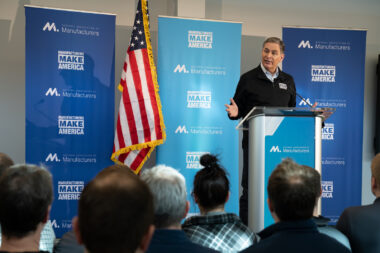
NAM Reports & Action Plans

Below are related NAM resources we encourage you to review:
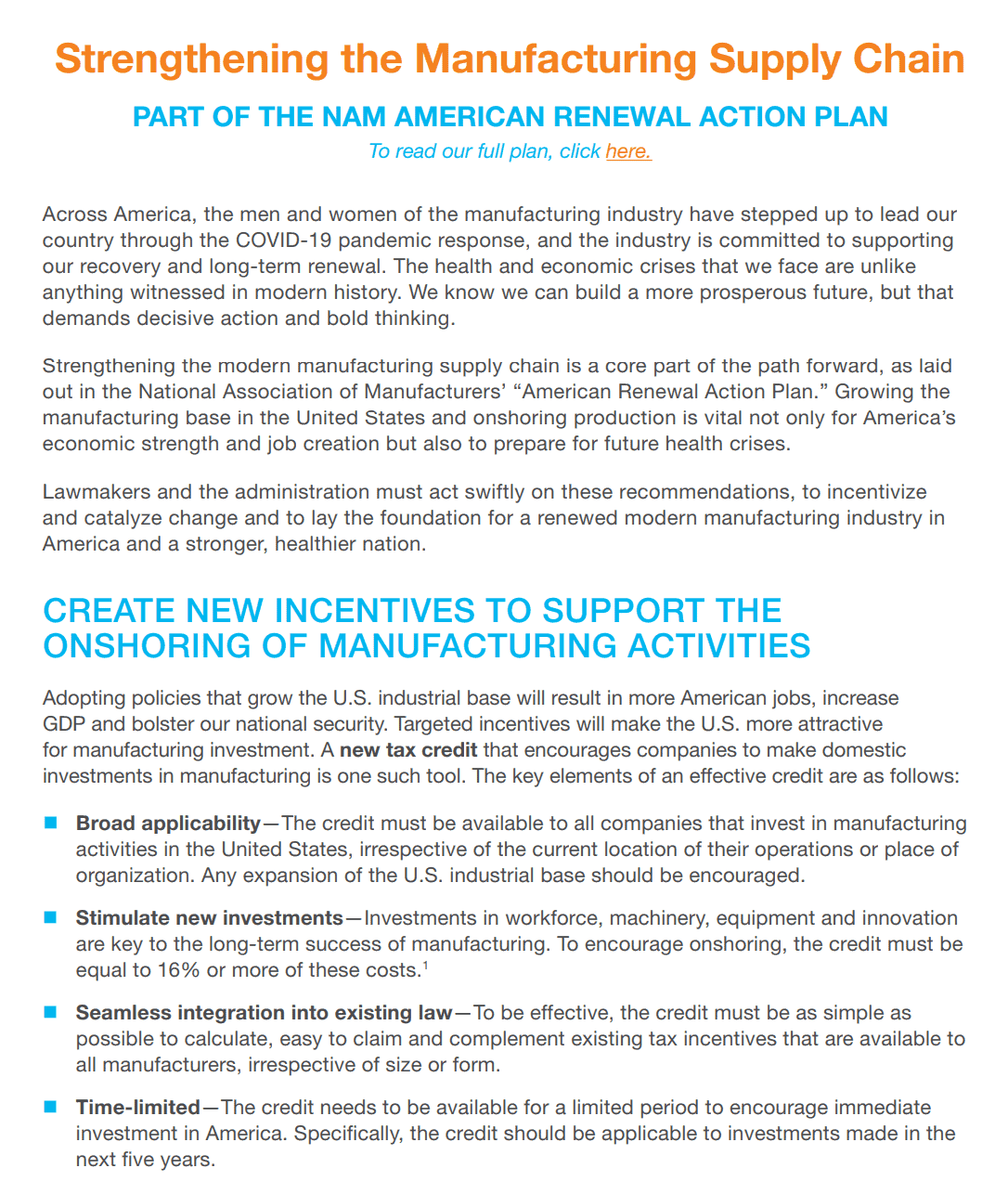
Strengthening the Manufacturing Supply Chain:
This document serves as the industry’s blueprint for an enhanced manufacturing economy, providing policymakers and the administration with recommendations on how we can help resolve the global supply chain crisis and lay the foundation for a renewed modern manufacturing industry. This document is part of the NAM’s its “American Renewal Action Plan.“

The National Impact of a Los Angeles and Long Beach Port Stoppage:
This study quantifies the impacts of a 15-day closure at the Los Angeles and Long Beach ports. Specifically, it estimates how such a closure would impact U.S employment, output, and income.

Competing to Win: This blueprint on issues from taxes and trade to energy and the environment provides a wide-ranging tool to guide policymakers’ actions and ensure that manufacturers can continue transforming the world for years to come.

Building to Win: Proposals in this plan were at the core of the bipartisan 2021 Infrastructure Investment and Jobs Act—and will help to make us more resilient, from 21st-century transportation and energy to broadband and water infrastructure, as we work to outcompete China.

A Way Forward: Our nation’s rich heritage and global economic influence have been made possible by generations of immigrants. This reasonable, practical and comprehensive proposal addresses the problems created by our current immigration system and how policymakers can fix those issues once and for all.
Promoting Operational Excellence

Through the Manufacturing Institute, the NAM’s Manufacturing Leadership Council, Innovation Research Interchange and the NAM Legal Center, the NAM is working to promote manufacturers’ operational excellence and drive industry transformation needed to help address the supply chain crisis. Below are related NAM resources we encourage you to review:
From the Manufacturing Institute 

Study: Seven Steps to a More Resilient, Agile Manufacturing Supply Chain. This paper—which was released by PwC, The Manufacturing Institute, and the Manufacturing Leadership Council—explores a seven-step approach to achieving resilience and building agility into operations.
Study: Cost of Manufacturing Operations Around the Globe. This joint study by KPMG and the Manufacturing Institute provides a current assessment of how the U.S. compares to its main trading partners as a location for manufacturing.

Webinar: Successfully Navigating Current Supply Chain Disruptions. This webinar discusses the action that industry leaders can take to improve their supply chain visibility, resilience and a sufficient workforce to secure supply and successfully navigate the risk of future disruptions.
From the Manufacturing Leadership Council
Get the latest news and insights on business operations from the Manufacturing Leadership Council.
ML Journal: 10 Steps to a Future-Proof Supply Chain. This pragmatic approach to building resilient M4.0 supply chains is essential for thriving in today’s new normal.
ML Journal: Fixing Broken Supply Chains. True supply chain resilience requires more than knee-jerk reactions. It requires a paradigm shift. The Manufacturing Leadership Journal examines the holistic strategy that analyzes customer retention risks, as well as the financial impact, that will need to take place to build true supply chain resilience.
ML Journal: SURVEY DATA: Manufacturing Supply Disruptions to Last Well Into 2023. A new MLC survey warns that disruption could continue for as long as two years as manufacturers strive to adopt more resilient supply chain strategies.
Webinar: Critical Issues Panel: Grappling With the Open Job Crisis. The number of open jobs in the U.S. manufacturing industry hit 1 million in December of 2021. This Critical Issues call looks at the dimensions of the problem and what manufacturers are doing both short term as well as longer term to address the issue.
MLC Master Class Series: Microsoft’s Agile Supply Chain: The Impact of AI & ML on Supply Chain Agility (In Partnership with Microsoft). This discussion provides an inside look at how one of the world’s leading technology companies is applying new analytical techniques in its own operations to ensure and enhance supply chain agility.
Webinar: Partnering for Post-COVID Supply Chain Optimization. This webinar discusses how company leaders are creating a more agile and resilient supply chain in a post-COVID environment.
Webinar: Manufacturing 4.0 Supply Chain Integration: Upstream & Downstream (In Partnership with West Monroe). This webinar dives into the transformative landscape of supply chain integration and collaboration, and how companies are now successfully leveraging real-time data across extended supply chains to drive value.
Webinar: Digitization of the Supply Chain: The Economy, The Pandemic, and Manufacturing (In Partnership with Grant Thornton). This webinar takes a closer look at the supply chain, including contributing factors from the current political climate and their potential impact.
From the Innovation Research Interchange (IRI) 
Study: How Do Industry 4.0 Technologies Boost Collaborations in Buyer-Supplier Relationships? In assessing Industry 4.0 technologies, this study found that buyer-supplier visibility and buyer-supplier integration matters more than the digital technologies used.
Study: Risk and Resilience in Supply Chains. In this paper adapted from their presentation at the IRI Virtual 2021 Annual Conference, Daniel A. Abramowicz and Shah Karim offer insights into how companies can take steps to enhance their supply chains and mitigate risks.
Study: Dealing with Shortages of Critical Materials. Concerned about growing supply uncertainties, firms are taking various actions to anticipate and plan for critical materials shortages.
Related News, Insights and Stories: Click here to stay up to speed on the latest related to the NAM’s efforts to inform manufacturers about how they can implement innovative programs and processes
Protecting and Growing the Workforce

From the NAM’s Creators Wanted initiative to the work of the Manufacturing Institute and a whole host of additional programs, NAM is working to address the worker shortage that is driving the supply chain crisis. Below are related NAM resources we encourage you to review:
From Creators Wanted 
Watch the stories of workers who are keeping the American supply chain moving and creating the future of modern manufacturing.
Jobs Resource: Creators Connect. The NAM’s Creators Connect platform helps companies attract talent, fill open positions and gain access to the Creators Wanted network.
Video: Chip In: Build a Career Making Your Favorite Technologies. This Making the Future episode focuses on the manufacturing industry’s efforts to solve the chip shortage and how you can play a crucial role in developing America’s chip production capabilities and helping lead our country into the digital future!
From the Manufacturing Institute
Study: Future Skill Needs in Manufacturing: A Deep Dive. The Manufacturing Institute, in partnership with Rockwell Automation and PTC, released a forward-looking study on where the manufacturing sector will be headed over the next 5 to 10 years and how those changes will impact the necessary skills that will be required of employees.
Study: How Adaptive Skills Can Play a Pivotal Role in Building the Manufacturing Sector of the Future. This new research from MI and EY focus on adaptive skills in the manufacturing workplace. What are adaptive skills? Simply put, they are skills or traits that enable individuals to transform their abilities as their demands and environment change. There is a need for broader and evolving skillsets in the manufacturing sector and for building a workforce motivated by opportunities for growth.
Webinar: Successfully Navigating Current Supply Chain Disruptions. This webinar discusses the action that industry leaders can take to improve their supply chain visibility, resilience and a sufficient workforce to secure supply and successfully navigate the risk of future disruptions.
From the NAM 
Video: NAM State of Manufacturing Address 2023. Manufacturing leaders, lawmakers and media joined the National Association of Manufacturers as NAM President and CEO Jay Timmons set the stage for the industry’s advocacy in 2023. What is the state of the industry? How do manufacturers lead in an uncertain world? Where is the manufacturing economy headed?

Related News, Insights and Stories: Click here to stay up to speed on the latest related to the NAM’s efforts to build the manufacturing workforce of tomorrow.
Resources for Company Leaders
Below are resources that the NAM has created to help manufacturers stay competitive through operational efficiency and direct, impactful advocacy.
Expand each section below to utilize our members-only resources:

CONNEX MARKETPLACE

EXPLORE NAM OPERATIONAL SOLUTIONS

Leverage Creators Connect
From the NAM Newsroom
Don’t miss the latest news and insights from the NAM newsroom and the media on manufacturers’ work to improve our competitiveness through supply chain resiliency and across our infrastructure network
Must Read: Related News & Insights
Immigration: Immigration reform is essential to our competitiveness worldwide and is a priority of manufacturing leaders across the U.S. as we work to solve the worker shortage that is contributing to our supply chain crisis.
Infrastructure: Our global supply chain network depends on strong and reliable infrastructure. From roads and rails to pipelines and broadband—a healthy supply chain means that manufacturers can move materials and products efficiently, giving our hardworking employees the tools to succeed.
Manufacturing Operations: Facing supply chain challenges, manufacturers are implementing innovative programs that are supporting their efforts to keep their doors open and their workforce strong.
Research, Innovation and Technology: Manufacturing doesn’t just use cutting-edge technology—we create it. But our proven ability to stay innovate and competitive relies on the health of our global supply chain.
Trade: With a level playing field and an accessible market, manufacturers in America can out-perform any competitor. That’s why solving the supply chain crisis is paramount to expanding opportunities to sell our products around the world and ensure global trade is open and healthy.
Workforce: From a historic worker shortage to wage inflation, manufacturers understand that focusing on growing and supporting our workforce is critical to solving our supply chain crisis.
Must Watch: NAM in the News
WATCH: NAM President and CEO Jay Timmons joins MSNBC’s Morning Joe to discuss how increased cooperation between the U.S. and the eventual rebuilding of post-war Ukraine can also be vehicles for strengthening our global supply chain network and economy,
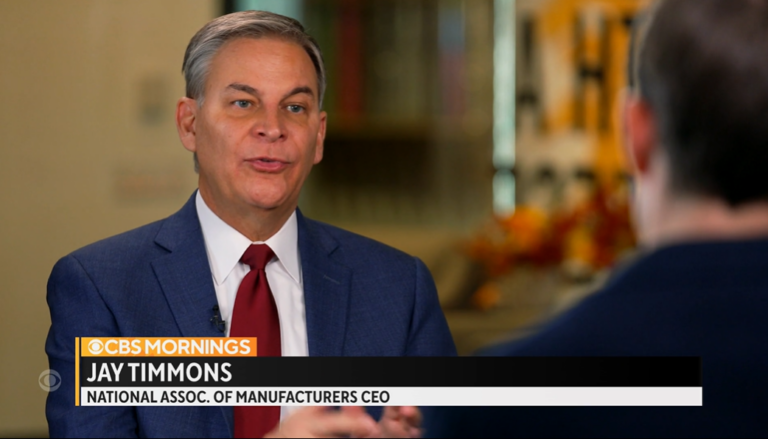
WATCH: NAM President and CEO Jay Timmons joined CBS Mornings today to discuss manufacturing’s number one challenge: finding enough skilled workers to fill available jobs.
WATCH: NAM President and CEO Jay Timmons joins Yahoo Finance to discuss the effects of Russia’s invasion of Ukraine on manufacturing in the U.S., the global supply chain, and our economy.
Engaging Your Company
Next to friends and family, company leaders are the most trusted sources of information about issues shaping our industry.
Take a look at the customizable resources and tools the NAM has produced to help manufacturers directly engage with policies that are shaping supply chain resiliency, innovation and future production.
Expand each section below to preview and engage with key NAM resources:
Become an NAM Ambassador
Be a Leading Voice
The NAM is working with manufacturers who would like to become a leading voice on priority issues facing the industry. Ambassadors will have the opportunity to…
- Advance the NAM’s ability to advocate on your behalf by sharing stories or anecdotes about how a policy issue affects your business.
- Spread key messages about manufacturing issues and drive social media conversations about pro-manufacturing priorities.
- Join colleagues across the manufacturing industry in signing official letters to Congress on top manufacturing priorities.
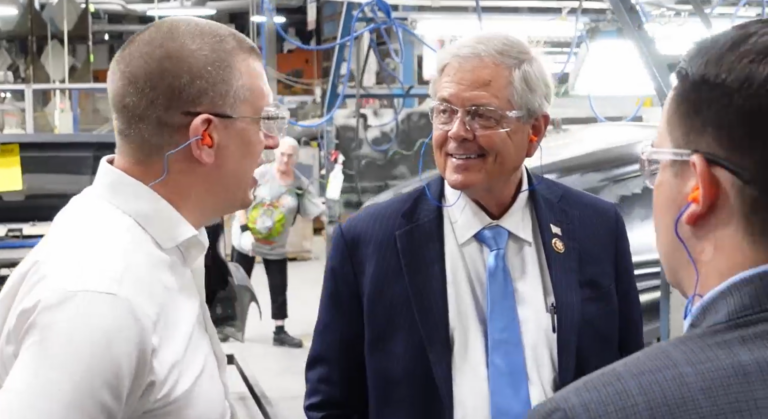
- Host elected officials for a facility tour and invite other manufacturers and community leaders to participate (or agree to do so virtually).
- Work with the NAM to submit an op-ed, letter to the editor, or making a media appearance on a NAM priority issues.
Boosting Company Engagement
Engaging Congress
When manufacturers use their voices, key decision makers in Washington, D.C. and our communities listen. To make sure our officials hear us loud and clear, it’s important that we take advantage of the primary engagement channels that officials use every day.
We encourage you to visit the NAM’s Engaging Congress toolkit for key resources and tips on how to best engage officials through email, calling and town halls. Please contact us with any thoughts or questions on how to maximize your company’s engagement. Manufacturers are driving our industry’s future, and it’s our job to amplify your efforts along the way.
VISIT ENGAGING CONGRESS TOOLKIT
Writing a Letter to the Editor
Step 1
Find the Letters to the Editor address
Find the email address where you can submit a Letter to the Editor on your local newspaper’s website. Usually this information can be found on the “Opinion” section of their website, or on the page in your newspaper where they publish Letters to the Editor.
Step 2
Follow the guidelines
Be sure to pay attention to the guidelines usually set by news organizations including word limits, which are sometimes as low as 150-200 words.
Step 3
Write the letter
Write your letter! Scroll down for some of our ideas and tips about how to write a good letter that has a better chance of being published.
Step 4
Email your letter
Paste your letter into the body of your email, and hit send!
Step 5
Share your contact information
Be sure to include your contact information (including phone number) in case the news organization wants to follow up or verify details. Sometimes this information is required, but news organizations won’t publish this information.
Step 6
Submit your letter locally
Submit your letter to local news organizations in the community where you live or work. Sometimes that might be a small, local newspaper, not just the biggest or most well-known paper in your area. This will give you a better chance of having your letter published.
Step 7
Send us a copy!
Did your letter get published? Congrats! Email us a link for us to amplify on NAM social media and highlight with your member of Congress. Be sure to share it on social media yourself!
TIPS ON HOW TO WRITE A LETTER
Connect your personal experience. Do you work in manufacturing? Talk about why infrastructure investment is important to you. Connect your story to the issue—why do YOU support investing in our infrastructure?
- Focus on a single issue (in this case, infrastructure). Make sure you’re driving home the importance of this issue.
- Be clear and concise. You usually have roughly 200 words or less to make your point, so heed the word count limits and get your point across crisply.
- Use your own words. You don’t need to write like a policy expert—in fact, that’s better. Talk about why this issue is important to you.
- Connect the issue to manufacturing. Talk about why investing in infrastructure is good for manufacturers in your community. Check out our talking points for some facts you can use.
